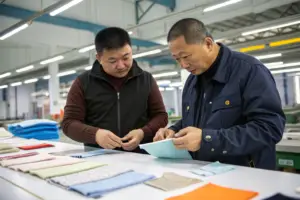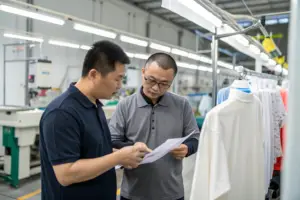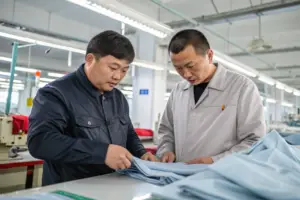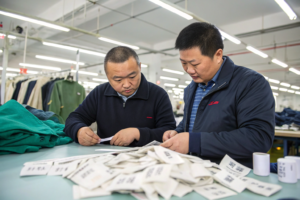
A brand owner in Dallas wired $18,000 to a new supplier last year. The samples were beautiful. The price was unbeatable. The supplier disappeared after the payment landed. No pants. No refund. No response. He called me three months later to help him place a rush order because he had a store full of empty racks and a bank account that was $18,000 lighter. This happens more often than people talk about. The payment method is not just an administrative detail. It is your primary shield against fraud.
The safest payment methods for wholesale linen wide-leg pants are those that offer buyer protection, traceability, and staged release of funds. A confirmed Letter of Credit for large first orders and Trade Assurance on Alibaba for smaller orders are the gold standards. PayPal Invoicing and wire transfers with a 30/70 split offer practical alternatives, but they require a verified relationship. Western Union and full upfront wire transfers to unknown entities are the most dangerous.
The method you choose should match the risk level of the transaction. I have been on the receiving end of thousands of payments at Shanghai Fumao. I know which methods protect you and which ones leave you exposed. Let me walk you through each option honestly.
What Is the Most Secure Payment Structure for a First Bulk Order?
You don't know me yet. I don't know you yet. A first order worth $20,000 or $50,000 is a leap of faith on both sides. You are afraid I will take your money and disappear. I am afraid you will cancel the order after I have already bought your specific fabric. The payment structure must protect both of us. It must be a bridge of trust built on banking rules, not on promises.
For a first bulk order over $10,000, a Letter of Credit (L/C) at sight is the most balanced and secure method. It involves both banks. Your bank guarantees payment to my bank only after I provide strict proof that I have shipped the exact goods you ordered. It is slow to set up and it costs a small fee, but it eliminates the risk of outright theft for the buyer.
An L/C is not for small orders. It is for serious inventory. Here is why it works.
How Does a Letter of Credit Protect Both Buyer and Seller?
An L/C is a contract. It says: "Bank of America will pay Shanghai Fumao $30,000 when Shanghai Fumao presents a Bill of Lading, a Commercial Invoice, a Packing List, and a Certificate of Origin that exactly match the terms of the credit." The word "exactly" is critical. If I make a spelling mistake on the invoice, the bank will reject the documents. I don't get paid until I fix it. This is frustrating for me, but it is powerful for you.
You get to set the conditions. You can specify the latest shipment date. You can demand a third-party inspection certificate before payment is released. You can require the SGS inspection report to be part of the document set. I only get your money when I prove I put the right linen wide-leg pants on the right boat. A client from Toronto used an L/C for his first order of 5,000 pants with us. He added a clause requiring a pre-shipment inspection by a specific agency. The agency came to our factory. They checked the goods. They sent the report. Only then did the bank release the payment. He paid a $300 fee for the L/C setup. He secured a $45,000 order. That is a smart trade-off.
When Should You Avoid a Letter of Credit?
Avoid an L/C if your order is under $10,000. The bank fees can be flat rates that eat up your margin. Avoid an L/C if you need extreme speed. Setting up an L/C takes 3 to 5 business days of paperwork. If you are chasing a fast-fashion window and need the fabric cut tomorrow, an L/C is too slow. Also, some small factories won't accept an L/C because they don't have the working capital to wait for the document verification process. They need a deposit to buy the raw linen fabric. I have the financial stability to work with L/Cs, and I welcome them from new partners. It tells me you are a professional buyer. But I also advise smaller brands to look at a simpler option like Trade Assurance if the order size is modest.
Is Alibaba Trade Assurance Reliable for Wholesale Linen Orders?
Many small to mid-sized brands find me on Alibaba. It is a valid sourcing channel. But the platform is only as safe as the supplier behind the listing. A verified badge is not a guarantee of fabric quality. The payment system, however, does offer a very practical safety net that many buyers don't fully use correctly.
Alibaba Trade Assurance is a reliable tool for orders between $3,000 and $25,000 if you use it with strict discipline. The key is that the contract on the platform must detail the exact fabric composition, the exact weight, the color, and the delivery date. A vague contract on Trade Assurance is worthless. A specific one is a powerful weapon.
Think of Trade Assurance as escrow with rules. Alibaba holds your money. They don't give it to me until you confirm you received the pants as described. But "as described" is the gray area.
What Must the Trade Assurance Contract Include for Full Protection?
You must write the spec into the order. Do not just write "Linen Pants." Write "Women's 100% Linen Wide-Leg Pants, 190gsm, Pre-shrunk, Color: Natural Flax, with shell buttons and a YKK zipper. Shrinkage after wash must be below 3%." Upload an image of the approved tech pack. Upload a photo of the approved pre-production sample.
If the pants arrive and they are 150gsm instead of 190gsm, you have a valid dispute. You can show Alibaba the contract says "190gsm." You can weigh the fabric on video. You will win the dispute. I have seen buyers lose disputes because they wrote "Quality Linen Pants" and nothing else. "Quality" is an opinion. "190gsm" is a fact. A client from Australia who buys from Shanghai Fumao on Alibaba always copies our entire spec sheet into the Trade Assurance note. It takes him 10 minutes. It has saved him from potential issues with other suppliers in the past. He learned that the hard way. You don't have to.
How Does the Dispute Process Actually Work?
If the goods are late or wrong, you file a dispute. You submit photo evidence. You submit a lab test if needed. The supplier responds. Alibaba reviews the evidence and makes a ruling. The process can take 2 to 3 weeks. It is not instant. This is why you should never agree to mark the order as "Received" before you have physically inspected the entire shipment. Once you release the funds, the protection ends.
Some suppliers will pressure you. They will say, "Please confirm receipt, we need the cash flow to start your next order." Do not do it. Inspect the linen wide-leg pants first. Open every carton if you have to. Check for hidden defects. Once you release the funds, you are on your own. The payment method is safe, but only if you follow the rules. I tell my first-time Trade Assurance clients to take their time with the inspection. I want them to be satisfied before they release the payment. A confident supplier has no problem waiting a few extra days.
What Are the Pros and Cons of PayPal and Credit Cards for Wholesale?
PayPal and credit cards are fast. They are familiar. You use them every day. But for wholesale, they are a double-edged sword. The fees are high, but the buyer protection is strong for small orders. The problem is that they don't scale well for large transactions. A 3.5% fee on a $50,000 order is $1,750. That could be your entire profit margin on a competitive item.
PayPal Invoicing and credit card payments are safest for sample orders, small trial runs under $5,000, and paying deposits. They provide strong chargeback rights if the product is never shipped or is counterfeit. For full balance payments on large bulk orders, the high transaction fees and limited seller acceptance make them impractical.
I accept PayPal for samples and small lab dips. I don't accept it for a $40,000 production run. The fee structure doesn't make sense for my margin either. Let's look at how to use these tools wisely.
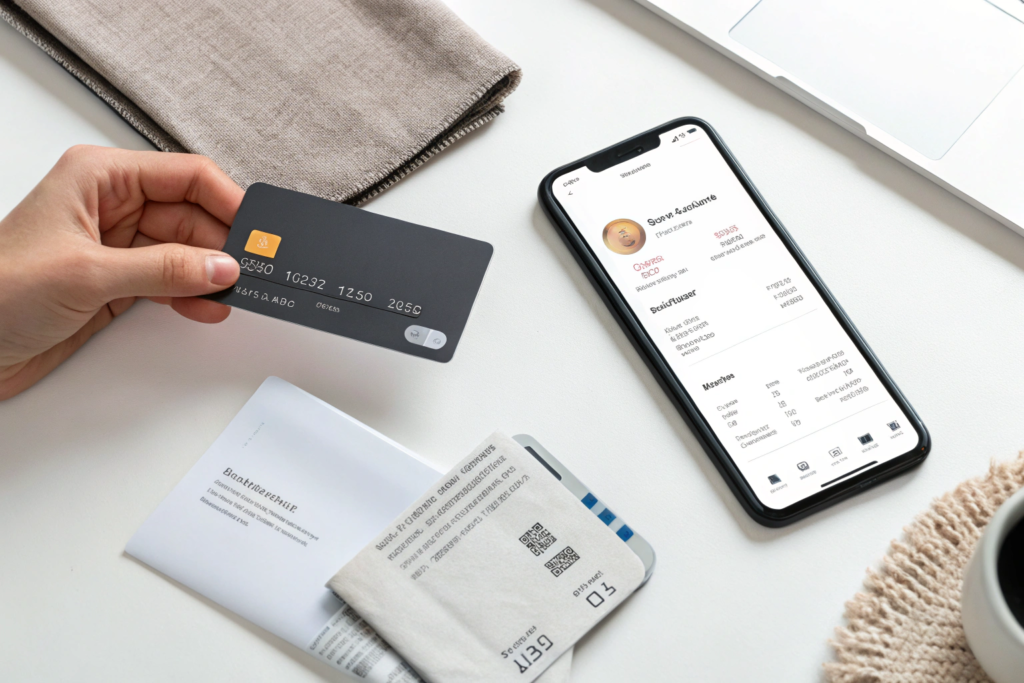
When Should You Use PayPal's Buyer Protection for Linen Orders?
Use it when you are ordering a pre-production sample. A sample might cost $100 to $300 including shipping. PayPal is perfect for this. If the sample never arrives, you file a dispute. You get your money back. The process is much faster than a bank L/C.
Also use PayPal for small trial orders. If you want to test 50 pairs of linen wide-leg pants before committing to 5,000, pay via PayPal Goods and Services. Never use the "Friends and Family" option for a business transaction. You waive all your protections. I had a client who sent a "Friends and Family" payment for a sample to another factory. The factory blocked him. PayPal could do nothing. He lost $200. It is a small amount, but it shows the principle. Always pay as a business transaction. The fee is about 3%, but the insurance is worth it. At Shanghai Fumao, our sample invoices are always sent through a protected channel. It protects you, and it formalizes the record for us. It is good business hygiene.
What Are the Limits of Card Chargebacks for B2B Transactions?
A credit card chargeback is a consumer protection tool. It is not a B2B arbitration system. If you pay a wholesale invoice of $20,000 with an American Express card and the pants arrive with a minor color shade variation, you cannot just call Amex and expect an instant refund. A shade variation is a common apparel industry issue. It is not fraud. The bank might rule against you, and you will have damaged your relationship with the supplier.
Use a credit card only if you are buying through a platform that offers B2B specific protections, or if you have an incredibly strong relationship with your card issuer. I recommend against paying a full production balance with a card. The risk of a dispute being decided in the supplier's favor is high if the goods are delivered but have subjective quality issues. Instead, use the card to pay the initial deposit. This gives you some chargeback recourse if the supplier goes completely dark. Then use a wire transfer for the balance against the shipping documents. This hybrid approach limits your exposure while keeping the transaction fees manageable.
Is a 30/70 Wire Transfer Split Ever Safe to Use?
Wire transfers are the plumbing of international trade. They are fast. They are final. Once the money leaves your account, it is gone. There is no "buyer protection" button. This is why a full 100% upfront wire transfer to a new supplier is a terrible idea. But a structured wire transfer, split into two parts, is the most common payment method I use with my long-term clients. It relies on trust, but it is structured to protect both sides.
A 30/70 wire transfer split, where you pay 30% of the invoice to start production and 70% after you receive photo or video proof of the finished goods, is a standard and acceptable practice with a verified, reputable manufacturer. The 30% covers the raw material risk. The 70% ensures you have leverage over the final shipment.
The risk shifts depending on who you are paying. A verified factory with a real address and a video call history is a different risk profile from a random Alibaba listing with no transaction history.
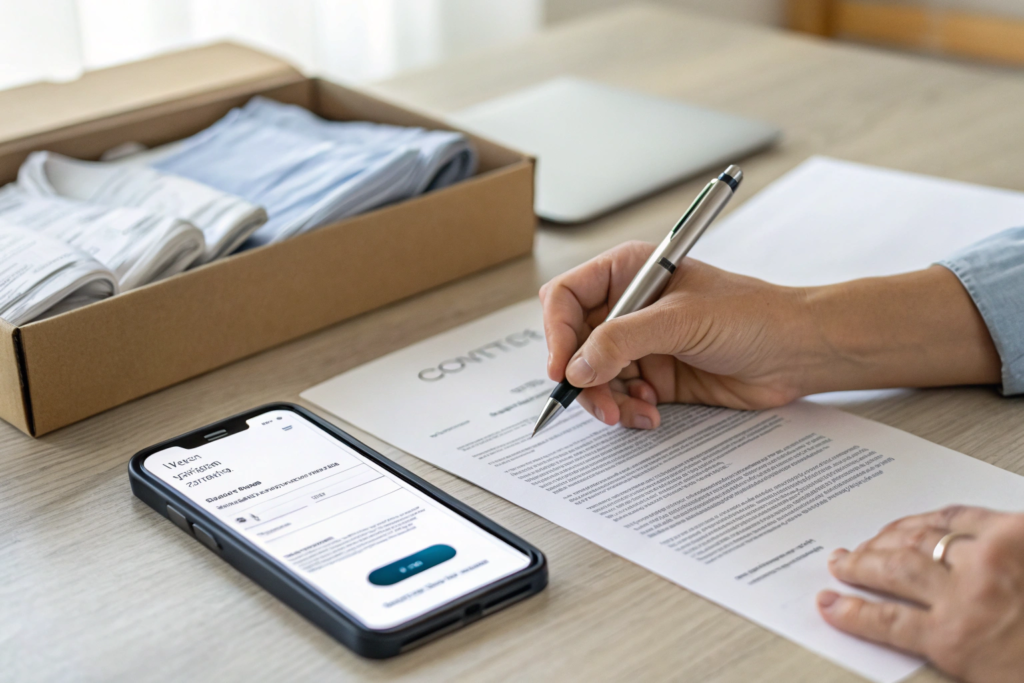
What Should You Verify Before Sending the 30% Deposit?
You must verify the entity. Ask for the business license. Cross-check the company name on the license with the bank account name. A scam supplier will ask you to wire money to a personal account or a company in Hong Kong that has a different name. This is a massive red flag. The payment must go to the corporate account of the factory.
Ask for a video call. Walk through the factory. See the linen fabric racks. See the cutting tables. A factory that can show you its production floor in real-time is a factory that has a physical operation to protect. A scammer has no factory. They will make excuses. They will show you a pre-recorded video. I always offer a live, interactive call to new clients. I walk to the window and show the street outside. I prove we are real. A client from Chicago sent us $12,000 as a 30% deposit last year. Before he wired the money, he had his freight forwarder in China call us and verify the factory address. This is smart. It costs nothing. It confirms the physical reality. Do this before you send any wire.
When Is Paying the 70% Balance Safe?
It is safe to pay the 70% balance when you have proof of life. I send my clients a specific set of documents and media before I ask for the balance. I send a photo of the finished cartons with their brand name on the shipping marks. I send a short video panning across the production line showing the finished linen wide-leg pants. I send the draft Bill of Lading.
You inspect the photos. You match the carton count to your order. You confirm the shipping mark is correct. Then you wire the balance. The goods are already packed. They are ready to be loaded into the container. This is the moment of maximum leverage. I don't ship until the balance clears. You don't pay until you see the physical goods. A buyer from Miami recently did this with us. She received her video. She noticed the care label was sewn on the side seam, not the waistband as specified. We fixed it in 24 hours. She sent the balance. The pants shipped. The delay was one day. The alternative, discovering this error at her warehouse, would have been a $2,000 relabeling job. The structured wire transfer process forced a quality check at the perfect moment.
Conclusion
Safety in wholesale payment is not about finding one magic method. It is about matching the method to the risk. For a first large order with a new partner, a Letter of Credit is a fortress. For a moderate Alibaba order, a detailed Trade Assurance contract is a sharp sword. For samples and small trials, PayPal is a quick shield. And for ongoing relationships with verified factories, a structured 30/70 wire transfer is a well-worn, reliable path.
The common thread is detail. A safe payment is backed by a safe paper trail. Your contract, your tech pack, your emails, your video call recordings. These are your evidence. If the payment is a wire, you verify the corporate account. If the payment is on Alibaba, you list the exact fabric weight in the contract. If the payment is an L/C, you demand an inspection certificate. You are not being difficult when you do these things. You are being professional.
I want my clients to feel secure when they pay an invoice. A secure buyer is a repeat buyer. A repeat buyer builds their brand with our pants. That is the whole business model.
If you are looking at a quote from us for linen wide-leg pants and you want to discuss the payment structure that works best for your risk comfort and cash flow, please connect with our Business Director, Elaine. Her email is elaine@fumaoclothing.com. She can walk you through our standard terms for new partners, whether you prefer Trade Assurance, a 30/70 wire, or an L/C. Let's find the safe path that starts your production without any sleepless nights.