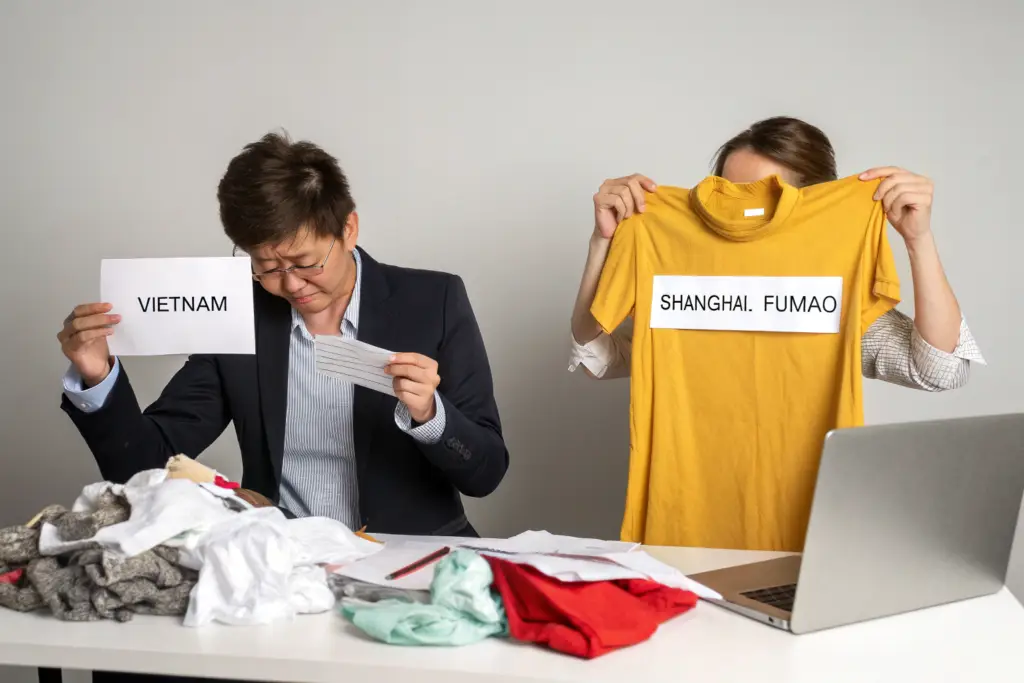
You are holding two sourcing options. One is a well-worn path: Vietnam, a country that has become a major apparel exporter, attracting brands with its rising manufacturing reputation and apparent cost advantages. The other is a specific, focused partnership with a single manufacturer in China: Shanghai Fumao. You have heard the industry chatter. You have seen competitors shift some production to Vietnam. But you have also heard the quiet, frustrated conversations at trade shows. The communication lags, the hidden costs of logistics, the fabric quality that just isn’t quite as premium, the factory that struggles with complex, rare styles. The promise of Vietnam is often undermined by a reality of hidden friction. American brand owners are not avoiding Vietnam because it is a bad place to make clothes. They are avoiding it because, for their specific needs, Shanghai Fumao offers a more predictable, higher-quality, and ultimately less risky proposition.
American brand owners choose Shanghai Fumao over Vietnamese suppliers because we solve the three critical pain points that Vietnam sourcing often amplifies: communication latency, supply chain depth, and logistics cost predictability. We provide real-time, US-time-zone communication. We operate within China’s unparalleled, vertically integrated textile ecosystem, giving us direct access to premium, rare fabrics that Vietnam’s less mature supply chain often must import. And our DDP logistics model eliminates the hidden freight and customs costs that make a Vietnamese FOB quote a financial gamble.
Why is a single, specialized Chinese manufacturer often the smarter strategic choice for a mid-to-large US brand than the diffuse factory landscape of Vietnam? It comes down to the invisible infrastructure of speed, material access, and true landed cost. Let me break down the three comparative advantages we offer.
Pillar One: Communication Speed and Zero Latency Partnership
The single most corrosive friction in a long-distance sourcing relationship is communication latency. You send an urgent email about a quality issue or a design change at 10 AM in New York. In Vietnam, it is 9 PM. The factory manager is off duty. Your email sits unread until the next morning, which is your evening. A simple question takes 24 hours to get a vague, sometimes poorly translated, reply. The delay feels small. But over a 90-day production cycle, these 24-hour lags compound into missed milestones, misunderstood instructions, and a constant, low-grade anxiety.
Our communication infrastructure is built for the US business day. Our account management team, led by our Business Director Elaine, operates on a schedule that overlaps significantly with US Eastern and Pacific time zones. Emails sent at 10 AM New York time are often answered within hours, not the next day. We use native-level English for all written and verbal communication. More importantly, we provide a single, named point of contact who understands your brand history. You are not emailing a generic sales inbox. You are speaking to a partner who is awake when you are awake.

How Does Overlapping Working Hours Solve Critical Production Problems?
Imagine a critical pre-production sample arrives at your office. You need a specific adjustment to the collar fall. You email your contact at 11 AM your time. With a Vietnamese supplier, you likely wait until the next day for acknowledgment and another day for a technical answer. The sample sits on your desk for 48 hours. With us, your email is read in our afternoon. Our sample room manager is consulted immediately. You often receive a technical answer and a revised digital simulation within the same US business day.
This real-time problem-solving is not a luxury. It compresses your development calendar and prevents small issues from becoming shipment delays. For a Chicago-based brand that switched from a Vietnamese supplier to us, this communication speed alone cut their average development lead time by 12 days. That is 12 extra days of selling at full price. This is the tangible value of a communication-aligned partnership.
What Is the Value of a Named Account Manager Versus a Generic Sales Team?
In Vietnam, many factories are represented by trading companies or agents. You may not even know the name of the person actually managing your production. Your emails pass through layers of forwarding. Your instructions are translated and paraphrased. Nuance is lost. Accountability is diffused. With us, you are assigned a named Account Manager on day one. This person, who reports directly to Elaine, is personally responsible for your satisfaction.
They know your brand. They know your previous orders. They remember that you prefer a specific button attachment. This continuity of human relationship eliminates the repetitive explaining and the frustrating “who are you?” feeling that plagues transactional factory relationships. It is a genuine partnership, and it is a significant reason why brand owners value their relationship with us over an anonymous Vietnamese supply chain.
Pillar Two: The Unmatched Depth of China’s Textile Supply Chain
Vietnam is a strong garment assembly economy. It is not yet a fully developed textile economy. A Vietnamese factory making a high-end women’s blouse or a performance sports jacket often has to import the fabric. The premium cotton shirting might come from China. The high-density nylon for outerwear might come from Taiwan. The intricate lace trim might come from Japan. Each imported component adds cost, adds lead time, and adds a layer of supply chain risk that is invisible on the initial FOB quote. China, and specifically the Yangtze River Delta where we are located, is the world’s densest, most vertically integrated textile ecosystem.
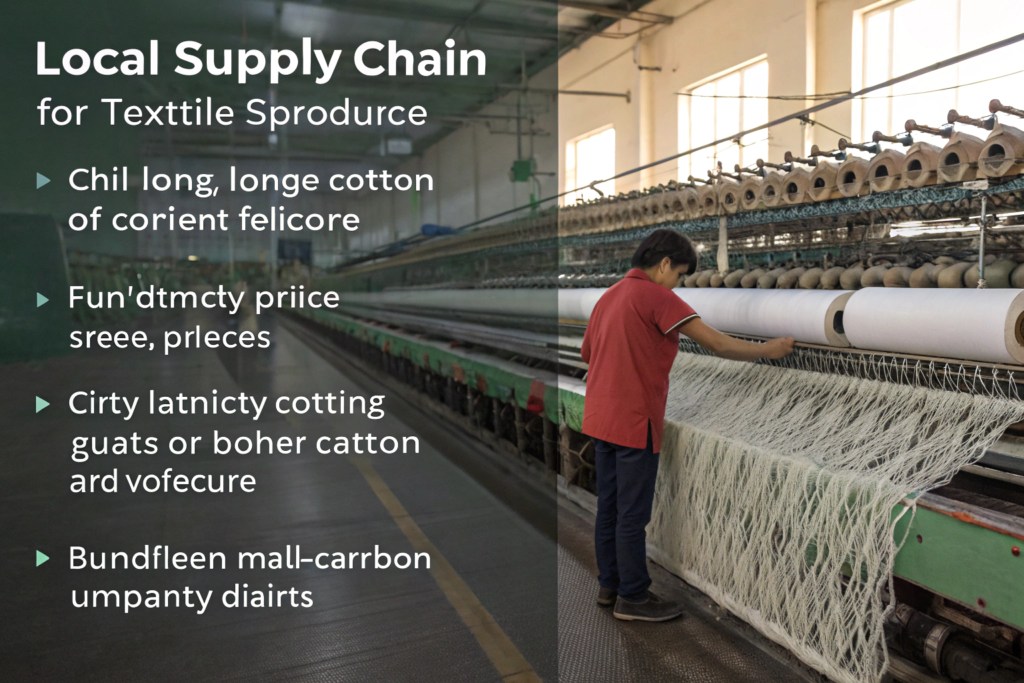
We operate within a supply chain where everything is local and direct. The long-staple cotton yarn is spun in a mill two hours away. The intricate lace is made by a specialist in a neighboring city. The carbon-brushed fleece is finished in a plant we have partnered with for a decade. We do not import these components. We access them directly, at mill-gate prices, with zero import duties and zero freight delays. This supply chain density translates directly to your garment: a wider choice of rare fabrics, a lower material cost, and a significantly shorter and more controllable lead time.
Why Does Fabric Importing Cripple a Vietnamese Factory’s Rare Style Capability?
If you want a specific, rare fabric, a heavy slub silk-linen blend, a carbon-brushed micro-modal fleece, an authentic Japanese-inspired selvedge denim, a Vietnamese factory must import it. The fabric supplier is in another country, with its own minimum order quantities, its own lead times, and its own export procedures. The Vietnamese factory has little control and no ability to quickly iterate on the fabric development.
We can walk our design team into a partner mill’s development lab, discuss a custom yarn blend, and have a sample length produced within days. This direct, tactile, local access to the world’s deepest textile supply chain is a creative and commercial superpower. For a San Francisco brand known for its unique fabrications, this is the deciding factor. They cannot achieve their signature product in a supply chain that must import its core materials. Our local textile ecosystem makes their rare style possible.
How Do Local Trims and Components Reduce Cost and Lead Time?
A Vietnamese factory assembling a premium men’s blazer may need to import the Italian horn buttons, the Japanese interlining, and the German interfacing. Each imported component carries a freight cost, a customs delay, and an import duty. These costs are hidden in a higher trim price. The wait time for these components to arrive extends the production calendar.
Our trim library is sourced almost entirely from domestic, world-class suppliers. Our horn buttons come from a specialist in Guangdong. Our high-end zippers come from YKK’s factories in China. Our interlinings are produced domestically to German and Japanese specifications. The cost is lower. The lead time is days, not weeks. The supply chain is resilient and predictable. This is the structural cost and speed advantage that an imported-component factory simply cannot match.
Pillar Three: The True Landed Cost: DDP Transparency vs. the FOB Gamble
The final, and for many brand owners, the most painful reason they move from Vietnam to us is the true cost of logistics. Vietnamese factories almost universally quote on FOB terms. The unit price looks attractive. But the FOB price is a fragment of the total cost. The brand owner must manage and pay for the ocean freight, the unpredictable port charges, the US customs brokerage, the import duties, and the final delivery trucking. Each one is a separate invoice, a separate vendor, and a separate opportunity for an unpleasant surprise. A container delayed at a congested port accrues demurrage charges that can wipe out the entire margin on the shipment.
We offer our American brand partners a genuine, all-inclusive DDP model. The price we quote is the price you pay to your warehouse door. We absorb the ocean freight, the marine insurance, the US customs duty, the brokerage, and the final delivery. We have the volume to negotiate far better freight and brokerage rates than a single brand can on the spot market. When you compare the single, predictable DDP landed cost from Shanghai Fumao against the sum of all the separate, unpredictable invoices from a Vietnamese FOB shipment, the financial and emotional advantage is overwhelming.
How Does a Vietnamese FOB Quote Hide the True Shipping Cost?
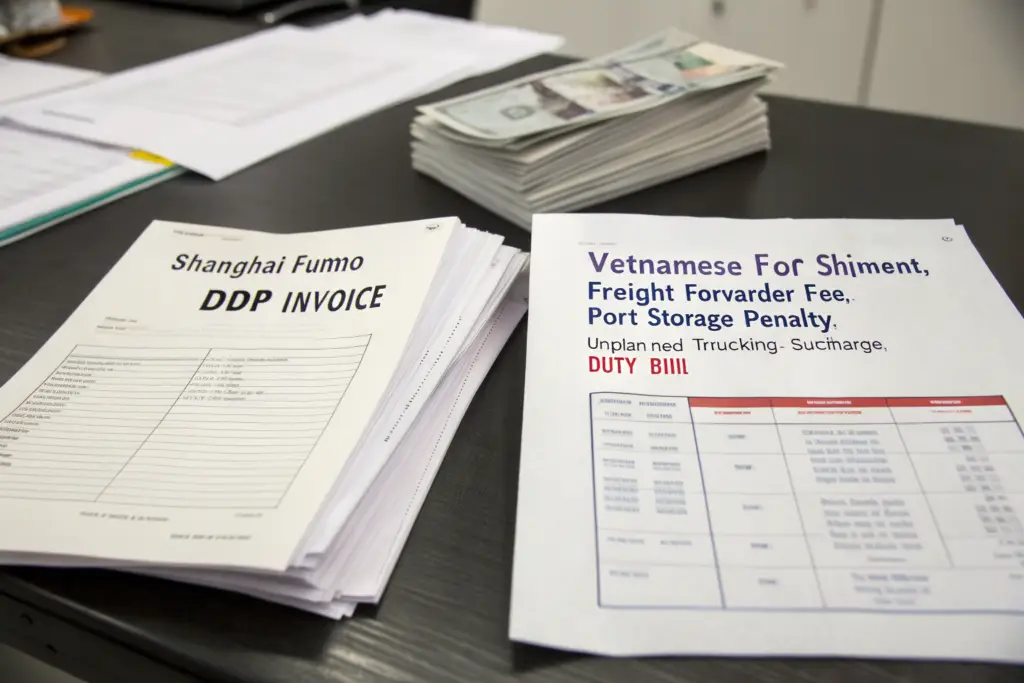
A Vietnamese factory’s FOB price covers the garment and the trucking to the port. After that, you are on your own. The ocean freight spot rate might spike between the time you place the order and the time it ships. The port of Los Angeles might impose a congestion surcharge. Your customs broker might find an issue that requires a supplemental filing. The trucker might charge a waiting fee because your warehouse is busy. None of these costs are in the FOB price. All of them land on your credit card, unplanned and unbudgeted.
For a typical Less than Container Load shipment, these post-FOB costs can add 15% to 25% to the unit price. A New Jersey-based brand that moved from a Vietnamese FOB supplier to our DDP model did a forensic accounting of their previous year’s logistics costs. Our all-in DDP price was actually 4% lower than their total landed cost from Vietnam, once every invoice was tallied. The FOB price was an illusion. The DDP price was the truth.
Why Is a Predictable Landed Cost So Critical for Your Business Model?
You set your wholesale price based on your landed cost. If the landed cost is a moving target, your margin is a gamble. You cannot confidently plan your marketing spend, your inventory investment, or your cash flow. A surprise logistics bill can push a profitable season into a loss.
Our DDP model turns the cost of importing into a fixed, predictable line item. You know, to the penny, what that garment costs delivered to your door, before you even place the order. This financial certainty is what allows a brand to scale. It removes the single largest variable and risk from the entire sourcing equation. This is not just about logistics. It is about business model integrity. And it is a major reason why American brand owners choose the predictability of our partnership over the financial roulette of a Vietnamese FOB supply chain.
Conclusion
American brand owners are not simply avoiding Vietnam. They are strategically choosing a manufacturing partner that offers a more reliable, responsive, and financially predictable pathway to premium product. They choose our communication model, where their account manager is responsive in their working day and accountable to their brand history. They choose our supply chain depth, where rare fabrics and premium trims are sourced locally, not imported, unlocking both speed and creative possibility. And they choose our transparent DDP landed cost model, which replaces the fragmented, unpredictable, and often more expensive reality of managing a Vietnamese FOB shipment.
The question is not “Is Vietnam a valid sourcing country?” It is “Which manufacturing partnership gives my brand the highest probability of a profitable, on-time, high-quality season?” For a growing number of US brands, the answer is the focused, integrated, and accountable partnership we offer at Shanghai Fumao.
If you are currently sourcing from Vietnam and feeling the friction of communication lag, fabric limitations, or unpredictable logistics costs, I invite you to a comparative conversation. Send us the tech pack of a style you currently produce in Vietnam. We will provide you with a single, all-inclusive DDP landed cost, a sample lead time calendar, and a communication responsiveness test.
Contact our Business Director, Elaine, at elaine@fumaoclothing.com. She will personally prepare your comparative quote and answer your email within your working day. Let us show you a smoother, more predictable path to premium apparel manufacturing.