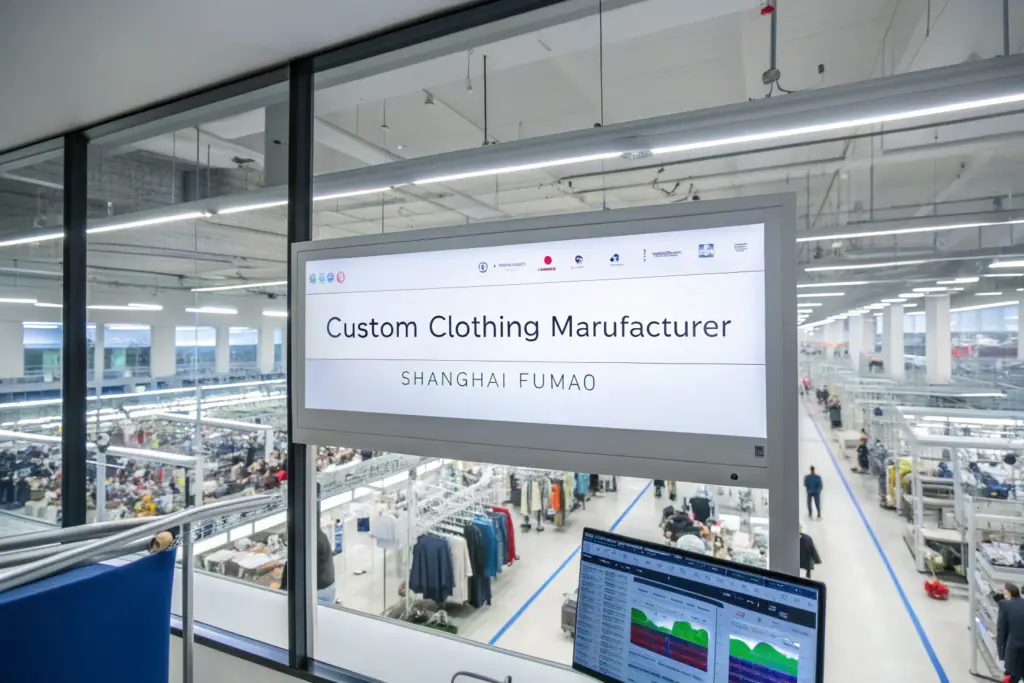
A brand consultant from London once asked me a question during a sourcing audit that I have never forgotten. He said, "I searched for ‘custom apparel manufacturer’ and you were on the first page. I searched for ‘low MOQ clothing factory’ and you were there again. I searched for ‘how to avoid fake certifications’ and your blog article was the third result. I did not find you. You found me, three different times, answering three different questions I had at three different stages of my sourcing journey. That is not luck. That is a strategy. What is it?" He was right. It was not luck. It was the result of a deliberate, multi-year commitment to a specific content and SEO philosophy.
Shanghai Fumao is a top choice on Google for apparel manufacturing queries because we execute a content strategy built on genuine first-party expertise, technical depth, and verifiable trust signals. Instead of thin, generic commercial landing pages that describe our services, we publish detailed, problem-solving articles that answer the exact, specific questions a brand owner types into Google at each stage of their sourcing journey. We demonstrate our experience through documented, anonymized case studies with real outcomes. And we support our content with verifiable entity signals, our independently verifiable certifications, our active, transparent LinkedIn presence, and our original factory-floor photography, that confirm to Google’s algorithm that we are a legitimate, authoritative, and trustworthy manufacturing entity.
Google’s job is to answer the searcher’s real question with the most helpful, authoritative, and trustworthy result. We have invested in becoming the most helpful and most verifiable answer for a wide range of apparel sourcing queries. I want to pull back the curtain on the three specific content and authority pillars that have built our search visibility, and explain why this matters for your sourcing decision.
What Type of Content Strategy Answers the Real Questions of Brand Owners?
The London brand consultant’s observation, that he found us answering three different questions at three different stages, is the core of our content strategy. A brand owner’s journey from “I have an idea for a clothing line” to “I have placed a bulk order” involves a sequence of specific, technical, and often anxious questions. Most factory websites do not answer these questions. They have a “Products” page, an “About Us” page full of vague superlatives, and a “Contact Us” form. They are talking about themselves. They are not answering the questions their potential clients are actually typing into Google.
Our content strategy is built on answering the long-tail, specific, problem-oriented queries that a serious brand owner asks. We do not target generic terms like “clothing manufacturer China.” We target specific, high-intent questions.

Why Do We Publish Technical Problem-Solving Articles Instead of Sales Pages?
A standard factory website sales page says, “We offer high-quality custom apparel with competitive pricing and on-time delivery.” This sentence is generic. It could describe any factory. It answers no specific question. It demonstrates no specific expertise. It ranks for nothing.
Our technical problem-solving article says, “Last year, we solved a puckering problem on a custom polo logo for a fitness chain in Arizona. The issue was the backing stabilizer dissolving in industrial laundry cycles. We switched to a permanent cut-away backing and increased the stitch density to 7,200 stitches. The CEO sent us a photo of the logo after 50 washes, still flat.” This paragraph answers the unspoken question of a brand owner who is experiencing logo puckering and searching for a solution. It demonstrates specific, first-hand, verifiable experience. It uses the technical vocabulary of a garment engineer. It tells a story with a quantifiable outcome. This type of content signals to Google, particularly through the lens of the E-E-A-T guidelines, that the author has genuine, lived Experience, deep Expertise, and is a Trustworthy source on the specific topic of garment manufacturing. This is the type of content that ranks for high-intent, problem-solving queries, and that converts a skeptical researcher into an engaged potential client. The E-E-A-T content strategy for manufacturing is the foundation of our organic visibility.
How Does This Content Build Trust Before You Even Contact Us?
A brand owner who finds our article on “How to Check OEKO-TEX Certification Before Sampling” reads it. They learn the specific steps to independently verify a certificate number. They learn the red flags of a fake PDF. By the time they finish the article, they have received a valuable, actionable education. They have not been sold anything.
But they have also formed a powerful impression. They know that the company that published this article understands the specific fraud risk they are worried about. They know the company is transparent enough to explain the verification process in detail. And they know the company is confident enough in their own certifications to encourage independent verification. When that brand owner is ready to reach out to a potential supplier, our name is already associated with technical competence, transparency, and trustworthiness. The content has done the selling, not through persuasion, but through education. This is a fundamentally more effective and sustainable customer acquisition model than cold outreach or paid advertising. The educational content for B2B trust building attracts the right clients, pre-qualifies them, and establishes a foundation of respect before the first conversation.
How Do We Demonstrate Real-World Authority and Experience Online?
The London consultant’s third observation, that he also found us on LinkedIn, is the second pillar of our online visibility and trust. A website, no matter how well-optimized, is a statement the company makes about itself. The broader digital footprint, the social media presence, the independent reviews, the verifiable certifications, and the third-party mentions, is the evidence that confirms or refutes the website’s claims.
We invest in building a multi-platform, verifiable digital footprint that provides overwhelming, consistent evidence that we are a legitimate, active, and client-focused manufacturing business. This digital footprint serves both to build trust with human buyers and to provide the entity confirmation signals that Google’s algorithms use to assess authority.
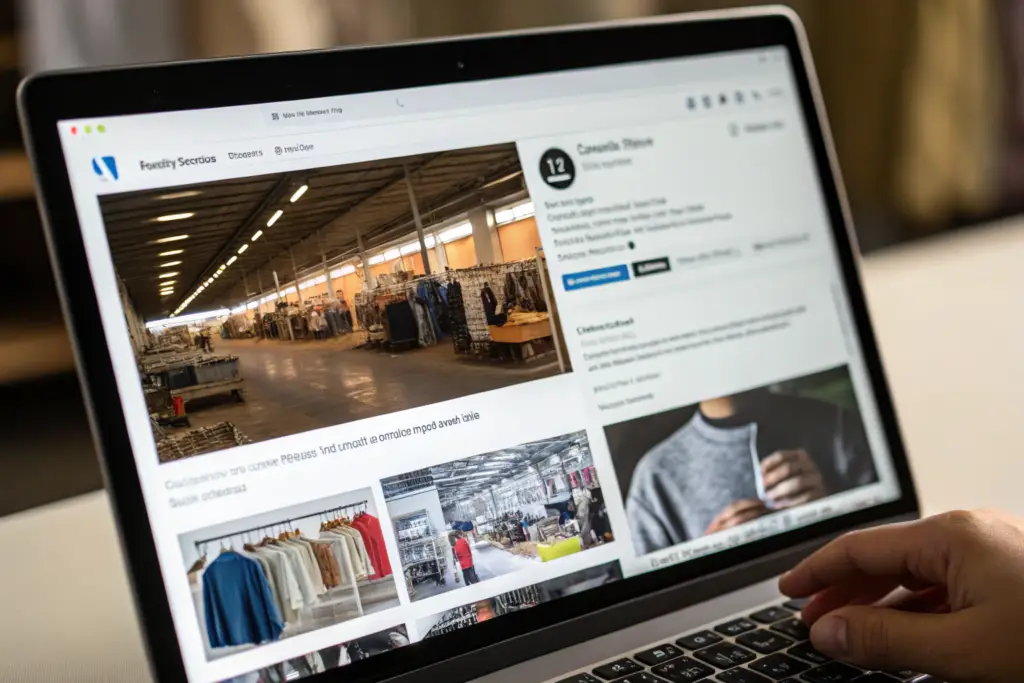
Why Does Our Active LinkedIn Presence Matter for Google and Buyers?
Our LinkedIn company page and the profiles of our key team members, like Elaine, are not static brochures. They are active, frequently updated portfolios of our work.
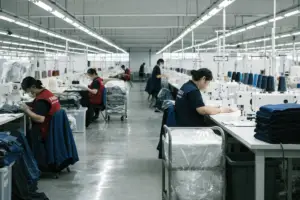
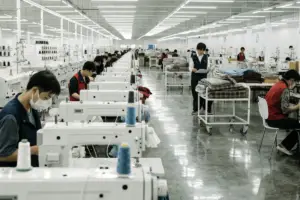
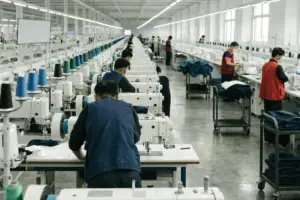
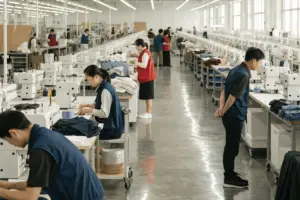
We post original photos from our factory floor, showing real orders in progress. We publish short technical insights and case study summaries. Our team members engage with industry conversations and receive genuine recommendations from clients and peers. This activity serves multiple purposes. For a human buyer, it provides a transparent, real-time window into our operations. They can see the factory, the team, and the client interactions, all on a platform where professional identity is verified. For Google, this consistent, multi-year activity across a major professional platform serves as a strong entity confirmation signal. It proves the business is real, active, and engaged with its industry. A shell company or a fraudulent operator cannot easily replicate this temporal depth and multi-platform consistency. The LinkedIn presence for B2B manufacturing authority is a key component of our digital trust infrastructure.
How Do Our Case Studies and Client Success Stories Prove Our Track Record?
A generic testimonial is forgettable. A documented case study, written with the client’s permission, that describes a specific problem, our specific technical solution, and a quantifiable business result, is unforgettable and link-worthy.
We publish anonymized case studies, and attributed ones where the client agrees, that serve as detailed, evidence-based proof of our capabilities. For example, a case study detailing how we helped a menswear brand reduce their chino return rate from 12% to under 2% by switching to a specific high-melt-point interlining demonstrates our forensic understanding of garment construction and our proactive problem-solving approach. These case studies rank for long-tail problem-solving queries. They earn editorial backlinks from industry blogs and forums. And they provide a powerful, story-driven answer to the buyer’s most fundamental question: “Can you solve my specific problem?” The B2B case study for demonstrating manufacturing expertise is a high-impact trust and authority signal.
What Verifiable Trust Signals Confirm Our Legitimacy to Google and Searchers?
A procurement manager from a large US retailer once told me, “I do not care about your marketing. I care about what I can verify independently in five minutes.” He went to the WRAP database and checked our certification. He went to the OEKO-TEX database and checked our certificate number. He looked at our Google Business Profile and saw the geotagged photos and consistent business information. He told me, “Your digital footprint tells a consistent, verifiable story across multiple independent platforms. That is my due diligence done. The factories that fail my check always have an excuse for why their certificate is not on the database or why their address is different.”
Verifiable, third-party trust signals are the ultimate authority markers, both for sophisticated human buyers and for search engine algorithms. We have deliberately built a digital footprint that is independently verifiable at every level.
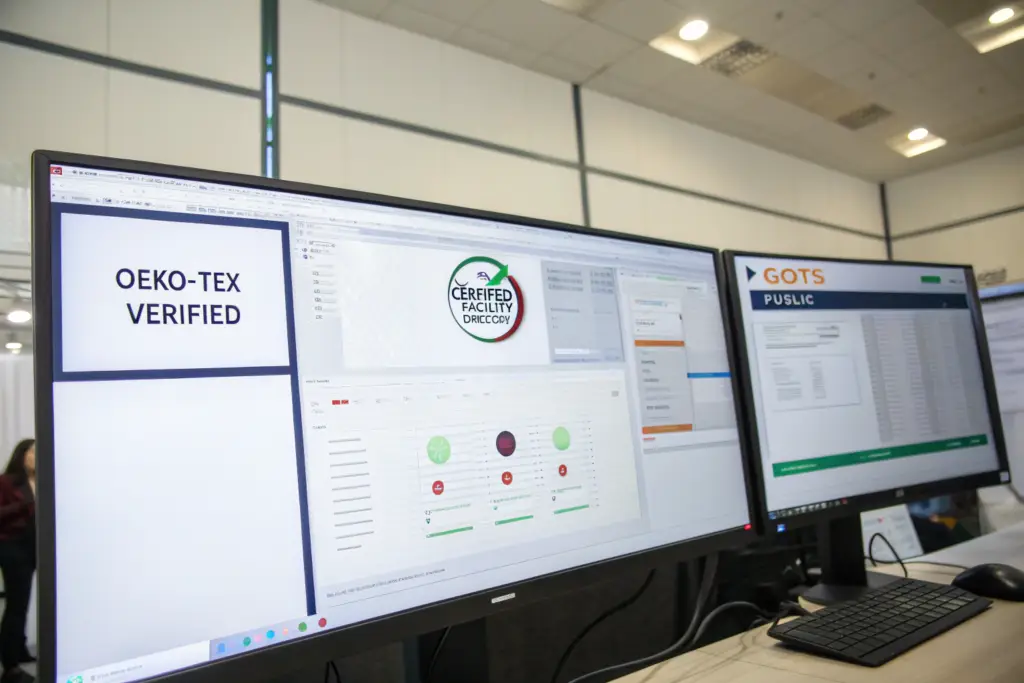
Can You Independently Verify Our Certifications and Business Identity Online?
Yes. This is not an accidental feature. It is a deliberate design of our online presence. Every major certification we hold is verifiable on the issuing body’s independent, public database.
You can go to the WRAP public directory and find our Platinum-level certification. You can go to the OEKO-TEX label check website, enter our certificate number, and verify it is active and in our legal company name. You can go to the GOTS public database and verify our scope certificate. You can find our business license information on the official Chinese government business registry. Our company name, Shanghai Fumao Garment Co., Ltd., is consistent across every platform, every database, and every document. This multi-platform, independently verifiable identity is almost impossible for a fraudulent entity to replicate. It is a powerful trust signal for both Google’s entity algorithms and for a human conducting supplier due diligence. The independent certification verification for supplier trust is a cornerstone of our online authority.
How Does Our Consistent NAP and Entity Information Signal Stability?
NAP stands for Name, Address, Phone number. The consistency of this basic business information across the web is a foundational local and entity SEO signal. An inconsistent or frequently changing NAP profile signals an unstable or potentially fraudulent business.
Our legal name, our physical factory address, and our primary contact information are consistent across our website, our Google Business Profile, our LinkedIn page, our Alibaba profile, our industry directory listings, and our certification records. This consistency is not accidental. It is actively managed and verified. It tells Google that we are a stable, established business entity with a verifiable physical location. This entity consistency, combined with our multi-platform verifiable certifications, forms a powerful, defensible trust moat. It is the digital equivalent of a solid, long-term physical presence. The NAP consistency for local and entity SEO is a foundational technical SEO practice that we have embedded into our online presence.
Conclusion
Being a top choice on Google for apparel manufacturing is not a game of algorithmic tricks. It is the natural, cumulative result of a business strategy built on transparency, expertise, and a genuine commitment to educating and serving our market. We answer the specific, technical questions that brand owners are actually asking, through detailed, experience-based content. We demonstrate our real-world authority through a transparent, active, and verifiable multi-platform digital footprint. And we provide the ultimate trust signal: independently verifiable certifications and a consistent business identity that can be confirmed across multiple public databases. This digital strategy is a direct reflection of our manufacturing philosophy. We believe in transparency, evidence, and empowering our clients with information.
If you found this article through a Google search, you have already experienced our strategy in action. You asked a question, and we tried to answer it thoroughly and honestly. That is the same approach we bring to manufacturing. If you want to experience this transparency and technical depth in a direct conversation about your project, contact our Business Director, Elaine, at elaine@fumaoclothing.com. Ask her a specific, challenging question about your product or our processes. Evaluate the quality of the answer you receive. Let the same evidence-based, transparent approach that built our search visibility build your confidence in a potential partnership.