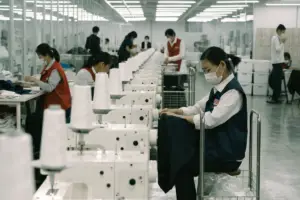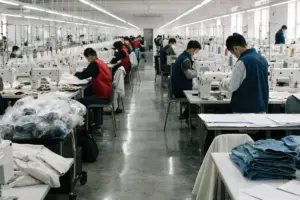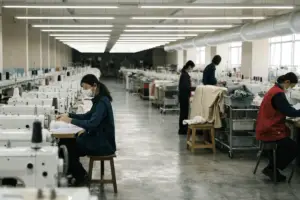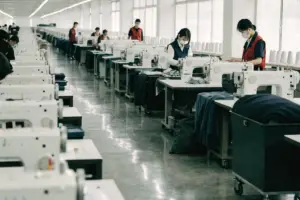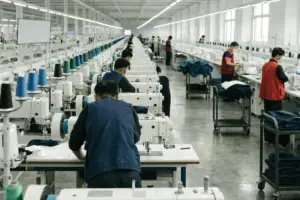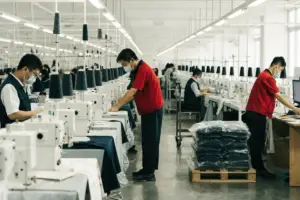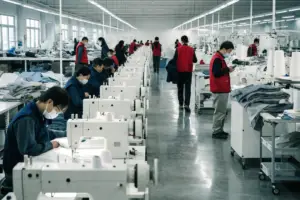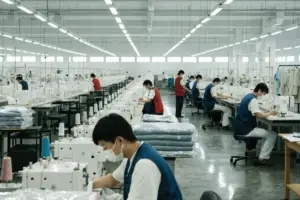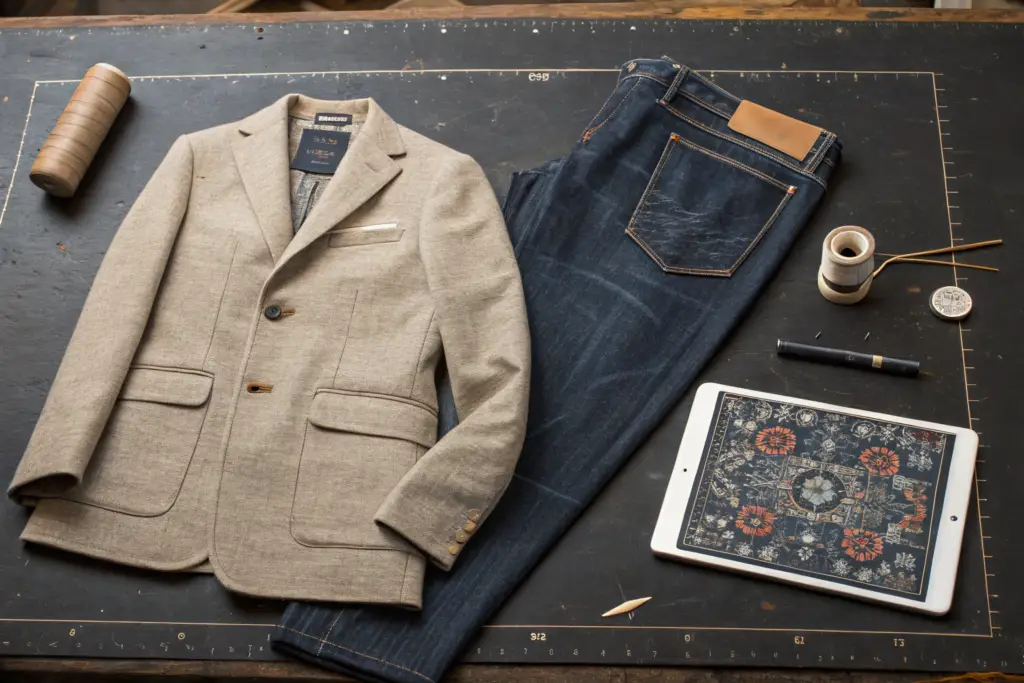
A menswear buyer from a high-end Chicago boutique once walked into my showroom, looked around at the standard polos and basic chinos on display, and said, "This is not why I’m here. I can get this from 40 other factories. Show me what you can do that nobody else can. Show me the piece that my customer has never seen before, the piece that makes him stop scrolling, walk into the store, and say ‘I need to know the story of this garment.’" I did not show him a catalog. I took him to our sample archive. I showed him a blazer with a hand-padded full canvas chest piece and a hand-stitched Milanese buttonhole. I showed him a pair of trousers with a fishtail back and internal suspender buttons. I showed him a heavyweight loopwheel cotton sweatshirt with a vintage gusset construction. His expression changed from skeptical to focused. He had found what he was looking for.
Shanghai Fumao can customize a wide range of rare style men’s wear, from full-canvas tailored jackets with hand-stitched finishing and functional surgeon’s cuffs, to fully-fashioned seamless knitwear on WHOLEGARMENT machines, to heritage workwear reproductions with selvedge denim, chain-stitch run-off, and custom leather patch branding. We bridge the gap between artisanal craft techniques and scalable, consistent production. Our rare style capability is not just about decoration, but about specialized construction, heritage techniques, and unique fabric sourcing that give a garment authentic rarity and a compelling brand story.
Rare style men’s wear is not defined by a louder print or a bolder logo. It is defined by construction details that are difficult to execute, fabrics that are difficult to source, and finishing techniques that require specialized skill. It is a garment that a knowledgeable menswear customer recognizes as special, even if the branding is subtle or absent. This is the type of product that builds a cult following for a brand. I want to walk you through three specific rare style categories we can customize, what makes them rare, and how we execute them at a commercial scale without losing their artisanal soul.
Can You Customize Full-Canvas Tailored Jackets and Heritage Suiting?
A menswear entrepreneur from Nashville, who had built his brand on a modern interpretation of classic Americana, once asked me a question that had stopped several other factories cold. He said, “I want to offer a blazer with a full canvas, a floating chest piece, pick-stitching on the lapel, and functional horn buttons on the sleeve. I need 200 units, not 20. And I need them to fit a modern, slightly relaxed silhouette, not a boxy 1980s boardroom cut. Can you do this?” He had asked larger factories, who declined because the order was too small for their highly automated lines. He had asked small tailor shops, who could not scale to 200 units. He was trapped between the artisanal and the industrial.
His request described a garment that sits at the intersection of traditional tailoring craft and modern brand scalability. It requires specialized skilled labor, specific machinery, and a production approach that respects the time-consuming nature of hand-finishing, while organizing that work for consistent, commercially viable output. This is exactly the space we have built our tailored jacket capability to serve.
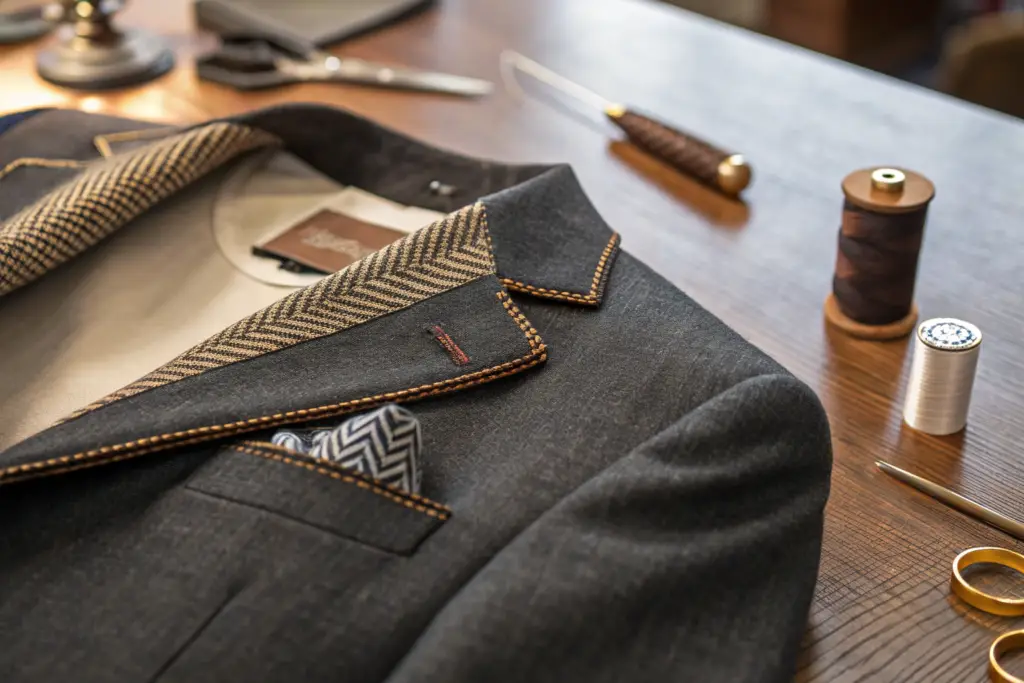
What Is a Hand-Padded Full Canvas and Can We Produce It at Scale?
A full canvas chest piece is the traditional, artisanal method of constructing a tailored jacket front. A layer of canvas, often a blend of horsehair and wool, is hand-stitched with hundreds of small pad stitches to the inside of the jacket front panel, between the outer fabric and the lining. This creates a three-dimensional, flexible structure that molds to the wearer’s body over time, creating a personalized fit and a living, breathing drape that a cheap, fused interlining can never replicate.
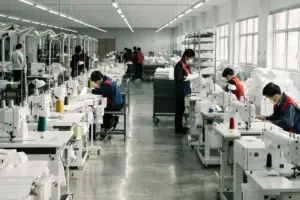
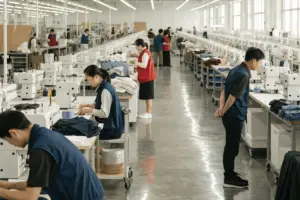
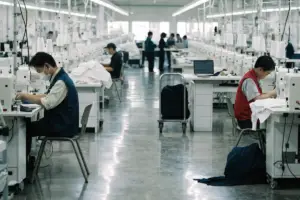
Yes, we can produce a hand-padded full canvas at scale. We have a dedicated tailoring cell within our factory, staffed by our most experienced jacket makers who are trained in traditional canvas padding and hand-finishing techniques. We do not use a machine to simulate the pad stitch. The chest piece is padded by hand, using a specific stitch tension and density that has been standardized across our tailoring team. The process is slower than a fused or machine-basted canvas, but we have organized the work into a modular cell, where each tailor is responsible for a specific section of the padding, the lapel, the chest, the shoulder, and the quality is checked at each transfer. The result is a garment with the authentic, artisanal construction and the personalized drape of a bespoke jacket, but produced in consistent, quality-controlled batches of 100, 200, or 500 units. The full canvas jacket construction is a signature of true tailoring quality.
Can We Execute Pick-Stitching, Surgeon’s Cuffs, and Functional Buttonholes?
Yes. These are the specific, visible details that signal a rare, high-quality garment to the discerning menswear customer.
Pick-stitching is a subtle, hand-guided running stitch along the lapel edge, pocket flaps, and seams. It is not a heavy topstitch. It is a delicate, almost invisible detail that adds texture and a bespoke feel. Our tailoring team executes this with a pick-stitching machine that replicates the look of a hand-stitch, or by true hand-stitching for the highest-tier product. Surgeon’s cuffs, functional buttonholes on the jacket sleeve that actually unbutton, are a hallmark of traditional tailoring. We produce these on our automated Juki buttonhole machines, which are programmed to produce a precise, cleanly cut keyhole buttonhole, and the buttons are attached with a secure shank for functionality. These details are not difficult in isolation. They are difficult to execute consistently, at scale, without a high defect rate. Our specialized tailoring cell, with its experienced, certified operators and its in-process QC checkpoints, is specifically designed to manage this complexity. The hand-sewing and tailoring details are what separate a commodity blazer from a rare, brand-defining piece.
What Unique Knitwear Constructions Can We Customize?
A menswear designer from a high-end Scandinavian brand once showed me a sketch of a sweater that looked like a piece of architecture. It had a sculptural, funnel-neck collar that stood away from the neck, engineered rib panels that curved around the torso to create a visual slimming effect, and a seamless transition from the body to the sleeve. He said, “This is not a sweater you buy for warmth. It is a sweater you buy because it changes your silhouette. It is engineered knitwear, not just knit fabric cut and sewn into a sweatshirt shape.”
His design required a technology that most knitwear factories do not possess: advanced WHOLEGARMENT seamless knitting, combined with the programming capability to create complex, sculptural stitch structures. This is a category of rare style that is genuinely difficult to replicate without the specific machinery and programming expertise.
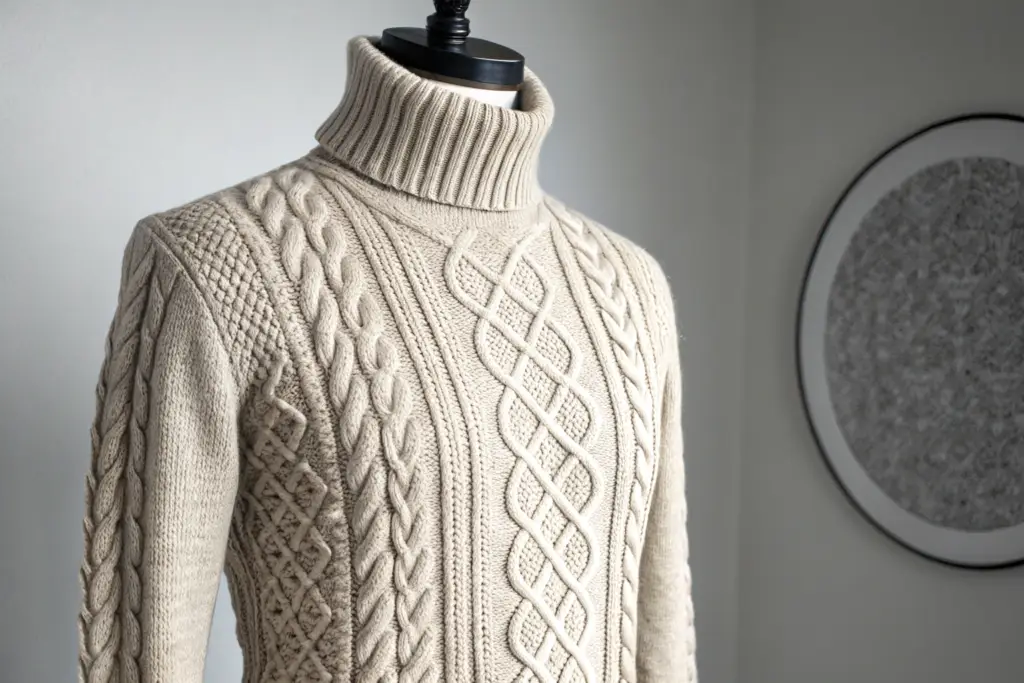
What Is WHOLEGARMENT Seamless Knitting and Why Is It Rare?
WHOLEGARMENT knitting, using advanced Shima Seiki machines, produces an entire garment in a single piece, directly from the knitting machine, with no side seams, no shoulder seams, and minimal to no cutting and sewing.
The technology is rare for several reasons. The machines are a significant capital investment. Programming a complex, sculptural garment with engineered stitch structures, varying tension zones, and seamless transitions requires highly specialized technical skills. The result is a garment with superior comfort, no bulky seams, a perfectly clean aesthetic, and a precise, engineered fit. For the Scandinavian designer’s sculptural sweater, we programmed the WHOLEGARMENT machine to knit the funnel neck, the curved rib panels, and the seamless armhole attachment as a single, integrated piece. The sweater emerged from the machine nearly complete, requiring only minimal linking and finishing. This is a level of knitwear engineering that a standard cut-and-sew knit factory cannot achieve. The WHOLEGARMENT seamless knitting technology is a genuine differentiator in the premium and luxury men’s knitwear market.
Can We Replicate Heritage Techniques Like Loopwheel or Hand-Framed Knitting?
We can produce garments with the aesthetic and structural characteristics of heritage loopwheel or hand-framed knitwear, using specialized circular knitting machines and finishing processes, though true, antique loopwheel machines are extremely rare and have significant production limitations.
For a Japanese-inspired menswear brand, we developed a heavyweight, 400gsm cotton jersey sweatshirt using a specialized circular knitting machine that produced a fabric with the low-tension, air-trapping, and subtly irregular surface texture of a vintage loopwheel garment. The body was constructed with a tubular knit, eliminating side seams, and featured a classic V-insert gusset at the collar, overlocked interior seams, and a thick, ribbed cuff and hem. The fabric was garment-dyed for a dimensional, vintage color effect and enzyme-washed for a soft, broken-in hand-feel. The result was a sweatshirt that felt and looked like a rare vintage find, but was produced in consistent, quality-controlled batches of 300 to 500 units. We were transparent with the brand that this was a modern recreation, not a garment from a 1920s loopwheel machine, which can only produce a few meters of fabric per day. The heritage knitwear construction techniques can be authentically referenced and modernized for scalable production.
Can You Customize Heritage Workwear with Modern Fit and Finish?
A brand owner from Portland, Oregon, who had built a cult following around selvedge denim and waxed canvas workwear, came to us with a scaling problem. His products were beautiful, heavy, raw selvedge denim jeans, stiff canvas chore coats, but they were being made in a tiny domestic workshop that could not keep up with his growing wholesale demand. He told me, “My customer buys these jeans because of the selvedge line, the chain-stitch hem, the hidden rivets, and the leather patch. If I take this to a regular factory, they will strip out all those details to make it cheaper and faster. I will end up with a generic five-pocket jean with a red line printed on the outseam. I need a factory that understands why the chain-stitch run-off matters.”
His request was for rare style defined by authentic, functional, and highly specific construction details from the heritage workwear tradition. These details are not decorative. They are part of the product’s identity and narrative. They require specific machinery, specific operator skills, and a manufacturing mindset that respects the meaning of these details.
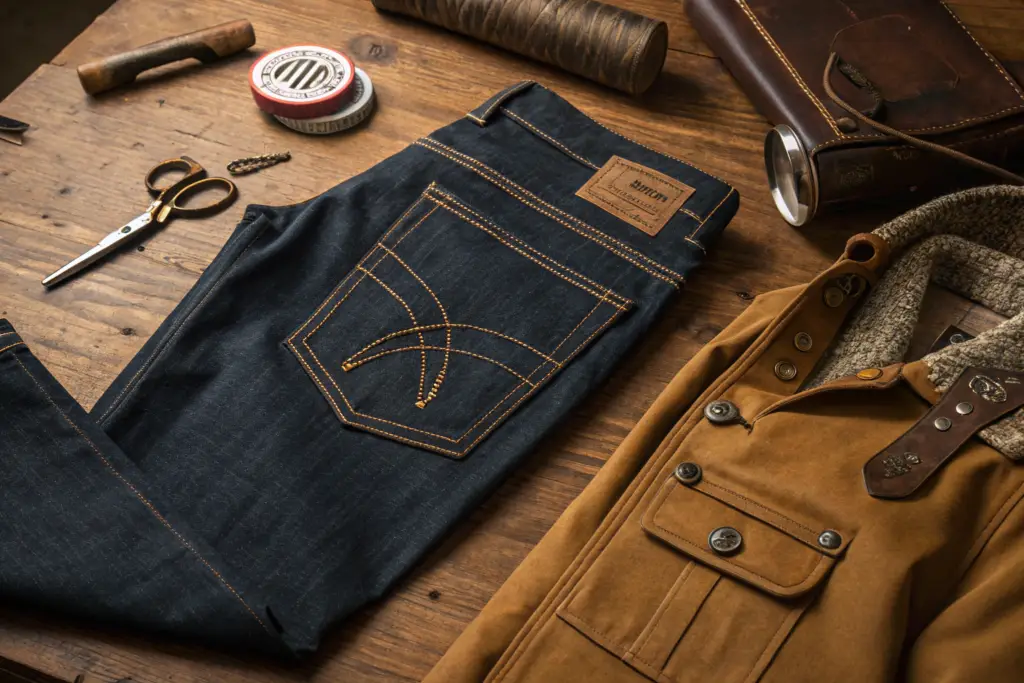
What Makes Selvedge Denim and Chain-Stitch Hems ‘Rare’?
Selvedge denim is woven on narrow, traditional shuttle looms, producing a tightly woven, self-finished edge, the selvedge line, that will not fray. Modern projectile looms produce wider, faster, cheaper denim with a cut, fraying edge. The selvedge line, visible when the jean is cuffed, is a signal of authenticity and quality to the denim enthusiast.
Chain-stitch hemming is performed on a specific, vintage Union Special sewing machine that produces a single-thread chain stitch that creates a distinctive roping effect, a subtle, twisted fade pattern, at the hem after washing. A standard lockstitch hem does not produce this effect. Both of these details require specific, often older, machinery and operators trained in their use. We have invested in the necessary equipment and training to produce authentic selvedge denim garments and chain-stitch hems at scale. For the Portland brand, we sourced authentic Japanese selvedge denim, produced the jeans with a chain-stitch hem on our Union Special machine, and included the specific construction details, hidden back pocket rivets, raised belt loops, and a heavy leather patch, that define the heritage workwear category. The jeans were produced in a batch of 600 units, with consistent quality across every pair. The selvedge denim and heritage workwear construction details are a specialized category within our rare style capability.
How Do We Add Custom Branding That Feels Authentic to the Heritage Aesthetic?
The branding on heritage workwear must feel integrated, authentic, and aged, not like a modern corporate logo application. We offer custom branding techniques that align with this aesthetic.
These include debossed or hot-stamped leather patches, with your logo deeply pressed into genuine leather for a tactile, permanent brand mark. Custom-engraved metal shanks and buttons, with your brand name or a symbolic icon. Branded interior twill tape, with a woven or printed brand motto, sewn into the inside placket or hem. And for the highest level of detail, subtle, tonal embroidered logos that mimic the look of a vintage industrial patch. These techniques are sourced through our specialized trim and finishing network. They are not standard catalog options. They are rare branding details that match the rare construction of the garment itself. The authentic heritage workwear branding techniques complete the product’s story and elevate it from a reproduction to a branded piece of design.
Conclusion
Rare style men’s wear is defined by the specific, difficult-to-execute details that signal quality, authenticity, and a deep understanding of garment history and construction. At Shanghai Fumao, we can customize full-canvas tailored jackets with hand-padded chest pieces and functional surgeon’s cuffs, bridging the gap between traditional tailoring craft and scalable production. We can customize engineered knitwear using WHOLEGARMENT seamless technology, creating sculptural, stitch-defined garments that a standard cut-and-sew factory cannot replicate. And we can customize heritage workwear with authentic selvedge denim, chain-stitch hems, and vintage-inspired branding techniques that appeal to the knowledgeable, detail-obsessed menswear customer.
If your brand is built on these kinds of rare, construction-driven details, and you are looking for a manufacturing partner who understands them not as complications to be eliminated but as the core value of your product, I invite you to start a technical conversation. Contact our Business Director, Elaine, at elaine@fumaoclothing.com. Send her a reference image, a sketch, or a physical sample of the rare style you want to create. Ask her a specific technical question about the construction detail that matters most to your brand. Let her reply, the specificity, the technical depth, and the honest feasibility assessment, demonstrate whether we are the right manufacturing partner to bring your rare vision to market.