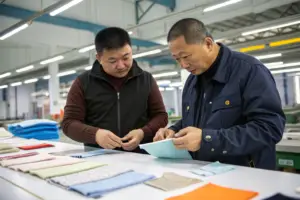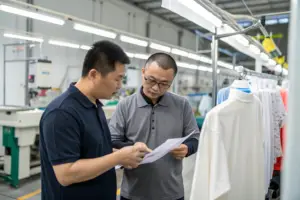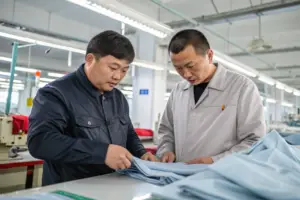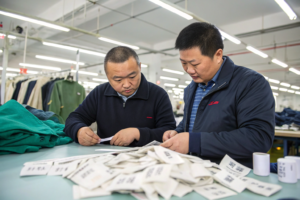
I once stood in a freezing warehouse in Chicago with a brand owner who was watching her $45,000 order of "premium down parkas" being returned by the truckload. The customers had complained that the jackets were flat, cold, and smelled like a wet dog. She had sourced them from a trading company that had promised "800 fill power goose down." What she actually received was a mix of low-grade duck down and shredded feathers, probably swept off a slaughterhouse floor. The jackets looked identical to the approved sample on the outside, but the insulation was a complete fraud. She had never verified the down inside the baffles. She had trusted a paper certificate that was as fake as the down itself.
To source incredibly warm and high-quality winter outerwear directly from reliable Chinese factories, you must bypass trading companies entirely and verify the factory's insulation integrity with third-party lab tests before bulk production begins. The non-negotiable elements of a high-quality winter coat are the fill power and species of the down, the density of the down-proof lining, and the precision of the baffle construction. You must demand an IDFL or SGS lab report that verifies the exact fill power, the down-to-feather ratio, and the species. You must visit the factory, either in person or by a trusted agent, to confirm they have an in-house down-filling machine with a computerized weight control system. You must test the fabric's "down-proof" rating by physically rubbing a sample over a dark cloth and looking for escaping quills. A warm jacket is an engineered insulation system, not a fashion item. The factory that understands this difference is the only one you should trust with your order.
Winter outerwear is the most technically demanding category in apparel sourcing. A t-shirt is a piece of fabric. A parka is a thermal system with dozens of components: the shell, the membrane, the lining, the insulation, the zippers, and the snaps. Each component must be sourced, tested, and assembled with precision. The penalty for failure is not a disappointed customer. It is a cold customer. I want to share exactly how to verify insulation quality, identify the correct manufacturing regions, and protect your order from the fraud that plagues the down market.
How Can You Verify the True Fill Power and Cleanliness of Down Insulation Before Production?
I have a simple test that I showed a brand owner once. I took a sample of genuine 800 fill power goose down and placed it in a clear jar. It filled the jar like a cloud, with individual clusters visible. Then I took a sample of the "800 fill power" down from a cut-open jacket she had sourced elsewhere. It was a dusty, grey, flat pile of crushed quills and tiny feathers. It filled half the jar. She had paid for the cloud and received the dust. The visual difference was undeniable. The lab report would later confirm it: the fake down was 450 fill power duck feather, not 800 fill power goose down.
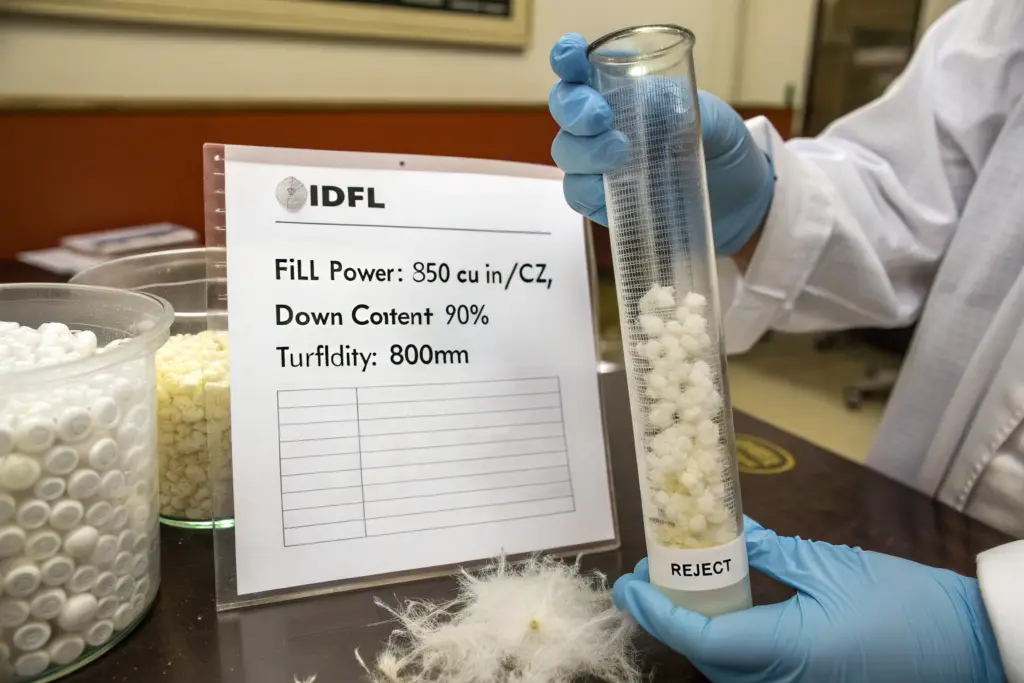
You verify the true fill power and cleanliness of down by demanding a pre-production lab test from IDFL (International Down and Feather Laboratory) or an equivalent ISO 17025 accredited lab. The factory must send a sample of the exact down lot that will be used in your jackets. The test report will specify the fill power, the down cluster percentage versus feathers, the species, and the turbidity (cleanliness) rating. For a premium, high-loft jacket, you should specify a minimum of 700 fill power for urban wear and 800+ for technical or expedition wear. The down-to-feather ratio should be at least 90/10. The turbidity should be above 600mm, indicating the down has been thoroughly washed and sterilized and will not emit odors. You do not approve the bulk filling until you hold this report in your hand. The factory's verbal promise is meaningless. The lab report is the only proof.
Down fraud is rampant because down is expensive and invisible once the jacket is sewn. A factory can save $20 per jacket by substituting low-grade down. The only defense is an independent lab test before the down is blown into the baffles.
What Is the Difference Between "Fill Power" and "Down Percentage" and Why Must Both Be Tested?
Fill power measures the loft, the fluffiness, of the down. It is measured in cubic inches per ounce. Higher fill power means more trapped air and more warmth for less weight. Down percentage measures the amount of actual down clusters versus feathers. Feathers are heavier, flatter, and have quills that can poke through the fabric. A fill power of 800 is worthless if the material is 50% feathers. You need both a high fill power and a high down percentage.
How Does the "Turbidity Test" Prevent That Infamous "Wet Dog" Smell in Wet Conditions?
Turbidity measures how clean the down is. Dirty down contains residual oils and dirt from the animal. When the jacket gets wet from rain or sweat, those residues rehydrate and emit a foul, animal-like odor. The turbidity test uses a specific water filtration method to measure the cleanliness. A result above 600mm indicates commercial-grade cleanliness. For premium jackets, a turbidity above 800mm is preferred.
What Machinery and Factory Floor Evidence Prove a Factory Can Assemble Seam-Sealed, Cold-Proof Shells?
I visited a factory once that claimed they could produce seam-sealed waterproof jackets. They showed me a beautifully taped seam on a sample. I asked to see the seam-sealing machine on the production floor. The manager walked me to a corner where a dusty, broken machine sat, clearly unused. He admitted they outsourced the seam sealing to a small workshop across town. They had no control over the process. The samples were made by hand. The bulk production would have leaked.
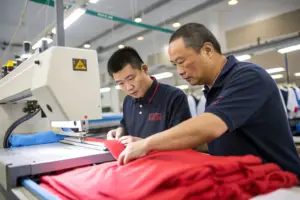
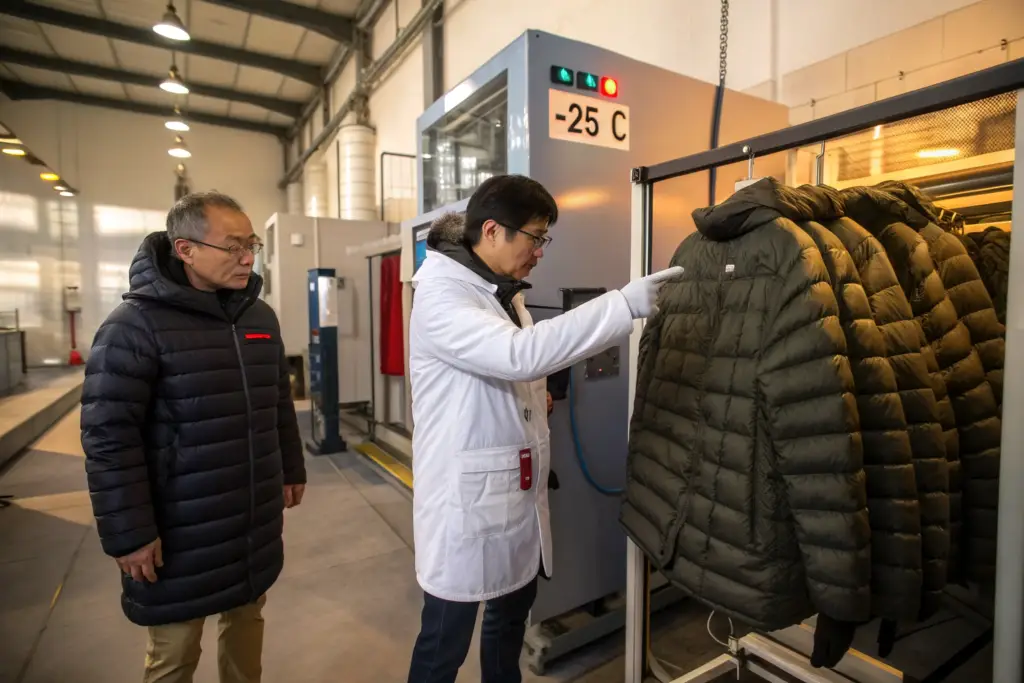
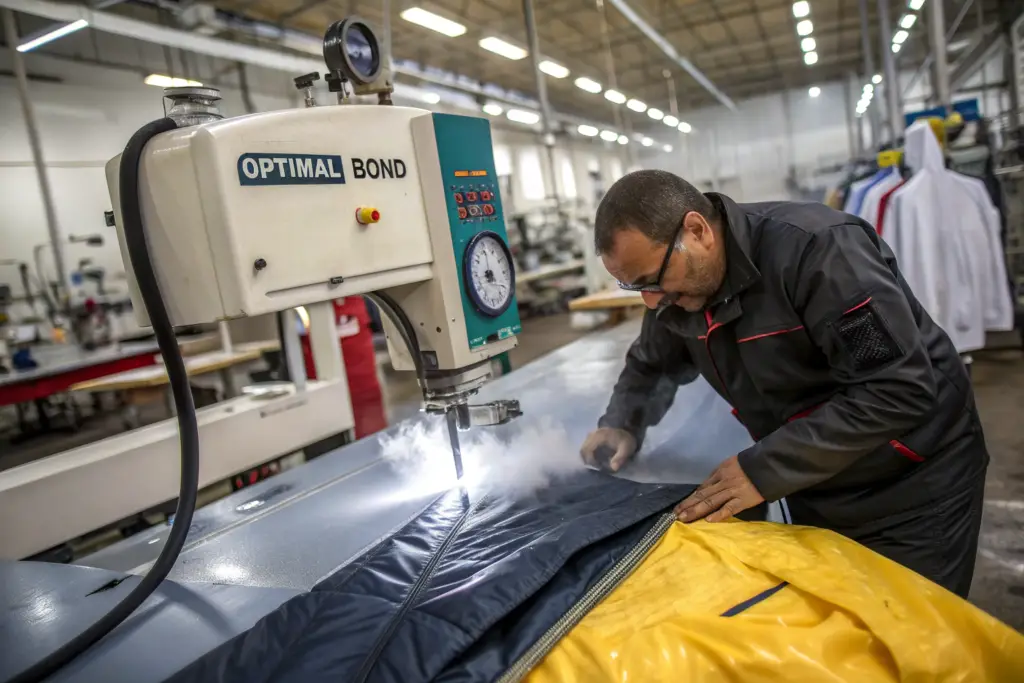
You prove a factory can assemble a cold-proof shell by physically verifying the existence and operational status of an in-house hot-air seam sealing machine. Seam sealing is the process of applying a waterproof tape over every stitch hole in the shell fabric. Without this, wind and water will penetrate the seams, and the jacket will not retain heat. The machine must be in use on the factory floor, not stored in a corner. You should ask to see a recent production run of seam-sealed garments and inspect the seams. A properly sealed seam is flat, with no air bubbles, peeling edges, or visible glue. You should also ask about the factory's cold chamber. A factory that produces technical outerwear should have a chamber where it can test the finished jacket's insulation performance at sub-zero temperatures.
The seam-sealing machine is the defining piece of equipment for a technical outerwear factory. Its presence on the active production floor is the single most reliable indicator that the factory genuinely produces waterproof, windproof shells.
How Can You Test a Seam-Sealed Jacket's Waterproofing During a Live Video Factory Tour?
Ask the factory to place a finished jacket on a mannequin inside their water spray test chamber. Ask them to run the spray for 5 minutes. Then ask them to unzip the jacket and show you the inside of the seams with a camera. If the inside is dry, the seam sealing is effective.
Why Is an In-House "Cold Chamber" a Non-Negotiable Sign of a Legitimate Performance Outerwear Factory?
A cold chamber tests the entire garment system. The factory places the jacket on a thermal manikin and measures the insulation value. This test reveals cold spots where the down has shifted or the baffles are underfilled. A factory without a cold chamber cannot know if their jackets are actually warm. They are guessing.
What Specific Regions and Clusters in China Are the Undisputed Capitals of Heavy-Duty Down and Ski Wear?
A brand owner once flew to Guangzhou to source down jackets. He spent three days touring factories that made beautiful woven shirts and light casual jackets. None of them had the specialized equipment for down filling or seam sealing. He had gone to the wrong city. China's manufacturing is organized into hyper-specialized industrial clusters. If you go to the wrong cluster, you will find factories that are willing to try, but incapable of delivering.
The undisputed capitals of heavy-duty winter outerwear in China are Jiaxing for down jackets and Quanzhou for technical ski and snowboard shells. Jiaxing, in Zhejiang province, has a complete down supply chain within a 30-kilometer radius: down processors, down-proof fabric mills, and factories with automated down-filling lines. Quanzhou, in Fujian province, is the home of performance outerwear manufacturing. The factories there have the seam-sealing machines, the cold chambers, and the experience working with waterproof breathable membranes. Suzhou is the center for premium wool and cashmere coats. You go to Jiaxing for a warm down parka. You go to Quanzhou for a waterproof ski jacket. You go to Suzhou for a luxury wool overcoat. The cluster defines the factory's true capability.
The sourcing trip to Guangzhou was an expensive lesson in geography. The brand owner eventually found his way to Jiaxing and discovered a world of specialized down factories he had not known existed. He now sources all his outerwear from the correct cluster and has never had a quality failure since.
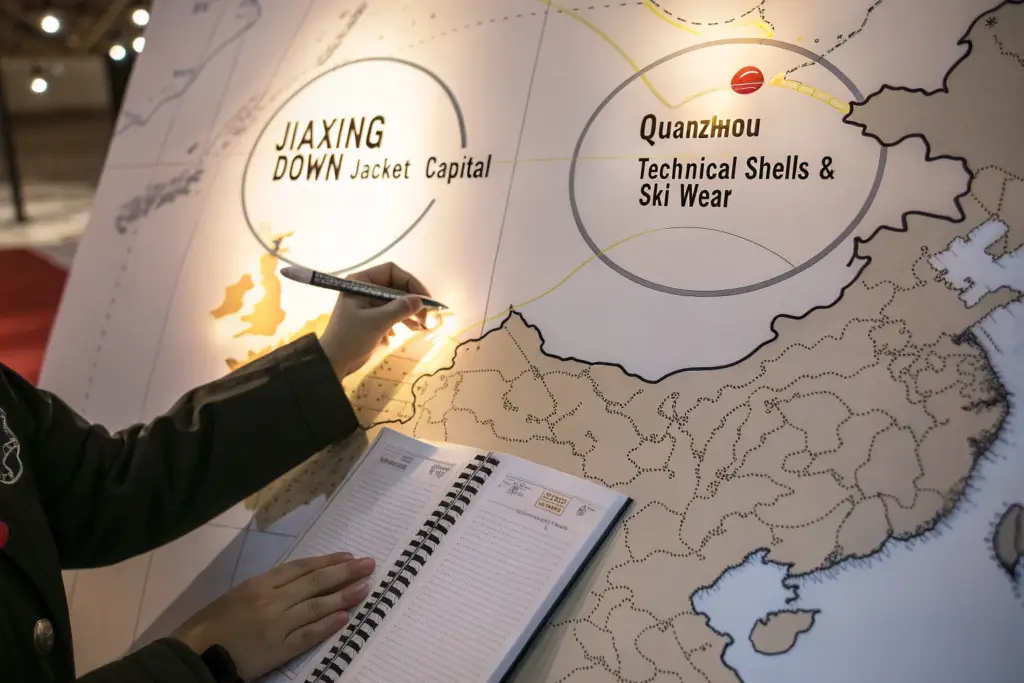
Why Does Jiaxing's "Down Supply Chain Radius" Guarantee Faster Sourcing and Better Prices?
In Jiaxing, the down supplier, the fabric mill, and the testing lab are all within a short drive of the factory. This proximity reduces transport costs, allows for rapid sample development, and creates competitive pressure that keeps prices sharp. A factory outside this cluster must import these components, adding time and cost.
What Types of Outerwear Are Best Sourced from the Quanzhou Cluster Versus the Suzhou Cluster?
Quanzhou specializes in technical, functional outerwear: ski jackets, snowboard pants, waterproof shells, and insulated performance vests. Suzhou specializes in tailored, formal outerwear: wool overcoats, cashmere car coats, and structured wool blazers. You do not source a precision-tailored wool coat from a ski wear factory, and you do not source a seam-sealed ski jacket from a tailoring house.
Conclusion
Sourcing incredibly warm and high-quality winter outerwear from China is a process of systematic verification. You verify the down with an independent IDFL lab test. You verify the factory's technical capability by confirming the existence and use of in-house seam-sealing machines and cold chambers. You verify the factory's specialization by going to the correct industrial cluster. The $45,000 loss in Chicago was not caused by a bad design. It was caused by a failure to verify the insulation inside the jacket.
A warm winter coat is a promise to the customer. They will wear it in freezing rain, on windy streets, in deep snow. If it fails, they will be cold, and they will never buy from your brand again. The factory that understands the engineering behind that promise is the only factory worth your trust.
At Shanghai Fumao, we have long-standing partnerships with specialized outerwear factories in Jiaxing and Quanzhou. We manage the sourcing, the lab testing, and the quality control for our brand partners. We provide IDFL test reports before bulk filling. We inspect seam-sealed garments for tape adhesion. We ensure that the jacket you designed is the jacket that arrives.
If you are sourcing winter outerwear and want the assurance of verified insulation and specialist manufacturing, we can help. At Shanghai Fumao, we will connect you with the right factory cluster for your specific product and manage the technical quality control. Contact our Business Director, Elaine, at elaine@fumaoclothing.com. She can share a sample IDFL test report and our outerwear sourcing checklist. Do not let your customers be cold. Source with proof, not with hope.