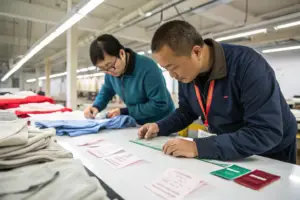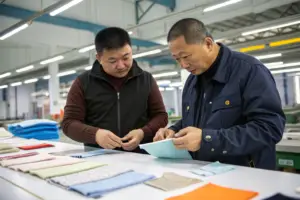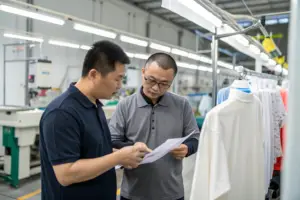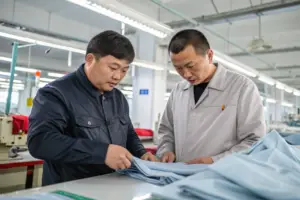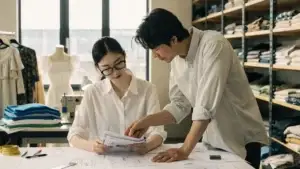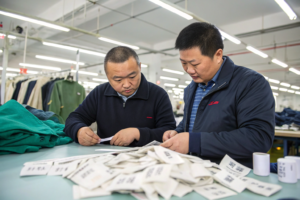
A women's wear brand founder from Antwerp once sat in my showroom with a look of exhausted frustration. She had just ended a two-year relationship with a manufacturer she had found through a European sourcing platform. She told me, "The samples were beautiful. That is how they hooked me. But the bulk production was a different garment. The sizing drifted. The fabric hand-feel changed between the first and second deliveries. And every time I asked for a specific certification for my German retail account, they sent me a PDF that my compliance officer rejected. I spent more time managing the factory than designing my collections. I am a designer. I need a manufacturer who understands that a European women's wear brand is not just selling clothes. It is selling trust, taste, and regulatory compliance in a single garment."
Yes, Shanghai Fumao is an excellent fit for European women's wear brands, specifically those positioned in the contemporary, premium, and accessible luxury segments. We are a strong fit because we have built our entire manufacturing model around the three non-negotiable demands of the European women's market: verified, continuously audited compliance with EU REACH, OEKO-TEX, and GOTS standards, the technical capability to preserve avant-garde and rare design details during scaling from sample to bulk, and a communication and sampling process that aligns with the European design calendar and the expectation of precise, direct, and punctual professional interaction. We are not a fit for brands whose sole competitive advantage is the absolute lowest ex-factory price on a commodity basic.
The European women's wear market is the most design-literate, quality-sensitive, and regulatorily stringent apparel market in the world. A French boutique buyer notices a dropped shoulder that is 1cm too low. A German compliance officer rejects a shipment if the OEKO-TEX certificate number does not verify on the live database. A Scandinavian brand owner expects a reply to a technical question within hours, not days. Succeeding in this market as a manufacturing partner requires a specific, integrated set of capabilities. I want to walk you through why we have built those capabilities, and how they align with the specific needs of a European women's wear brand.
What Compliance and Certification Standards Do We Meet for the EU Market?
The Antwerp brand founder's frustration with her previous supplier's "fake PDFs" is a story I have heard from many European brands. She had been given an OEKO-TEX certificate that looked official. When her German retail account's compliance team checked the certificate number on the official database, the company name did not match. The certificate belonged to a different entity. Her supplier had been passing off another factory's certification as their own. Her shipment was rejected. Her retail relationship was damaged. She learned the hard way that a certificate you cannot independently verify is worse than no certificate at all.
Compliance in the European market is not a marketing asset. It is a legal operating license. Selling apparel in the EU without valid, verifiable compliance documentation is not a risk. It is an eventual certainty of product seizure, fines, and retail delisting. A good fit for a European brand must have a compliance infrastructure that is real, current, and independently verifiable.

How Do We Manage REACH and OEKO-TEX Compliance Verifiably?
We do not simply claim REACH and OEKO-TEX compliance. We operate a verifiable, documented, and continuously audited compliance system.
For REACH, the EU regulation on chemical safety, we do not rely on a single, static certificate. We require REACH compliance declarations from our fabric mills and trim suppliers for the specific materials used in your order. For high-risk orders or products for young children, we send samples to accredited third-party laboratories like SGS or Intertek for a full REACH Annex XVII restricted substances screen. The test report is issued directly by the independent lab, with a unique report number that you can verify on the lab's online portal. For OEKO-TEX Standard 100, we provide our live certificate number and a direct link to the official OEKO-TEX label check website. You type in the number yourself. You verify that the certificate is active, that the certified company name matches our legal entity exactly, and that the product class matches your garment's end-use, Class I for baby products, Class II for direct skin contact. This independent verification takes two minutes and is the definitive check against certificate fraud. The EU REACH regulation for textiles is the regulatory baseline we work to.
Do We Hold GOTS Certification for Organic Collections?
Yes. For brands producing organic cotton or other organic fiber collections, we hold a valid GOTS Scope Certificate, proving our factory is certified to process GOTS-certified textiles.
More importantly, for each specific organic order, we provide a GOTS Transaction Certificate. This TC traces the specific batch of organic fiber from the certified farm, through the spinner, knitter, and dye house, to our factory and your finished garments. You can verify the TC number on the GOTS public database. This is the legally required document for making an organic claim in the EU market. A supplier who only provides a Scope Certificate and not a batch-specific TC is not providing legally valid organic certification. We provide both, and we ensure the supply chain is fully traceable and audited. This is the compliance infrastructure that a European women's wear brand needs to sell confidently into the EU market.
Can We Preserve the Design Integrity of European Women's Wear?
A Parisian designer once told me, "The difference between a €400 dress and a €1,200 dress is not the fabric cost. It is the millimeter decisions. The angle of the collar. The weight of the drape. The way the bias cut falls against the body. A factory that does not understand this will give me a dress that looks like my sketch from a distance but feels dead on the body. The soul of the design will be gone." She had experienced this design dilution repeatedly. Factories would simplify a complex drape to fit their standard production methods. They would substitute a stiff interlining for a soft one because it was easier to sew. The garment would arrive technically correct by the measurement spec but aesthetically dead.
European women's wear, particularly in the contemporary and premium segments, is driven by design integrity. The silhouette, the drape, the proportion, the specific hand-feel are the product. A good manufacturing partner must be capable of preserving these intangible design qualities during the scaling process.
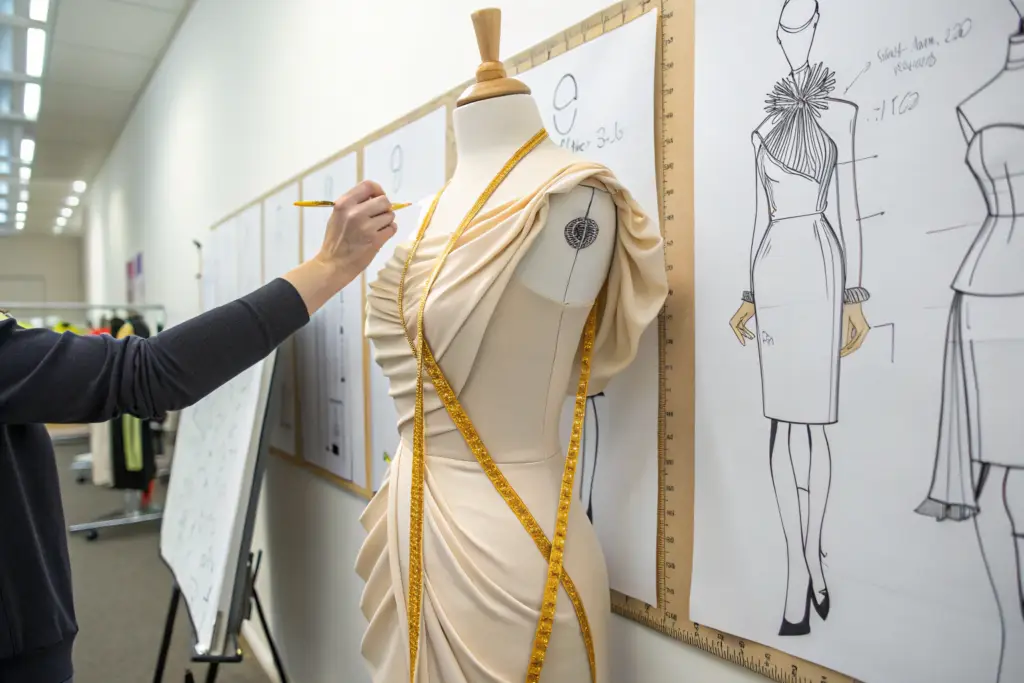
How Do We Handle Complex Draping, Silhouettes, and Finishes?
We preserve complex design details through a combination of specialized pattern engineering, custom construction jigs, and a dedicated rare-design production team.
When a design features an unusual drape or an asymmetric silhouette, our pattern maker reverse-engineers the original sample to understand the exact grain lines, ease allowances, and construction sequence that create the desired effect. This is not a simple digitization. It is a forensic analysis of the design's architecture. For a sculptural collar or a specific hem curve, we build a custom acrylic jig that guides the fabric into the sewing machine at the precise, mathematically determined angle, ensuring the sculptural effect is identical across every unit in the production run. We have a designated team within our factory that specializes in these complex, design-forward garments. They are trained in handling delicate fabrics, executing couture-level finishing, and maintaining the "soul" of the design that the Parisian designer described. The preserving design integrity in garment manufacturing is a core capability for our European women's wear partnerships.
Can We Source the Unique Fabrics That Define European Collections?
European women's wear collections are often built around a unique fabric story: a specific textured boucle, a fluid TENCEL™ twill, a crinkled metallic organza. We source these fabrics through our dense local textile network and, where needed, from specialist mills in Italy, Japan, and Korea.
Our fabric sourcing team acts as a creative matchmaker. You provide a physical swatch, a mood reference, or a technical specification. We send the brief to multiple mills, and we return physical development swatches for your review. For a Dutch brand's collection, we sourced a Japanese-milled cupro twill with a sand-washed finish that perfectly matched their "liquid drape" design brief. This fabric was not in any standard catalog. It was found through our sourcing network. The ability to find, test, and import these specific, rare fabrics is a critical part of our value to a design-led European brand. The specialized fabric sourcing for European fashion bridges the gap between creative vision and material reality.
How Does Our Sampling and Production Timeline Fit the European Fashion Calendar?
A buyer for a Copenhagen-based brand once told me, "Our fashion calendar is not a suggestion. It is a structural reality. We show at Copenhagen Fashion Week in August. The collection must be in stores by February. Every week of delay in the sampling phase, every week of production delay, compresses our selling window. We work backwards from the in-store date, and we need a manufacturer who treats those dates as sacred." Her brand's entire commercial year was orchestrated around fixed, immovable deadlines.
The European fashion calendar is a demanding master. A good manufacturing partner must be able to operate within its rhythm, with predictable sampling timelines, guaranteed production slots, and reliable delivery. Our operational model is designed for this synchronization.

How Do We Handle the Sampling and Approval Process Efficiently?
We align our sampling process with the European design calendar. We understand the critical handover point between design finalization and pre-production sampling.
We offer a dual-track sampling process. We produce the physical pre-production sample, sewn to the exact specification, using the actual bulk fabric. Simultaneously, we provide a digital sample evaluation package: high-resolution multi-angle photos, a detailed fit video on a model, and a measurement chart. This allows the designer to conduct a remote evaluation in detail, often within hours of receiving the digital package. Conditional approval can be given based on the digital review, allowing production preparations to begin, while the physical sample is in transit. This parallel digital and physical process compresses the sampling timeline by 7 to 10 days, a critical time saving in the tight European calendar. The accelerated sampling for fashion calendar alignment is a standard part of our service for European brands.
Can We Guarantee Capacity for the Peak European Production Windows?
Yes. The European production window, typically April to June for the Autumn/Winter season, is a peak period for our factory. We manage this through our capacity reservation system.
We recommend that European brands reserve their production capacity at the beginning of the design cycle, often in January for a July delivery. A capacity reservation agreement locks a specific production slot, with a defined volume and delivery window, before all design details are finalized. This guarantees that when your designs are ready for production, the factory capacity is already allocated and waiting. We do not overbook our lines. A reserved slot is a guaranteed slot. This system provides the predictability that the European calendar demands. The capacity reservation for peak season production is the mechanism that aligns our manufacturing capacity with your critical path.
Conclusion
A good fit between a European women's wear brand and a manufacturing partner is defined by alignment on the specific, non-negotiable demands of the European market. It is about compliance that is verifiable on live databases, not decorative on a PDF. It is about design sensitivity that preserves the soul of a sculptural silhouette, not simplifies it into a commodity. It is about a fabric sourcing capability that can find the specific, rare textile that defines a collection's identity. And it is about operational reliability that synchronizes with the immovable deadlines of the European fashion calendar. At Shanghai Fumao, we have built our manufacturing model around these specific demands because we serve this specific market segment.
If you are a European women's wear brand in the contemporary, premium, or accessible luxury space, and you are looking for a manufacturing partner who speaks the language of EU compliance, design integrity, and calendar reliability, I invite you to test our fit with a real project. Contact our Business Director, Elaine, at elaine@fumaoclothing.com. Send her a sketch, a mood board, or a tech pack for your next collection. Ask her a specific technical question about a design detail or a compliance requirement. Evaluate the speed, the specificity, and the creative understanding in her reply. Let that interaction be your first data point in determining if we are the right manufacturing partner for your brand's journey.