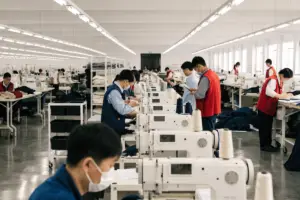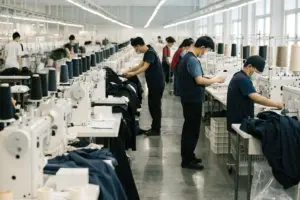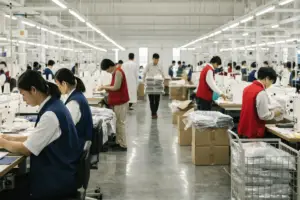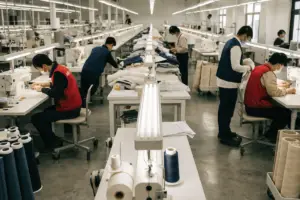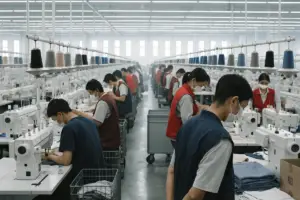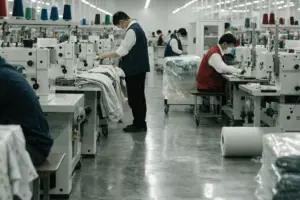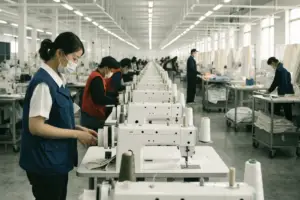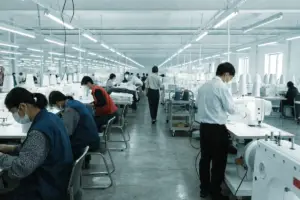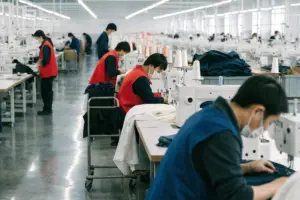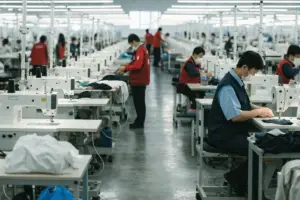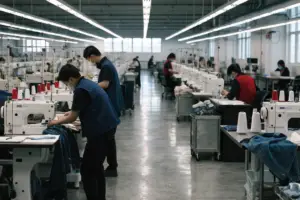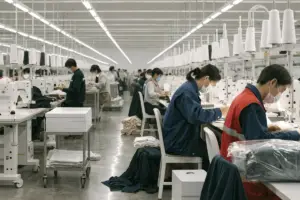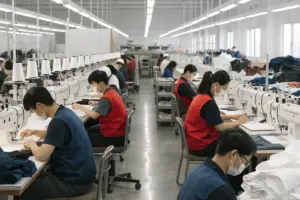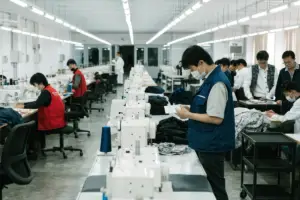
A few months ago, a brand owner from Los Angeles called me with a confession. He had moved his entire production to Vietnam three years earlier. The initial pricing was attractive. The samples looked good. The sales pitch from the Vietnamese factory was compelling. But three years in, he was exhausted. He told me, "Every order is a negotiation about fabric. They have five options, and if I want something different, a specific weight, a specific finish, a blend, they look at me like I asked for a moon rock. My last order was delayed six weeks because the fabric mill in China, where they source anyway, was backed up. I am paying Vietnam labor costs, but I am still dependent on Chinese fabric. And the communication? I send an email on Monday, I get a vague reply on Thursday. I feel like I am managing a secret, not a supply chain." He was not angry. He was tired. He had optimized for labor cost and had unknowingly sacrificed supply chain depth, technical agility, and communication transparency.
Brand owners switch from Vietnam to Shanghai Fumao primarily for three structural reasons: deeper access to the Asian textile supply chain, significantly faster and more transparent communication with technically fluent, decision-empowered contacts, and a broader, more agile product development capability that supports custom fabric development, complex construction, and rapid design iteration. Vietnam offers competitive labor costs and strong capabilities in basic cut-and-sew categories. We offer an integrated, technology-enabled manufacturing ecosystem that solves the supply chain dependency, communication friction, and product development limitations that frustrate brands as they grow beyond basic sourcing.
Vietnam is a strong manufacturing country, particularly for specific categories like performance outerwear, basic knits, and simple woven garments. This is not a criticism of Vietnam. It is an honest assessment of the structural trade-offs between two different manufacturing models. Many brands start in Vietnam for the right reasons. Many later switch to us because their needs evolved beyond what the Vietnamese supply chain structure can efficiently support. I want to walk you through the specific reasons this switch happens, based on real conversations with clients who have made the move.
What Supply Chain Limitations Frustrate Brands in Vietnam?
The Los Angeles brand owner’s frustration about fabric options was not an isolated complaint. It is the most common structural pain point I hear from brands switching from Vietnam. He had been told his factory was a “full-service” manufacturer. The reality was that the factory was an excellent cut-and-sew operation, but its fabric sourcing was entirely dependent on imports, primarily from China, and to a lesser extent, Korea and Taiwan. The factory did not have a deep, local textile base to draw from. When the LA brand owner asked for a custom-developed performance interlock in a specific weight and finish, the Vietnamese factory had to send the request to their Chinese fabric supplier. The supplier was not their supplier. It was a separate entity, with its own priorities, its own lead times, and no direct accountability to the brand owner. The factory was a middleman for fabric.
This structural dependency on imported textiles is the fundamental supply chain limitation that drives brands to switch. It affects speed, cost, and creative freedom.
How Does Access to Local Textile Mills Affect Speed and Cost?
Vietnam’s textile industry has grown significantly, but it remains concentrated in basic knit and woven commodities. The specialized, innovative, and custom textile development sector is still largely based in China, which has decades of accumulated investment, expertise, and industrial clustering.
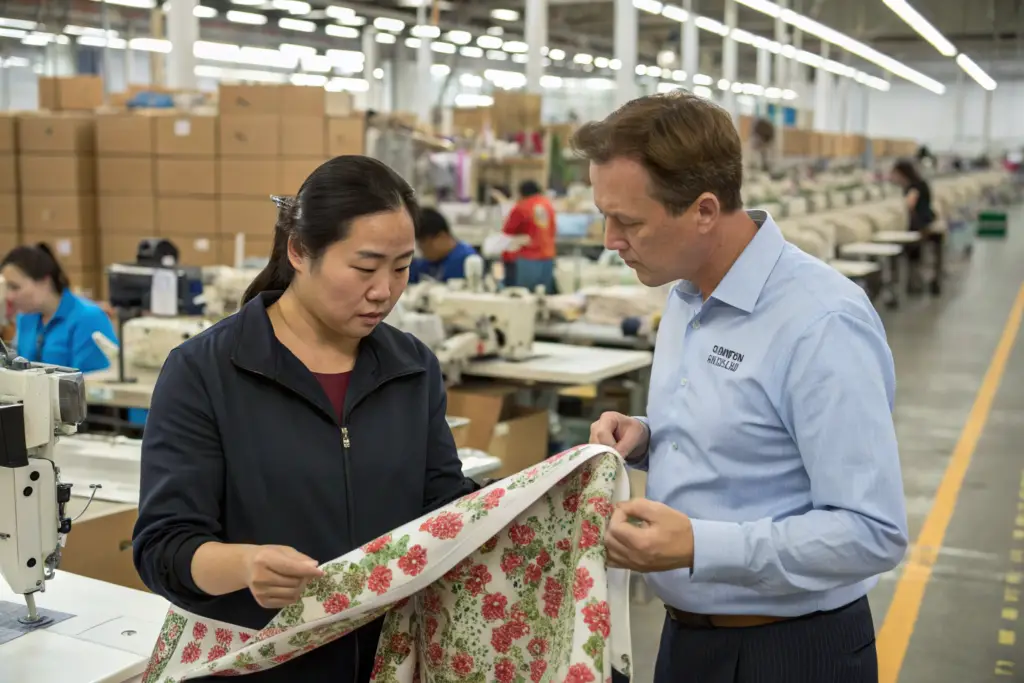
When a Vietnamese factory sources fabric from China, the brand pays two logistics margins, two importer margins, and the time cost of cross-border shipping and customs clearance. A fabric that takes our factory three days to receive from a local mill takes a Vietnamese factory two to three weeks to import. This time penalty directly adds to the production lead time. It also adds cost. The fabric is more expensive in Vietnam than in China, because of the freight and import duties. The brand owner who switches to us often discovers that the slightly higher labor cost in Shanghai is more than offset by the significantly lower fabric cost and faster fabric lead time. For a woven shirt program, the fabric cost in Vietnam, imported from a Chinese mill, was 18% higher than our local fabric cost for the same specification. The lead time for fabric delivery was twenty-one days longer. The brand was paying more and waiting longer for the exact same textile input. This is not a reflection of Vietnamese factory inefficiency. It is a geographic and structural reality. Our local textile supply chain density is a competitive advantage that translates directly into lower cost and faster speed for the brand.
Why Is Custom Fabric Development Faster in Our Ecosystem?
Custom fabric development, creating a unique blend, weight, or finish specifically for a brand’s collection, is the area where the difference is most stark. In Vietnam, a custom fabric request often involves a factory communicating with an overseas mill through an intermediary. The feedback loop is slow. A lab dip submission that takes us ten days can take a Vietnamese factory four weeks, simply because the physical swatches must cross borders twice.
In our ecosystem, the brand brief goes directly from our fabric sourcing team to three or four competing local mills. We receive multiple development swatches within two weeks. We test them in our in-house lab. We select the best candidate. We send the physical swatch to the client with a technical data sheet. The entire cycle, from brief to approved bulk fabric, can be completed in six to eight weeks. For a brand launching a seasonal collection with a unique fabric story, this speed advantage means the difference between hitting a trade show deadline and missing it. The Vietnamese factory, despite its best efforts, is structurally constrained by the geography of the textile supply chain. The brand that switches to us is not just switching factories. They are switching to a vertically integrated textile ecosystem where fabric development is a local, competitive, and rapid process.
What Communication Differences Drive the Switch?
A denim brand owner from Nashville once described his communication experience with his previous Vietnamese factory in a single, memorable phrase. He said, “It felt like I was sending messages into a well. Sometimes I would hear a splash. Usually, I just stared into the dark, hoping.” He was not exaggerating. He showed me an email thread. His detailed, five-point technical question had received a two-word reply: “Will check.” Three days later, he followed up. No response. Four days later, he followed up again. The reply was “Okay, can do.” He had no idea which of his five points had been addressed. He had no confidence the factory understood his requirements. He was making $40,000 inventory decisions based on two-word emails. The stress was corroding his enjoyment of running his brand.
Communication is the daily experience of a manufacturing partnership. When it is vague, delayed, and unaccountable, it creates constant anxiety. When it is specific, prompt, and technically informed, it builds trust and frees the brand owner to focus on sales and design.

Is Language Fluency the Main Issue, or Is It Structural?
Language fluency is a factor, but it is not the root cause. Many Vietnamese factory sales representatives speak functional English. The deeper issue is structural. The person communicating with the brand owner is often a sales agent, not a technical production manager. They do not have direct access to the factory floor. They cannot answer a technical question without first consulting someone else, who may be busy, unavailable, or not incentivized to respond quickly to an overseas client’s detailed inquiry.
At Shanghai Fumao, your point of contact is a senior Business Director, a professional with deep garment engineering knowledge and the authority to make decisions. When you send a technical question about a seam construction, you are speaking to someone who understands the question, can walk onto the production floor, inspect the garment, and reply with a specific answer and often a photo, within hours. This is not a language difference. It is a role and authority difference. The communication structure in many Vietnamese factories creates a buffer between the client and the production reality. Our structure eliminates that buffer. The person who talks to you is the person who can solve your problem. This direct technical communication model is the single most frequently cited reason clients give for why the switch felt like a relief.
How Do We Handle the Time Zone Gap Differently?
Vietnam and China share a similar time zone, so the clock difference is not the issue. The issue is the responsiveness within the overlapping business hours and the quality of asynchronous communication when the brand owner is offline.
We operate with a strict internal response time standard. Routine inquiries receive a substantive reply, not just an acknowledgment, within one business day. Urgent issues are addressed within hours during our business day, which overlaps with the early morning in the US. We also use asynchronous communication tools, specifically pre-recorded video updates and annotated photos, that allow a brand owner to wake up in the US, check their email, and see a complete visual status update without needing to be online at the same time as us. A brand owner who previously had to stay up late or wake up early to catch their Vietnamese factory on a live chat now receives a Friday video showing their cut fabric, their sewing line status, and a brief verbal summary from Elaine. They watch it at their convenience. The asynchronous communication protocol respects the client’s time zone and mental bandwidth. It replaces the anxiety of waiting for a reply with the confidence of a scheduled, predictable update.
Can We Handle Complex Products That Vietnam Factories Decline?
A premium menswear brand owner from Chicago told me about a specific rejection that prompted his switch. He had designed a blazer with a full canvas construction, a pick-stitched lapel, and functional horn buttons on the sleeve. His Vietnamese factory, which had produced simpler unstructured jackets for him, declined the order. They said their workers were not trained in full canvas construction. They offered to make a fused version, which was not the product he designed. He realized his factory’s capability ceiling had become his brand’s creative ceiling. He needed a partner who could grow with him, not limit him.
As brands mature and move upmarket, their product complexity increases. They add tailoring details, complex washes, unique finishing techniques, and hybrid fabrications. A factory that excels at basic commodities may not have the technical depth to execute these more demanding products.
What Advanced Construction Techniques Do We Offer?
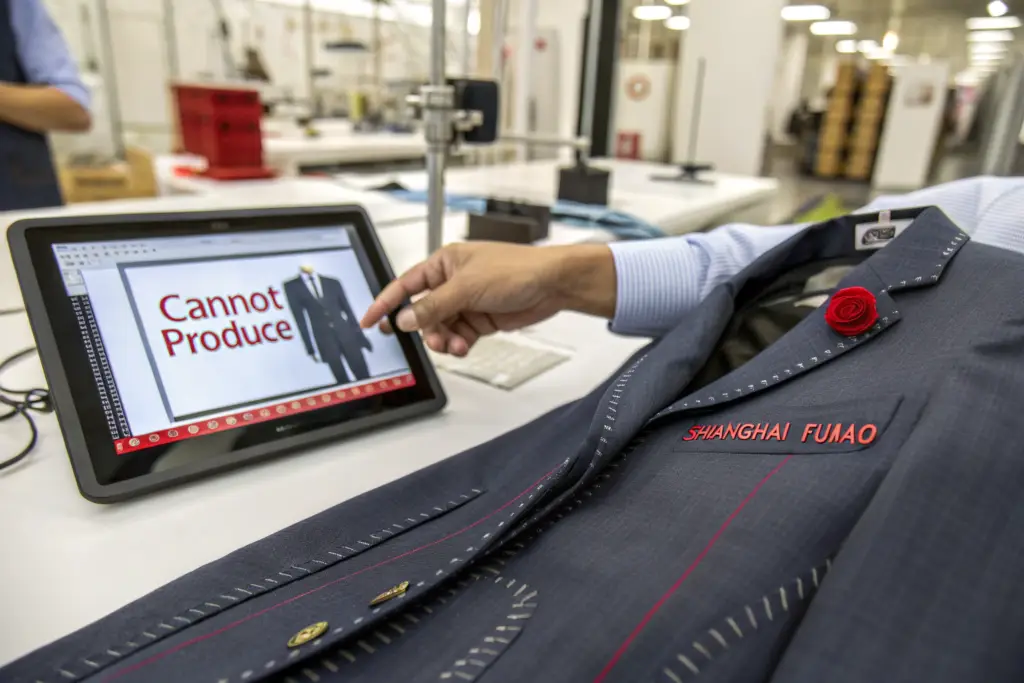
We have invested in the skilled labor, specialized machinery, and production engineering required for complex garment construction. This includes full canvas and half canvas tailored jacket construction, which requires hand-padding the chest piece and pick-stitching the lapel edge. It includes functional sleeve buttonholes, known as surgeon’s cuffs, which require precise hand-finishing.
It includes complex wash and dye treatments on finished garments, such as enzyme washes, pigment sprays, and vintage distressing, all executed with consistent, scaled processes. It includes intricate embroidery and multi-head logo applications with dense, high-stitch-count digitizing. For the Chicago menswear brand, we produced their full-canvas blazer with pick-stitching and functional horn buttons. The construction required a dedicated tailoring cell within our factory, staffed by our most experienced jacket makers. The result was a garment that matched the quality of their previous Italian samples, at a price point that allowed them to wholesale profitably. The Vietnamese factory’s “no” was honest about their capability. Our “yes” was backed by a specialized team and a dedicated production line. The advanced garment construction capability is a differentiator for brands that are moving beyond basic casualwear.
Can We Support a Diverse Product Range from a Single Factory?
A practical frustration for brands manufacturing in Vietnam is the need to split their production across multiple specialized factories. Knit polos go to one factory. Woven shirts go to another. Tailored trousers go to a third. Each relationship requires separate communication, separate quality standards, separate deposits, and separate logistics coordination.
Our five specialized production lines, housed within a single, unified quality management system, solve this fragmentation. A brand can produce their knit polos, their woven shirts, their tailored trousers, and their lightweight outerwear all within Shanghai Fumao. They communicate with one Business Director. They receive one consolidated weekly update. They ship one consolidated container. The quality standards and the brand aesthetic are managed consistently across all product categories. For a brand launching a full collection, this single-factory, multi-category capability simplifies their operational life dramatically. They are not managing three separate factory relationships. They are managing one partnership. The multi-category manufacturing capability is a logistical and quality-control advantage that saves time, reduces administrative overhead, and ensures brand consistency across the entire product line.
Conclusion
The decision to switch manufacturing partners is never made lightly. It involves disrupting established supply lines, re-qualifying a new vendor, and absorbing the emotional cost of change. Brand owners make the switch from Vietnam to Shanghai Fumao when the structural limitations of their current supply chain begin to outweigh the inertia of staying put. They switch when they are tired of fabric options being limited to what is already in the factory’s small inventory. They switch when the communication lag and ambiguity become a constant source of operational stress. They switch when their design ambition, a fully canvased blazer, a custom-developed performance fabric, a complex garment wash, hits the capability ceiling of a factory optimized for basic commodities. They switch because they need a partner who can grow with their brand, not a vendor who limits it.
If you are currently manufacturing in Vietnam and these frustrations resonate with your experience, I am not asking you to make an immediate switch. I am suggesting you run a parallel test. Contact our Business Director, Elaine, at elaine@fumaoclothing.com. Send her a tech pack for a product you are currently producing in Vietnam, especially one that has caused communication or supply chain friction. Ask her for a quote, a fabric sourcing plan, and a production timeline. Compare the responsiveness, the fabric options, and the technical feedback you receive. Run a small sampling order. Let the evidence, the speed, the specificity, and the transparency of the interaction, inform your decision. You may find that the switch is not just a change of supplier, but an upgrade to your entire operating model.