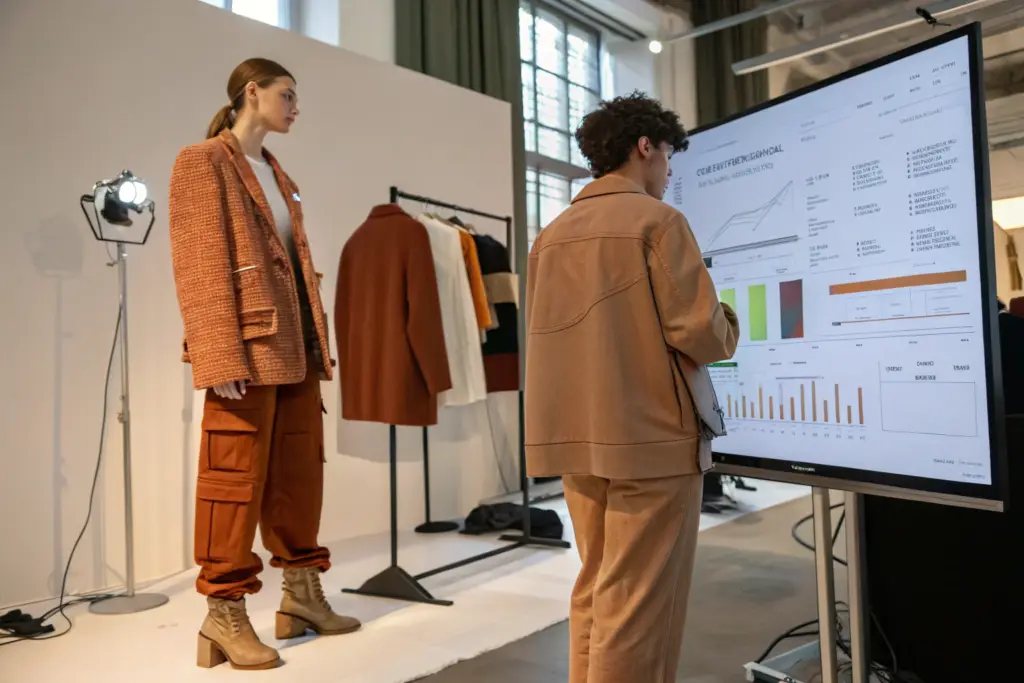
A US distributor from Chicago sat in my showroom last month and said something that crystallized the 2026 market perfectly. He had just walked a major regional trade show. He told me, "Every booth had the same five products. The same cropped hoodie. The same wide-leg trouser. The same boxy tee. I walked the whole floor and felt like I saw one brand with forty different logos. The buyers were bored. They were looking for something they had not seen before, something they could not find on every other rack. But they also needed to know it would sell through, not just look interesting on a mannequin." He was describing the core tension of distribution in 2026. The market is saturated with fast-follower basics. The opportunity is in rare, differentiated styles that capture a specific aesthetic trend, but that are engineered to perform at wholesale scale and at a price point that leaves room for retail markup.
The rare style apparel categories that will work best for US distributors in 2026 are those that combine a clear, identifiable trend anchor from the emerging "Quiet Performance" and "Elevated Utility" macro-trends with scalable, quality-controlled production. Specifically, modular garment-dyed knit sets with tonal texture play, sculptural lightweight outerwear with convertible features, and post-athleisure tailored comfort pieces in sustainable fiber blends. These categories offer the visual differentiation that boutique buyers crave, while maintaining the fit consistency, margin structure, and replenishment capability that distributors require.
Rare style does not mean a one-off art piece. It means a product that has a distinct, recognizable design DNA that is not yet commoditized. It is rare relative to the sea of sameness in the mass market, but producible, wearable, and commercially viable. I want to walk you through three specific rare style directions we are actively developing with our US distributor clients for 2026, why they work, and what makes them scalable.
Why Are Modular Garment-Dyed Knit Sets a Key 2026 Trend?
A women's boutique owner from Austin told me about a selling phenomenon she observed in late 2025. A brand she stocked offered a "set": a relaxed blazer and a matching wide-leg trouser in a garment-dyed organic cotton French terry. The set retailed for $220. She sold out in two weeks. Her customers were not just buying the set. They were buying the blazer separately, pairing it with jeans. They were buying the trouser and wearing it with a vintage band tee. The pieces worked as a coordinated statement, but they also integrated seamlessly into the customer's existing wardrobe. She told me, "It's the opposite of the matching sweatsuit. The sweatsuit says 'I gave up.' This set says 'I am comfortable, but I am also the most interesting person in this room.'"
The modular garment-dyed knit set is a rare style that works for distribution because it combines the comfort demand that is now non-negotiable in the US market with a level of visual intentionality that feels elevated and new. It is rare in its tonal depth and textural coherence, but it is built on a familiar, sellable foundation of soft knit dressing.
What Makes Garment-Dyed Finishes Look 'Rare' and Premium?
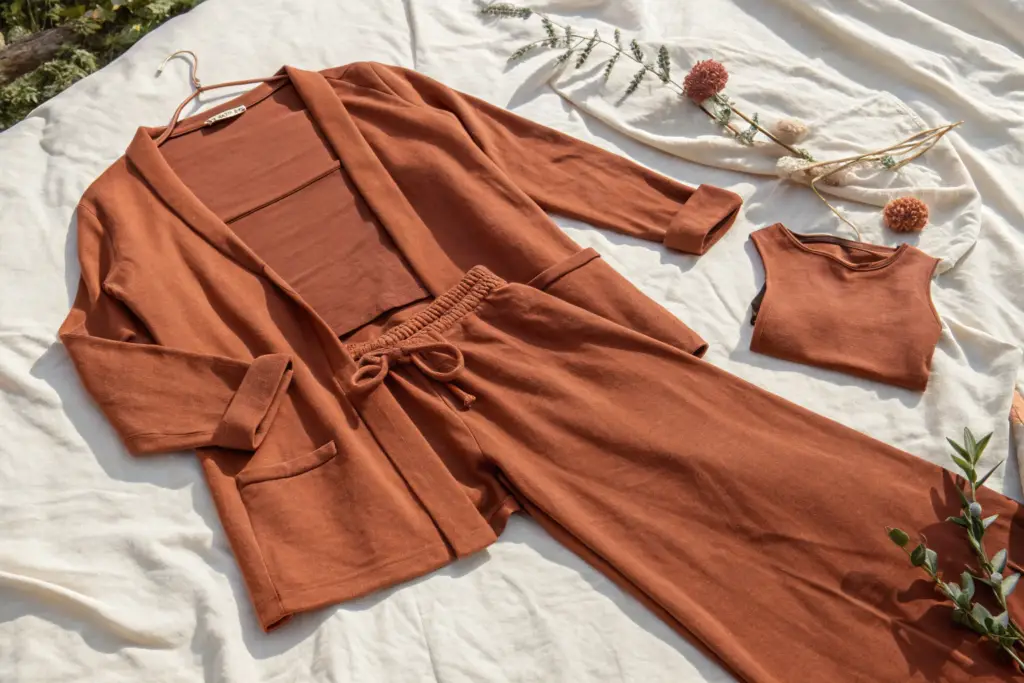
Garment dyeing is the process of dyeing the finished, sewn garment rather than dyeing the fabric roll before cutting. This technique produces a unique depth of color, a soft, lived-in hand-feel, and subtle tonal variations at the seams and stitching that cannot be achieved with piece-dyed fabric.
The visual effect is a garment that looks personal, artisanal, and slightly vintage from the first wear. The color has a dimensional quality. The stitching absorbs the dye differently than the main body fabric, creating a subtle, tonal contrast that highlights the construction. This is a rare aesthetic in a market dominated by flat, uniform piece-dyed jersey. It signals quality and intentionality. We produce garment-dyed knit sets in our 280gsm and 320gsm organic cotton French terry, which takes the dye beautifully and shrinks to a stable, soft hand during the dyeing process. For a San Francisco distributor launching a private-label lounge-to-street collection, we produced a range of blazers, wide-leg trousers, and tank tops in five garment-dyed earth tones: terracotta, sage, charcoal, sand, and a deep indigo. The pre-production wash testing ensured the shrinkage was fully accounted for in the pattern, so the post-dye fit was accurate. The collection sold into 40 boutique accounts in the first season. The garment-dyed finishing technique is not a standard commodity process. It requires specific expertise, and it produces a genuinely differentiated product.
How Do We Ensure Color Consistency Across Separates for Distribution?
The commercial risk of a knit set sold as separates is color inconsistency. If the blazer and the trouser are slightly different shades, the customer perceives a defect. The retailer receives returns. This is the specific engineering challenge that makes a rare style scalable for distribution.
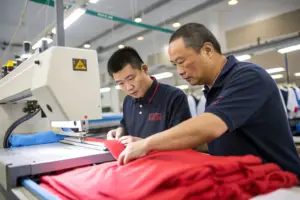
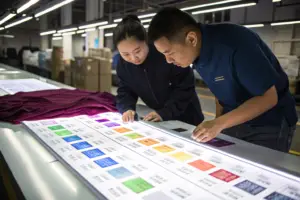
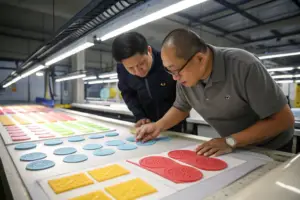
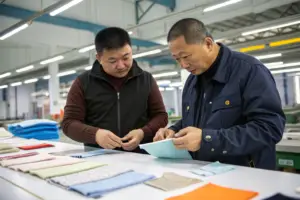
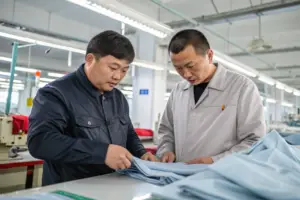
We solve this through a strict batch-dyeing protocol. For any order of modular separates, all pieces intended to be sold as a matching set, the blazer, the trouser, the tank, are dyed together in the same dye bath, in the same lot. We do not dye blazers on Monday and trousers on Wednesday and hope they match. The batch is physically processed as a single unit. Furthermore, we use our in-house spectrophotometer to measure the color of the finished garments against the approved lab dip standard. The Delta-E tolerance is tightened to less than 1.0 for matching separates, a stricter standard than our general tolerance. Each set is then visually inspected under D65 daylight-simulating lighting by a QC inspector before packing. The pieces are packed as a set, ensuring they travel through the supply chain and arrive at the retail store together. This batch-dyeing and inspection protocol is the engineering backbone that makes a visually rare, artisanally-finished product reliable enough for wholesale distribution. The color consistency in garment dyeing is the hidden operational discipline behind the aesthetic.
What Is 'Sculptural Lightweight Outerwear' and Why Will It Sell?
A menswear distributor from Portland told me his "coat rack test" for evaluating new outerwear. He hangs a new sample on a rack with twenty other jackets. He walks to the other side of the showroom, turns around, and looks. If the new jacket does not visually pull his eye, if it blends into the row of generic bombers and chore coats, he does not buy it. He said, "Outerwear is the first thing a buyer sees when they walk into a booth. It has to stop them. It has to make them walk over and touch it. The inside of the jacket is for the end consumer. The silhouette is for the buyer."
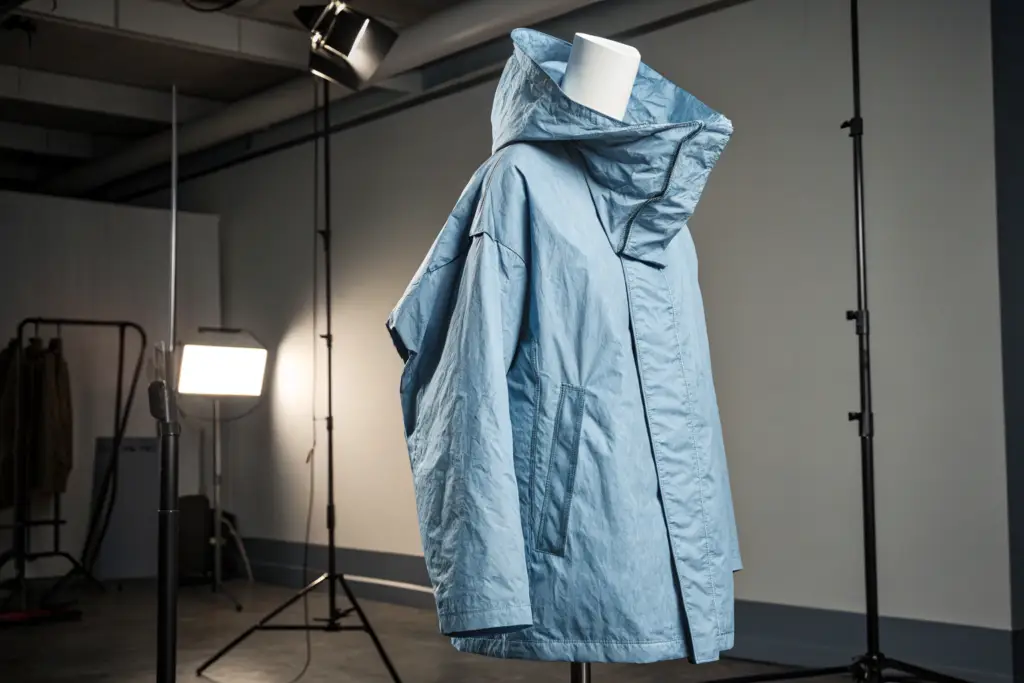
Sculptural lightweight outerwear is the rare style that passes the coat rack test. It is defined by an exaggerated, architectural silhouette, an oversized collar, a dramatic dropped shoulder, an asymmetrical hem, a sculptural sleeve, executed in a lightweight, often technical or textured fabric that makes the silhouette wearable and packable, not heavy and cumbersome. It is outerwear as a statement piece, not just a weather barrier.
Can Oversized Silhouettes Be Produced Consistently at Scale?
The challenge of an oversized, sculptural silhouette is consistency. A standard factory will cut the pattern pieces, sew them together, and the resulting garment will vary subtly in drape and proportion from unit to unit, especially in lightweight, drapey fabrics. The "sculpture" collapses into a formless sack.
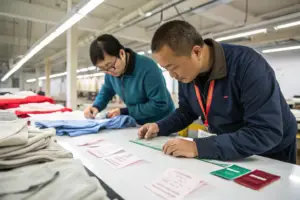
Our solution combines precise laser-guided cutting with a pre-production construction jig. The pattern is digitized and cut on our Gerber automated cutter with millimeter precision. The critical seam, the collar roll, the hem curve, the shoulder drop, is then assembled using a custom jig that holds the fabric pieces at the exact angle specified by the designer's pattern. This ensures the dramatic collar stands away from the neck at exactly 35 degrees on every single unit, not 30 degrees on some and 40 degrees on others. For a Los Angeles distributor launching a unisex sculptural anorak in a crinkled nylon fabric, we produced 1,200 units. The QC inspection measured the collar angle and the hem asymmetry on a random sample. The variation was under 2 degrees and 3 millimeters, respectively. The silhouette was consistent. The buyer's "coat rack test" was passed not just by the sample, but by every unit on the rack. The scalable oversized pattern construction requires an investment in cutting precision and assembly tooling that most factories will not make for a "difficult" design. We make it because we understand that the silhouette is the product.
Which Fabrics Elevate a Simple Shape into a 'Rare' Outerwear Piece?
The fabric is the second half of the sculptural outerwear equation. A standard cotton twill or polyester shell will not create a rare, directional look. The fabric must have its own inherent texture, drape, or technical quality that complements the exaggerated silhouette.
For 2026, we are seeing strong demand from our distributor clients for lightweight nylon blends with a crinkled or paper-touch finish, TENCEL™-linen blends with a dry, matte drape for unlined jackets, and recycled polyester twill with a subtle tonal jacquard weave pattern for visual depth. These fabrics are not standard commodity materials. They are sourced from specialized mills and often require specific handling. The crinkled nylon, for example, must be cut and sewn without flattening the crinkle texture. We use a reduced-pressure presser foot on the sewing machines and avoid any ironing that would press out the dimensional surface. The fabric is a sourcing and handling challenge, but it is also the differentiation. A buyer touches the jacket and feels a texture they have never felt on a similar silhouette. That tactile rarity closes the sale. For the Portland distributor, we developed a sculptural bomber in a Japanese-milled paper-touch nylon with a contrast matte ripstop lining. The fabric was the key talking point in their showroom appointments. The specialized outerwear textiles require a supply chain that can source and handle non-standard materials at commercial volume.
What Defines the Post-Athleisure 'Tailored Comfort' Category?
A distributor who services high-end corporate and country club accounts told me his customers are experiencing "Zoom fatigue in their clothing." His words. He said, "For two years, everyone lived in performance joggers and hoodies. Now they have to go back to dinners, meetings, and events, but they refuse to be uncomfortable. They want the comfort of the jogger in the silhouette of a tailored trouser. They want the ease of a hoodie in the structure of a blazer. They do not want to choose between looking professional and feeling comfortable." This is the post-athleisure consumer.
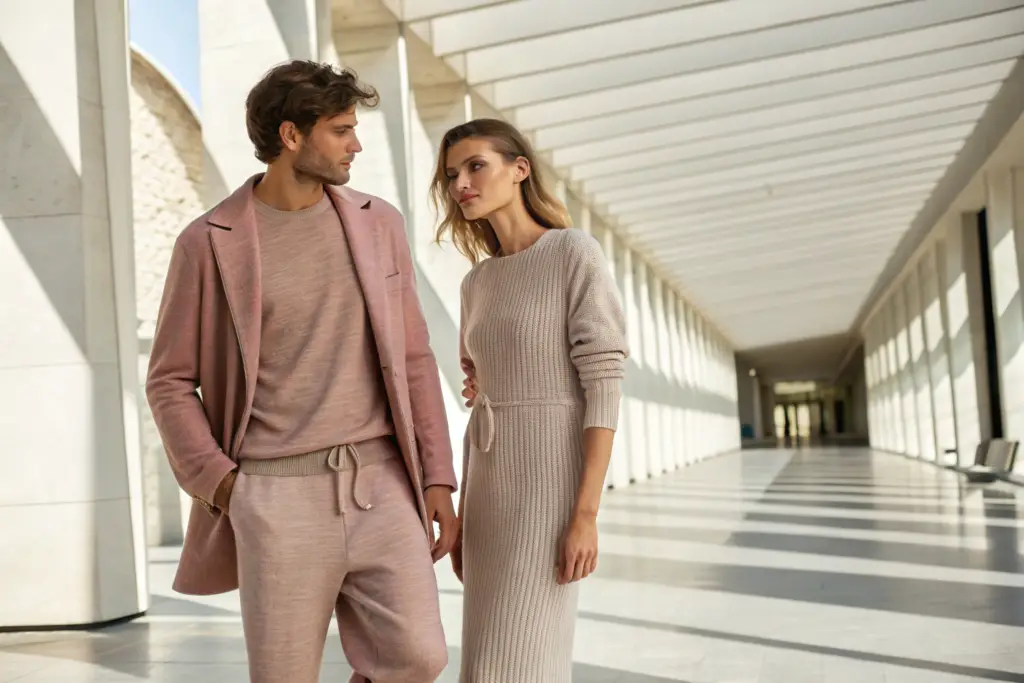
The "Tailored Comfort" category is rare because it requires a genuine fusion of two historically separate garment engineering disciplines: the soft, stretch, recovery-driven construction of activewear, and the structured, shaped, detail-oriented construction of tailored menswear and womenswear. It is not a knit blazer that looks like a sweatshirt. It is a knit blazer that holds the shape of a tailored blazer.
How Do We Engineer a 'Knit Blazer' That Holds Its Shape?
A standard knit blazer is made from French terry or ponte and is essentially a cardigan with a collar. It sags at the shoulders. It wrinkles at the elbow. It has no internal architecture. The rare, sellable version is a garment that looks, from a distance, like a lightly structured tailored jacket, but feels, when worn, like a soft knit layer.
We achieve this through hidden internal construction. The blazer has a lightweight, fusible knit interlining in the collar, lapel, and front facing, which gives it shape memory and prevents rolling. It has a soft, unpadded shoulder with a hidden internal canvas layer that provides just enough structure to hold a clean shoulder line without any padding stiffness. The body fabric is a compact, stable double-knit, not a stretchy single jersey, which resists bagging and holds its silhouette through a full day of wear. For a New York distributor's private-label "commuter blazer" program, we used a Japanese-milled polyester-rayon-spandex double-knit with a dry, matte hand. The blazer was machine washable, wrinkle-resistant, and weighed half as much as a traditional wool blazer. It was engineered for comfort but constructed for structure. The distributor sold it into travel retail and corporate accounts with the tagline "Boardroom to Boarding Gate." The engineered knit tailoring is a hybrid product category that requires expertise in both soft garment construction and tailored interlining techniques.
What Trousers Complete This Look Without Being Either a Sweatpant or a Suit Pant?
The trouser that completes the Tailored Comfort look is the most difficult piece to get right. It must have the elasticated or drawstring waist of a comfort garment, but the tapered, clean leg line of a tailored trouser. It must be made from a fabric with enough structure to hold a crease or a clean drape, but with enough mechanical stretch to allow full mobility.
Our solution is a trouser pattern cut with a slightly higher rise, a relaxed thigh, and a tapered leg opening, sewn in a woven cotton-nylon-elastane blend with a matte, technical finish. The waistband has a flat front with a hidden elasticated back, offering the clean appearance of a tailored waist from the front, with the comfort and flexibility of an elastic waist. For a women's version, we offer a pull-on wide-leg trouser in a structured ponte knit with a compression waistband that smooths without constricting. For a distributor launching a women's work-leisure brand, we produced a range of these trousers in four neutral colorways. The sell-through in independent boutiques was exceptional because the customer could not find this specific hybrid anywhere else. It was not a yoga pant. It was not a suit pant. It was a genuinely rare, genuinely comfortable, genuinely polished new category. The hybrid comfort trouser construction requires pattern-making that respects both the ease of a knit and the visual discipline of a woven tailored garment.
Conclusion
The rare styles that will work best for US distributors in 2026 share a common DNA. They are not extreme, unwearable fashion statements. They are thoughtful, engineered evolutions of categories the consumer already understands. The modular garment-dyed knit set elevates the familiar comfort of a sweatsuit into a coordinated, intentional, artisanal look through tonal depth and texture. The sculptural lightweight outerwear piece transforms a utility layer into a brand-defining silhouette statement through exaggerated proportion and specialized fabric. The post-athleisure tailored comfort garment fuses the ease of activewear with the structure of tailoring, solving the real, daily problem of a consumer who refuses to choose between comfort and presentation. All three categories are rare in their visual differentiation, but viable in their distribution economics because we have engineered the production processes, the fabric sourcing, and the quality control protocols to make them consistent, scalable, and delivered on time.
If you are a US distributor planning your 2026 line and you are looking for products that will stop a buyer on a trade show floor and sell through at retail, I invite you to start a conversation with our team. Contact our Business Director, Elaine, at elaine@fumaoclothing.com. Send her your line plan, your target price points, or just a mood board of the aesthetic direction you are feeling. She will work with our design and sourcing teams to translate that direction into specific, producible, and commercially viable rare styles that your retail accounts have not seen before. Let us build a 2026 collection that passes the coat rack test.