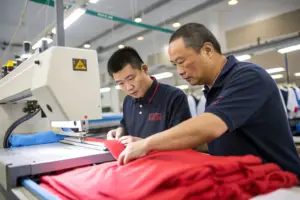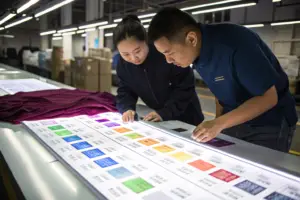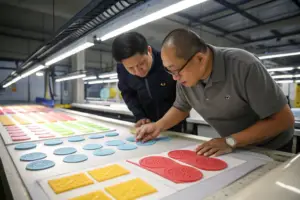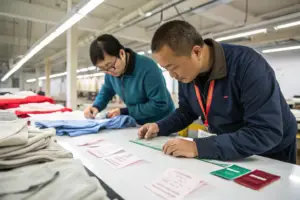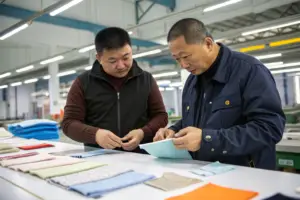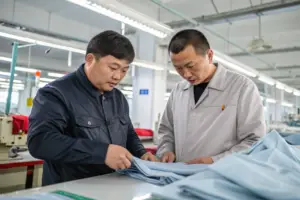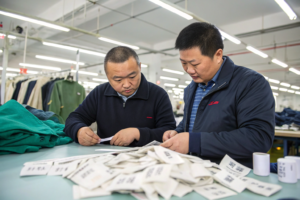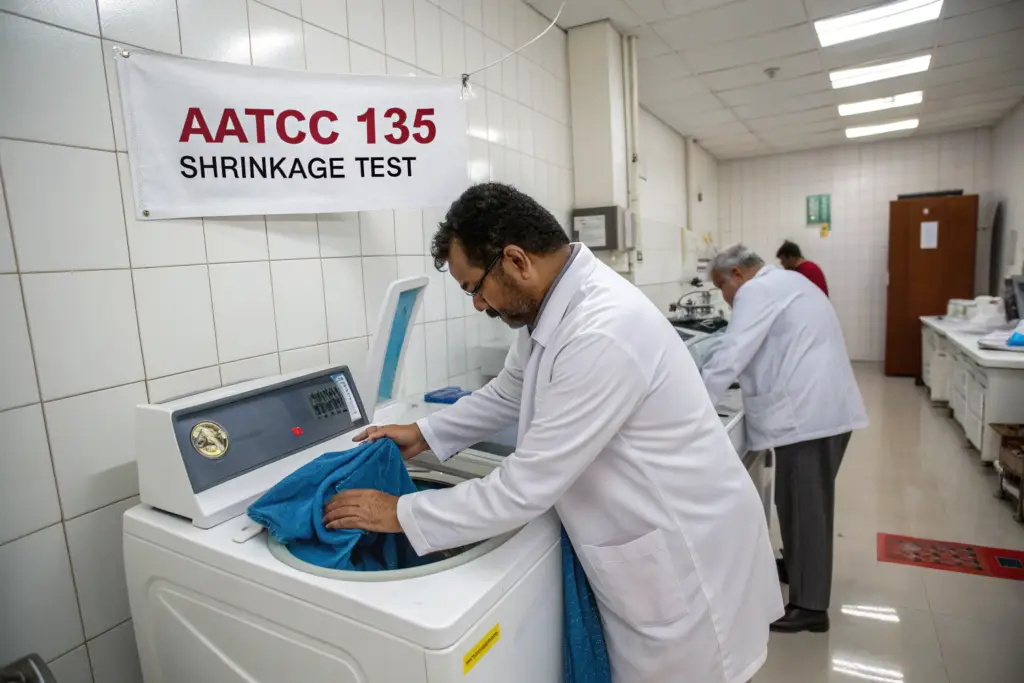
I sat in a tense meeting with a brand owner and a factory manager three years ago. The brand owner had just received a container of 1,200 cotton t-shirts. Every single one had shrunk by nearly a full size after the first wash. The customer returns were flooding in. The factory manager insisted he had followed the spec. The brand owner insisted the fabric was defective. Neither could prove their case because the fabric had never been tested for shrinkage before cutting. The entire $18,000 order was a write-off. The root cause was not the cotton. It was the complete absence of a pre-production shrinkage test and a compressive shrinkage process. The fabric had been woven, dyed, dried under tension, and cut. The tension was the hidden enemy, and it released itself in the customer's washing machine.
The primary root cause of fabric shrinkage is the release of latent tensions and stresses introduced into the fibers during yarn spinning, weaving or knitting, and chemical finishing. When fibers are stretched and heated during these processes, they are "set" in a stressed state. When the customer washes the garment, the water and heat relax the fibers back to their natural, unstressed state, and the fabric shrinks. The second major cause is the hygroscopic swelling of natural fibers like cotton, linen, and rayon, which absorb water and swell, causing the yarns to tighten and the fabric to compact. Expert factories completely prevent shrinkage by neutralizing these stresses before the fabric reaches the cutting table. They use a combination of mechanical compressive shrinkage (Sanforizing), precision heat setting for synthetics, and a strict protocol of pre-production "fabric relaxation" washes. The goal is to make the fabric "wash its last wash" before the garment is ever sewn.
Shrinkage is the most preventable quality failure in garment manufacturing. It is not a mystery. It is a physics problem with a known, repeatable solution. I want to share exactly how shrinkage happens, how it is measured, and how Shanghai Fumao ensures that every meter of fabric we cut is dimensionally stable.
What Physical Mechanisms at the Fiber Level Actually Cause Cotton and Linen to Shrink?
A brand owner once told me she thought shrinkage was a sign of cheap fabric. She assumed that if she bought expensive, long-staple cotton, it would not shrink. She bought the best Supima cotton she could find. She made beautiful, expensive shirts. The first batch shrank 5% in length because the fabric had never been pre-shrunk. She had confused fiber quality with dimensional stability. They are completely different properties. A $50 per meter cotton shirting will shrink just as much as a $5 per meter cotton if neither has been mechanically stabilized.
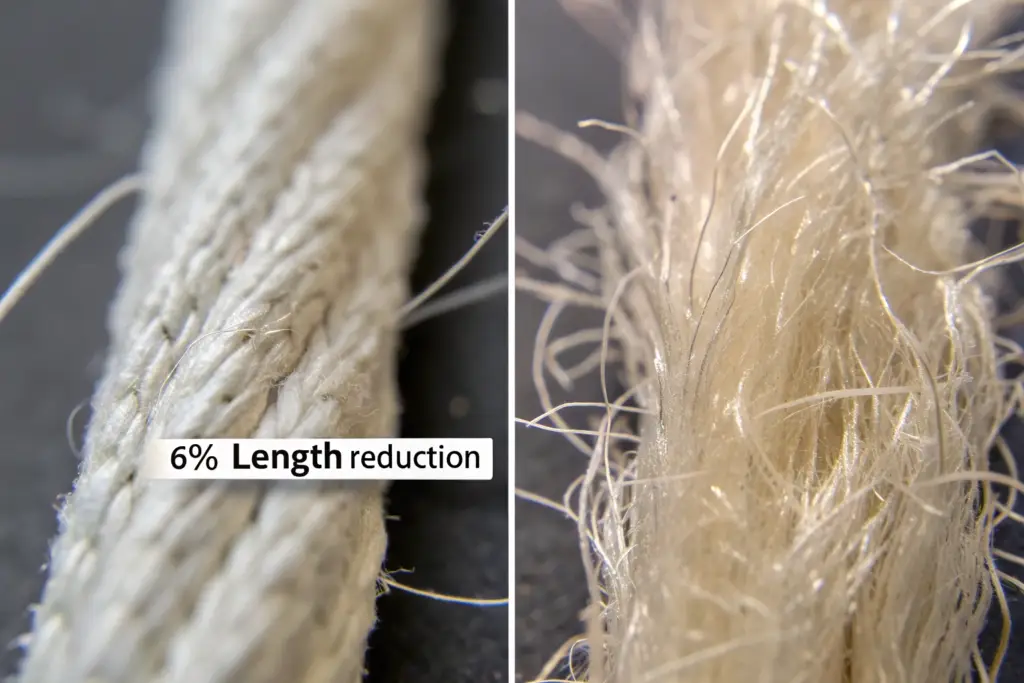
Cotton and linen are cellulose fibers. Under a microscope, they are not smooth. They are twisted, ribbon-like structures filled with tiny internal channels called lumens. When these fibers are spun into yarn and woven into fabric, they are stretched and held under tension. When water enters the fiber, the cellulose swells. The fiber increases in diameter, which forces the surrounding yarns to tighten their crimp and curve. This tightening effect pulls the fabric shorter. This is relaxation shrinkage. A separate but related mechanism is consolidation shrinkage. The mechanical agitation of washing causes the fibers to shift and entangle, compacting the fabric structure. Both mechanisms are inherent to natural fibers and can only be prevented by mechanically forcing the fabric to shrink in a controlled factory process before it is cut.
The key insight is that shrinkage is not a sign of poor quality fiber. It is a sign of an incomplete manufacturing process. The tension that causes shrinkage is introduced by the very act of making the fabric. Removing that tension is a mandatory finishing step.
Why Does High-Tension Drying on a Stenter Frame "Program" a Fabric to Shrink Later?
A stenter frame dries fabric by gripping the edges with pins or clips and pulling it through a heated chamber. This stretches the fabric width-wise and length-wise while it dries. The heat "sets" the fibers in this stretched position. The fabric is essentially frozen in a state of tension. When the customer washes it, the water relaxes the set, and the fabric returns to its pre-stentered dimensions. The shrinkage is the release of the programmed tension.
What Is the Critical Difference Between "Relaxation Shrinkage" and "Consolidation Shrinkage"?
Relaxation shrinkage happens on the first wash. It is the release of the manufacturing tensions. Consolidation shrinkage is progressive. It happens over multiple washes as the mechanical agitation slowly compacts the fabric structure. A fabric that passes a single wash test may still experience progressive shrinkage if it has not been properly compacted. Knit fabrics are particularly susceptible to progressive shrinkage.
How Does the Sanforizing Compressive Shrinkage Machine Physically "Lock" a Woven Fabric's Dimensions?
I took a brand owner on a tour of a denim mill that supplied our factory. We stopped at the Sanforizing machine. The mill manager took a piece of raw, loom-state denim and fed it into a simple wash test. It shrank 10%. Then he took a piece of the same denim that had just passed through the Sanforizer. It shrank less than 1%. The brand owner stared at the two swatches. He had been in the apparel business for ten years and had never seen the machine that made his jeans stable. He said, "This is the most important machine in the factory, and I never knew it existed."
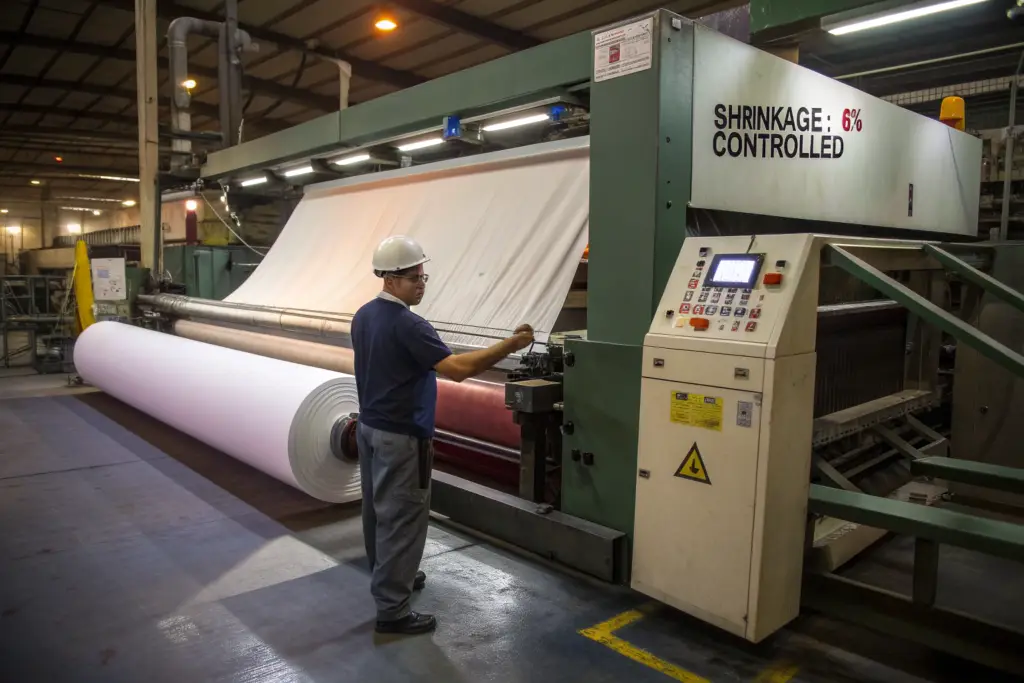
The Sanforizing machine is the definitive solution for woven fabric shrinkage. It works by feeding the fabric between a thick, heated steel roller and a thick, slowly moving rubber blanket. The rubber blanket is stretched as it goes around a curve. The fabric is pressed into this stretched rubber. As the rubber blanket straightens, it contracts back to its original length, and the fabric, pressed tightly against it, is forced to contract along with it. This mechanical compression physically shortens the fibers in a controlled, measured way. The fabric emerges from the Sanforizer with its potential shrinkage already "spent." When the customer washes the garment, there is almost no residual shrinkage left. The process is monitored by laser measuring devices that verify the fabric has been shrunk to the specified percentage. A fabric that has been correctly Sanforized will shrink less than 1% in subsequent washes.
Sanforizing is not optional for quality woven garments. It is the minimum standard. A brand that sources woven cotton, linen, or hemp fabrics should demand a Sanforizing certificate or a shrinkage test report before the fabric is cut. The absence of this process is the root cause of most catastrophic shrinkage failures.
How Does the Rubber Blanket Mechanism in a Sanforizer Differ from Simple "Heat Setting"?
Heat setting, used for synthetics, relies on temperature to lock fibers in place. It does not physically compress the fabric. Sanforizing physically forces the yarns closer together, shortening the fabric length. It is a mechanical process, not just a thermal one. This is why it works on natural fibers that cannot be heat-set.
What Is the Industry Standard for "Residual Shrinkage" on a Properly Sanforized Cotton Shirting?
The industry standard, as defined by many major retail brand manuals, is a maximum of 1% residual shrinkage in the warp direction and 0.5% in the weft direction after three home laundry cycles. A Sanforized fabric that meets this standard is considered dimensionally stable.
What Pre-Cutting "Fabric Relaxation" Protocols Guarantee Zero Shrinkage on Sensitive Knits and Rayons?
I once had a brand partner who produced a beautiful line of bamboo rayon jersey dresses. The samples were perfect. The bulk production arrived, and the dresses were 3 inches shorter than the spec. The fabric had been rolled tightly on a tube for two weeks between knitting and cutting. The tension of the roll had stretched the fabric. When it was cut and then washed by the customer, it relaxed back to its original, shorter length. The factory had not allowed the fabric to "relax" before cutting. The fix was simple, but the lesson was painful.
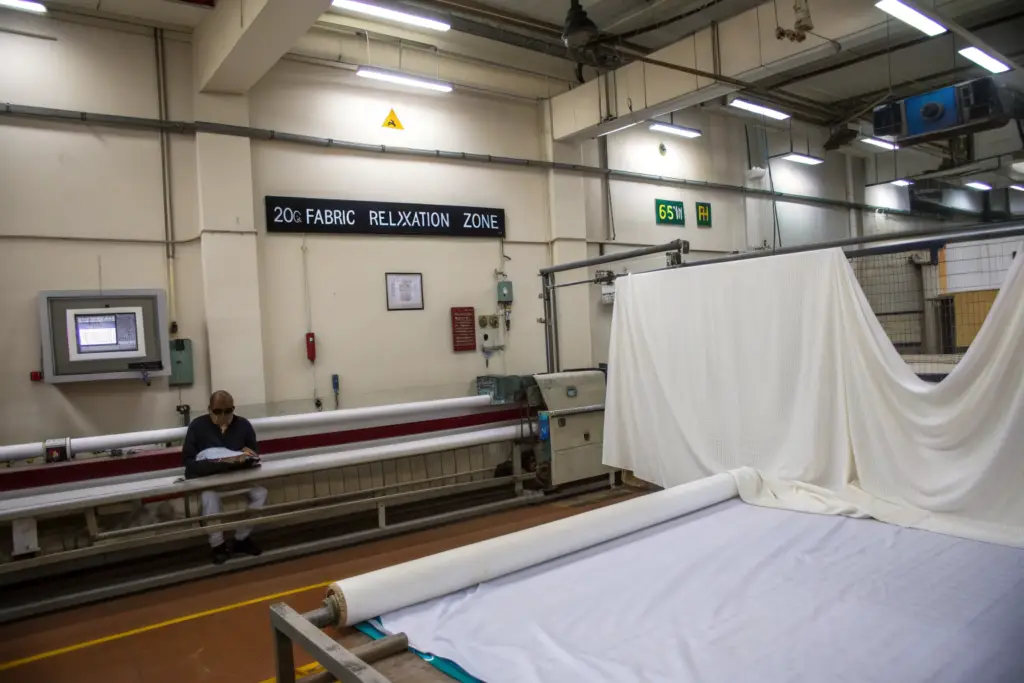
For sensitive knits and rayons, Sanforizing is not always possible or appropriate. These fabrics require a "relaxation protocol" before cutting. The fabric is unrolled from the tight production rolls and allowed to rest in a climate-controlled environment for 24 to 48 hours. This allows the fibers to absorb moisture from the air, release their internal tensions, and return to their natural, unstressed dimensions. For fabrics prone to progressive shrinkage, a full "pre-wash and tumble dry" protocol is required. The entire fabric lot is washed and dried under controlled conditions, then re-rolled for cutting. This "spends" the shrinkage before the garment is sewn. The cost of this extra step is a small fraction of the cost of a returned, shrunken garment.
The relaxation zone is a simple, low-tech solution to a high-cost problem. It requires only space, time, and climate control. A factory that does not have a relaxation zone, or that rushes fabric directly from the delivery truck to the cutting table, is a factory that is gambling with your garment's dimensions.
Why Is a 24-Hour "Climate-Controlled Rest" Critical for Viscose and Modal Knits?
Viscose and modal are regenerated cellulose fibers. They are highly hygroscopic and swell significantly when they absorb moisture. A roll of viscose jersey fresh from the knitting mill has a very low moisture content and is under tension. If cut immediately, the pieces will absorb moisture from the air and shrink after cutting, causing sizing inconsistency. A 24-hour rest in a controlled 65% relative humidity environment allows the fabric to reach equilibrium moisture content and release its tensions. The cut dimensions will then be stable.
How Does a "Full-Scale Pre-Wash" Protocol Work for High-End Linen That Cannot Be Sanforized?
Linen is often not Sanforized because the process can crush its natural texture. The alternative is a full-scale pre-wash. The entire fabric lot is washed in an industrial washing machine using the same conditions a customer would use, then tumble dried. The shrinkage occurs in the factory, not in the customer's home. The fabric is then re-rolled, and the pattern is adjusted to account for the minimal residual shrinkage. This is a premium process but guarantees zero customer complaints.
Conclusion
Fabric shrinkage is a preventable engineering failure. The root causes are known: latent tension from spinning and weaving, programmed stretch from stenter drying, and mechanical compaction from washing. The solutions are equally well known: Sanforizing for wovens, heat setting for synthetics, and climate-controlled relaxation for knits and rayons. The $18,000 loss from the 1,200 shrunken t-shirts was not an act of God. It was a failure to apply these standard, proven processes.
An expert factory does not just sew garments. It stabilizes fabric. It tests shrinkage before cutting using AATCC or ISO standard methods. It verifies that the residual shrinkage is below the acceptable threshold before a single pattern piece is laid out. It treats dimensional stability as a fundamental property of the raw material, not as a quality problem to be discovered later.
At Shanghai Fumao, we have integrated these processes into our standard production workflow. Our woven fabrics are sourced from mills that provide Sanforizing certificates. Our knit fabrics pass through a documented relaxation protocol before cutting. We conduct internal shrinkage tests on every new fabric lot and provide the test reports to our brand partners. We do not cut fabric that has not been stabilized.
If you have experienced shrinkage issues, or if you want to ensure your next production run is dimensionally stable, we can help. At Shanghai Fumao, we will share our standard shrinkage test protocol, our relaxation zone specifications, and a sample shrinkage test report. Contact our Business Director, Elaine, at elaine@fumaoclothing.com. She can send you a technical guide on our fabric stabilization processes. Let's make sure your garments fit your customers as perfectly on the tenth wash as they do on the first.