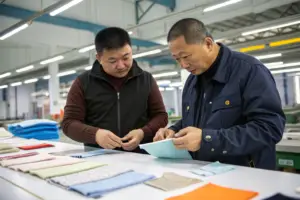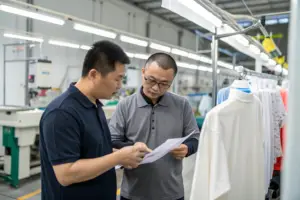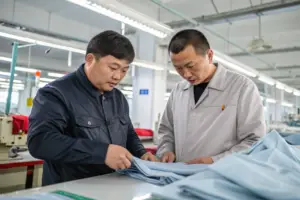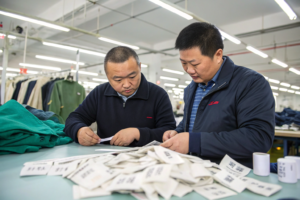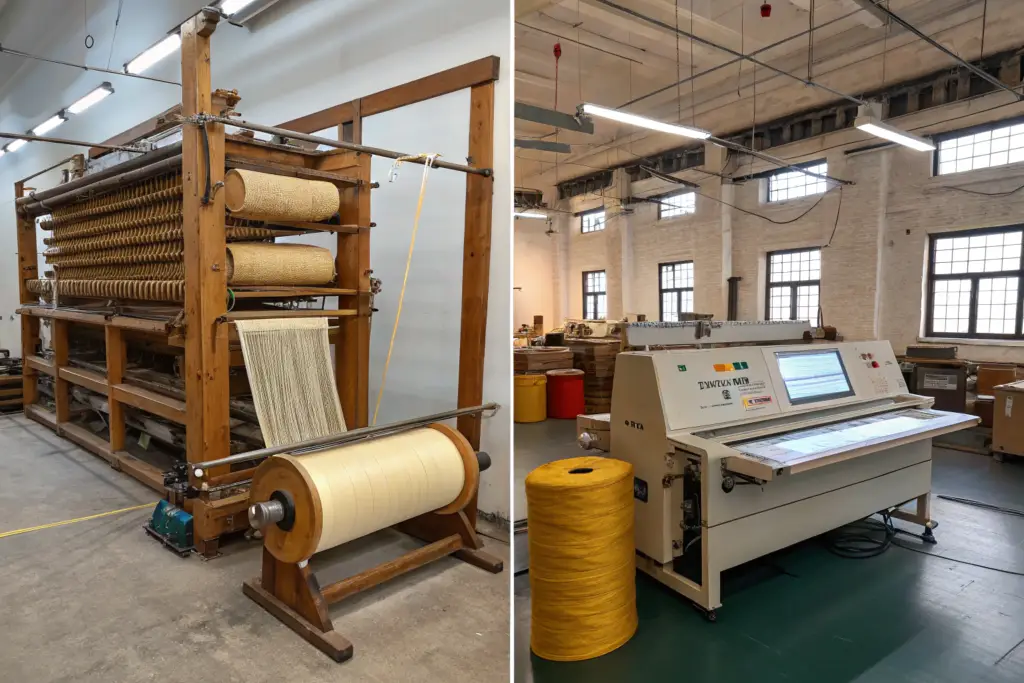
A few years ago, a premium sportswear brand owner from Los Angeles sat in my showroom and placed two nearly identical performance polo shirts on the table. One was made in a specialized facility in North Carolina. The other was our sample. He said, "I have been buying from this US supplier for six years. They do great work. But they have one fabric option for performance pique. One. I asked them to develop a lighter-weight, faster-drying version with a softer interior for next summer, and they told me their minimum development run was 5,000 yards and it would take fourteen weeks. Can you do better?" This was not a question about price. It was a question about technological agility. He needed a manufacturing partner who could innovate on fabric, not just reproduce a catalog standard.
Shanghai Fumao's fabric technology is better than most local US suppliers in one critical dimension: development agility and technical breadth. Our position within the dense Asian textile ecosystem gives us access to a network of specialized mills that can develop custom performance blends, sustainable finishes, and novel textures in smaller minimums and faster lead times than the consolidated, large-volume-focused US textile industry. However, "better" depends on your specific need. For small-batch, heritage-quality selvedge denim or rapid-turn domestic basics, a local US supplier may hold the advantage. For custom performance development, sustainable innovation at accessible minimums, and multi-construction variety, our technology and supply chain offer a superior solution.
The question is not which country makes better fabric in absolute terms. The question is which supply chain structure best serves your brand's specific innovation needs, order profile, and speed to market. I want to walk you through the structural differences, the specific technologies we deploy, and the honest trade-offs, so you can make an informed decision for your specific product category.
Why Does Our Location Give Us an Edge in Fabric Innovation?
The Los Angeles brand owner's frustration with his US supplier's fourteen-week development lead time was not a reflection of that supplier's skill. It was a reflection of the structural reality of the US textile industry. Over the past three decades, the US textile sector has consolidated around large-scale, capital-intensive production of standard commodity fabrics. The specialized, flexible mills that once dotted the Carolinas have largely closed or been absorbed into larger entities optimized for volume, not variety. The remaining niche mills are excellent at what they do, but they are few in number and geographically dispersed. If a US brand wants a custom performance knit, they are often dependent on one or two domestic mills, or they must look overseas anyway.
Our factory sits at the center of the most densely concentrated textile innovation cluster in the world. This geographical reality is a technological advantage.

How Does Proximity to Mills Accelerate Custom Development?
Within a 50-kilometer radius of our factory, there are dozens of specialized textile mills. Some focus exclusively on circular knit performance fabrics. Others specialize in woven cotton shirting. Others are dedicated to sustainable dyeing and finishing chemistry. This density creates a collaborative innovation ecosystem.
When a client requests a custom fabric, we do not rely on a single mill's R&D department. We can send the brief to three or four specialized mills simultaneously. They compete to develop the best swatch. Within ten days, we have multiple physical developments to compare. For a women's activewear brand, we needed a fabric with specific technical properties: 250gsm, brushed interior for softness, smooth exterior for printing, four-way stretch, and a wicking finish that survived 50 washes. We sent the brief to three local knitting mills and two finishing houses. We received five development swatches within two weeks. We tested them in our in-house lab, selected the best-performing swatch, and had bulk fabric in production within four weeks. The entire custom development cycle, from brief to bulk fabric, was six weeks. A US supplier, dependent on a single mill with a long development queue, quoted fourteen weeks for the same project. This speed advantage is not about individual skill. It is about ecosystem density and competitive parallelism. We can source a custom textile development from a network, not a single source.
What Access Do We Have to Advanced Finishing Technologies?
Fabric finishing is where much of the technological "magic" happens. Moisture management, antimicrobial treatments, UV protection, water repellency, and specialized hand-feels are all achieved through finishing chemistry and mechanical processes applied to the fabric after it is knitted or woven.
The chemical and mechanical finishing sector in our region is highly advanced, serving global performance brands. We have access to finishing houses that offer C0 DWR (durable water repellent) without PFCs, a critical requirement for sustainable outerwear. We use cold-pad batch dyeing for reduced water and energy consumption. We apply bio-polish enzyme washes that permanently improve pilling resistance without weakening the fabric. For a men's travel chino program, we developed a cotton-nylon-elastane blend with a dual finish: a C0 DWR for light rain protection and a wicking finish on the interior for comfort. The fabric looked like a classic cotton twill but performed like a technical travel pant. This combination of aesthetic authenticity and hidden performance is a hallmark of advanced finishing. The finishing house that executed this is a 30-minute drive from our factory. Our technical team visited them twice during the development to inspect the finish application and test the durability. This physical proximity and frequent face-to-face technical collaboration is difficult to replicate with a domestic US supplier whose finishing partner may be in a different state or a different country entirely. The textile finishing technology ecosystem is a critical component of our overall fabric capability.
How Does Our Testing Compare to US Laboratory Standards?
A technical designer from a major US outdoor brand once challenged me on testing. She said, "Your fabric looks great, but my US mill provides AATCC test reports from a third-party lab in North Carolina. Can you match that level of independent verification?" This was a fair question. She had been burned before by Asian suppliers who provided test reports that turned out to be unreliable, either from non-accredited labs or simply fabricated. She needed proof that our testing was as rigorous and trustworthy as her domestic supplier's.
I answered her challenge by sending her our in-house lab's AATCC and ISO accreditation certificates, our calibration records, and an invitation to send our fabric to her preferred third-party lab in the US for parallel testing. She did. The results from our Shanghai lab and the North Carolina lab were within the acceptable inter-laboratory tolerance on every parameter. She approved our fabric.
Do We Test to AATCC, ISO, and ASTM Standards?
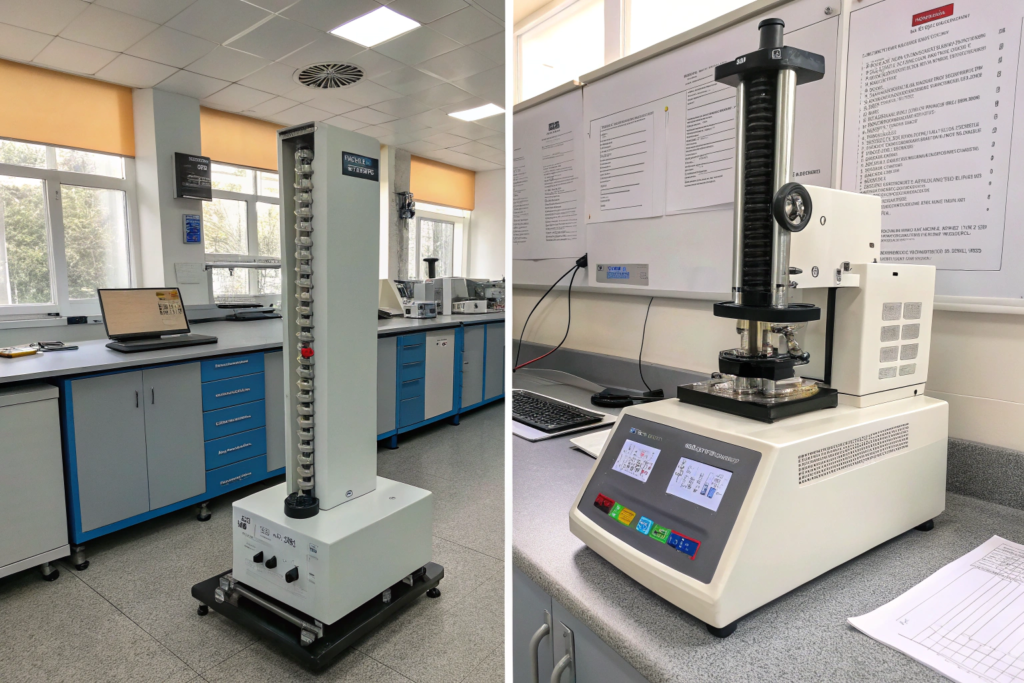
Yes. Our in-house fabric testing laboratory operates according to the exact same international standards used by US and European textile labs. We test to AATCC (American Association of Textile Chemists and Colorists) methods for US-bound orders, ISO methods for European-bound orders, and ASTM methods as specified.
Our lab equipment includes a Martindale abrasion tester for pilling and surface wear, a Wascator for dimensional stability and appearance after wash, a hydrostatic head tester for waterproof ratings, a moisture vapor transmission rate tester for breathability claims, and a spectrophotometer for color consistency measurement and Delta-E calculation. All equipment is calibrated to manufacturer specifications and traceable to international standards. For a performance jacket order, we tested the fabric for waterproof rating, breathability, seam slippage, color fastness to light and wash, and pilling resistance. The test report was generated using AATCC methods, the exact same format the client's US supplier used. The results exceeded the brand's minimum specifications. The brand's quality manager reviewed the reports and approved them without requesting third-party re-testing. This is the standard we operate at. We do not use "internal methods" that produce favorable but non-comparable results. We test to the internationally recognized standards that your US retail buyers and quality assurance teams know and trust. The AATCC testing standards are the language of global textile quality. We are fluent speakers.
Can We Provide Third-Party Testing from Internationally Recognized Labs?
Yes, and we do so proactively for many orders. While our in-house lab is highly capable and standards-compliant, we understand that some brands, particularly large retailers and those with strict vendor compliance programs, require test reports from a named, independent third-party laboratory.
We work regularly with SGS, Intertek, and Bureau Veritas, the three largest and most recognized global testing, inspection, and certification companies. For a children's wear order requiring CPSIA compliance testing, we sent the finished product samples directly to an Intertek lab in Shanghai that is CPSC-accepted. The lead and phthalate test report was issued by Intertek, an independent third party. The client received a legally defensible compliance document. This service adds a line item cost and a few days to the timeline, but it is the gold standard for independent verification. We recommend third-party testing for any order where chemical safety compliance is legally mandated, such as children's products, or where the brand's vendor agreement specifies an approved external lab. We manage the entire process, from sample collection to report delivery. The client does not need to coordinate with a lab in a different time zone. The ability to offer both rigorous in-house testing and seamless third-party testing integration is a technological capability that matches or exceeds the offering of many local US suppliers, who may outsource all testing to an external lab anyway. Our third-party lab testing integration provides both speed and independent credibility.
What Fabric Technologies Can We Offer That Are Unique or Advanced?
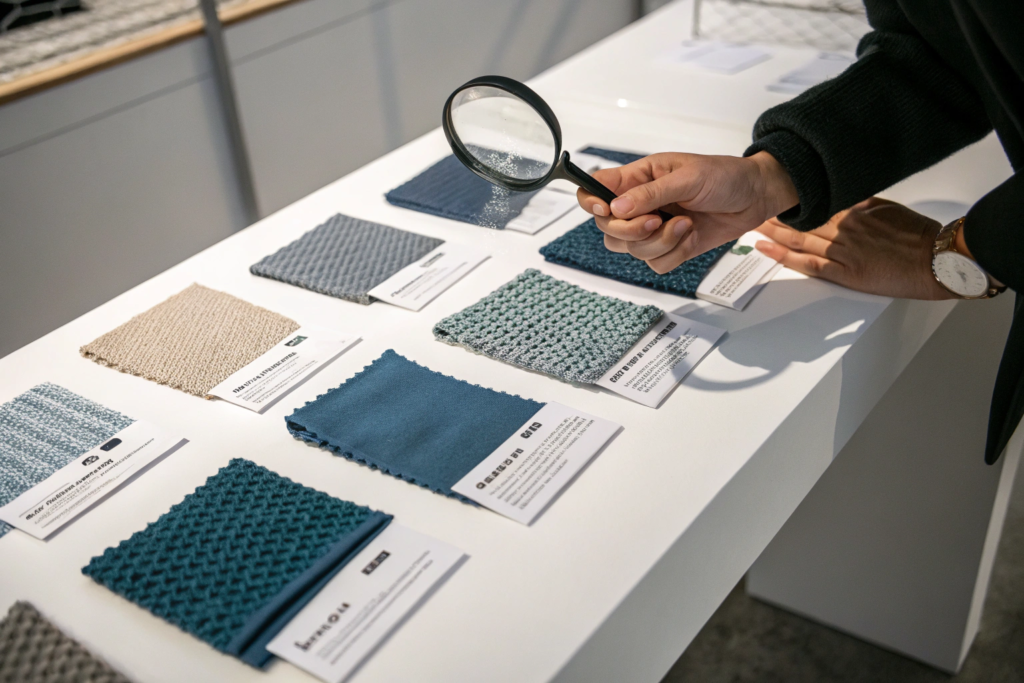
A designer from a New York-based contemporary menswear brand once asked me, "What can you do that nobody else can?" It was a deliberately provocative question. I did not give him a marketing slogan. I took him to our sample room and showed him three physical swatches that represented the edges of our technological capability. He was not looking for a standard fabric. He was looking for a point of difference, something his US supplier could not easily offer.
Our unique fabric technology proposition is not one single magic material. It is the combination of advanced knitting technologies, sustainable fiber innovations, and the ability to integrate multiple performance characteristics into a single fabric without sacrificing hand-feel or aesthetic authenticity.
Do We Offer Seamless 3D Knitting and Whole-Garment Technology?
Yes. We operate computerized flatbed knitting machines, including Shima Seiki WHOLEGARMENT technology, which can knit an entire garment in a single piece without side seams or shoulder seams. This is a capability that very few US suppliers possess at a competitive scale for production.
Seamless knitting eliminates the cutting and sewing waste of traditional cut-and-sew knitwear. It produces a garment with superior comfort, no bulky seams, and a clean, modern aesthetic. It is ideal for premium activewear, base layers, and minimalist knitwear. For a men's luxury athleisure brand, we produced a fully-fashioned merino wool-blend zip-neck sweater on our seamless machines. The garment had engineered ventilation zones, a seamless body for zero-chafe comfort, and a tailored silhouette that was impossible to achieve on a traditional cut-and-sew line. The brand's US supplier did not have this technology in-house. They offered to source it from a third-party knitter, adding complexity and margin. Our direct in-house capability provided a faster, more cost-effective, and better-integrated solution. The seamless technology also reduces labor input, partially offsetting the cost of premium yarns. The 3D knitting technology is a genuine technological differentiator that we offer as a standard production capability, not a special-order novelty.
How Do We Integrate Sustainable Fibers Without Sacrificing Performance?
The historical trade-off in sustainable textiles has been performance versus eco-credentials. Recycled polyester felt rough. Organic cotton lacked durability. TENCEL™ was too delicate. Our fabric development focuses on erasing this trade-off through intelligent blending and advanced finishing.
We have developed a range of performance-tested sustainable fabric platforms. Our recycled performance interlock blends 70% GOTS-certified organic cotton with 30% GRS-certified recycled polyester. The organic cotton provides softness, breathability, and a natural hand-feel against the skin. The recycled polyester provides wicking, shape retention, and durability. The fabric is OEKO-TEX Class I certified, meaning it is safe for baby products. It matches the performance metrics of a conventional cotton-polyester blend. For a men's outdoor brand, we developed a 100% recycled nylon shell fabric from reclaimed fishing nets, with a PFC-free DWR finish. The fabric met the brand's waterproof and breathability specifications while telling a compelling sustainability story that their US supplier's conventional nylon could not match. The key is our access to innovative sustainable fiber suppliers, many of whom are based in Asia, and the finishing chemistry expertise to make these next-generation fibers perform at a commercial level. This integration of sustainability and performance is where our fabric technology offers a clear advantage over many local US suppliers who may be constrained by the more limited sustainable fiber supply chains available domestically.
What Are the Honest Trade-Offs Compared to a Local US Supplier?
I will be completely honest with you. We are not the best choice for every order. I have told potential clients this directly. A streetwear brand owner in Los Angeles needed 50 units of a custom-printed t-shirt turned around in ten days for a surprise album drop by a music artist. I told him, "We cannot do that. You need a local LA screen printer who can run it overnight. Call them." He appreciated the honesty. He now uses us for his seasonal bulk production and his local printer for rapid-turn marketing moments.
The choice between us and a local US supplier is a strategic decision based on your specific product requirements, order profile, and business model. There are genuine trade-offs, and you should understand them clearly.
When Is a Local US Supplier the Better Choice?
A local US supplier is often the better choice in three specific scenarios. First, when you need extremely rapid turnaround on a small quantity, typically under 200 units, within one to two weeks. The physics of international shipping make this impossible for an overseas factory. Second, when "Made in USA" is a core part of your brand's value proposition and your customer base pays a premium for domestic manufacturing. This is a marketing asset that cannot be replicated by an overseas factory. Third, when you need iterative, rapid sample development with in-person collaboration. A local factory allows you to drive across town, touch the sample, and make decisions in real-time.
These are real advantages. We do not try to compete with them. Instead, many of our clients use a hybrid model. They use a local US supplier for samples, rapid replenishment, and small-batch custom pieces. They use us for scaled production, custom fabric development, and cost-sensitive core lines. This is not a weakness. It is an optimized, dual-supply-chain strategy. A domestic vs. overseas manufacturing assessment should be based on a clear-eyed analysis of your specific needs, not a blanket assumption about quality.
Where Do We Offer Clear Advantages Over US Suppliers?
Our clear advantages emerge when your order involves custom fabric development, advanced performance finishes, complex garment construction, or a need for a wide variety of fabric qualities from a single manufacturing partner.
If your brand requires a unique, custom-developed performance fabric with specific technical specifications, our speed-to-market and development cost are generally superior. The dense textile ecosystem allows for rapid, competitive prototyping. If your order quantity is in the 500 to 5,000-unit range, a sweet spot for many premium and contemporary brands, we offer significant cost efficiencies without compromising on quality. If your brand needs a full-range manufacturing partner who can produce woven shirts, knit polos, performance outerwear, and tailored trousers under one quality management system, our five-line diversified factory offers a breadth that most specialized US suppliers cannot match. And if your brand operates on a seasonal calendar that allows for an eight-to-twelve-week lead time, our integrated model delivers a landed, quality-assured garment that is cost-competitive with, and often technologically more advanced than, a domestic equivalent. The key is matching the task to the tool. We are not the right tool for a 48-hour t-shirt rush. We are the right tool for building a season-defining collection with custom textiles at a commercially viable cost. Understanding this distinction is the foundation of a smart sourcing strategy.
Conclusion
The question of whether our fabric technology is better than a local US supplier does not have a single, absolute answer. It has a strategic answer based on what you are trying to build. In the areas of custom fabric development speed, access to advanced finishing technologies, seamless and 3D knitting capabilities, and the integration of sustainable fibers with commercial-grade performance, our position within the Asian textile ecosystem provides us with technological advantages that are difficult for the consolidated, volume-focused US textile industry to replicate. In the areas of ultra-rapid turnaround, in-person sample collaboration, and "Made in USA" brand storytelling, a local US supplier holds the clear advantage.
The smartest brands we work with use both. They treat us as their technology and scale partner for core collections and innovation, and their local supplier as their speed and flexibility partner for samples and quick-turn replenishment. If you are curious to test our fabric technology against your current US supplier's offering, I invite you to send us a challenge. Contact our Business Director, Elaine, at elaine@fumaoclothing.com. Send her a swatch of your current fabric, your performance specifications, and your ideal development timeline. We will develop a competitive swatch, test it in our lab against the same standards, and send you both the fabric and the test report. Let the physical evidence, the hand-feel, the stretch, the wash test result, make the case for our technology. You can then make your sourcing decision based on data, not assumptions.