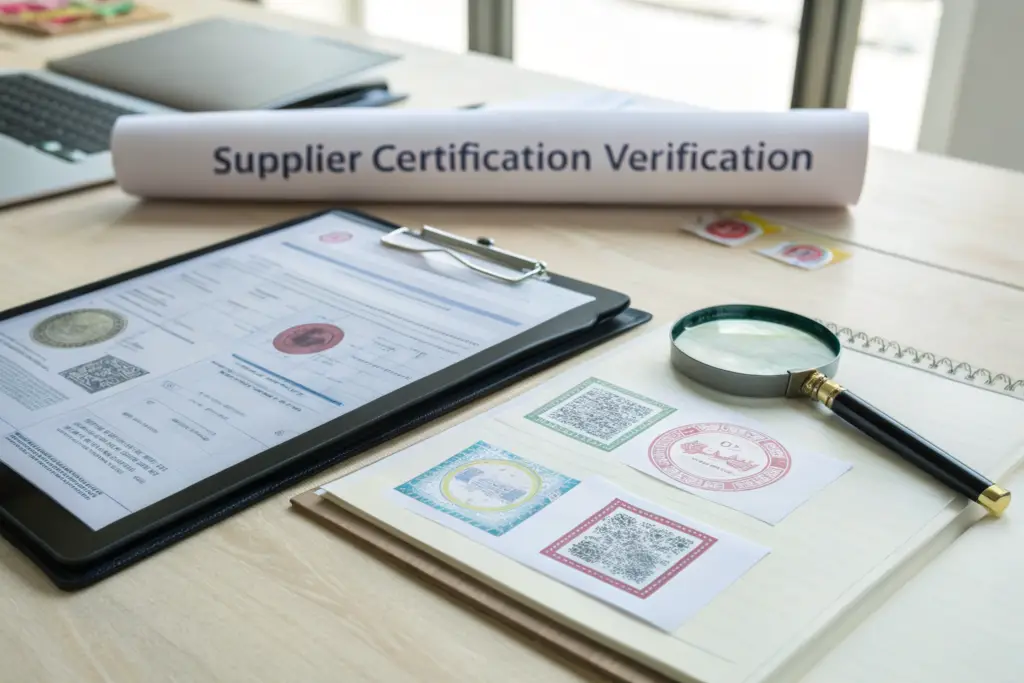
A brand owner from Toronto once told me about her "certification drawer." It was a literal filing cabinet drawer in her office, stuffed with glossy certificates she had collected from suppliers over the years. She pulled out one from a factory she had worked with two years earlier. It was a beautiful, gold-embossed OEKO-TEX certificate. She had framed it in her mind as proof of safety. Then she checked the expiration date. It had expired eight months before the factory shipped her order. She checked the company name on the certificate. It was a different legal entity than the company on her invoice. The certificate was real, but it did not belong to the factory she paid. She had been defrauded by a valid document misapplied. She told me, "I realized I had been collecting logos, not verifying facts."
As a buyer, you should ask Shanghai Fumao for five core, verifiable certifications: a valid WRAP (Worldwide Responsible Accredited Production) certificate, a SMETA 4-Pillar audit report, an OEKO-TEX Standard 100 certificate, a GOTS scope certificate if you order organic textiles, and our valid business license with manufacturing scope. Critically, you should not just ask for the PDF. You should ask for the live certificate number or audit reference, and then independently verify each document on the issuing body's official public database. A certificate you cannot verify is worthless.
Certifications are not decorative badges. They are legal risk management tools, market access permits, and verification shortcuts. But they only function as these tools if they are current, correctly scoped, genuinely owned by the entity you are contracting with, and independently verifiable. I am going to walk you through each certification you should request from us, exactly what it proves, what specific data points to check, and how to verify it independently. I will also tell you which certificates to be skeptical of if a supplier cannot produce them in a verifiable format.
What Social Compliance Certifications Should I Verify?
A distributor from Seattle told me his board of directors had given him a new mandate. Before signing any new supplier contract, he had to personally verify the factory's social compliance, not through a sales agent's email, but through a live, independent database check. One of his competitors had been featured in a major news investigation for sourcing from a factory with forced labor. The competitor's brand value dropped by 40% in six months. Retailers dropped them. The CEO resigned. The distributor's board was not interested in paper promises. They wanted prosecutable evidence.
Social compliance certifications are your primary legal and reputational shield against being entangled in human rights abuses. They prove the factory has been inspected by an independent third party and found to meet specific standards on wages, working hours, safety, and freedom of association. The two you should ask us for are WRAP and SMETA.
What Is a WRAP Certificate and How Do I Verify It?
WRAP stands for Worldwide Responsible Accredited Production. It is the largest independent social compliance certification program for the apparel industry, recognized globally by major brands and retailers. It audits factories against 12 principles covering human resources, health and safety, environmental practices, and legal compliance, including prohibitions on forced labor and child labor.
Shanghai Fumao holds a Platinum-level WRAP certificate. This is the highest level of certification. It means we have passed three consecutive annual audits with no uncorrected non-compliances. A Platinum certificate cannot be obtained by a factory that is just "good enough." It requires a sustained, multi-year record of full compliance and a mature, internally-driven social compliance management system. When you request our WRAP certificate, do not accept a PDF. Ask for our WRAP registration number. Then go to the WRAP public directory. Type in our number or our company name, Shanghai Fumao Garment Co., Ltd. You will see our current certification status, the certification level (Platinum), the scope of certification, and the valid-until date. Check that the company name on the WRAP database exactly matches the company name on your sales contract and invoice. Check that the certificate is valid on the current date. A genuine Platinum certificate with a live, matching database entry is the strongest social compliance signal a buyer can obtain in the apparel industry. It means our factory has been physically inspected, our worker interviews have been conducted privately, and our management systems have been verified over multiple years.
Why Should I Ask for a SMETA 4-Pillar Audit Report?
SMETA (Sedex Members Ethical Trade Audit) is a detailed audit methodology used by thousands of global brands and retailers. It is not a certificate in itself, but an audit protocol. The audit report is what holds the value. Critically, you must ask specifically for the 4-Pillar version.
A 2-Pillar SMETA audit covers Labor Standards and Health & Safety. A 4-Pillar SMETA audit additionally covers Environment and Business Ethics. The Environment pillar assesses the factory's management of waste, water, and chemicals. The Business Ethics pillar assesses the factory's policies against bribery, corruption, and unethical subcontracting. A factory that only provides a 2-Pillar report may be hiding environmental violations or a practice of secretly outsourcing your order to an unauthorized subcontractor. At Shanghai Fumao, we undergo full 4-Pillar SMETA audits conducted by an accredited third-party audit firm. We provide the complete audit report, including any non-conformances found and our documented corrective action plan. We do not just send the "pass" summary page. A sophisticated buyer reads the full report. They look at the specific findings. A minor finding on a documentation update that was corrected within 24 hours is a sign of a healthy, responsive management system. A report with zero findings is suspicious. Every audit finds something. A clean report often indicates a superficial or compromised audit. The Sedex platform allows buyers to access audit reports directly, with the factory's permission. This independent platform access is a higher level of verification than receiving a PDF by email. Ask us for our Sedex reference number and permission to view the report on the platform. This ensures the report is genuine, unedited, and current.
What Product Safety and Quality Certifications Are Essential?
A childrenswear brand owner from Australia once told me her personal sourcing rule. She said, "I touch the fabric. I smell it. Then I ask for the test report. If it smells like chemicals, I don't even ask. I just walk away. If it smells clean but the test report is two years old, I walk away. The smell test and the paper test both have to pass." Her rule was intuitive but scientifically sound. Product safety certifications are the paper test. They provide quantified, lab-verified proof that the fabric does not contain harmful levels of restricted chemicals.
Product safety certifications are non-negotiable for garments worn against the skin, and legally mandatory for children's products in the US and EU. The certifications you request from us should match the intended market and end-user of your product.
What Is the Difference Between OEKO-TEX Class I and Class II?
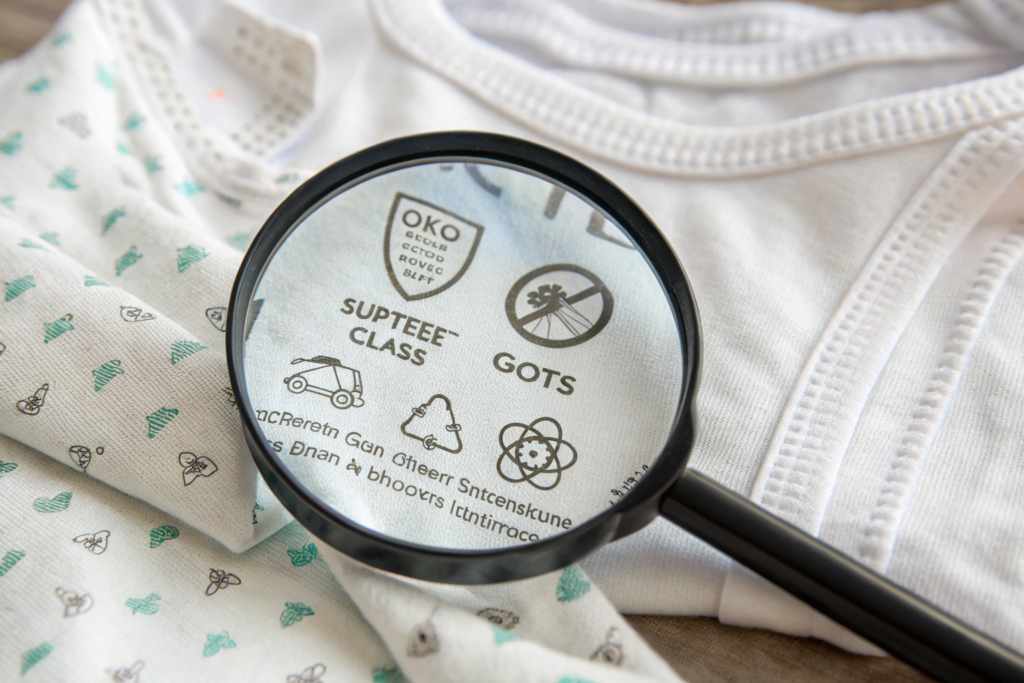
OEKO-TEX Standard 100 is a global testing and certification system for textile raw materials, intermediate, and end products at all processing stages. It tests for over 100 harmful substances, including formaldehyde, heavy metals, pesticides, and allergenic dyestuffs. The critical detail is the product class.
Class I is for products for babies and toddlers up to 36 months. The testing limits are the strictest in the standard, calibrated for a baby's body weight, sensitive skin, and tendency to mouth fabric. Class II is for products with direct skin contact for adults, such as shirts, blouses, and underwear. The limits are still strict, but less stringent than Class I. If you are ordering children's wear, you must ask for a Class I certificate. A Class II certificate is not legally or ethically sufficient for a baby product, even if the fabric "feels" soft. At Shanghai Fumao, we provide the specific OEKO-TEX certificate number for your order. You can independently verify the certificate on the OEKO-TEX label check website. Enter the number. You will see the certified company name, the product class (Class I or II), and the valid-until date. Verify that the company name matches our legal entity, that the class matches your product's end-user, and that the certificate is active. A generic, unspecific "OEKO-TEX certified" claim without a traceable certificate number is a red flag. The traceable number is the only part that holds legal and evidentiary value.
When Do I Need a GOTS Transaction Certificate?
GOTS (Global Organic Textile Standard) is the leading processing standard for textiles made from organic fibers. It covers the entire supply chain, from harvesting the raw fiber to the finished garment. It also includes environmental and social criteria for the processing facilities.
There are two GOTS documents you need to understand. A Scope Certificate proves a factory is certified to process GOTS goods. A Transaction Certificate (TC) proves that a specific, individual shipment of goods is GOTS certified. Many buyers make the mistake of only checking the Scope Certificate and assuming their order is organic. This is incorrect. The Scope Certificate is a license to operate. The Transaction Certificate is the receipt for your specific purchase. Without a TC, you cannot legally sell the product as GOTS-certified organic in most markets. When you order organic textiles from us, we provide a TC number that links your specific invoice and shipped quantity back through the entire supply chain: the farm, the ginner, the spinner, the knitter, and our factory. You can verify this TC number on the GOTS public database. You will see the full traceability chain. If any link is missing, or the quantities do not match, the organic claim is not valid. This is the most rigorous anti-fraud mechanism in the organic textile industry. Demand the TC number for every organic order. A supplier who only offers a Scope Certificate, or whose TC number does not verify, is likely selling conventional cotton falsely labeled as organic.
What Business Legitimacy Documents Should I Request?
A procurement manager from a large UK retailer once gave me his simplest piece of advice for supplier evaluation. He said, "I only do business with a legal entity, not a sales name. If the name on the certificate does not match the name on the bank account, I stop the process. No exceptions." He had learned this the hard way. He had once paid a deposit to a trading company that presented the audit certificate of a different, legitimate factory. When the goods were defective, the trading company dissolved. The legitimate factory denied any contractual relationship. He had no legal recourse because his contract was with a ghost.
Business legitimacy documents prove that the entity you are paying is a real, legally registered company with the correct operational scope and asset backing. These documents are the foundation of any enforceable contract.
How Do I Verify a Chinese Manufacturing Business License?
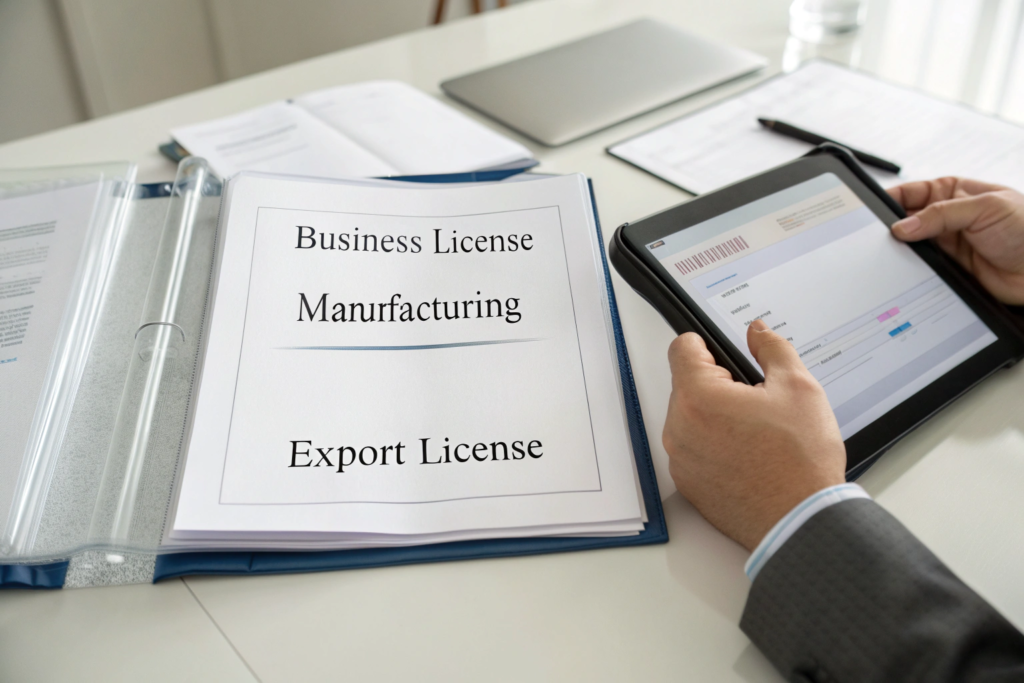
Every legitimate Chinese factory has a unified Business License issued by the State Administration for Market Regulation. This is a public, legally required document. It contains a unified social credit code, the legal company name, the registered address, the legal representative, the registered capital, the establishment date, and critically, the business scope.
Ask for a copy of the Business License. Check the company name. It must exactly match the name on the sales contract, the bank account, and all certifications. Check the business scope. It must explicitly state "manufacturing" or "production" of garments. If the scope only lists "trading" or "consulting," the entity is a middleman, not a factory. Shanghai Fumao Garment Co., Ltd. is our legal entity. Our business scope is garment manufacturing and export. We provide our license openly. You can independently verify the company registration on the National Enterprise Credit Information Publicity System, China's official business registry. This website is in Chinese, but with translation tools, you can verify the company's registration status, any administrative penalties, and the registered capital. A factory with a valid, verifiable manufacturing license and a consistent entity name across all documents has passed the most fundamental trust test. A supplier who refuses to share their license, or whose license has a different name, is hiding their true legal identity.
Should I Ask for References Beyond Certifications?
Certifications and licenses prove a factory has passed third-party inspections and legal registrations. They do not prove the factory delivers on time, communicates effectively, and produces consistent bulk quality that matches the pre-production sample. For this, you need direct client references.
We proactively offer references from current clients in your region and product category. Ask for the contact details of two or three clients with a similar order profile to yours. Call them or email them directly. Ask specific questions: "Did the bulk goods match the approval sample? Were there any hidden costs after the deposit was paid? How did they handle a quality issue? Would you reorder?" A legitimate factory with satisfied clients will facilitate these conversations. We have clients in North America and Europe who have agreed to serve as references. They are real brand owners, distributors, and designers who have worked with us on multiple orders. A factory that only provides written testimonials, or that makes excuses for why you cannot speak to a real client, is a red flag. Written testimonials are easily fabricated. A live, 15-minute phone call with a real reference is one of the most powerful supplier due diligence tools available. It provides the experiential, qualitative evidence that complements the quantitative data of certifications and audits. Use both. The paper trail and the human reference together form a complete picture of the supplier's reliability.
Conclusion
The certifications you request from a garment supplier are not a paper-collecting exercise. They are a systematic risk management protocol. Each certification answers a specific, critical question. The WRAP Platinum certificate and SMETA 4-Pillar audit report answer the question: "Are the people making my clothes treated fairly and working in a safe environment, verified by independent, unannounced inspections?" The OEKO-TEX Class I certificate and GOTS Transaction Certificate answer the question: "Is the fabric safe for my end customer's skin, and can the organic claim be legally and traceably proven?" The unified Business License and direct client references answer the question: "Is the entity I am paying a real, legally accountable manufacturer, and do their existing clients vouch for their performance?"
At Shanghai Fumao, we do not just provide these documents. We provide the live verification paths. The certificate numbers you can check on the issuing body's database. The business license you can cross-reference on the government registry. The client references you can call directly. We treat your due diligence process as a collaborative trust-building exercise, not an obstacle to overcome. If you are preparing to place an order and need to complete your supplier verification, contact our Business Director, Elaine, at elaine@fumaoclothing.com. Ask her for our current WRAP number, our SMETA audit reference, and our OEKO-TEX certificate links. Verify every single one independently. Then ask her for a client reference in your market segment. We will pass your audit because our compliance is structural, not decorative. Let the evidence speak.