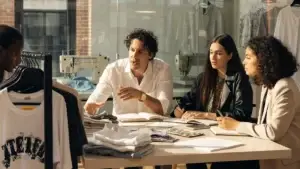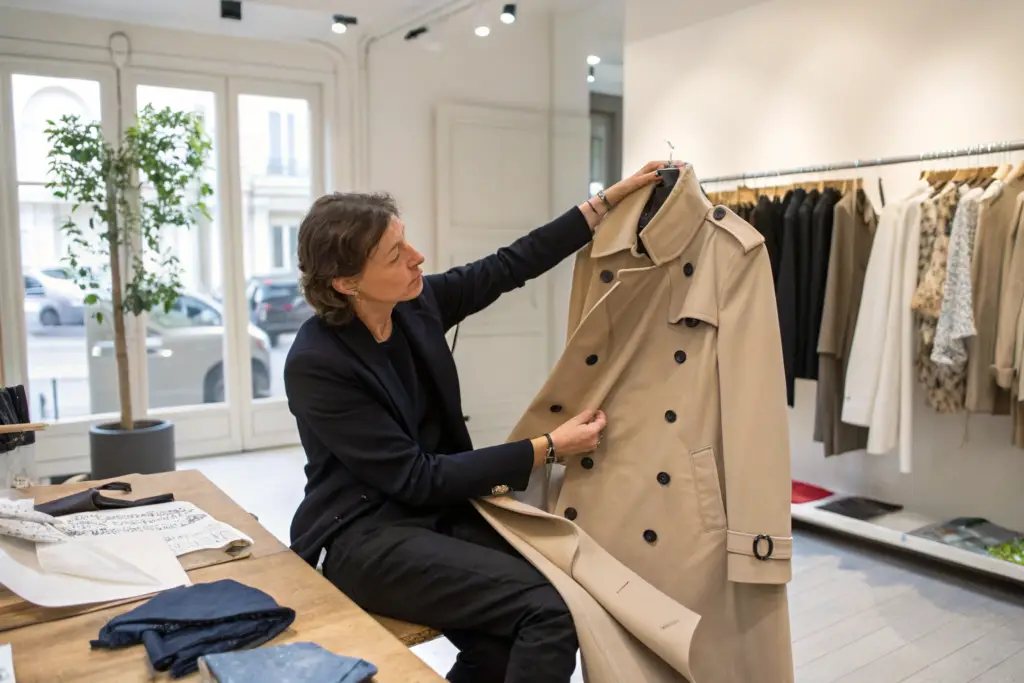
A Parisian boutique owner once sat in my showroom and said something that perfectly captured the European buyer's psychology. She placed a single garment on the table. It was a women's trench coat with a deconstructed, sculptural collar that appeared to float away from the neck. She said, "I found six factories who told me they could make this. Five of them sent me back something that looked like a standard trench coat with the collar folded weirdly. They simplified it. They flattened it. They killed the only reason my customer would pay €900 for it. You are the first factory that understood the collar was the product." That sentence has stayed with me. European buyers at the high-end boutique and designer level are not shopping for manufacturing capacity. They are shopping for design fidelity. They need a partner who understands that the asymmetry, the unconventional drape, the raw edge finish, the historical reference in the silhouette, is not a production inconvenience. It is the entire commercial value of the garment.
European buyers choose Shanghai Fumao for rare styles because we have built a dedicated Rare Design Translation Team that bridges the gap between European creative vision and Asian manufacturing execution. This team combines old-world haute couture construction knowledge with modern modular production techniques. We refuse to simplify a design to make it easier to sew. Instead, we engineer specialized jigs, custom finishing processes, and fabric-specific handling protocols that preserve the designer's original sculptural intent, even across bulk production runs. We speak the language of European fashion, both linguistically and aesthetically.
The European boutique buyer, the Parisian concept store owner, the Milanese showroom director, they are not buying commodities. They are curating a point of view. Their customer is visually literate, trend-sensitive, and unforgiving of design dilution. A rare style that has been "simplified for production" is a returned garment and a lost customer. I want to walk you through the specific capabilities and documented case studies that explain why European buyers trust us with their most delicate, complex, and commercially critical signature pieces.
How Do We Preserve Avant-Garde Design Details in Production?
I remember a Belgian designer who came to us with a jacket that had a "living seam." That was her term. The seam was a structural, undulating curve that ran diagonally from the right shoulder to the left hip. It was not a printed line. It was a true three-dimensional construction seam that gave the jacket a spiraling, sculptural form. She had taken this jacket to three European manufacturers. Two refused to quote because the pattern-making was too complex. One quoted an MOQ of 500 units at a price that made her business model unviable. She was on the verge of dropping her brand's signature design language.
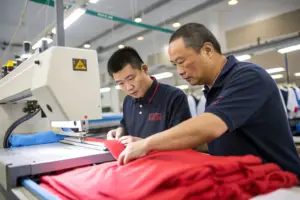
Avant-garde design details are the first casualties of standard manufacturing. A conventional production manager sees an unconventional seam, a raw edge, or an inverted pleat and immediately translates it into the closest standard operation they have a machine for. The design loses its soul in this translation. Our process refuses this simplification.
What Is a 'Construction Jig' and How Does It Protect Design Intent?
A construction jig is a custom-made physical guide or template that we engineer for a specific, complex seam or fold. It is a tool borrowed from high-end woodworking and precision engineering, which we have adapted for garment manufacturing.
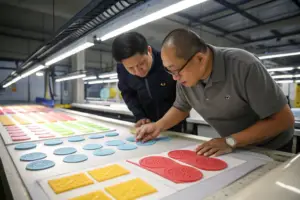
For the Belgian designer's spiraling "living seam," the challenge was not the sewing machine. The challenge was that the two curved fabric edges needed to be fed into the machine at a constantly changing, precise angle. A human operator, even a highly skilled one, cannot maintain the exact angle across 400 units, eight hours a day. The variation would be visible. The spiral would wobble. We designed a laser-cut acrylic jig that clamped onto the sewing machine bed. The jig had a curved channel that matched the specific arc of the seam. The operator fed the fabric edges into the channel, and the jig guided them at the exact, mathematically correct angle for every millimeter of the 60-centimeter seam. The jig cost us about $200 to design and fabricate. It took two days to perfect. But it meant that the 400th jacket sewn on a Friday afternoon had the exact same spiral geometry as the first jacket sewn on a Monday morning. The designer measured the spiral deviation on a random sample of 20 jackets. The maximum variation was under 1.5 millimeters. She was silent for a moment, then said, "I have been looking for this for three years." A production jig is not a standard factory tool. It is a temporary, custom investment we make for a specific order. It is a physical commitment to preserving a specific design's geometry. Most factories will not make this investment. They will tell the client to "simplify the design for production." We tell the client, "We will build a tool to make your design producible without changing it."
Can Raw-Edge Finishes and Hand-Stitched Details Be Scaled?
Raw-edge finishes, hand-stitched beading, frayed hems, and other deconstructed details are signatures of European avant-garde and luxury design. A standard factory says, "This is unfinished. We will fold and topstitch it." That "correction" destroys the designer's aesthetic. But scaling a genuinely hand-stitched or raw-edge detail requires a different production approach.
We do not scale these details by automating them. We scale them by modularizing the artisanal labor. For a Dutch womenswear brand, their signature piece was a deconstructed blazer with a deliberately raw, fraying edge on the lapel and a hand-stitched blanket stitch in contrasting silk thread along the hem. The raw edge could not be machine-finished. The blanket stitch could not be replicated convincingly by a machine. We created a dedicated "couture finishing cell" within our production floor. This cell was staffed by five senior artisans, not production sewers. Each artisan was trained on the specific fraying technique (a controlled wire-brush abrasion to a laser-cut edge) and the specific blanket stitch (tension, stitch length, thread angle). We broke the work into a small assembly line. One artisan frayed the lapels. Two artisans executed the blanket stitch. One performed in-process quality check. The cell produced 50 finished blazers per day, consistent in their "unfinished" aesthetic. The Dutch brand sold the blazer for €780, with the product description specifically highlighting the "hand-finished raw edge by skilled artisans." The hand-finishing was not a cost to be eliminated. It was the value proposition to be preserved and marketed. Our job was to make that hand-finishing scalable and consistent enough to support a commercial production run of 600 units. This approach requires a factory that respects the haute couture finishing skills and sees them as a production capability, not just a sample-making curiosity.
What Sourcing Network Finds Rare Fabrics for European Tastes?
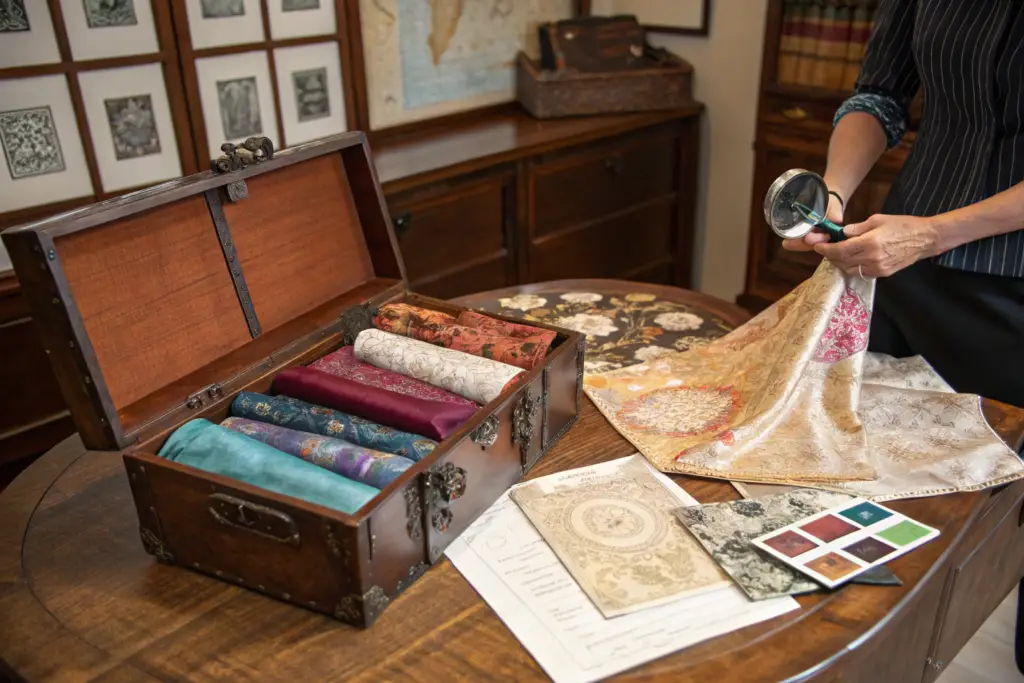
A buyer from a Copenhagen concept store once sent me a physical mood board. It was not a digital PDF. It was an actual board, shipped from Denmark, with scraps of fabric pinned to it. There was a fragment of a 1920s beaded flapper dress, a piece of Japanese indigo-dyed linen, and a sliver of iridescent shell material. Her note said, "I need a fabric that feels like all three of these had a baby. Can you find it?" This is how European buyers communicate. They work from tactile, historical, and emotional references. They are not searching a catalog for a stock code. They are hunting a feeling.
Our fabric sourcing for European rare styles is not a procurement function. It is a creative research and matchmaking process. We bridge the gap between a buyer's poetic vision and the global textile supply chain's technical capabilities.
Can You Source Deadstock and Sustainable Luxury Materials at Scale?
European boutiques are under immense pressure to offer sustainability without compromising on the luxurious, rare aesthetic that justifies their price point. Deadstock fabrics, which are leftover, premium materials from luxury fashion houses, are a perfect solution. They are inherently sustainable because they rescue existing material from landfill. They are inherently rare because the quantity is finite.
The challenge with deadstock is finding enough yardage for a production run. A stunning roll of printed silk twill might only be 80 meters. That makes 50 dresses, not 500. We solve this in two ways. First, we work with certified deadstock aggregators in Italy and Japan to locate larger, consolidated lots. We have sourced deadstock wool crepe, originally produced for a major Milanese house, in quantities of 300 meters, enough for a 200-unit boutique run. Second, we offer a hybrid model. For a Berlin-based brand, we sourced 120 meters of genuine deadstock floral jacquard for a "Limited Edition, 75 pieces only" capsule. The marketing value of the limited quantity and the deadstock story was enormous. The collection sold out in pre-orders. For their next, larger run, we worked with a certified Italian mill to develop a custom jacquard that captured the same aesthetic feel as the deadstock, but with consistent supply. The client could then offer a "Main Collection" version alongside the limited edition. We also source GOTS-certified organic peace silk, where the silk moth is allowed to emerge from the cocoon, and GRS-certified recycled cashmere. The key is verification. We provide full deadstock certification and sustainable fiber traceability documentation, which the European boutique can then use in their own marketing. The sourcing is not just about the fabric. It is about the authenticated, marketable story that comes with it.
How Do We Match European Color and Texture Trends?
European color preferences are nuanced and market-specific. A "sage green" for a Scandinavian brand is a cool, greyed-off, muted tone. A "sage green" for an Italian resort brand is warmer, more yellow-toned, and vibrant. A generic factory swatch book will not capture this distinction.
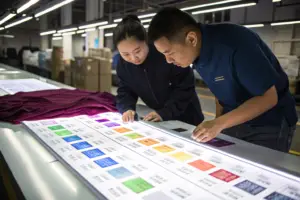
We bridge this gap through a physical, iterative lab dip process aligned with European color standards. We do not ask a buyer to pick from a pre-existing color card. We ask for their physical reference: a Pantone code, a thread cutting, a paint chip, a piece of vintage fabric. Our dye house then creates a set of lab dips, small fabric swatches dyed to the target color, with deliberate slight variations in tone, warmth, and saturation. These physical lab dips are shipped to the buyer. The buyer evaluates them in their own light, against their collection's other pieces, and selects or adjusts. For a London-based menswear brand, we went through five rounds of lab dips to achieve a specific shade of "museum grey" for a flannel trouser. The color had to match the exact tone of a mid-century architectural concrete reference the designer provided. Five rounds meant five weeks of sampling. A mass-market factory would have stopped at round two and shipped an approximately grey trouser. We continued until the designer held the lab dip against his concrete sample in London's natural light and said, "This is it." This patience and precision is what European buyers expect. The textile color matching process is treated as a creative collaboration, not a transactional fulfillment. We also track macro European color trends through trade show attendance and trend forecasting services, allowing us to proactively suggest fabric finishes, like a brushed melton or a paper-touch nylon, that align with emerging European design directions.
Why Is a Single Technical Contact Essential for Complex European Orders?
A Milanese showroom director told me about her previous factory communication experience. She described it as "a game of telephone played across eight time zones and three languages." She would explain a complex drape adjustment to an Italian-speaking agent. The agent would email a Mandarin-speaking sales rep. The sales rep would tell the pattern maker verbally. The pattern maker would make a guess. The sample would arrive, and it would be wrong. The cycle would repeat. She lost six weeks on a single pleat refinement. She told me, "I don't need a salesperson. I need a technical peer who can hear the word 'more slouch' and know I mean lower the armhole by 1.5cm and increase the bicep ease by 3cm."
European orders for rare styles are communication-intensive. They involve nuanced discussions about proportion, drape, texture, and historical reference. A standard sales rep is a linguistic conduit, not a technical participant. Our model replaces the conduit with a direct, technically fluent collaborator.

Who Manages Your Order and What Technical Authority Do They Have?
Your order is managed by a dedicated Business Director, a senior professional with deep garment engineering knowledge and the authority to make real-time production decisions. This is not a client services agent reading from a script. This is the person who can walk onto the production floor and stop a line.
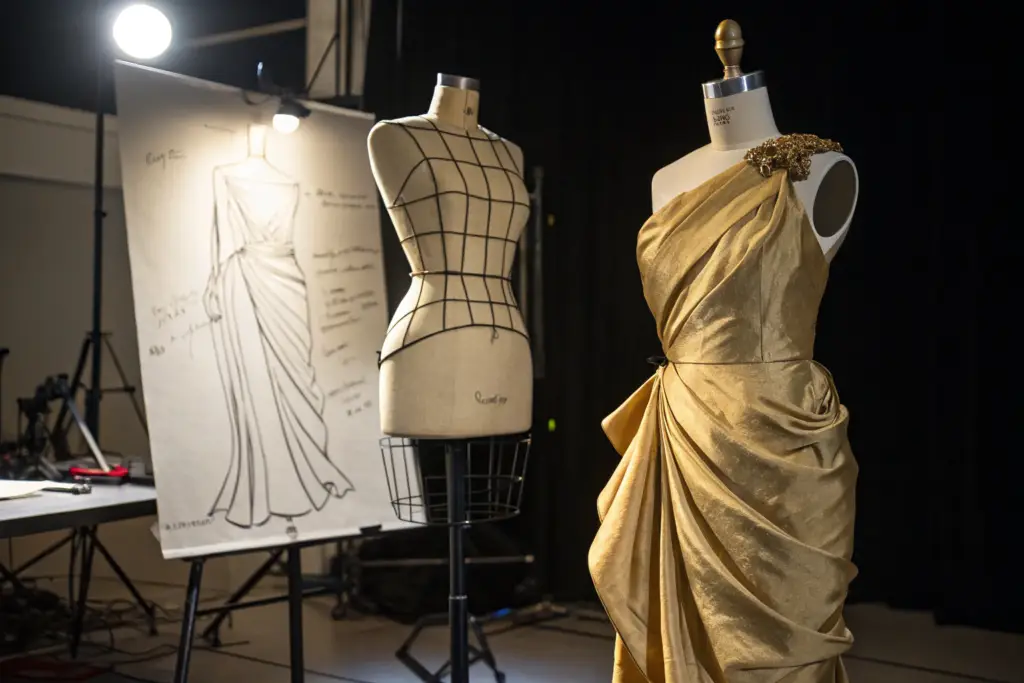
For a Parisian label's complex draped dress, the Business Director, Elaine, was the sole point of contact from initial inquiry to container loading. When the designer sent a photo of the first fit sample and said, "The drape at the hip is pulling slightly, it needs to be more liquid," Elaine did not forward the message to a technical department. She took the sample and the photo to the pattern maker. They discussed the bias grain angle. They identified that increasing the bias angle by 3 degrees and adding 4cm of ease at the hip curve would create the liquid drape without distorting the waist fit. Elaine emailed the designer back within three hours with the proposed technical solution, a diagram of the pattern adjustment, and a confirmed timeline for the revised sample. The designer replied, "Exactly." This is a technical peer-to-peer conversation. It bypasses the linguistic and organizational layers that dilute design intent in a standard factory communication model. The Business Director has the authority to approve a fabric substitution, to pause production for a quality check, or to upgrade a shipment to air freight at our cost if a deadline is at risk. This embedded authority ensures that the person talking to the client is the person who can actually solve the problem. The technical account management model is designed for complexity.
How Do We Use Video to Perfect Fit and Finish Remotely?
For complex, sculptural garments, a flat photo and a written comment are often insufficient. A garment must be seen in motion, on a body, from multiple angles, to evaluate drape and proportion. We use live, high-definition technical video calls as a standard fit tool.
We schedule a video call with the designer. Our in-house fit model, or an adjustable mannequin, wears the sample. The designer directs the camera. "Turn to the side. Walk towards the camera. Show me the back armhole when she raises her arm. Zoom in on the collar roll." Our pattern maker is on the call, watching, taking notes, and discussing adjustments in real-time. For a Brussels-based designer's sculptural coat, a video call revealed that the collar, while technically correct to the pattern, was collapsing slightly when the model walked. The designer saw the movement live, described the intended structural behavior, and our pattern maker immediately suggested a hidden internal wire channel in the collar edge to maintain the sculptural lift. The designer approved the solution on the spot. The revision was cut and sewn the next day. Without the live video, this dynamic failure mode would not have been detected until the next physical sample arrived, costing two weeks and significant air freight. The video call is not a substitute for physical samples, but it dramatically compresses the iterative fit approval cycle. It also builds a direct, trusting relationship between the designer and the factory's technical team. The designer feels they have been on the production floor, looking at the garment together with the person who will engineer it. This virtual fit session capability is essential for long-distance, high-complexity creative collaborations.
Conclusion
European buyers choose Shanghai Fumao for rare styles not because we are the cheapest, but because we are the most faithful to the design. We have invested in the specific capabilities that protect and scale avant-garde creativity: the custom construction jigs that preserve a spiraling seam across 400 units, the couture finishing cells that scale a hand-stitched raw edge into a commercial production run, the deadstock and sustainable luxury sourcing network that finds the fabric to match a poetic mood board, and the color-matching patience that iterates five rounds of lab dips to achieve a specific museum grey. Underpinning all of this is a communication model built on a single, technically fluent Business Director who has the authority to act and the knowledge to translate "more liquid" into a specific pattern adjustment. European design integrity is our manufacturing specification. We do not simplify. We engineer to preserve.
If you are a European buyer, boutique owner, or designer who has been told that your signature piece is "too complex to produce" or "needs to be simplified for cost," I invite you to test our commitment to design fidelity. Contact our Business Director, Elaine, at elaine@fumaoclothing.com. Send her your most difficult sketch, your most precious sample, your most ambitious fabric reference. Ask her for a technical feasibility assessment and a realistic timeline. She will tell you honestly what it will take to bring your vision to life, without flattening its soul. Let us prove that rare design can be manufactured without compromise.