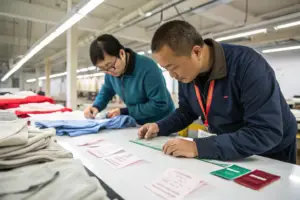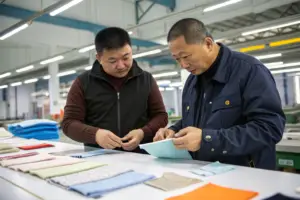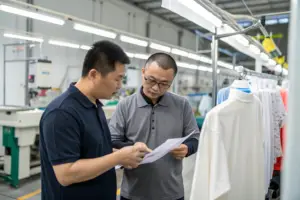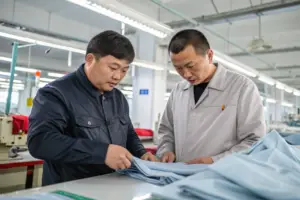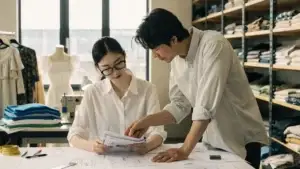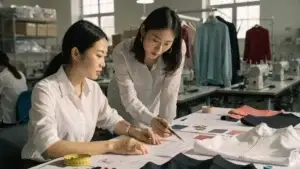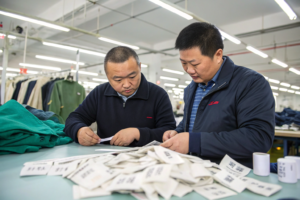
A childrenswear brand founder from London once sent me a fabric swatch she had been using from her previous supplier. It was a printed cotton jersey for a toddler dress. She asked me, "Can you match this quality?" I took the swatch to our lab. The fabric was a carded open-end cotton, loose, hairy, and with a low thread count. When I stretched it under a light, I could see pinpricks of light through the weave. I called her back and said, "I can match this fabric, yes. But I would rather not. This fabric will pill badly, shrink unevenly, and the print will crack after ten washes." There was a long silence on the phone. Then she said, "That explains the returns." Her previous supplier had told her it was "premium kids' wear cotton." It was not. It was a cheap adultwear base cloth with a cute print on top. The fabric was not engineered for a child's skin, a child's activity level, or a parent's washing machine.
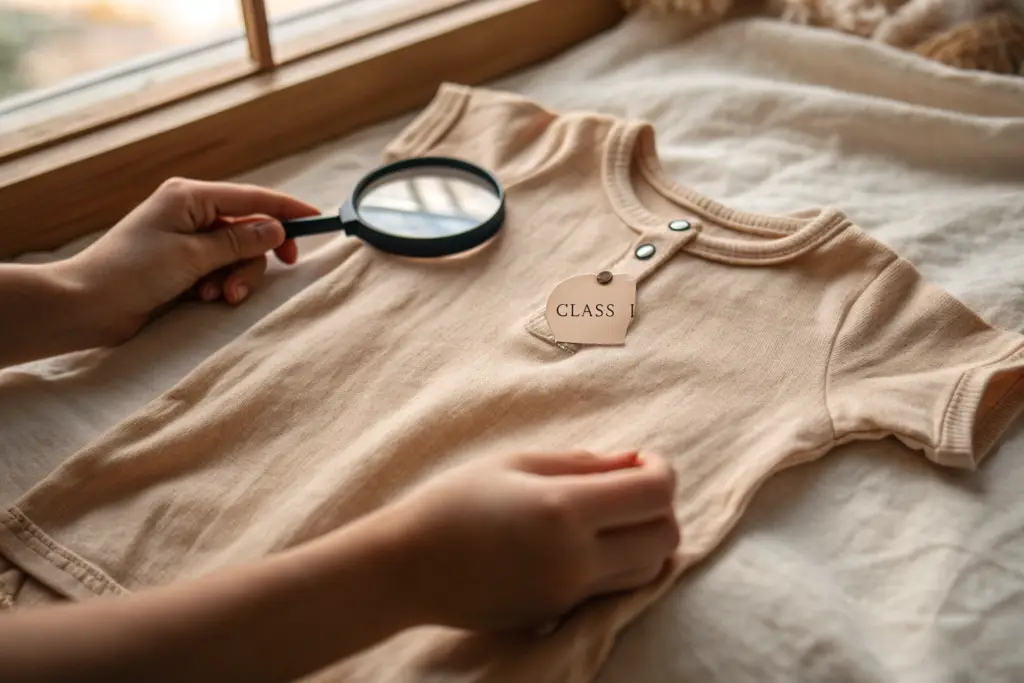
Yes, Shanghai Fumao offers first-class fabric for kids' wear. We source and produce children's garments exclusively from OEKO-TEX Standard 100 Class I certified textiles, the highest safety classification for baby and toddler products. Our fabrics are engineered for durability against frequent high-temperature washing, have a soft hand-feel that minimizes skin irritation, and meet the stringent chemical safety requirements of both US CPSIA and EU REACH regulations. We do not repurpose generic adult fabrics for children. Every textile we use in a kids' wear order is specifically selected and tested for its suitability for the most demanding and vulnerable end-user.
A child's skin is thinner and more permeable than an adult's. A child's garment is washed more frequently and more aggressively. A child's garment is chewed, crawled in, and subjected to biomechanical stresses that a typical office shirt never experiences. Fabric quality for kids is not a marketing term. It is a physiological and mechanical engineering requirement. This article explains the specific standards, certifications, and sourcing practices we use to ensure the fabric we put against a baby's skin is genuinely first-class, not just labeled as such.
What Safety Certifications Are Mandatory for Premium Kids' Wear Fabric?
I need to tell you about a shipment that never happened. A distributor from Australia had placed an order for 2,000 printed cotton baby blankets. The design was adorable, hand-painted watercolor animals. The fabric was a soft brushed cotton. Right before cutting, our compliance officer flagged the print pigment. The supplier of the pigment provided a general safety data sheet, but not the specific heavy metals analysis required for infant products under the Australian equivalent of CPSIA. We halted the order. We sent the pigment to an independent lab. The result showed lead content at 12ppm. The legal limit for children's products in Australia was 10ppm. It was a two-part-per-million failure, invisible to the naked eye, completely safe for an adult, but illegal for a baby. We found an alternative, certified pigment. The delay cost us a week. The client was initially frustrated. Then she realized we had just prevented a forced product recall, a government fine, and a potential brand-ending safety scandal.
Safety certifications for kids' wear are not optional marketing badges. They are legally enforced, scientifically defined thresholds that exist because children have been harmed by non-compliant textiles in the past. First-class fabric for kids' wear begins and ends with verified, active, and scope-appropriate certifications.
What Is the Difference Between OEKO-TEX Class I and Standard Certificates?
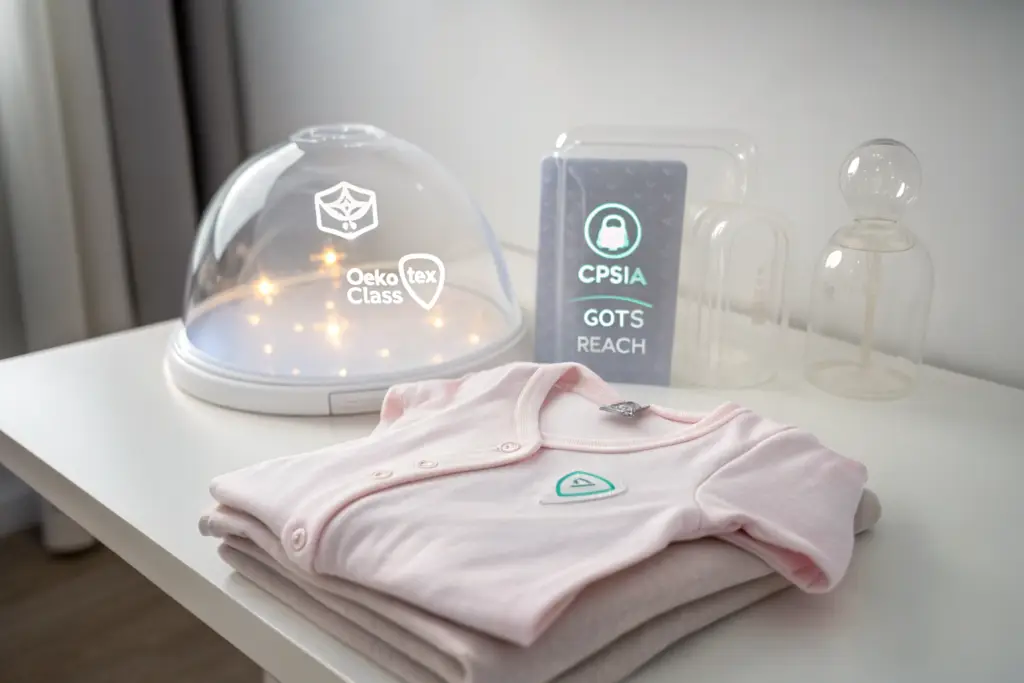
OEKO-TEX Standard 100 is the most recognized textile safety certification globally. But many buyers do not realize it has four product classes based on the intensity of skin contact and the vulnerability of the user. Class I is for babies and toddlers up to 36 months. Class II is for direct skin contact for adults. Class III is for occasional skin contact. Class IV is for decoration materials.
The testing limits for Class I are significantly stricter than for Class II. A formaldehyde limit that is acceptable for an adult T-shirt is too high for a baby onesie. A heavy metal tolerance that passes Class II will fail Class I. A generic factory might offer you "OEKO-TEX certified fabric," but if you do not ask which Class, they may be supplying Class II adult fabric and calling it "certified" without technically lying. At Shanghai Fumao, we mandate Class I certification for any textile used in a product intended for a child under three years old. We do not allow Class II substitution, even if the fabric "feels" soft enough. The certification number must be active, traceable on the OEKO-TEX public database, and specifically list Class I in its scope. We provide our clients with the live certificate number and the direct verification link before we cut a single meter of fabric. This is not a paper formality. The Class I standard tests for over 100 harmful substances at limits calibrated for an infant's body weight, skin permeability, and oral contact behavior. Babies chew on their sleeves. They drool. The fabric chemicals must be safe for ingestion, not just skin contact. A Class II standard does not test for this scenario. This distinction is the definition of first-class for the most vulnerable customer.
How Do CPSIA and REACH Regulations Impact My Fabric Choices?
CPSIA (Consumer Product Safety Improvement Act) is the mandatory US regulation for children's products. It governs lead content in surface coatings and substrates, phthalate limits in plastics, and mandatory third-party testing from a CPSC-accepted laboratory. REACH is the European equivalent, regulating a broader range of chemical substances, with specific restrictions on AZO dyes, formaldehyde, and heavy metals.
For a US-bound kids' wear order, we generate a Children's Product Certificate (CPC) backed by a CPSC-accepted lab test report. This is not optional for the brand owner. It is a legal requirement for selling children's products in the United States. The testing must be performed on the actual finished product, not just the raw fabric, because components like snaps, zippers, and labels also contribute to the overall chemical load. For a client producing a line of toddler pajamas, we tested the finished garment for lead in the printed label, phthalates in the plastic snap closure, and flame retardancy per the CPSC sleepwear standards. The pajamas passed. The CPC was issued. The client could legally sell on Amazon and in US boutiques. Without this CPC, their inventory could be seized, and they could face fines up to $100,000 per violation type. For EU-bound goods, the REACH compliance is similarly enforced. We have had to reject specific dyestuffs from non-European suppliers because their amine levels exceeded the 30ppm REACH threshold, even though the color looked perfect. A first-class kids' wear program integrates these regulatory requirements into the fabric sourcing decision from day one, not as a post-production checkbox. The CPSIA compliance process adds cost and lead time, but it is the price of legally and ethically entering the children's market.
How to Choose Fabrics That Survive Kids' Daily Wear and Tear
I have a specific memory of a brand owner in Seattle who tested our fabric in a way I had never seen before. She took the sample kids' legging I sent her, gave it to her four-year-old son, and told him to "go be a dinosaur." He wore them for a week straight. He climbed trees. He slid down a gravel driveway. He crashed into furniture. She washed the leggings eight times in hot water and dried them on high heat. Then she emailed me a photo. The leggings had no holes, no significant pilling, and the color was still bright. She wrote, "Okay. This fabric passes the dinosaur test. What is it?" I told her it was a 260gsm interlock knit, a blend of organic cotton, modal, and a small percentage of elastane, finished with a bio-polish enzyme wash.
Kids' wear fabric engineering is a discipline of anticipating maximum abuse. Children do not treat their clothes with care. Parents wash them on aggressive cycles to remove food, dirt, and bodily fluids. A fabric that feels lovely on a showroom hanger but falls apart after three washes is not first-class. It is a liability disguised as a textile.
What Is the Best Fabric Weight and Structure for Active Kids?
Fabric weight, measured in grams per square meter (GSM), is a primary determinant of durability. Lightweight fabrics below 160gsm are prone to tearing, especially at the knees and seams. For children's playwear, leggings, and trousers, we recommend fabrics in the 220gsm to 280gsm range. This provides a substantial, protective feel without being heavy or restrictive.
The structure of the knit is equally critical. An interlock knit is denser and more stable than a single jersey. It does not curl at the edges. It resists stretching out of shape. For a line of unisex kids' joggers, we used a 280gsm brushed-back French terry with a tight, compact face. The brushed interior provided warmth and softness. The tight face resisted abrasion from playground surfaces. The French terry structure has a strong wale that runs vertically, giving the fabric dimensional stability. We also reinforced the knee area with a hidden second layer of the same fabric, a technique borrowed from workwear. The client reported a less than 1% return rate for durability issues, compared to 8% for their previous, lighter-weight jogger. For tops and dresses, a 200gsm to 220gsm interlock knit or a heavy single jersey with elastane offers a balance of drape, comfort, and tear resistance. I advise against lightweight voile or gauze fabrics for children under five, unless the design is specifically a delicate occasion piece and the parent understands the care limitations. A first-class kids' wear fabric is not just about the fiber content label. It is about the physical weight and the structural knit that can withstand hundreds of hours of kinetic energy.
How Do We Make Natural Fibers Resistant to Pilling and Shrinkage?
Pilling and shrinkage are the two most common reasons for kids' wear returns. A parent receives a beautiful organic cotton sweater. After three washes, it is covered in fuzz balls and the sleeves are now three-quarter length. The parent feels cheated. The brand loses that customer forever.
We combat pilling at the yarn and finishing stages. We use long-staple cotton fibers, which are inherently less hairy and less prone to pilling than short-staple fibers. For knits, we specify a compact ring-spun yarn rather than an open-end yarn. The compact spinning process twists the fibers more tightly and singes off surface fibers, resulting in a smoother, stronger yarn. Then, we apply a bio-polish enzyme treatment. This is a natural enzyme, typically cellulase, that digests the micro-fuzz on the fabric surface without weakening the core structure. The fabric emerges from the enzyme wash with a clean, smooth face that resists the mechanical friction that generates pills. To control shrinkage, we use a mechanical compacting process during finishing. The fabric is fed through a compactor machine that overfeeds the fabric into a controlled shrinkage, pre-shrinking it before cutting. Our standard for kids' wear is less than 5% residual shrinkage after five home laundry cycles. We test every bulk fabric lot in our internal lab before cutting. A fabric shrinkage test report showing 3% or less is our release criteria. These processes add cost and time compared to simply cutting and sewing a generic greige fabric. But they are the difference between a garment that looks new after 20 washes and one that looks shabby after five. For a parent, that difference is the entire value proposition.
Can You Source Sustainable and Organic Fabrics for Children's Clothing?
A luxury baby brand from Copenhagen approached us with a very specific brief. Their entire value proposition was "the purest garment on earth." No pesticides. No synthetic dyes. No plastic-based trims. No greenwashing. They wanted a fabric that was genuinely, verifiably, and radically pure, and they wanted to make 1,000 units of it. This is a difficult brief, not because the fabric is hard to find, but because the proof of purity is hard to validate across a complex global supply chain.
Sustainable and organic sourcing for kids' wear is not about choosing a fabric with an "eco" prefix. It is about building a documented, auditable chain of custody from the farm to the finished garment. Children are the most sensitive end-user, and the "natural" marketing claim carries the highest legal and ethical burden of proof.
What Does GOTS Certification Guarantee for Kids' Wear?
The Global Organic Textile Standard is the most rigorous processing standard for organic fibers. It covers not just the farming of the cotton, but every subsequent processing stage: ginning, spinning, knitting, dyeing, and garment manufacturing. It also includes strict environmental and social criteria for the factories involved.
When a client requests GOTS-certified kids' wear, we do not just buy "GOTS yarn." We engage our entire supply chain in the certification process. The yarn spinner, the knitter, and our own factory must all hold valid GOTS scope certificates. For each order, we generate a Transaction Certificate that traces the specific batch of yarn through to the specific finished garments. The client receives this TC number and can verify it on the GOTS public database. For the Copenhagen brand, we sourced GOTS-certified organic cotton from a farm collective in India. The yarn was spun in a GOTS-certified mill. The fabric was knitted and dyed using only GOTS-approved low-impact dyes and auxiliary chemicals. Our factory's GOTS scope certificate was audited to ensure compliance with the social criteria. The final garments were labeled with the GOTS logo and the certification body's mark, a legally protected use of the trademark that requires a valid license number. This is the difference between a "made with organic cotton" claim, which may only refer to the fiber content, and a GOTS-certified garment, which certifies the entire processing chain is free from toxic inputs and exploitative labor. For a premium kids' wear brand, the GOTS label on the care tag communicates a verified purity promise to the parent, who is increasingly educated and skeptical about unsubstantiated environmental claims.
Are Recycled Polyester Blends Safe for Delicate Skin?
Recycled polyester, often made from post-consumer PET bottles, is widely marketed as a sustainable alternative. For children's wear, especially garments worn directly against the skin, I advise caution and very careful sourcing.
The recycling process, if not meticulously controlled, can introduce chemical contaminants. The original PET bottles may have contained residues of the beverages they held, or the bottles may have been collected from waste streams contaminated with unknown substances. The mechanical or chemical recycling process must be thorough enough to eliminate these potential contaminants. We only use recycled polyester that is GRS-certified and has passed OEKO-TEX Class I testing. The GRS certification verifies the recycled content and tracks the chain of custody. The OEKO-TEX Class I test confirms the finished fabric is free from harmful substances at the infant-grade threshold. For a kids' activewear brand, we developed a performance interlock using a blend of 70% GOTS organic cotton and 30% GRS-certified recycled polyester. The polyester provided durability, wicking, and shape retention. The organic cotton provided softness and breathability against the skin. The fabric was tested and passed Class I certification. The brand could legitimately market both the organic and recycled content with full supply chain transparency. However, if a client requests a 100% recycled polyester garment for toddlers, I will ask them to reconsider the end-use. Pure polyester against a baby's skin can trap heat and moisture, and the chemical origin story is more difficult to guarantee at the infant safety threshold. A blended approach, with a natural fiber dominant against the skin and a certified recycled synthetic for performance, is a safer and more comfortable path. The GRS certification provides the necessary traceability backbone for any recycled claim.
Conclusion
First-class fabric for kids' wear is a specific, measurable, and verifiable standard, not a subjective description of softness. It begins with mandatory safety certifications, OEKO-TEX Class I, CPSIA compliance, and REACH compliance, each representing a legally enforced protective barrier around the child's developing body. It continues with durability engineering, selecting fabric weights, knit structures, and finishing processes that anticipate the Dinosaur Test: the relentless, joyful destruction of a child at play. And it is grounded in authentic, auditable sustainability, where GOTS and GRS certifications provide a transparent chain of custody from the organic farm or recycled source to the finished garment. A soft, cheap fabric that pills, shrinks, or leaches restricted chemicals is not first-class. It is a failure of responsibility to the most vulnerable consumer.
At Shanghai Fumao, we treat every kids' wear order as a safety-critical project. We do not cut a single meter of fabric until the lab report is in, the certificate database is checked, and the shrinkage and pilling tests are passed. If you are building a children's brand that promises parents uncompromising safety, durability, and purity, I invite you to verify our standards for yourself. Contact our Business Director, Elaine, at elaine@fumaoclothing.com. Ask her for a sample of our OEKO-TEX Class I certified interlock or our GOTS-certified French terry. Request the live certificate numbers so you can verify them independently. Let the fabric, and the documentation behind it, speak for our commitment to first-class kids' wear.