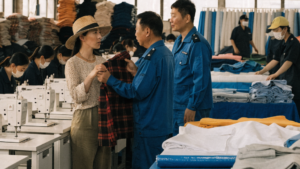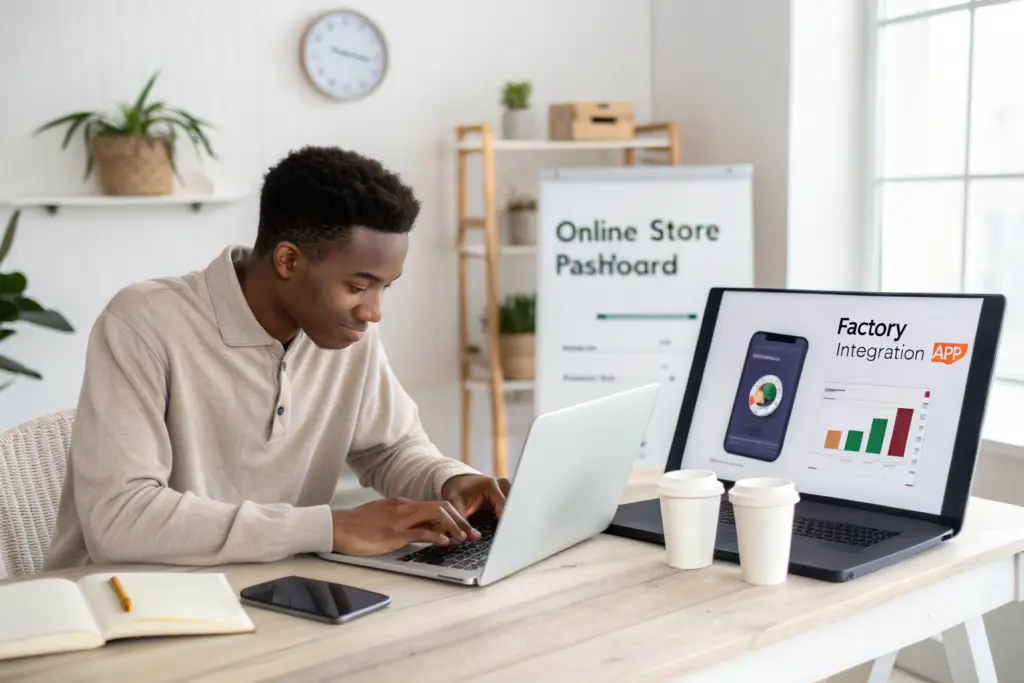
I sat in a coffee shop in Austin last year with a 24-year-old who had built a $30,000-a-month apparel brand without ever touching a single garment. He did not own a warehouse. He did not own a printer. He did not pack a single box. His entire inventory was a digital catalog on a Shopify store. When a customer in Chicago ordered a hoodie, the order flowed automatically to our factory in Shanghai. Our team printed the label, picked the garment, packed it, and shipped it directly to the customer’s doorstep with the brand’s logo on the packaging. The customer never knew the brand owner was running the business from his apartment. The brand owner never worried about inventory, shipping, or returns. His job was marketing, brand building, and customer relationships. The factory handled everything else.
You quickly create a seamless dropshipping model using a highly reliable B2B clothing factory by building a three-layer technology and logistics integration. Layer one is a product catalog integration where the factory provides a live feed of available styles, sizes, colors, and stock quantities that syncs automatically with your e-commerce platform. Layer two is an automated order routing system where a purchase on your website triggers an instant notification to the factory’s fulfillment system, which generates a pick list, a packing slip with your brand identity, and a shipping label. Layer three is a white-label logistics layer where the factory ships the product directly to your customer using your brand’s packaging, your brand’s label, and a return address that protects your brand identity. The entire model is built on three non-negotiable factory capabilities: real-time inventory visibility, blind shipping with your brand identity, and a guaranteed 24 to 48-hour order processing window. A factory that claims to offer dropshipping but cannot provide real-time inventory data is not a dropshipping partner. It is a wholesale supplier that occasionally ships small orders.
The dropshipping model is the most capital-efficient way to launch an apparel brand. You do not buy inventory upfront. You do not lease a warehouse. You do not hire a fulfillment team. Your capital goes entirely into customer acquisition and brand building, which are the highest-return activities in the apparel value chain. I want to share exactly how to set this up, what to demand from your factory partner, and how to avoid the operational failures that give dropshipping a bad reputation.
What Exact Technology Integrations Are Required for a Real-Time, Blind Dropshipping Operation?
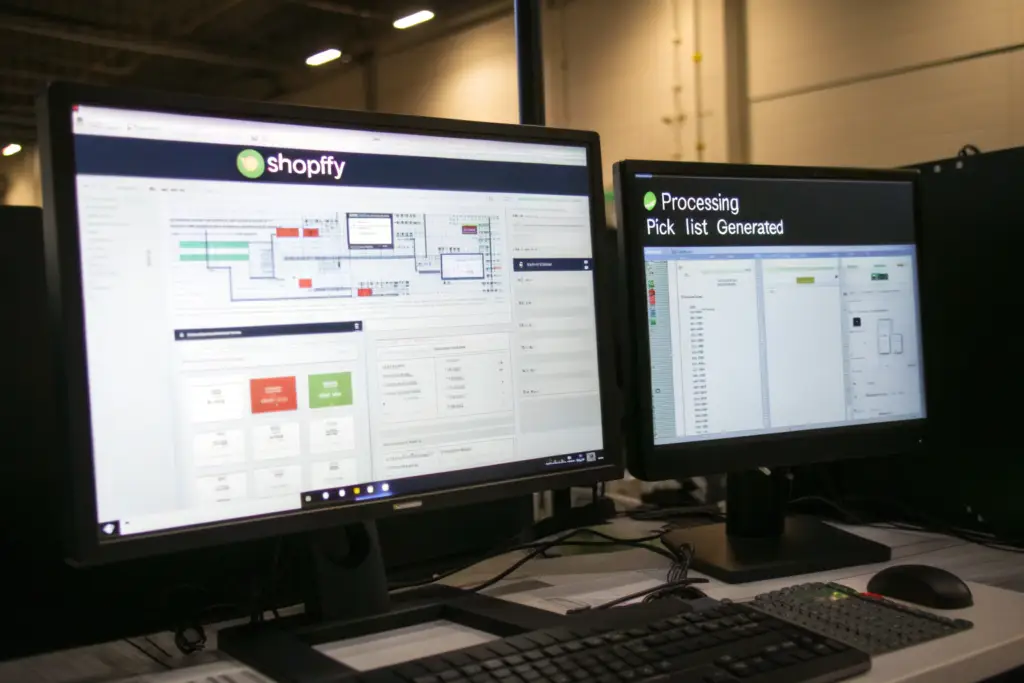
A brand owner I work with started his dropshipping business by manually emailing orders to his factory. Every morning, he would copy the previous day’s orders from his Shopify dashboard, paste them into a spreadsheet, and email the spreadsheet to his factory contact. It worked for ten orders a day. When his business grew to 50 orders a day, the manual process collapsed. Orders were missed. Tracking numbers were lost. Customers complained. He almost lost his business because his operations could not scale with his sales. We integrated his Shopify store with our factory’s order management system through an API. Now, when a customer clicks "Buy," the order appears on our packing station screen within 60 seconds. No human intervention. No missed orders. No copy-paste errors.
A real-time, blind dropshipping operation requires three specific technology integrations between the brand’s e-commerce platform and the factory’s fulfillment system. First, an inventory sync integration that pulls live stock quantities from the factory’s warehouse into the brand’s product pages. When the factory sells out of a size, the brand’s website automatically shows "Out of Stock." Second, an automated order push integration that sends every new order to the factory’s fulfillment queue the moment payment is confirmed, including the customer’s name, shipping address, and ordered SKU. Third, a tracking number push-back integration that sends the carrier name and tracking number back to the brand’s platform the moment the shipping label is generated, triggering an automatic shipping confirmation email to the customer. These three integrations eliminate every manual step in the order-to-fulfillment process. The brand owner can wake up in the morning, check the dashboard, and see that orders placed overnight are already being packed without them lifting a finger.
The technology integration is not optional. A factory that asks you to email orders is a factory that is not actually set up for dropshipping. They are a wholesale supplier who is willing to ship small quantities. The difference is the difference between a scalable business and a job that you cannot grow beyond the limits of your own typing speed.
How Does an API or Middleware Integration Automatically Convert a Shopify Sale into a Factory Packing Slip?
The integration works through an Application Programming Interface (API) or a middleware platform. When a customer completes a purchase on the brand’s Shopify store, Shopify generates an order with a unique ID. A middleware platform like Orderhive, TradeGecko, or a custom-built connector detects the new order and formats the data into a structure the factory’s system can read. It sends a POST request to the factory’s order management API. The factory’s system receives the data, creates a picking list with the customer’s name, address, and ordered items, and prints a packing slip and shipping label. The entire process from customer click to printed label takes under three minutes. The brand does nothing. The factory’s fulfillment team begins picking and packing immediately. The Shopify-to-factory API integration is the standard for modern dropshipping operations.
What Is “Blind Shipping” and How Do You Ensure the Factory Never Reveals Its Identity to Your End Customer?
Blind shipping means the factory ships the product without any factory branding on the packaging, the packing slip, or the return address. The customer receives a package that appears to come directly from the brand. The return address on the shipping label is the brand’s address or a neutral fulfillment center address, not the factory’s address in Shanghai. The packing slip inside the box has the brand’s logo, not the factory’s name. The poly bag has the brand’s custom branding. To ensure blind shipping, you must provide the factory with your branded packaging materials, your packing slip template, and your return address. You must include a blind shipping clause in your contract that specifies a financial penalty for any shipment that reveals the factory’s identity. The blind shipping best practices for dropshipping protect your brand’s relationship with your customer.
How Does a Factory’s In-House Stock Holding and Picking System Replace Your Entire Warehouse?
A brand owner I work with used to rent a 500-square-foot storage unit for $800 a month. She stocked 200 units of each style, which tied up $15,000 in inventory at any given time. She spent her Sundays packing orders. She was a warehouse manager who occasionally did marketing. She switched to our factory’s stock holding program. We now hold 50 units of each of her best-selling styles in our finished goods warehouse. When an order comes in, our picking team pulls the garment, packs it, and ships it. She pays a small storage fee of $0.15 per unit per month and a picking fee of $0.80 per order. Her total monthly logistics cost is now $250 instead of $800. She reclaimed her Sundays. She reclaimed her living room. She reclaimed $15,000 in working capital.
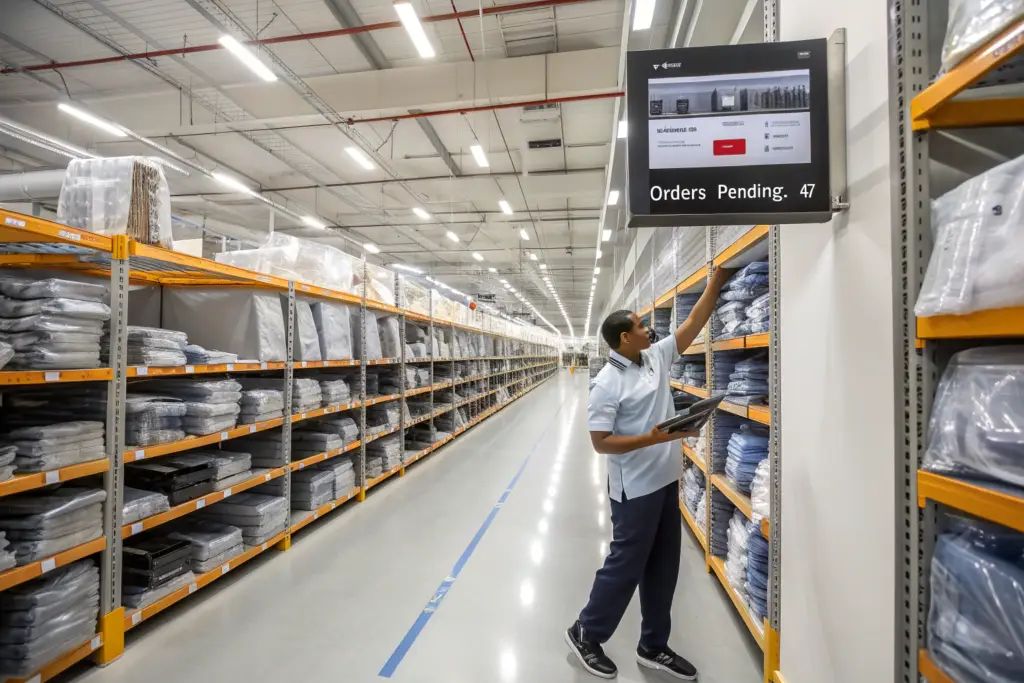
A factory’s in-house stock holding and picking system replaces your warehouse by providing a virtual inventory model. The factory holds a buffer stock of your finished garments in their warehouse. This stock is segregated from other brands’ inventory, barcoded, and tracked in a Warehouse Management System that you can view in real time. When an order is placed, the factory’s picking team locates the garment, scans the barcode, and places it on the packing line. You pay a small storage fee and a per-order picking fee. You never touch the product. You never pay for a warehouse lease, utilities, insurance, or warehouse staff. The capital that was tied up in inventory can be deployed into marketing and product development. The time that was spent on fulfillment can be deployed into growing the business. The virtual inventory model is the financial engine that makes dropshipping profitable.
The virtual inventory model is not just a convenience. It is a structural financial advantage. A brand that operates with virtual inventory has a lower cost structure than a brand that operates a warehouse. That cost advantage can be invested in better marketing, better product, or higher margins.
What Is the Difference Between “Stock Holding” and “On-Demand Manufacturing” in a Dropshipping Context?
Stock holding means the factory has finished goods sitting on a shelf, ready to ship. When an order comes in, the garment is picked and packed within hours. This model requires the brand to have pre-produced inventory and paid for it. On-demand manufacturing means the garment does not exist until the order is placed. The factory cuts and sews the garment after the customer buys it. This model requires zero upfront inventory investment but has a longer delivery time, typically 5 to 14 days. Stock holding is appropriate for best-selling carryover styles where you can predict demand and want fast shipping. On-demand is appropriate for new styles, custom sizes, or products where you want to test demand before committing to bulk production. The most sophisticated dropshipping operations use a hybrid model: stock holding for core styles, on-demand for seasonal or test styles.
How Does a Factory’s Picking Accuracy Rate of 99.9% Directly Prevent Costly Chargebacks?
A mispick happens when the warehouse worker pulls the wrong size, the wrong color, or the wrong style. The customer receives a Medium instead of a Large. They return the item. The brand pays for return shipping, loses the sale, and potentially receives a chargeback from the payment processor. A factory with a 99.9% picking accuracy rate, verified by barcode scanning at every touchpoint, reduces these costly errors to near zero. The barcode scanner verifies that the garment matches the order before the packing slip is printed. If the scan fails, the system alerts the picker. The mispick is caught before the box is sealed. The warehouse picking accuracy metrics are a key performance indicator you should demand from your factory partner.
What Quality Control Checkpoints Must Occur Inside the Factory Before the Garment Is Blind-Shipped?
A dropshipping brand learned a painful lesson about quality control. They had integrated with a factory that shipped directly to customers. The factory’s QC process was designed for bulk wholesale orders, where a 2% defect rate was acceptable because the retailer would catch the defects before putting the garments on the rack. In a dropshipping model, there is no retailer buffer. The defective garment goes directly to the end customer. The brand’s return rate was 12%, double the industry average. The reviews were brutal. "Hole in the sleeve." "Crooked hem." "Label sewn upside down." The factory was not doing anything wrong by wholesale standards. They were simply not doing enough for direct-to-consumer standards.
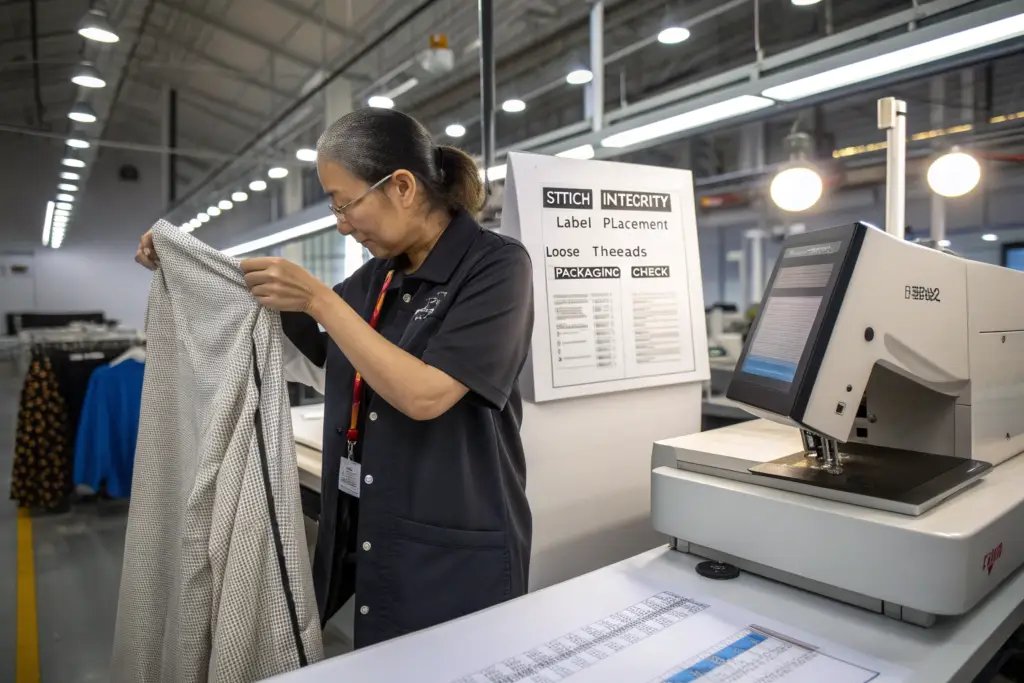
The quality control checkpoints for dropshipping must be more rigorous than standard wholesale QC because the garment goes directly to the end consumer with no intermediary inspection. Before a garment is blind-shipped, it must pass a 100% visual inspection under bright light, not a statistical AQL sample. The inspector must check every seam, every label, every hem, and every surface for defects. The garment must be checked for loose threads, which are the number one consumer complaint. It must be pressed or steamed to remove packing creases. It must be folded neatly and placed in the branded packaging. The QC standard for dropshipping is a "retail-ready" standard. The garment must look exactly as it would on a boutique rack. A factory that applies wholesale QC standards to a dropshipping operation will generate an unacceptable return rate.
The QC process is the invisible barrier between a delighted customer and a returned package. In a traditional wholesale model, the retailer absorbs some of the QC risk. In a dropshipping model, the brand absorbs all of it. The factory must be your QC department, and their standards must reflect that responsibility.
Why Does a 100% Visual Inspection Replace the Standard AQL 2.5 Statistical Audit for Dropshipping?
AQL 2.5 means the inspector checks a random sample of approximately 200 units from a batch of 3,000. If fewer than 10 units have major defects, the batch passes. In a wholesale model, the other 2,800 units go to retail stores. The stores’ staff inspect the garments before putting them on the rack. Defects are caught. In a dropshipping model, the other 2,800 units go directly to individual customers. The 10 defective units that were statistically acceptable in the AQL sample become 10 angry customers, 10 returns, and potentially 10 negative reviews. For dropshipping, a 100% visual inspection is required. Every single garment must be checked. This costs more, approximately $0.30 to $0.50 per unit versus $0.05 for AQL sampling. The cost is justified by the reduction in return rate and the protection of the brand’s reputation. The 100% inspection versus AQL sampling for direct-to-consumer is a critical operational decision.
What Is a “Gold Seal” Pre-Pack Standard That Ensures Every Blind-Shipped Box Is Instagram-Unboxing Ready?
A Gold Seal pre-pack standard is a documented, photographed packing procedure that every fulfillment worker follows. The garment must be folded to a specific dimension with tissue paper inserted to prevent creasing. The branded hang tag must be attached at a specific position. The branded sticker must be placed on the tissue paper, not on the poly bag. A thank-you card must be inserted on top of the garment. The box must be sealed with branded tape. A Gold Seal reference box is photographed and displayed at every packing station. The packer compares their finished box to the reference before sealing it. This ensures that every customer receives an unboxing experience that looks and feels premium, regardless of which individual packer handled their order.
Conclusion
Building a seamless dropshipping model using a highly reliable B2B clothing factory is the fastest path to a capital-efficient, scalable apparel brand. The model replaces upfront inventory investment with a variable cost structure. You pay for the product only after the customer has paid you. Your capital is deployed into marketing and brand building, not warehousing and fulfillment labor. The technology integrations eliminate manual order processing. The virtual inventory model eliminates the warehouse lease. The 100% QC process protects your customer experience.
The key to making this work is choosing a factory that is genuinely set up for dropshipping, not a wholesale supplier who is willing to ship small orders. The factory must provide real-time inventory visibility, blind shipping with your brand identity, automated order routing, and a 100% inspection standard. A factory that claims to offer dropshipping but cannot provide these four capabilities is a factory that will generate returns, complaints, and operational chaos.
At Shanghai Fumao, we offer a complete dropshipping fulfillment program designed for brands that want to sell without holding inventory. We provide inventory sync integration with major e-commerce platforms. We offer blind shipping with your branded packaging, packing slips, and return address. We hold buffer stock of your best-selling styles in our finished goods warehouse. We perform 100% visual inspection on every dropshipped garment. We ship DDP to your customer’s door.
If you are launching a new brand or transitioning an existing brand to a dropshipping model, we can help. At Shanghai Fumao, we will walk you through our dropshipping integration process, our stock holding program, and our QC standards. Contact our Business Director, Elaine, at elaine@fumaoclothing.com. She can send you a dropshipping capability document and a sample integration timeline. Launch your brand without inventory. Build your business without a warehouse. Focus on what creates value: your brand, your marketing, and your customer relationships. Let the factory handle the rest.