You have lived the nightmare. The holiday collection is stuck at the port. The buyers are calling. The marketing campaign is live, but the shelves are empty. You finally receive the goods in March, and that beautiful winter coat line is now on a clearance rack, sold at a loss. I have seen this tragedy destroy promising brands. A missed shipping window is not just a late delivery. It is a permanent loss of revenue, a loss of retail credibility, and a toxic inventory write-off. The industry is littered with factories that make beautiful samples but collapse into chaos during peak season. Your brand deserves a partner who treats your calendar like a binding contract.
Shanghai Fumao solves missed shipping seasons by integrating aggressive pre-production planning, real-time production tracking, and guaranteed vessel space booking. We reverse-engineer your required in-store date into a rigid, monitored production timeline. We don't just promise delivery dates. We build a system that makes on-time shipment the inevitable outcome, not a hopeful guess.
How do we break the cycle of chronic delays that plague this industry? We do it by controlling the controllable. We lock down every detail before cutting. We track every piece as it moves through the line. We book shipping space before the order is even finished. Let me walk you through the specific systems that transform your seasonal calendar from a source of anxiety into a competitive advantage.
Pre-Production Planning That Locks Down Your Calendar
A late shipment is rarely caused by one big disaster. It is the accumulation of tiny, unchecked delays. The lab dip came back two days late. The button supplier needed an extra week. The cutting room queue was too long. These micro-delays pile up, and suddenly you are three weeks behind. We break this pattern with a discipline called the Time and Action Calendar. This is not a passive spreadsheet. It is the central operating system of your order.
Our pre-production planning process is mandatory and non-negotiable. We build a critical path calendar that maps every single task, from lab dip approval to final carton sealing, against hard deadlines. Each task has a named owner and a dependency. If a task slips by 24 hours, the system alerts management and we deploy resources to recover the time immediately. The calendar protects your ship date.

What Is a Time and Action Calendar and How Does It Save Weeks?
A Time and Action (T&A) calendar is a project management tool that breaks your order into hundreds of discrete steps. It links tasks in sequence. For example, "Fabric Inspection" cannot happen until "Fabric Arrival" is complete. "Cutting" cannot start until "Fabric Inspection" is passed. We build the T&A calendar backward from your required container loading date.
This reveals the true critical path. It exposes hidden bottlenecks before they happen. Last autumn, a men's outerwear brand came to us after their previous supplier missed a crucial November ship window. We took their design and built a T&A calendar in 24 hours. It showed that the custom zipper lead time was the critical constraint. We immediately air-freighted the zipper samples to start the approval process, while the base fabric was still being dyed. This parallel processing, guided by the critical path analysis, recovered three weeks of lost time. The order shipped on November 3rd, hitting their Black Friday deadline. This is how disciplined production planning turns a late order into an on-time delivery.
Why Is a Pre-Production Meeting a Critical Quality Gate?
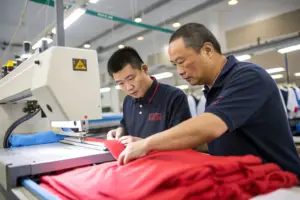
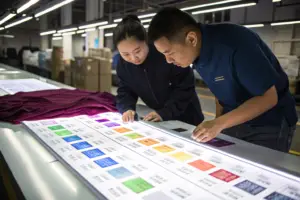
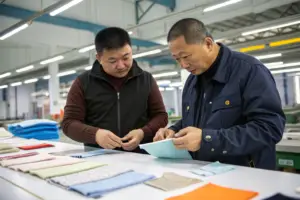
Before the first meter of fabric is unrolled, we hold a mandatory Pre-Production Meeting. The pattern master, the cutting room supervisor, the sewing line chief, the quality manager, and the merchandiser all sit together with your approved sample and tech pack. We read every line of the spec sheet aloud. We examine the sample construction stitch by stitch.
In this meeting, we identify production risks. Is a particular seam too complex for a standard machine? Does the trim application require a special folder attachment that needs to be ordered? We solve these problems in the meeting room, not on the factory floor where they cause delays. For a recent women's wear order with a complex bias-cut skirt, the pre-production meeting revealed that the fabric's slipperiness required a special needle plate. We ordered the plate that afternoon. It arrived before cutting started. The line never stopped. This one-hour meeting saved days of potential downtime. This is the preventative discipline that keeps your delivery date safe.
Real-Time Production Tracking and Bottleneck Management
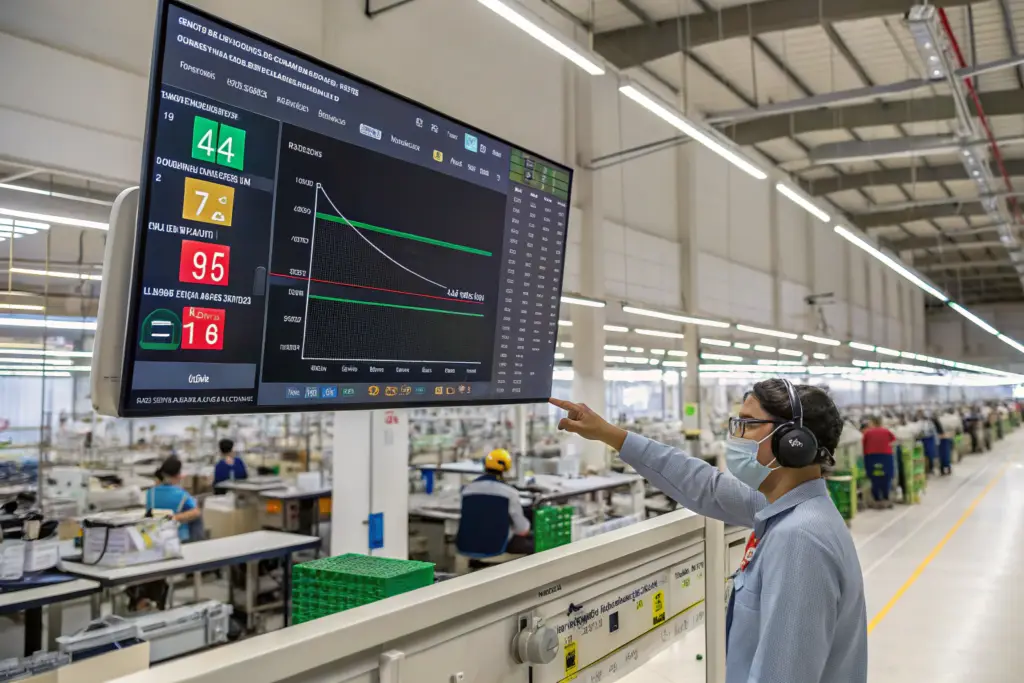
You cannot manage what you cannot measure. A traditional factory manager walks the floor and "feels" whether production is on track. That gut feeling is usually wrong. When a problem finally becomes visible, it is too late to fix it. We removed the guesswork. We installed a Real-Time Production Tracking system that gives us instant, objective data on the status of every single piece in your order.
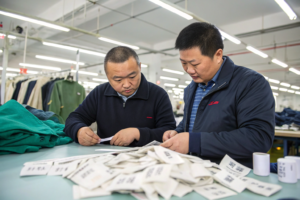
We use barcode scanning at every major production milestone. A bundle of cut pieces is scanned as it enters the sewing line, and a finished garment is scanned as it exits. This data feeds a live dashboard that our production manager monitors continuously. If the output rate of your style drops below the planned target, we see it within minutes, not days. We can immediately re-allocate operators or machines to recover the pace.
How Does Barcode Tracking Prevent Bottlenecks Before They Delay Orders?
Imagine your order of 5,000 dresses. The body assembly line is running at full speed. But the sleeve attachment station is slow. Without data, the supervisor sees people "working hard" and thinks everything is fine. In reality, a mountain of half-finished bodies is piling up. This is a bottleneck. Our barcode tracking reveals this immediately.
The dashboard shows the Work-in-Progress pile-up at the sleeve station. The production manager sees the data. He walks to that station. He discovers the operator is struggling with a tight thread tension. He fixes the machine tension and adds a second operator for two hours to clear the backlog. The line balance is restored. The order finishes on time. For a large distributor order last spring, this tracking system flagged a bottleneck at the labeling station. We shifted two cross-trained workers from the packing line to labeling for one shift. It cleared the jam. The order shipped on the original scheduled day. This granular production monitoring is how we keep our promises.
Can Live Data Recover Time Lost to Unexpected Machine Downtime?
Machines break. Needles snap. Motors overheat. This is a reality of manufacturing. The difference is how fast you respond. In a non-digital factory, a broken specialist machine might sit idle for hours before the mechanic is alerted. With our tracking system, the machine connects to the network. If it stops producing for more than five minutes, an alert goes to the maintenance team's phones.
Last year, during a peak season order of 10,000 woven shirts, a critical buttonhole machine's motor burned out. The real-time alert fired immediately. The maintenance team had a replacement motor from our spare parts inventory installed within 45 minutes. The line was paused, but not derailed. Because the rest of the line continued and we adjusted the workflow slightly, the total shift output loss was less than 2%. The order shipped on time. The brand owner never knew there was a problem. This is the invisible shield that predictive maintenance and manufacturing analytics provide. We absorb the shocks so your delivery date remains untouched.
Guaranteed Logistics and Peak Season Vessel Allocation
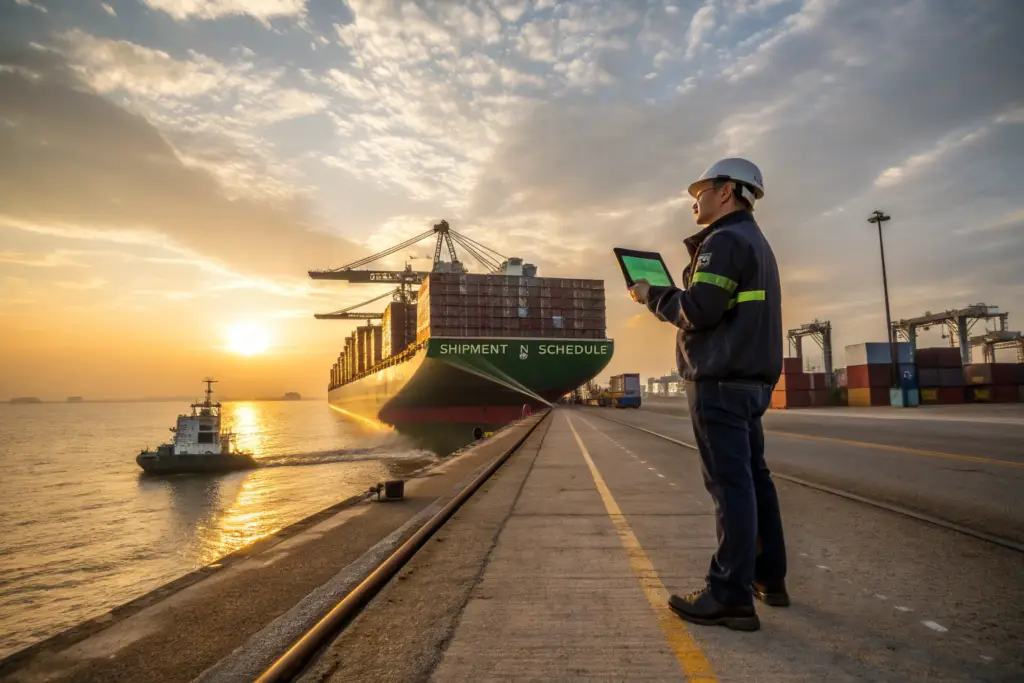
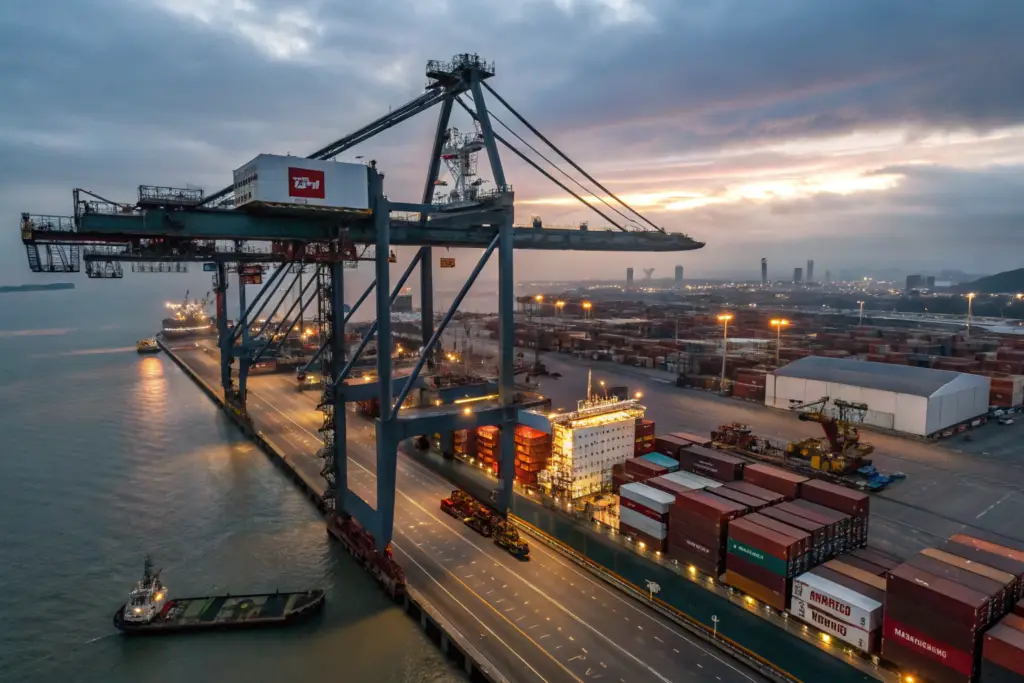
A perfectly manufactured order is useless if it cannot get on a ship. During the August-to-October peak season, vessel space from Asia to the US West Coast becomes extremely tight. Factories without logistics power see their containers "rolled" to a later sailing, sometimes multiple times. Your goods sit at the dock for two weeks while your selling window closes. This is the final mile where many factories fail. We do not leave this to chance.
We secure vessel space with our carrier partners through annual contracts that guarantee allocation during peak season. Our logistics team books space weeks before your order is finished, based on the T&A calendar's projected completion date. When your goods are packed and the container is sealed, a confirmed sailing date is already waiting. We do not beg for space. We own it contractually.
Why Does a Carrier Contract Matter for Your Holiday Season Launch?
During peak season, shipping lines prioritize their contracted, high-volume customers. A factory that books on the spot market is the lowest priority. We have annual service contracts with major carriers. These contracts specify a Minimum Quantity Commitment of containers we will ship, and in return, the carrier guarantees us space allocation.
This is an industry-level advantage. When a spot-market shipper gets rolled, our containers still load. A New York fashion brand learned the value of this last holiday season. Their previous Chinese supplier, a small trading company, saw their Black Friday order rolled twice. The shipment arrived in late December. Dead stock. They moved the next season's order to us. Our contracted space meant the container loaded on the exact vessel we had booked. It arrived at their warehouse on October 10th, in plenty of time for the holiday floor set. This contract-backed shipping guarantee is a core component of our promise to solve missed seasons. You can research the importance of these logistics partnerships on freight industry platforms.
How Does Our Container Loading Protocol Prevent Shipping Damage Delays?
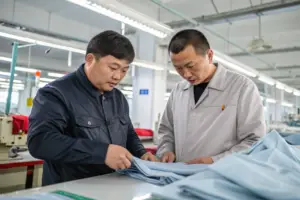
A delayed shipment due to transit damage is still a delayed shipment. If your goods arrive crushed, wet, or dirty, you cannot sell them. We apply a strict container loading protocol. An inspector checks every container before loading. It must be clean, dry, and free of sharp edges or holes. The inspector photographs the empty container and the loaded container with doors open and closed.
We use reinforced cartons specified for your product weight. We block and brace the pallets inside the container so nothing shifts during ocean transit. For a Florida-based brand that had experienced mold issues with a previous supplier, we placed desiccant packs inside every carton and a container desiccant pole to absorb moisture. The goods arrived in perfect, sellable condition. This meticulous attention to the container loading process is another link in the chain of on-time, in-full delivery. We protect your product until it is safely in your warehouse.
Conclusion
Missing a shipping season is not an act of God. It is a failure of planning, visibility, and logistics power. We solve this failure by controlling the three critical links in the delivery chain. We lock down your calendar with a militant pre-production process that surfaces risks before they become delays. We track your production in real-time so we can see a bottleneck forming and clear it within hours, not days. And we secure your container's place on a ship through contractual logistics partnerships that survive peak season chaos.
At Shanghai Fumao, we understand that a late delivery is a financial death sentence for a seasonal collection. We have engineered our entire operation, from the meeting room to the loading dock, to guarantee that the date we commit to is the date we keep. We do not just ship clothes. We ship certainty.
If a late shipment has damaged your brand in the past, or if you are terrified of missing your next seasonal launch window, I want you to experience a different kind of factory relationship. Let us take your next style, build a critical path calendar, and show you exactly how we would guarantee its on-time arrival.
Contact our Business Director, Elaine, at elaine@fumaoclothing.com. She will schedule a call to discuss your seasonal calendar and walk you through our time-and-action planning process. Let us make your next shipping deadline the one you never had to worry about.