I pulled a five-year-old shirt out of my closet last month. It was from one of the first brands we ever manufactured for. The fabric had softened beautifully. The stitching was still perfect. The printed satin care label inside the side seam was completely blank. Every letter of the brand name, the size, the washing instructions, had flaked off after dozens of wash cycles. The shirt was a walking advertisement for the brand, but nobody who saw it would ever know who made it. The brand had saved maybe $0.08 per unit by choosing printed tags over woven labels. That $0.08 savings cost them a five-year branding opportunity every time that customer wore the shirt.
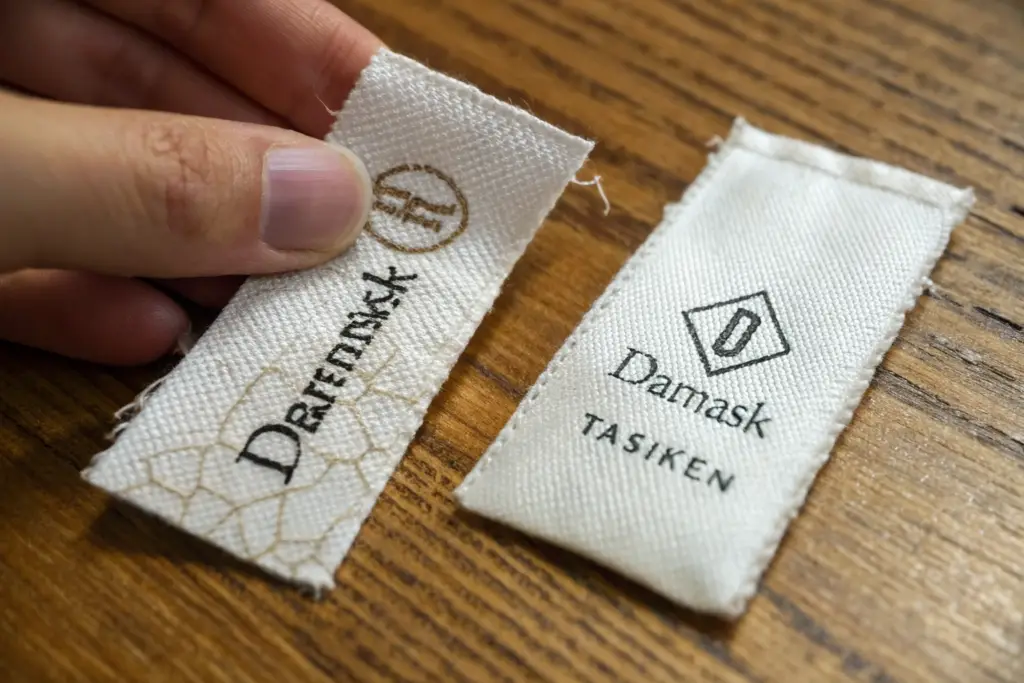
Custom woven brand labels are significantly better than printed tags for long-term brand identity because they are physically permanent. A woven label is constructed by interlacing polyester or cotton yarns into a dense, dimensional fabric. The brand logo and text are part of the structure of the label, not a layer of ink sitting on top of it. This means the label will not fade, crack, peel, or wash out for the entire useful life of the garment, which for a premium piece can be five to ten years. A printed tag, whether screen-printed, thermal-printed, or laser-printed onto satin or cotton tape, is inherently degradable. The ink sits on the surface and is attacked by friction, water, detergent, and body oils with every wear and wash. After 20 laundry cycles, the printed tag begins to fail. The brand identity literally washes away. The difference between a woven label and a printed tag is the difference between a brand that designs for the showroom and a brand that designs for the lifetime of the garment.
The brand label is the only component of the garment that the customer sees every single time they dress and undress. It is the most repeated brand impression in your entire product. Investing in that impression is not a cost. It is one of the highest-return marketing investments a clothing brand can make. I want to share exactly why woven labels outperform printed tags, what specifications matter most, and how our brand partners at Shanghai Fumao use custom woven labels to build enduring brand recognition.
What Physical and Material Properties Make Woven Labels Indestructible to Washing and Friction?
A performance activewear brand we work with switched from printed labels to woven labels after a devastating return wave. Customers were returning leggings not because the fabric failed, but because the care label information had washed off, and they did not know how to wash the garment properly. They were washing hot water performance fabric on warm settings and destroying the elasticity. The printed label was supposed to tell them to wash cold. The label itself failed. The brand switched to woven labels. The care instructions remained legible for the life of the legging. The returns for care-related fabric damage dropped by 40%.
Woven labels are physically indestructible to normal washing and friction because the information is structural, not superficial. In a woven damask or taffeta label, the polyester or cotton yarns are dyed before weaving. The logo and text are formed by the interlacing of different colored yarns, just like a fine tapestry. There is no ink to scratch off, no coating to dissolve, and no adhesive to degrade. The label is a single piece of engineered textile. It will withstand over 100 industrial wash cycles without visible degradation. A printed label, by contrast, relies on a surface ink layer that is bonded to the substrate by heat or chemical adhesion. This bond is mechanically weak. The friction of the label rubbing against the garment fabric during wear, the agitation of the washing machine, and the chemical action of detergent gradually break the bond. The ink flakes away. The information is lost. The woven label is the permanent solution. The printed label is a temporary solution.
The material difference is visible under a microscope. A woven label shows a structured grid of interlocking yarns. A printed label shows a flat surface with ink particles clinging to the peaks of the fibers. The structured grid survives. The ink particles do not.
What Is the Molecular Difference Between a Dyed Polyester Yarn in a Woven Label and a Surface Ink Adhesion on a Printed Tag?
A dyed polyester yarn is colored through a process called solution dyeing or package dyeing. The pigment is embedded within the polymer structure of the fiber itself. It is not on the surface. It is the fiber. Cutting the yarn in half reveals the same color at the core as on the outside. This is why a woven label will never lose its color. The color is the material. A surface ink on a printed tag is a separate chemical layer that sits on top of the substrate. It is bonded by weak van der Waals forces or a heat-activated adhesive. Water molecules and detergent surfactants work their way between the ink layer and the substrate, breaking these weak bonds. The ink separates. The textile dyeing versus printing chemistry explains why dyed yarns are permanent and surface inks are not.
How Many Industrial Wash Cycles Can a Damask Woven Label Survive Versus a Thermal Printed Satin Tag?
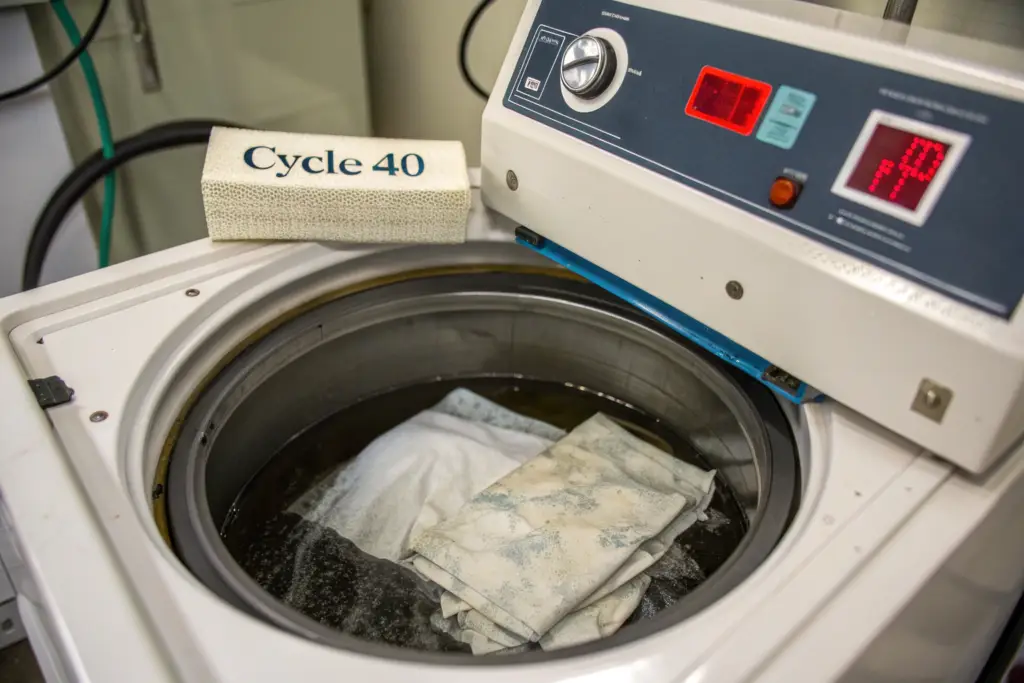
A high-quality woven damask label, made from 100% polyester yarns with a fine weave density, will survive 100 to 200 industrial wash cycles without visible degradation. A thermal printed satin label will begin to show significant fading and cracking after 15 to 25 wash cycles. The printed label is often illegible by cycle 40. This is a 10x difference in durability. For a garment that is expected to last five years and be washed 50 times, the woven label will look nearly new at the end of its life. The printed label will be blank by year two. The wash durability testing for labels is standardized. A brand that wants to test this can send both label types to a lab and request an AATCC 61 accelerated wash test.
How Does the Perceived Value Transfer from a Textured, Dimensional Label to the Entire Garment?
I watched a customer in a boutique pick up two identical-looking jackets. She checked the price. Both were $180. She tried on both. Both fit. She could not decide. Then she turned the jackets inside out and touched the labels. One label was a scratchy, shiny printed polyester tag. The other was a soft, textured woven cotton label with a subtle brand logo. She chose the jacket with the woven label. She told the boutique owner it "felt more expensive." The garments were identical in every other respect. The label was the deciding factor.
A woven label transfers perceived value to the entire garment through the psychological mechanism of sensory transference. When a customer touches a garment, their fingers encounter the label. If the label feels textured, soft, and substantial, their brain transfers that positive sensory experience to the surrounding garment. They assume the fabric is better, the stitching is stronger, and the design is more considered. The dimensional quality of a woven label, the slight raised texture of the yarns, the matte finish, the soft drape, is inherently premium. A printed label, by contrast, feels flat, smooth, and often scratchy. The sensory experience is negative or neutral. The customer may not consciously notice the label, but their subconscious does. The woven label creates a "halo effect" of quality that colors the customer’s perception of the entire purchase. This is one of the smallest investments a brand can make with one of the highest returns in perceived value.
The tactile experience is the most underrated element of brand building. A customer who touches your label and feels quality has formed a memory. The next time they see your brand, that memory of quality returns. The label is a silent salesperson that works every time the garment is touched.
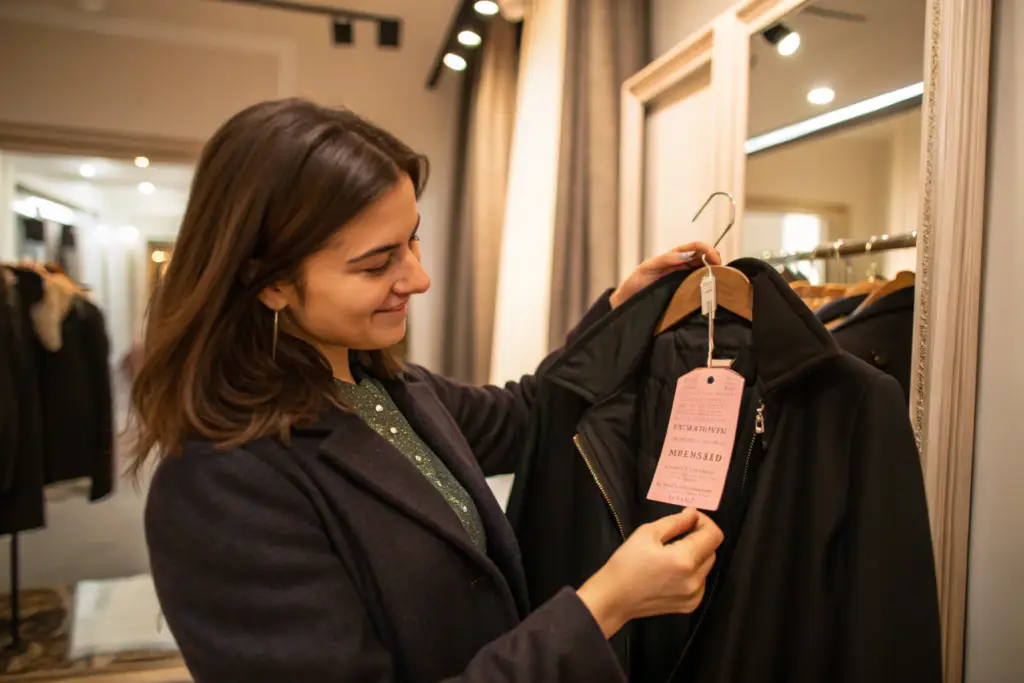
What Specific Tactile and Visual Elements of a Woven Damask Label Signal “Luxury” to a Consumer?
A luxury woven label has specific physical characteristics. It uses a damask weave, which creates a subtle, elegant sheen on the logo against a matte background. The yarns are fine, 50 denier or thinner, allowing for sharp, high-definition text and detailed logos. The label edges are laser-cut and heat-sealed, not folded or cut with a hot knife that leaves a rough ridge. The label material is soft, often a brushed polyester or a cotton blend, not a stiff, shiny satin. The attachment is precise, sewn flat on all four sides with a single-needle lockstitch, not a chainstitch that unravels. These elements together create a label that feels like a miniature piece of fine fabric, not a piece of packaging. The luxury label design specifications are well documented in the trims industry.
Why Does a Worn-Out, Blank Printed Label Subconsciously Damage the Brand’s Reputation Every Time the Customer Does Laundry?
Every time a customer does laundry, they see the care label. If the label is blank, faded, or peeling, the customer’s subconscious registers a negative impression. The brand’s identity has literally disintegrated. The customer may not articulate this, but they feel it. The brand feels cheap, temporary, and poorly made. The opposite is true for a woven label that remains crisp and legible after years of washing. The customer sees the brand name, feels the quality, and their positive impression of the brand is reinforced. The care label is a recurring brand touchpoint that compounds over the life of the garment. A woven label compounds positively. A printed label compounds negatively. The cumulative effect on brand loyalty is significant.
How Does a Woven Label’s Edge Finish Prevent the “Fraying Tag” Look That Damages a Garment’s Interior Aesthetics?
A brand owner once complained that her garments looked "messy" on the inside, even though the outside was beautiful. I turned the garment inside out. The printed label edges were fraying. Tiny threads were sticking out, catching on the fabric, and creating a generally unfinished appearance. The label was the only thing wrong with the interior. We switched her to a woven label with laser-cut, heat-sealed edges. The interior of the garment immediately looked clean, professional, and intentional. The cost difference was less than $0.05 per label.
A woven label with a proper edge finish prevents the frayed, unraveling look because the edges are sealed during the cutting process. The standard for premium woven labels is laser cutting with a simultaneous heat seal. The laser melts the polyester yarns at the cut edge, fusing them into a clean, hard border that will never fray. Cheaper labels are cut with a hot knife, which leaves a rough, melted ridge, or with a cold blade, which leaves raw edges that fray immediately. A printed label on satin or cotton tape is almost always cold-cut, and the edges begin to fray after the first wash. The fraying threads not only look bad; they catch on other garments in the wash, causing tangling and damage. The edge finish of a label is a detail that 99% of customers will never consciously notice, but 100% of customers will subconsciously register as either "quality" or "messy."
The edge finish is the hallmark of a well-made label. A factory that invests in laser-cutting equipment is a factory that cares about the details that most brands overlook.
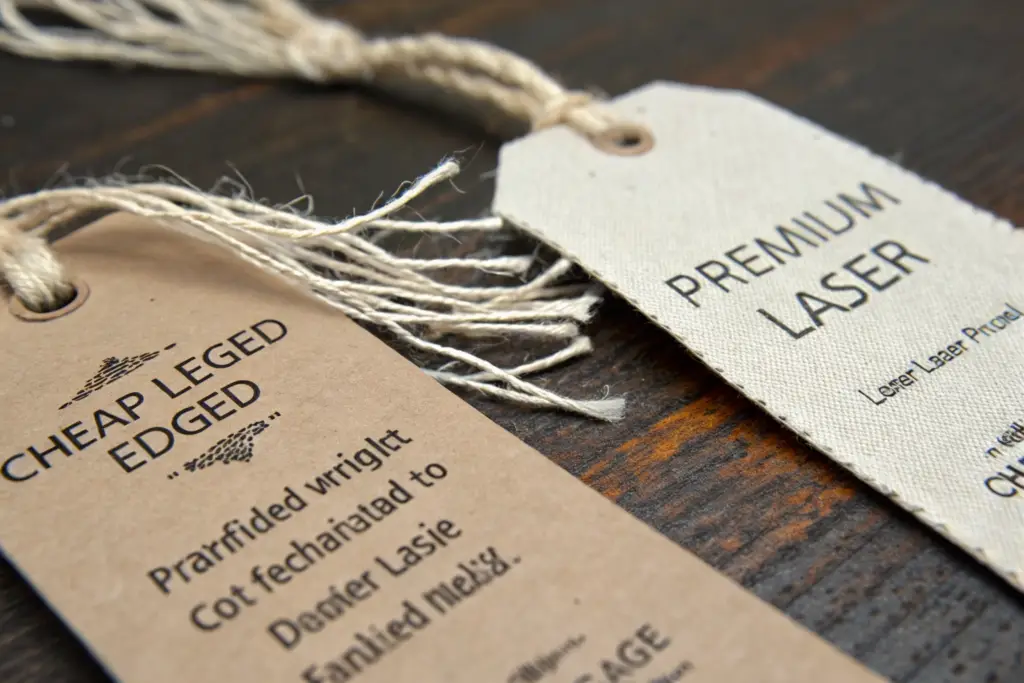
What Is the Difference Between a Laser-Cut, Hot-Knife-Cut, and Cold-Cut Label Edge?
A laser-cut edge is the premium standard. The laser vaporizes the material along a precise cutting path and simultaneously seals the edge. The result is a perfectly smooth, sealed border with no fraying and no discoloration. A hot-knife cut uses a heated blade to melt through the fabric. The edge is sealed, but it often leaves a rough, raised ridge and can cause yellowing on light-colored labels. A cold-cut edge is simply a mechanical blade cut. The edge is raw and will begin to fray immediately. For a brand that cares about quality, laser-cut edges are non-negotiable. The label edge finishing methods comparison explains the cost and quality differences.
How Does the Fraying of a Care Label Impact the Overall “Interior Architecture” of a Premium Garment?
The interior of a premium garment should be as beautiful as the exterior. Clean-finished seams, bound edges, and a smooth, flat label are the hallmarks of quality construction. A fraying care label is a visual and tactile irritant. It makes the interior feel unfinished and cheap. It can also create a physical problem: frayed threads can get caught in zippers, wrap around buttons, and cause the customer frustration every time they dress. The interior of the garment is the customer’s private experience with the brand. The exterior is the public experience. Both matter. The woven, laser-cut label is the only choice that maintains the interior architecture over the life of the garment.
Conclusion
Custom woven brand labels are significantly better than printed tags for long-term brand identity because they are physically permanent, sensorially premium, and aesthetically enduring. A woven label’s dyed yarns will never fade, crack, or peel. Its textured, dimensional surface transfers a perception of quality to the entire garment. Its laser-cut edges maintain a clean, professional interior appearance for the life of the product. A printed tag, by contrast, is a temporary surface decoration that begins to degrade the moment the customer washes the garment. The $0.08 saved on a printed tag is paid back many times over in lost brand impressions, diminished perceived quality, and a frayed interior aesthetic.
The brand label is not a commodity trim. It is a strategic brand asset. It is the only component of the garment that the customer sees and touches every single time they interact with the product. Investing in the best possible version of that component is one of the highest-return decisions a clothing brand can make.
At Shanghai Fumao, we offer a complete custom woven label program. We work with specialized label manufacturers to produce woven damask labels in polyester, cotton, and recycled options. We offer laser-cut edge finishing, multiple fold options, and attachment with single-needle lockstitch. We can integrate your logo, care instructions, size information, and brand messaging into a single, beautifully designed label.
If you want to upgrade from printed tags to woven labels, or if you are launching a new brand and want to start with the premium option, we can help. At Shanghai Fumao, we will send you a sample pack of our woven label materials, finishes, and edge options. We will produce a sample label with your logo for your approval before bulk production. Contact our Business Director, Elaine, at elaine@fumaoclothing.com. She can share a woven label specification guide and a cost comparison between printed and woven options. Your label is the last thing you sew into the garment and the first thing your customer judges. Make it a permanent, beautiful statement of your brand’s commitment to quality.