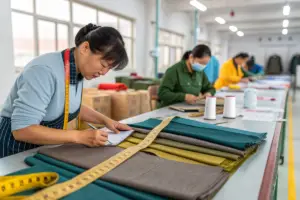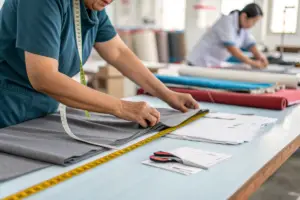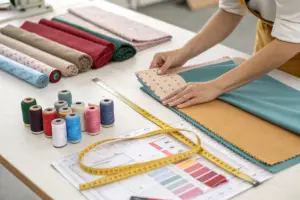
You know the sinking feeling. The shipment is ready to leave the port, but the inspection report flags a major defect rate. Suddenly, your two-week delivery window becomes a six-week disaster. The factory blames the inspection team. The inspection team blames the factory. You are stuck with empty shelves and an angry sales team. This is the classic quality-versus-speed trap. Most manufacturers treat quality control as a final gate, a barrier that stops the goods. At that point, a delay is inevitable if the goods fail. I restructured our entire production system to escape this trap. I saw that quality control had to become a driver of speed, not a brake on it.
We ensure quality without delays by shifting from endpoint inspection to inline process control. We embed quality checks at every 20% of the production cycle, not just at the end. This proactive system catches defects the moment they happen. We correct the root cause in real-time, keeping the line moving and the final shipment on schedule.
How do we make this work in practice? It is a combination of specialized inspection stations on the line, a digital ticketing system that flags risks instantly, and a pre-production approval process that eliminates the confusion that causes rework. I want to take you onto our factory floor and show you exactly how our quality system protects both your standards and your delivery dates.
Inline Quality Gates That Catch Defects Instantly
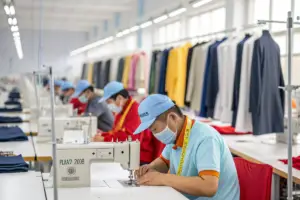
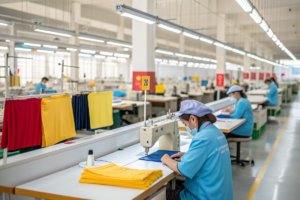
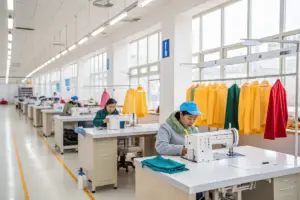
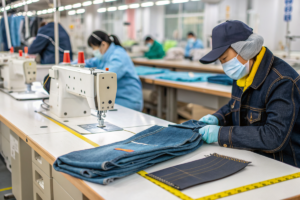
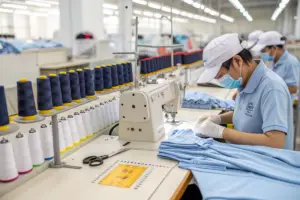
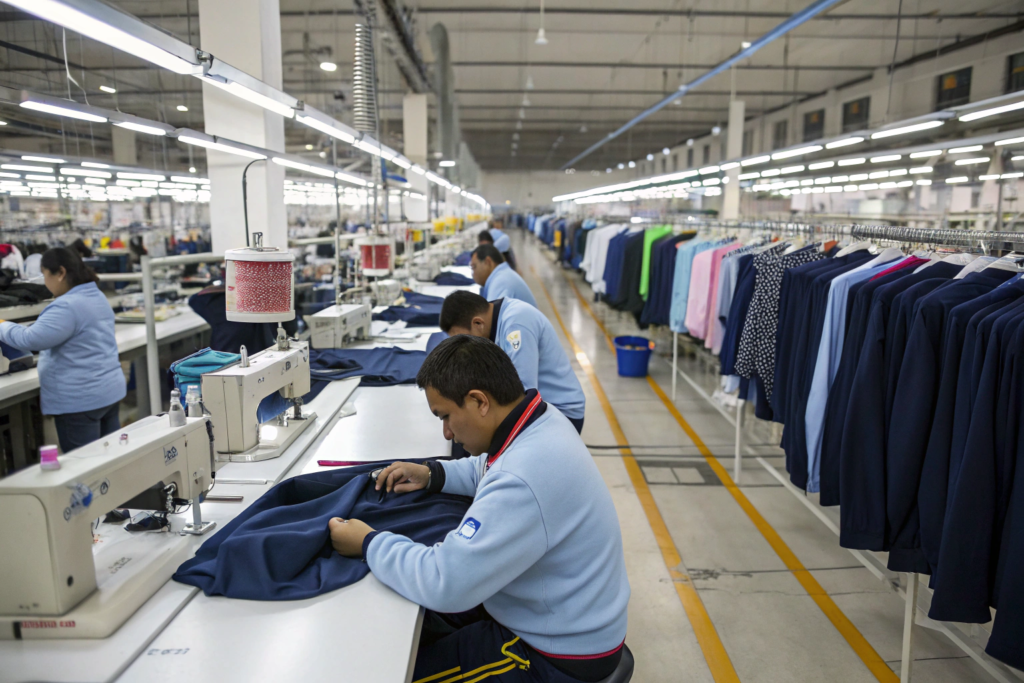
Waiting until a garment is fully sewn to check the stitching is illogical. By then, a wrong needle tension could have ruined 500 pieces. You have to wait for the repair operators to unpick and resew the faulty seams. That is pure delay. Our factory floor is physically structured to stop this. We do not have one final inspection table. We have multiple, strategically placed inline inspection stations. These gates act like a sieve that catches the dirt before it enters the clean water.
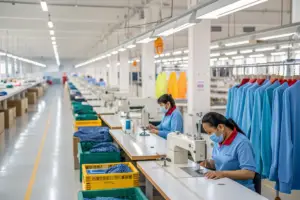
We place quality gates after the cutting stage, after the initial assembly, and before the final finishing. Each gate has a dedicated checker who audits a random sample of the work-in-progress against the approved measurement spec and seam standard. If a defect is found, the line leader stops the specific operation immediately. We fix the machine or retrain the operator right then, without stopping the rest of the line.
Why Is a Cutting Room Quality Gate Critical for On-Time Delivery?
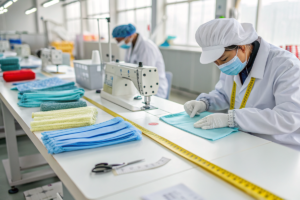
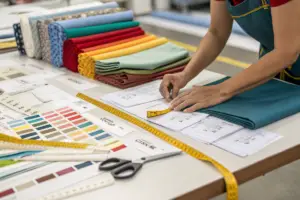
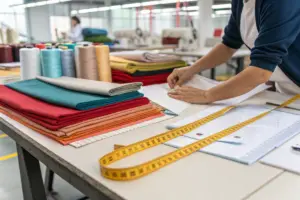
The cutting room is where the shape of your garment is decided. If a pattern is misaligned or the fabric is stretched during spreading, every single piece cut from that lay is defective. Finding this at the final inspection is a catastrophe. You have to recut the whole order, and the fabric might be gone. We place a mandatory quality gate right at the cutting table exit.
A checker measures the cut panels against a hard copy of the pattern. They check for fraying edges, notches, and the direction of the grain line. We use an automatic spreading machine with tension control to eliminate the stretch, but the checker verifies it. Last year, for an order of 3,000 rayon blouses, the cutting gate inspector noticed a slight off-grain line on a specific pattern piece. It was a marker-making error, not a cutting error. We corrected the digital marker file in minutes and re-spread that specific section. The delay was 45 minutes. If caught after sewing, the delay would have been three days. This is the type of cutting room management that prevents a small error from becoming a shipment delay.
How Does Inline Seam Inspection Prevent Bottlenecks?
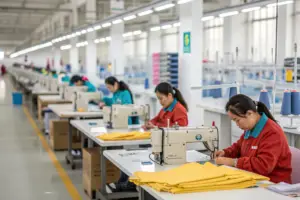
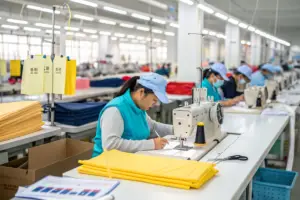
The sewing floor is the longest part of the process. A defect introduced at station 5 might not be visible until station 15. That is ten stations of wasted labor and time. Our inline seam inspection happens at the "critical assembly" point. After the main body is joined, but before the sleeves are attached, for example. The inspector has a portable lux meter and a seam strength tester right there.
They pull and stretch the critical seams. They check the stitch per inch count with a simple pick glass. If the stitch length has drifted, they don't wait for the supervisor. They hand the piece back to the operator and reset the machine's tension dial. We track these inline failures on a live production monitoring system. It lets our production manager see if a particular machine or operator is repeatedly failing. We solve the root cause during the run, which means the final inspection passes at 98% or higher the first time. No backlog. No delay.
Digital Pre-Production Approvals That Eliminate Rework
The biggest cause of production delay is not a broken machine. It is confusion. The factory interprets the tech pack one way. The buyer thought they meant something else. The sample comes back wrong. The re-sampling adds three weeks. We solved this by moving the approval process into a digital, visual format that leaves zero room for interpretation. We call it the "digital twin" pre-production meeting. We do not cut a single meter of fabric until the digital model is approved.
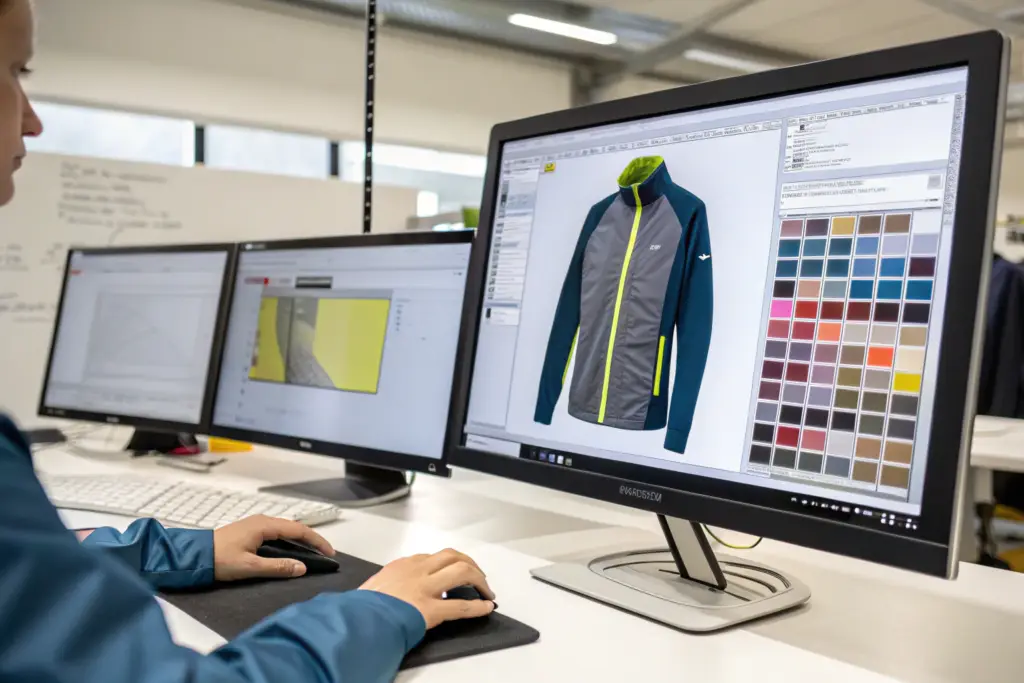
We eliminate sampling delays by using 3D prototyping software. Before the physical sample is made, we send you a 360-degree digital render of the garment on a fit model. You can see the drape, the pocket placement, and the logo position. We lock down every detail in the digital approval. When we move to the cutting table, there are no surprises. The production version matches exactly what you already approved on screen.
How Does 3D Virtual Sampling Speed Up the Approval Process?
A physical sample has to be cut, sewn, finished, and couriered. That is a minimum of seven to ten days lost, even for a simple style. A 3D virtual sample is ready in 24 hours. You get a link by email. You can rotate the garment, zoom in on the stitching, and see how the fabric pattern repeats on the seams. It is not a video game. It is a physics-based simulation using the actual fabric weight and stretch parameters.
A sportswear distributor in the Netherlands needed to reorder a best-selling polo but wanted to change the collar color to contrast. We created the new colorway in our 3D software in four hours. He approved it on his phone at the airport. The fabric was ordered that same day. The traditional sample loop would have lost a week. We apply this process for all major style changes. Resources on the latest 3D garment design tools explain how accurate these digital twins have become. For us, it is a non-negotiable step to protect the production calendar.
Can Digital Color Approval Replace Physical Lab Dips?
Color approval is traditionally a serial process of sending lab dips back and forth by courier. It can take four rounds and three weeks. We now use a hybrid system. The mill creates the physical lab dip as a legal reference. But before they ship it, they send us the digital color data measured on a spectrophotometer. We import that spectral data into our 3D model and show it to you on a calibrated monitor.
This digital color preview allows you to reject an obviously wrong shade within 24 hours, before the physical swatch even arrives. We finalize the approval with the physical swatch, but the digital preview eliminates two wasteful courier cycles. This process is fully aligned with modern digital color management standards. For a recent 10,000-piece dress order for a French brand, this hybrid system cut color approval time from fourteen days to five. It kept the entire order on track for an early spring delivery.
| Approval Stage | Traditional Timeline | Fumaoclothing Digital Timeline | Time Saved |
|---|---|---|---|
| Initial Sample | 10-14 days (physical make & ship) | 24-48 hours (3D render & review) | 10+ days |
| Color Lab Dips | 14-21 days (3x physical dips) | 5-7 days (digital preview + 1 physical) | 10+ days |
| Strike-Offs | 7-10 days (physical print proofs) | 2-3 days (digital print simulation) | 5+ days |
| Size Set Approval | 7 days (physical courier) | 1 hour (3D fit visualization) | 7 days |
Data-Driven Auditing That Predicts and Prevents Failures
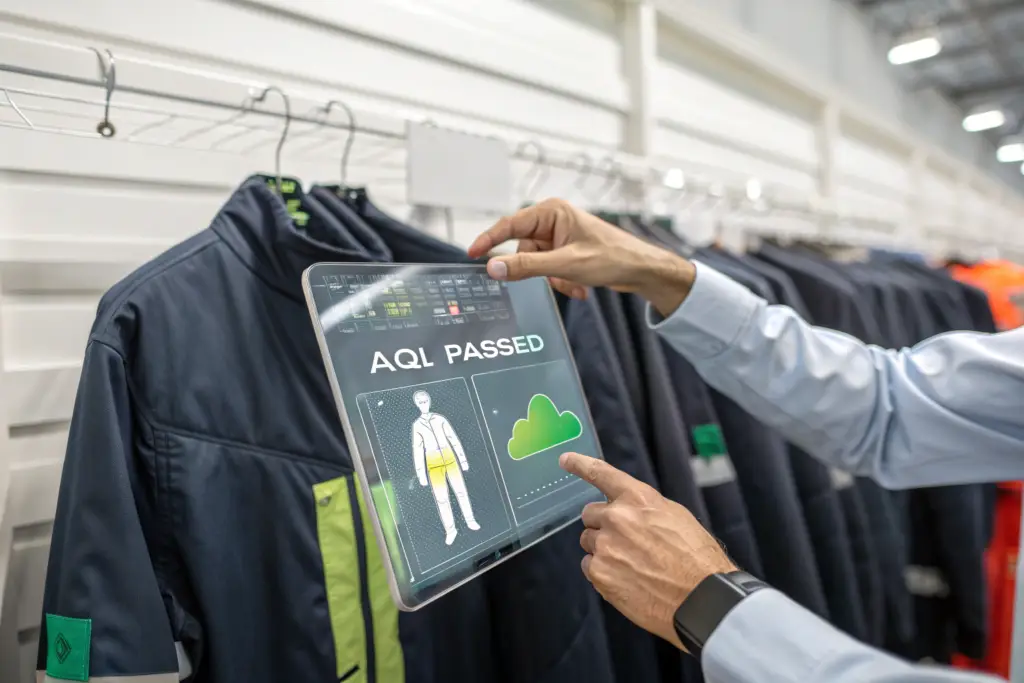
Final inspection should not be a surprise party. It should be a boring confirmation of what you already know. If you are running inline quality gates effectively, your data is already screaming at you about the health of the order. We use a digital AQL tracking system that aggregates the inline defect data. It creates a predictive quality curve. This tells us, three days before the final audit, whether the order is on track to pass or if we need a preemptive top-up.
Our quality data system predicts audit outcomes. We log every inline defect by category, operator, and machine. This database generates a "Quality Confidence Score" for every open order. Our QC manager reviews this score daily. If a style dips below a 98% confidence threshold, we add extra inline checks or increase the production quantity to absorb potential rejections without affecting the shipped quantity.
What Is a Predictive Quality Score and How Does It Work?
Think of it like a credit score for a production order. We classify defects into critical, major, and minor, just like the AQL tables. Each inline rejection is a negative point. A day of zero defects is a positive data point. Our software plots a trend line. If the slope is negative, we have a quality crisis brewing.
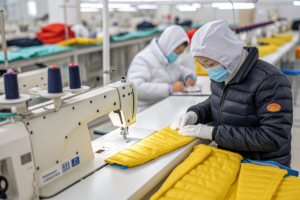
For a fleece jacket order last winter, the score started dipping on day three of production. The data pointed to "seam puckering" on the shoulder seam. The QC manager pulled the data, saw the issue was isolated to two machines, and recalibrated them. The score recovered. The final AQL 2.5 audit showed a 0.8% major defect rate, well within the limit. This predictive analytics in manufacturing approach transforms QC from a reactive checkpoint into a proactive steering wheel. It guarantees that the final audit date is also the shipping date.
How Does Our Defect Library Train Operators to Avoid Mistakes?
Every defect we find, whether inline or final, is photographed and logged into a digital "Defect Library." This is not a punishment tool. It is a training textbook made from our own reality. The library shows a high-resolution image of the defect, the cause, and the corrective action. We show this to operators during their pre-shift team meetings.
If a new order starts, and it has a similar collar construction to one that had high defects six months ago, our team leader pulls up the historical defect photo. She says, "Watch out for this specific pucker." The operators see the real-world example. They adjust their handling. This continuous quality training loop builds a culture where people learn from history, not repeat it. This prevents the repeat failures that cause delays. The collective skill of our workforce improves with every order we run.
Conclusion
Delivering quality on time is not a miracle. It is the result of an engineered system that rejects the traditional, broken "inspect-at-the-end" model. We start by stopping defects in the cutting room before the fabric hits the sewing line. We use 3D digital approvals to eliminate the confusion and rework that bleed weeks from the calendar. We run inline quality gates that catch a loose seam the moment it happens, not when the carton is being sealed. And we use data analytics to predict whether an order will pass the final audit, so we can correct course while there is still time.
This is how Shanghai Fumao removes the conflict between quality and speed. We treat quality as a continuous, measurable process parameter, just like the stitch length or the needle temperature. When quality is a constant, the timeline becomes a guarantee.
If you are currently losing money to late shipments caused by a cycle of rework and repair, I want to show you how our system can stabilize your supply chain. We can run a trial order on one of your styles and share the inline quality data with you in real-time, so you can see the control for yourself.
Please contact our Business Director, Elaine, at elaine@fumaoclothing.com. She can set up a call to walk you through a recent case study where our predictive quality system saved a brand's peak season. Let us put a system in place that delivers the quality your customers expect, on the exact date you need it.