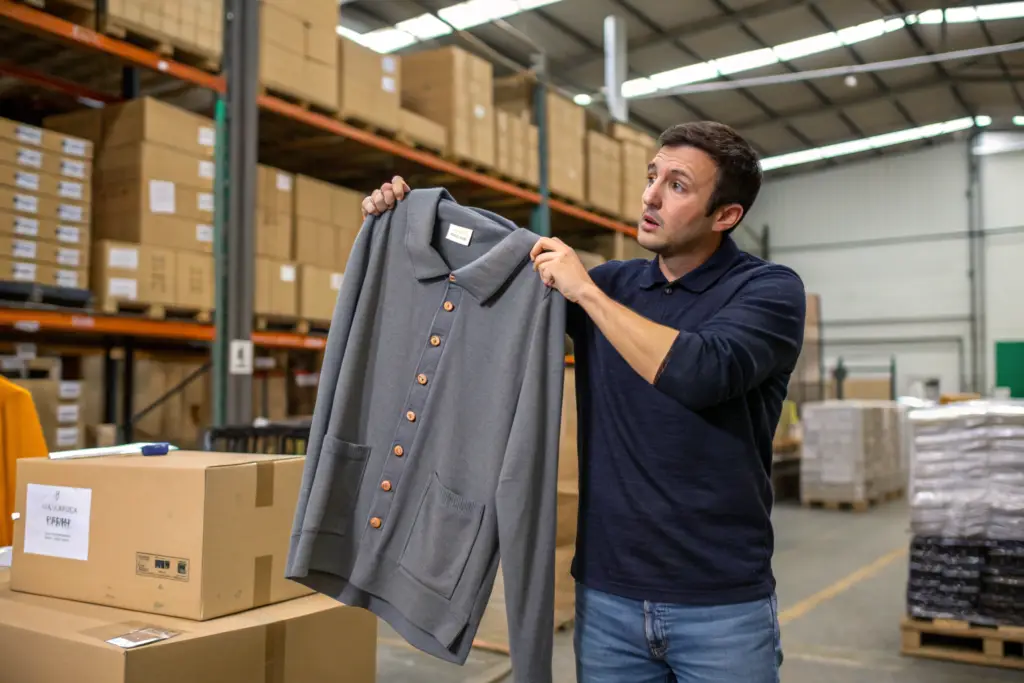
If you are a US brand buyer, you have felt that panic in your chest. You open a shipment and find the sleeves are shorter than the spec. The buttons are cracked. The deadline for the trade show is three days away, and you are holding a product you cannot sell. I have seen this destroy small brands. I have also seen it make big buyers lose their annual bonuses. This is why choosing a factory is not a purchasing decision. It is a career decision. You need a manufacturer who cares about your customer as much as you do.
Shanghai Fumao aims to be the best manufacturer for US brands because we engineer reliability into our core process. We don’t just take your purchase order. We take your concept, validate the construction, source the certified materials, and deliver on a binding timeline. We operate as your overseas production department, not just a supplier.
Why are we different from a thousand other factories you could find? It comes down to how we handle the three main nightmares of sourcing: product integrity, supply chain authenticity, and direct delivery. I don’t want to sell you just a sewn garment. I want to show you how we build a quality shield around your brand, from the fiber to the front door of your warehouse.
Mastering Complex Construction for Different Apparel Categories
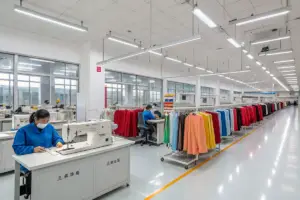
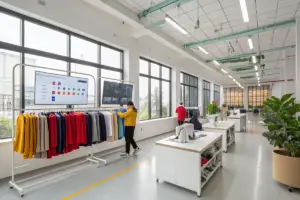
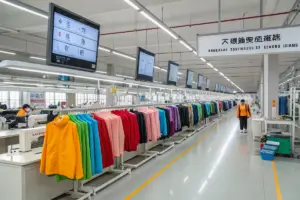
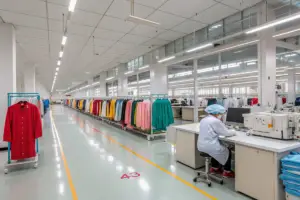
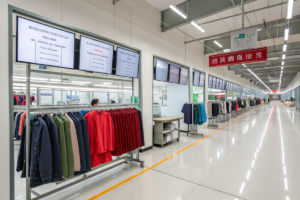
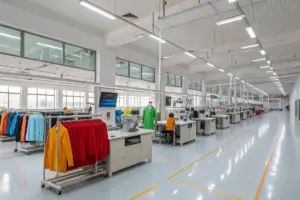
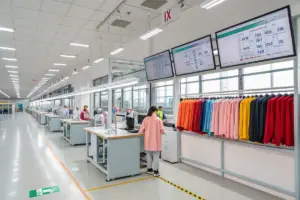
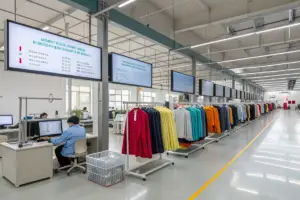
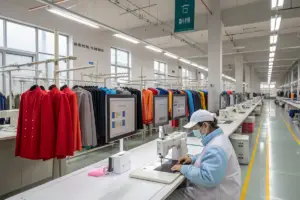
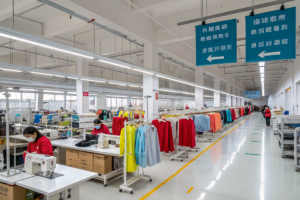
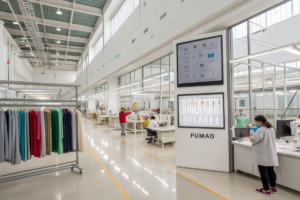
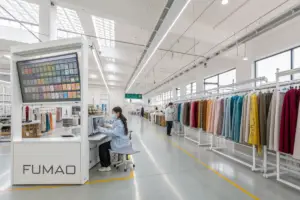
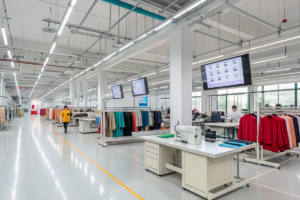
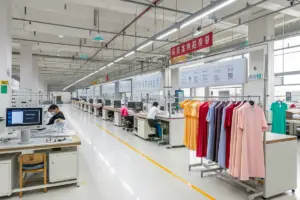
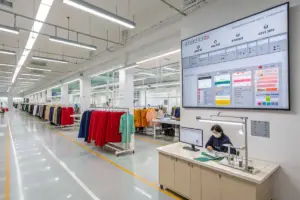
Specialization is profitable. But if you are a brand, managing a knitwear factory in Bangladesh, a denim factory in Vietnam, and a silk factory in China is a logistics nightmare. You want one team that speaks the language of many fabrics. I designed my production floor to bridge that gap. We have distinct cells for heavy woven outerwear, delicate knit activewear, and structured formal wear. This means your technical hoodie and your formal trousers are both being cut by people who understand the fabric’s physics.
Our ability to handle diverse garment categories under one roof makes us the best partner for mid-to-large US brands. You get a single audit trail, one quality standard, and one shipping coordinator. This consolidation of expertise reduces your management overhead and eliminates the finger-pointing that happens when you use multiple specialized vendors.
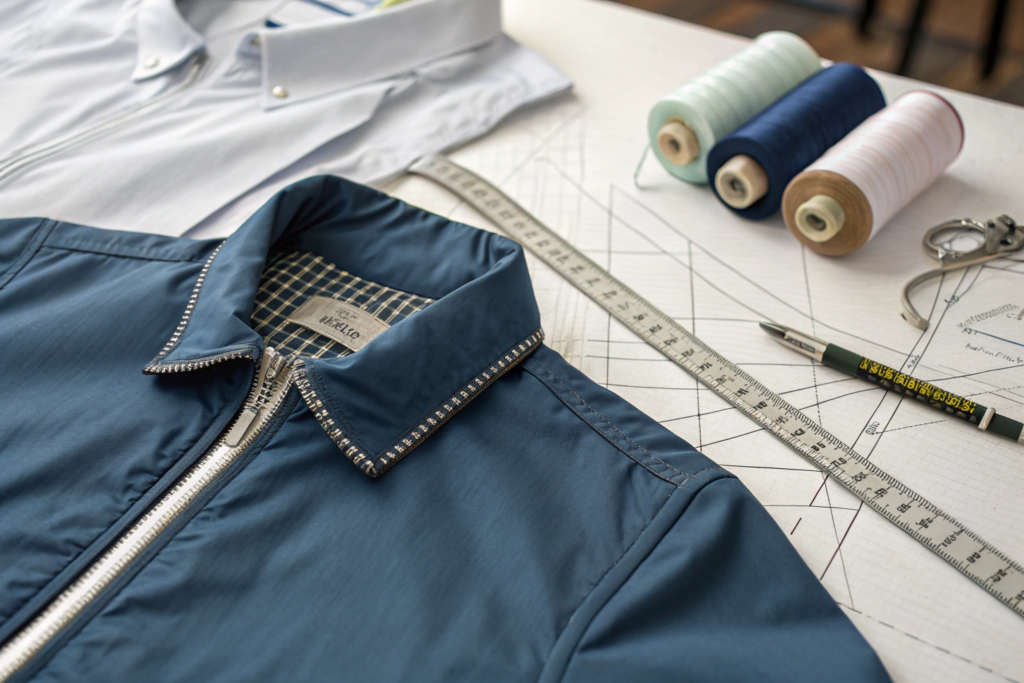
Can a Single Factory Produce Durable Denim and Lightweight Silk?
The equipment for denim and silk are polar opposites. Denim requires heavy-duty feed dogs and thick needles. Silk requires a light touch, a sharp fine needle, and a perfectly smooth throat plate to avoid snags. Most factory owners don’t want the headache of switching between these modes. We deliberately designed our factory layout with two sealed environments.
In 2020, a Los Angeles-based brand came to us with a complex launch. They needed 3,000 units of structured raw-denim jackets and 1,500 bias-cut silk slip dresses in the same delivery window. The dust from the denim cutting could have ruined the silk. So, we kept the silk cutting room pressurized and filtered, a clean-room environment. Our production manager scheduled the lines so that the heavy denim processing never crossed paths with the delicate silk finishing. The launch was seamless. The brand saved 15% on consolidated freight. This is the multi-category sophistication we bring.
Why Is Technical Outerwear a True Test of a Factory’s Skill?
Making a fashionable trench coat is about looks. Making a waterproof, breathable shell is about physics. You have taped seams, waterproof zippers, and high-tensile thread. If the needle makes too big a hole, the jacket leaks. We built a dedicated outerwear line just to solve these problems. We use machines with electronic tension control to precisely set the thread pull.
A Seattle outerwear brand challenged us to produce a packable rain jacket. The fabric was a whisper-thin 20D ripstop nylon. It was so slippery that standard machines distorted the seams. We switched to a differential feed machine that gripped the fabric without stretching it. We also set up a hydrostatic head testing station right on the line to test random samples. The jackets exceeded the brand’s waterproof rating by 20%. This is proof that technical manufacturing requires a scientific mindset, not just an assembly line.
Preventing the “Fake Certificate” Trap in Ethical Sourcing
I know a dirty secret of our industry. There are factories that buy fake audit certificates for fifty dollars. They hang them on the wall and hope you don’t look too closely. This is a massive risk for you. If a US retailer audits your supply chain and finds fraudulent documentation, your whole purchase order can be canceled. I run an honest business. Not just for ethics, but for security. Authenticity is a business asset. It protects your contracts.
We are a transparent factory. We maintain active SEDEX SMETA 4-Pillar audits and BSCI certifications that you can verify online with the audit reference number. We encourage brand buyers to send their own third-party inspectors unannounced. We don’t hide behind agents. We show you the real payroll records, fire safety logs, and chemical inventory.

How Does a SEDEX Audit Protect Your Retail Partnerships?
Major US retailers like Walmart or Target rely on SEDEX to de-risk their supply chains. A SMETA audit checks for labor rights, health and safety, environmental performance, and business ethics. If your factory fails this, you can’t sell to those retailers. We passed our latest SEDEX audit with zero critical non-compliances.
Last year, a children’s wear brand wanted to pitch to a big box store. They were terrified about compliance. We sent them our full SMETA report within an hour. We also arranged a video walkthrough showing the fire exits, the needle breakage log, and the chemical storage room. They landed the contract. The buyer told them our transparency was the deciding factor. This is how we make your business stronger.
What Are Restricted Substances Lists (RSL) and Why Must You Care?
An RSL is a list of chemicals banned in finished products. If your kids’ pajamas contain a banned flame retardant, you don’t just get a complaint. You get a lawsuit. We integrate RSL management into sourcing. Before we buy a zipper or a snap, we request a certificate of compliance from the trim supplier against the relevant RSL.
We scan for lead, phthalates, and formaldehyde using a handheld XRF analyzer. This is standard practice in product safety testing. Recently, a batch of leather patches for denim jeans failed our lead screening. They were meant for a premium US line. We rejected them on the spot. The supplier was shocked, but our client never heard about the problem. They just got safe, compliant jeans. You need a manufacturer who does this screening before the product ships, not after.
Turning DDP Logistics into a Competitive Advantage
You can make the best jacket in the world. But if it costs you a fortune in hidden freight charges, your profit disappears. Standard FOB terms leave you with a bill of lading and a prayer. You wait for a customs broker to call with a list of surprise fees: pier pass, chassis split, customs exam. We removed that anxiety. We push DDP because it turns a variable risk into a fixed cost. You know your landed price before the machine even starts sewing.
DDP is our standard recommendation for US brands. We act as the Importer of Record. We pay the US duties and clear customs on your behalf. You don’t need a customs bond. You buy from us the same way you buy from a domestic supplier: one simple price to your door. This is how we help you out-compete rivals stuck in the FOB maze.
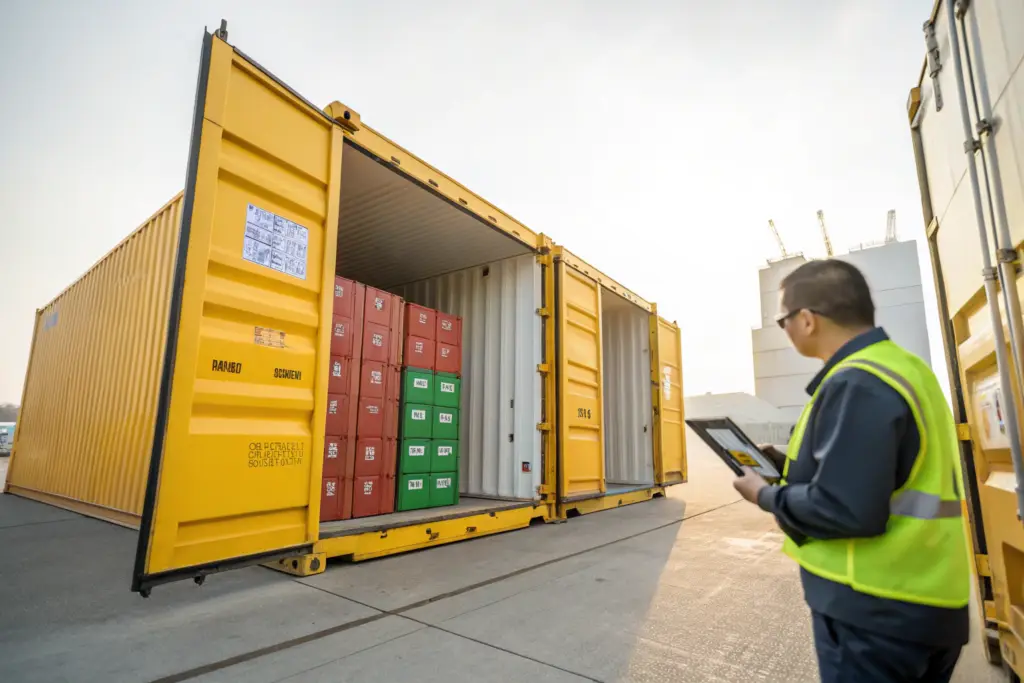
Why Is Your Landed Cost More Important Than Your FOB Price?
A low factory price is an illusion if the shipping and duties are high. We teach our clients to focus on the Landed Cost. That is the cost of the garment placed on your shelf. DDP makes this calculation easy. We once analyzed a bid for a sportswear client in New Jersey. Our factory price per unit was $0.60 higher than a Vietnamese competitor. But our DDP landed price was $0.90 lower per unit.
How? We avoid the hidden costs of US port congestion storage and expedited customs exams. We handle the entire freight management process efficiently. You save money and brain cells. We have an in-house logistics team that books space with multiple carriers to find the fastest and most cost-effective route, ensuring your DDP price remains competitive.
How Does Direct Warehousing Prevent Retailer Chargebacks?
US retailers are ruthless with deadlines. If your labels are wrong or the carton size doesn’t match the routing guide, you get a chargeback. It could wipe out your profit on the whole order. We solve this by integrating with your distribution network. We study your routing guide right after the sample approval. Our packing team is trained to apply the specific UCC-128 labels required by your warehouse.
For a large wholesale client feeding a national department store chain, we recently implemented a warehouse automation step. We barcode-scan every carton and upload the Advanced Shipment Notification data directly to their portal. They told us our chargeback rate is the lowest among their overseas vendors. This precision in logistics is what makes us not just a manufacturer, but a supply chain partner for ambitious US brands.
Conclusion
Is Shanghai Fumao the best choice for your US brand? If you measure “best” by the cheapest FOB quote, probably not. There is always a cheaper price. But if your definition of “best” involves a partner who manages the complex ecosystem behind a garment, then we are exactly that. We bring multi-category technical skill, a SEDEX-audited compliance framework, and a streamlined DDP delivery model.
We do not just sell labor. We sell certainty. Certainty that the fabric is authentic. Certainty that the construction is durable. Certainty that the box will arrive at your DC without a surprise bill. I built Shanghai Fumao to serve serious brand builders who see their factory as a core asset, not a commodity. We work best with buyers who value engineering over guesswork.
If you are working on a new collection that blends different fabrications, or if you are simply fed up with the chaos of hidden freight fees, let’s talk. I want to hear about the product that challenges you.
Reach out to our Business Director, Elaine, at elaine@fumaoclothing.com. She can schedule a call to review your design boards and show you precisely how our technical team would handle the product development. Let us prove that the right manufacturing partner makes your business better.