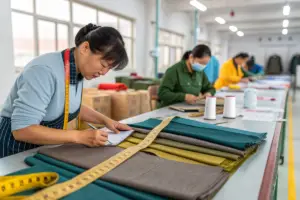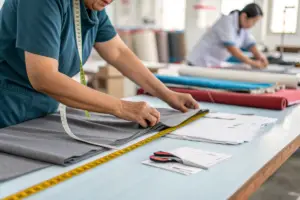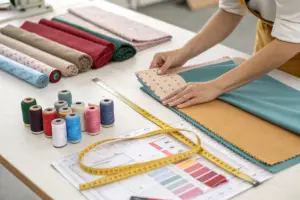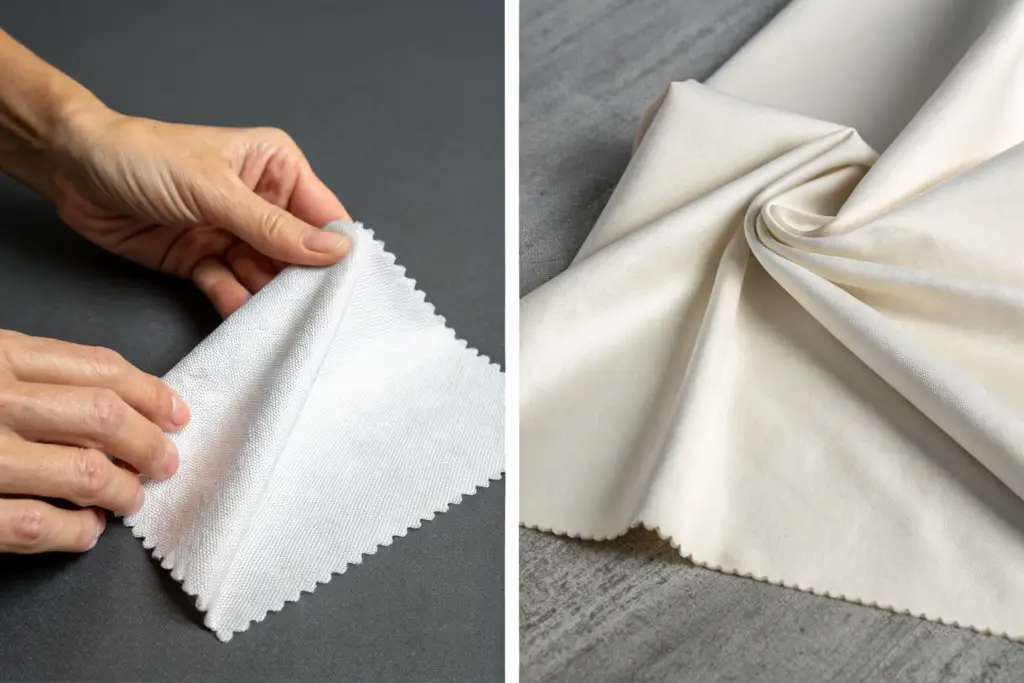
You have probably stared at two quotes and wondered why the price gap is so wide. The Vietnamese factory offers a "premium cotton" hoodie for less. You place the order. The sample looks okay. But after ten washes, your customer is holding a stiff, pilled, shapeless rag. Your return rate spikes. Your reviews tank. I have seen this movie too many times. The short-term savings vanish into long-term brand damage. The difference is almost always hidden in the fiber quality and the finishing treatment. Not all cotton is created equal, and not all suppliers are honest about what they are selling.
Shanghai Fumao delivers better fabric than typical Vietnam suppliers by sourcing only long-staple fibers and applying advanced bio-polishing finishes. We reject the commodity-grade cotton that many low-cost factories use. Our fabric retains its softness, shape, and color depth for the life of the garment, not just the first wear. We compete on engineering, not just on cutting corners.
Why does this matter for your brand? Because a garment's feel is your customer's first physical interaction with your label. If the fabric feels cheap, your brand feels cheap. I want to walk you through the fiber selection, the yarn spinning, and the chemical finishing that separate a Shanghai Fumao garment from a standard Vietnamese export. This is about building a product your customers will keep and love.
The Crucial Role of Long-Staple Fiber Selection
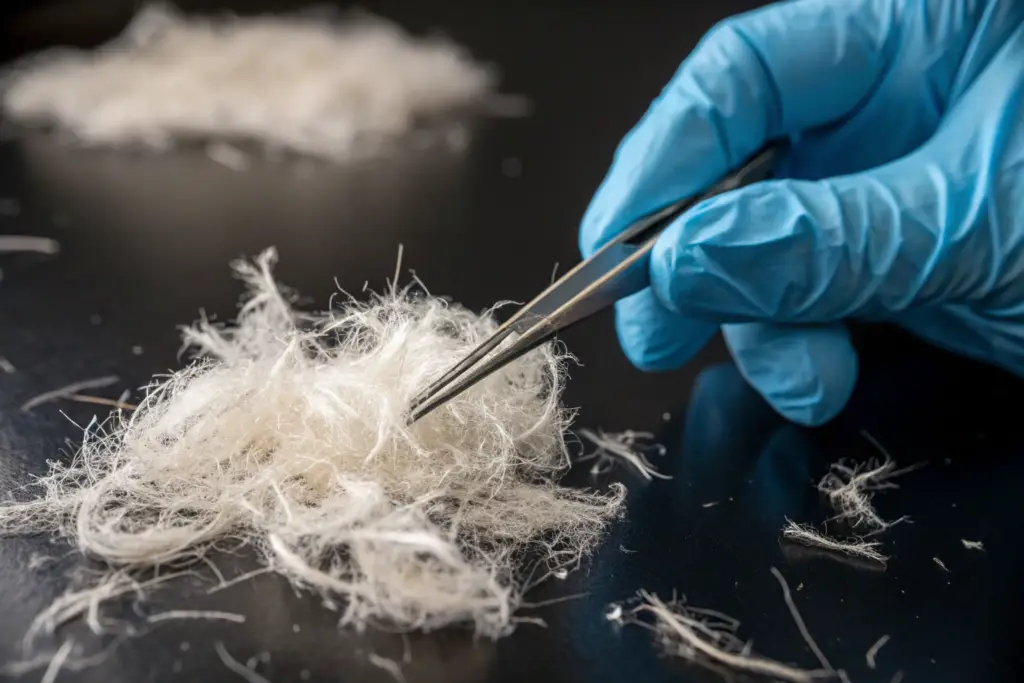
The length of the cotton fiber dictates the entire life story of a t-shirt. Short fibers, usually from machine-picked generic cotton, stick out of the yarn like tiny porcupine quills. They feel rough against the skin. Under friction, they snap off and tangle into those ugly little pills you hate. Long-staple fibers, on the other hand, can be spun into a finer, stronger yarn with fewer exposed ends. This is the physical reality behind the word "luxury." It is not just a marketing term. It is a measurable physical property.
We exclusively source long-staple cotton, such as American Supima or premium Xinjiang cotton, for our core wholesale lines. This adds a small premium to the raw cost, but it eliminates the micro-pilling that plagues cheaper garments. For US buyers, this means your product looks premium on the shelf and stays premium after a year of weekly washes.
Why Does Staple Length Define a Garment's Lifespan?
When a yarn is made of short fibers, the only thing holding it together is the twist. Over time, the twist relaxes, and the short fibers fall out. That is why cheap t-shirts go thin. Long fibers have more surface area overlapping. The friction of the fibers themselves holds the yarn together. This structural integrity means the fabric withstands abrasion better.
In 2022, we put our 50s Supima jersey through a Martindale abrasion test, a standard test that rubs the fabric until it breaks. It achieved a score of over 50,000 rubs before showing significant wear. A standard carded 20s cotton, typical of some low-cost Vietnamese wholesale products, barely reached 25,000 rubs. We tested this side by side in our lab. The result is a fabric pilling resistance that doubles the life of the garment. You can sell a product that your customer buys twice because they love it, not because the first one fell apart.
How Does Ring-Spun Yarn Beat Open-End Yarn in Softness?
The spinning method is the second secret. Open-end spinning, common in fast fashion, uses high-speed rotors to twist fibers. It creates a yarn with a dense, hard core but a fuzzy, irregular surface. It is fast and cheap. Ring-spun yarn is twisted by a mechanical ring and traveler. It simulates a hand-spun process. It makes the fibers lie almost parallel and creates a much smoother, finer, and stronger yarn.
Our knitwear line uses exclusively ring-spun yarns. A New York athleisure brand switched to us from a Vietnam-based supplier in 2023. Their previous fabric used a 50/50 open-end blend. We introduced a ring-spun cotton-modal blend. The hand feel was dramatically softer. Their customer feedback on "softness" improved significantly within one season. According to technical comparisons from Cotton Incorporated, ring-spun is demonstrably superior in both softness and strength. This is an upgrade your customer can feel instantly.
Advanced Finishing Techniques That Lock in Quality
You can take the most expensive long-staple cotton, but if the finishing is wrong, you still end up with a bad product. Finishing is where cheap factories ruin good fabric. They use harsh caustic soda to strip the fabric fast. They use cheap resins to make it feel stiff and heavy. Our finishing floor is different. We treat the fabric at the molecular level, using enzymes rather than brute chemical force. This is the step where we lock in the softness, the dimensional stability, and the color fastness for the next twenty laundry cycles.
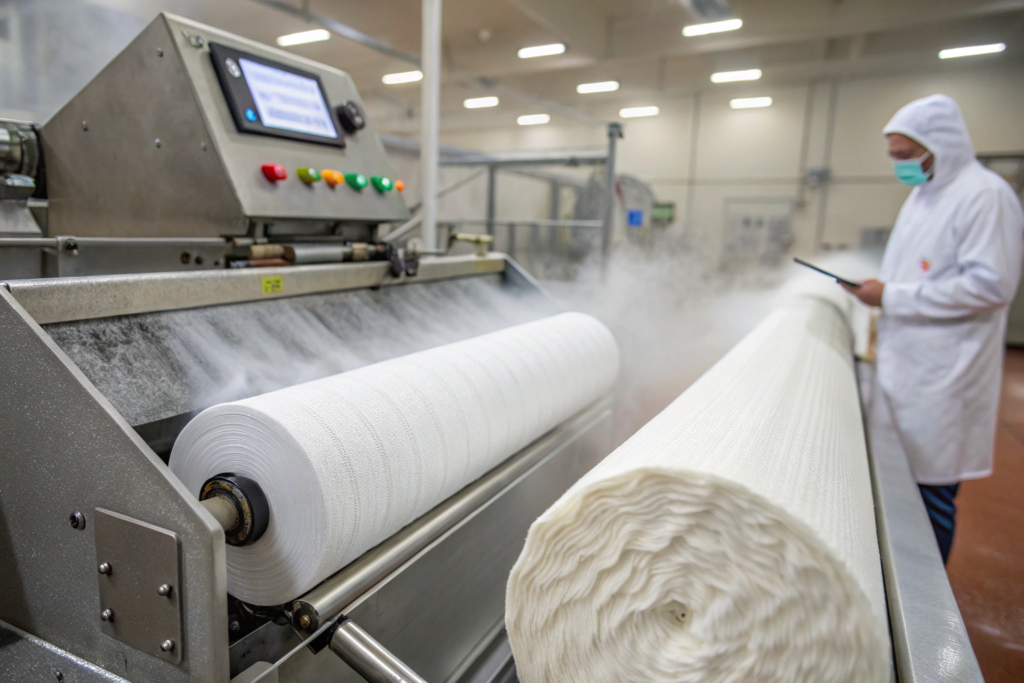
Our bio-polishing and compacting processes set our fabric apart from Vietnamese competitors. We use cellulase enzymes to digest the tiny fuzz on the yarn surface, permanently removing the cause of pilling. We then use controlled compacting to give the fabric a soft, full hand while mechanically stabilizing it against shrinkage.
Can Enzyme Wash Eliminate Pilling Forever?
"Forever" is a strong word, but enzymatic bio-polishing attacks the very root of the problem. Cellulase enzymes are biological catalysts that eat cellulose. In a controlled bath, they preferentially attack the micro-fibrils that protrude from the yarn. They digest the fuzz without weakening the core of the fabric. A cheap chemical method, like aggressive singeing, just burns the fuzz off and leaves a burnt, rough tip.
We introduced a specific acid cellulase wash for a Portland-based kids' wear brand. Their previous fabric, sourced from Vietnam, pilled heavily on the cuffs. We ran their new order through our enzyme bath for 45 minutes at a precise temperature of 55°C. The before-and-after comparison under our 40x microscope showed almost zero protruding fibers. The client's return rate for "material defect" dropped to under 1%. For detailed science on this, the textile finishing research is clear: enzymes clean the fabric surface more effectively than any mechanical method. This is how we ensure your garment stays looking new.
Why Is Compacting Critical for T-Shirt Shape Retention?
You know the twisted side seam on a cheap t-shirt. That is torque. It happens because the tension from the spinning and knitting releases when you wash it. You can also get vertical shrinkage, turning a size large into a medium. Compacting is a mechanical process that pre-shrinks and relaxes the fabric. We pass the knitted fabric through a steam-heated blanket and a felt belt before cutting.
This compacts the stitch loops and sets the dimensional stability. Our standard for jersey knits is a maximum 3% residual shrinkage, well below the 5% industry norm. A Miami fashion distributor moved their basic tee program to us for this reason. Their previous supplier's shirts shrank up to two inches in length. Our compacted fabric held its shape. You can learn about these specifications at Textile School. It is a non-negotiable step for any brand that wants repeat customers.
Comparing Certification Integrity with Regional Competitors
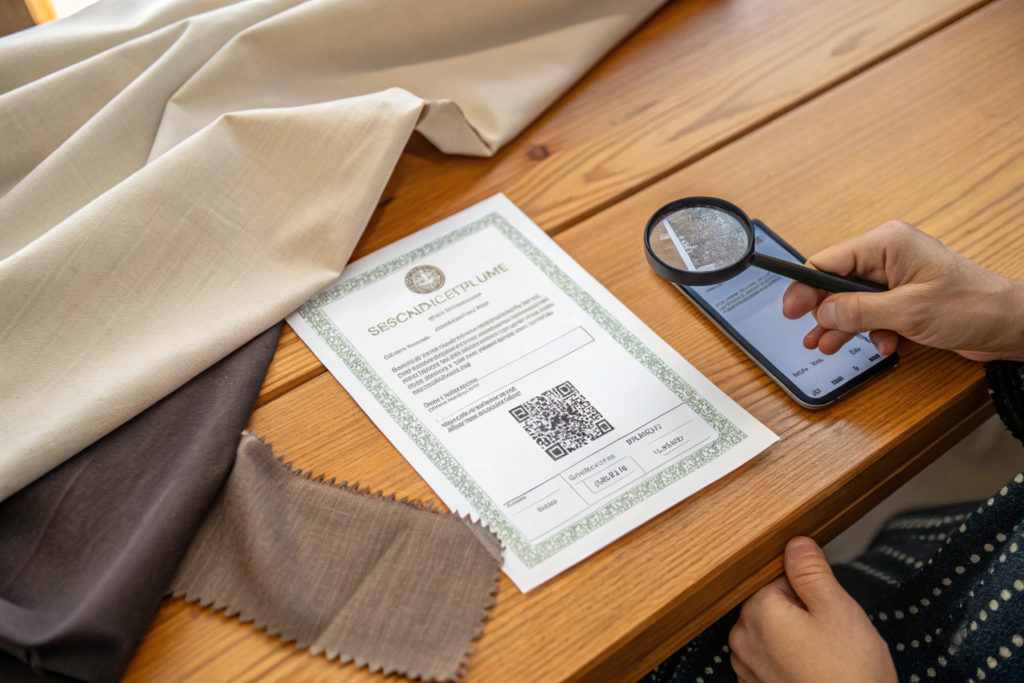
A fabric can only be "organic" or "recycled" if the paperwork is real. A cheap supplier might give you a generic certificate that looks official but falls apart under audit. You might be selling "organic" baby clothes that are actually conventional cotton. If a consumer watchdog investigates, your brand takes the fall, not the factory in Vietnam. We take a paranoid approach to traceability. We don't just trust a printed PDF. We verify every lot number against the certifier's online database.
The integrity of our certifications is absolute. We maintain GOTS, GRS, and Oeko-Tex certifications through chain-of-custody tracking. We provide you with the transactional certificate for your specific order. This level of documentation is superior to the generic, unverifiable claims often encountered from the lowest-cost Vietnamese producers.
Can You Trace a Garment Back to the Cotton Field?
For most brands, the supply chain is a dark tunnel. You see the factory, but you don't see the farm. We have mapped our organic supply chain back to the gin and the farm cooperative. When you order GOTS-certified baby clothes from us, you don't just get a product. You get a transactional certificate that traces the raw material from the certified organic farm through the spinner, the knitter, and the dyer, to our cutting table.
We recently produced a batch of organic toddler sleepwear for a US market client. We provided the full chain-of-custody documentation, including the farm's organic certificate number. This level of supply chain traceability is essential to support the "100% Organic" label you put in the neck. A generic audit certificate for the factory is not enough to make a product claim. You need the transactional paperwork. We make sure you have it.
Why Is an Oeko-Tex Standard 100 Certificate a Sales Tool?
An Oeko-Tex Standard 100 certification means the fabric has been tested for over 100 harmful substances and is safe for human contact. For sensitive categories like underwear and baby clothes, this label is a silent salesperson. It tells a parent, "This is safe for my child's skin." But only if the certificate is real and current.
We test our core fabric lines annually to maintain the Oeko-Tex certification. We can print the label number on your care label. A California baby brand we work with uses this in their marketing. They show the Oeko-Tex certificate on their website. It builds an unshakeable trust that generic "soft and safe" marketing slogans cannot match. When a Vietnamese supplier cannot provide this verifiable third-party testing, they are leaving you exposed to a liability.
Conclusion
Better fabric is not a coincidence. It is a sequence of deliberate choices. It is choosing a long, fine fiber over a short, cheap one. It is choosing a gentle ring-spinning process that aligns the fibers. It is choosing an enzymatic bath that removes fuzz at the molecular level rather than burning it off with chemicals. And it is choosing a compactor that sets the dimensions for life. These choices cost more. But they create a garment that reflects a premium brand, not a discount commodity.
When you compare us to a generic Vietnam supplier, you are comparing an engineered textile strategy to a cost-cutting exercise. We compete by making your brand feel like a million dollars to the touch, by ensuring the shirt doesn't twist after the first wash, and by backing every "organic" claim with a legal audit trail. We don't want to be the cheapest. We want to be the reason your customer comes back to buy four more colors.
If you are ready to upgrade your fabric quality and leave the cycle of pilling returns and shrinkage complaints behind, let's start a conversation. I want to send you a feeler pack of our core long-staple jerseys and enzyme-washed finishes so you can hold the difference in your own hands.
Reach out directly to our Business Director, Elaine, at elaine@fumaoclothing.com. She will arrange to ship our standard fabric swatch book to your office. Touch the fabric. Stretch it. Wash it. Then let's talk about how we can make your next collection the one with the lowest return rate in your company's history.