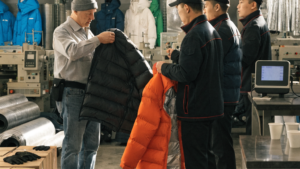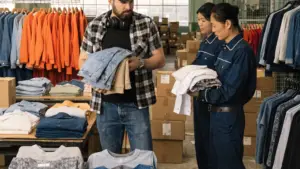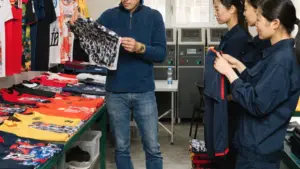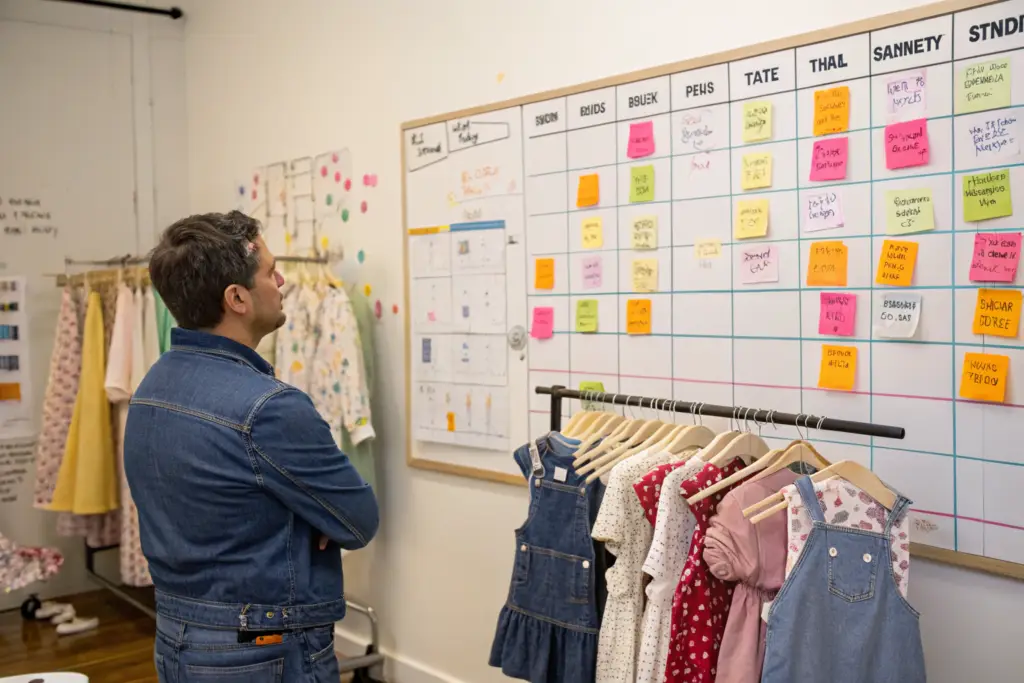
I sat across the table last spring from a brand owner who was living the dream. Her organic kids wear line had gone viral on TikTok. Sales had tripled in four months. Three major department store buyers had reached out in a single week. She should have been celebrating. Instead, she looked like she had not slept in a month. Her factory, the one that had faithfully produced her 200-unit batches, could not handle the 3,000-unit purchase orders. Her fabric mill was out of the certified organic cotton she needed. Her packaging supplier was two weeks late. And the retail buyers were demanding a lower price point that she could not hit without cutting corners she refused to cut. Scaling was supposed to be the fun part. It felt like her business was falling apart under its own success.
The most incredibly common challenges when aggressively scaling a custom kids wear brand are safety compliance complexity, size curve fragmentation, and the brutal margin compression of wholesale pricing. First, kids wear is legally not just small adult clothing. It is a heavily regulated product category with strict flammability standards, lead and phthalate limits, and small parts choking hazard requirements that differ by country. Scaling into new markets means navigating a minefield of testing protocols that get exponentially more expensive as your SKU count grows. Second, the kids wear size curve is a nightmare of logistics. You are not just sizing up a waist and an inseam. You are managing infant, toddler, and tween fits, often requiring completely different pattern blocks. Third, wholesale buyers expect a 2.5x to 3x markup, but parents are highly price-sensitive. When you scale, the margin between your rising manufacturing costs and the price parents will pay gets crushed, leaving you to survive on volume that your supply chain is not yet ready to handle. These three challenges sink more scaling kids wear brands than any design or marketing failure ever could.
I have watched brands crumble under the weight of a CPSC recall. I have seen warehouses filled with mismatched size runs because the grading was not validated. I have consoled founders who realized their best-selling hoodie was losing money on every wholesale order. Scaling is not just a bigger version of starting. It is an entirely different business. I want to share the specific, hard-won lessons from our factory floor at Shanghai Fumao about how to navigate these three challenges so your brand can survive the growth spurt.
Why Is Multi-Country Safety Compliance the Absolute Make-or-Break Challenge in Kids Wear Scaling?
A brand owner I know had to recall 1,200 units of a best-selling hoodie because the drawstring was too long. It violated the ASTM F1816 standard for children’s upper outerwear. The Consumer Product Safety Commission flagged the shipment at the port. The entire container was held. The brand had to pay for the destruction of the goods, refund the retailers, and cover the legal fees. The total cost was $35,000. The brand survived. Barely. The mistake was not a design flaw. It was ignorance of the regulation. The brand owner had assumed that her Chinese factory knew the U.S. rules. The factory did not. The factory produced the hoodie with a standard drawstring length that was perfectly legal in Europe but illegal in the United States. The brand learned the most expensive lesson in kids wear: compliance is the brand’s responsibility, not the factory’s.
Multi-country safety compliance is the make-or-break challenge because kids wear regulations are not globally unified; they are a patchwork of contradicting standards. The U.S. requires tight-fitting sleepwear to pass flammability tests per 16 CFR Part 1615, while the EU requires loose-fitting sleepwear with specific fire warnings under EN 14878. You cannot sell the same pajama legally in both markets without serious modifications. As you scale into new territories, you must afford destructive testing on finished garments, including lead content tests, phthalate tests, and physical mechanical tests for snaps, buttons, and zippers. A single failure does not just block that shipment; it can land your brand on a CPSC watchlist or the EU RAPEX system, effectively blacklisting you. Aggressive scaling means your compliance budget needs to grow faster than your revenue because the cost of testing a 50-SKU collection can easily hit $15,000.
The mistake brands make is treating compliance as a pre-production checkbox. In reality, it is an ongoing production monitoring process. A dye lot changes? You need to re-test. You switch from a metal snap to a plastic snap? You need to re-test. Scaling means these variables multiply. You need a factory partner who understands that "kids wear manufacturing" is a regulatory specialization, not just a smaller shirt.
How Do the Flammability Requirements of 16 CFR Part 1615 Completely Change the Fabric Sourcing Process?
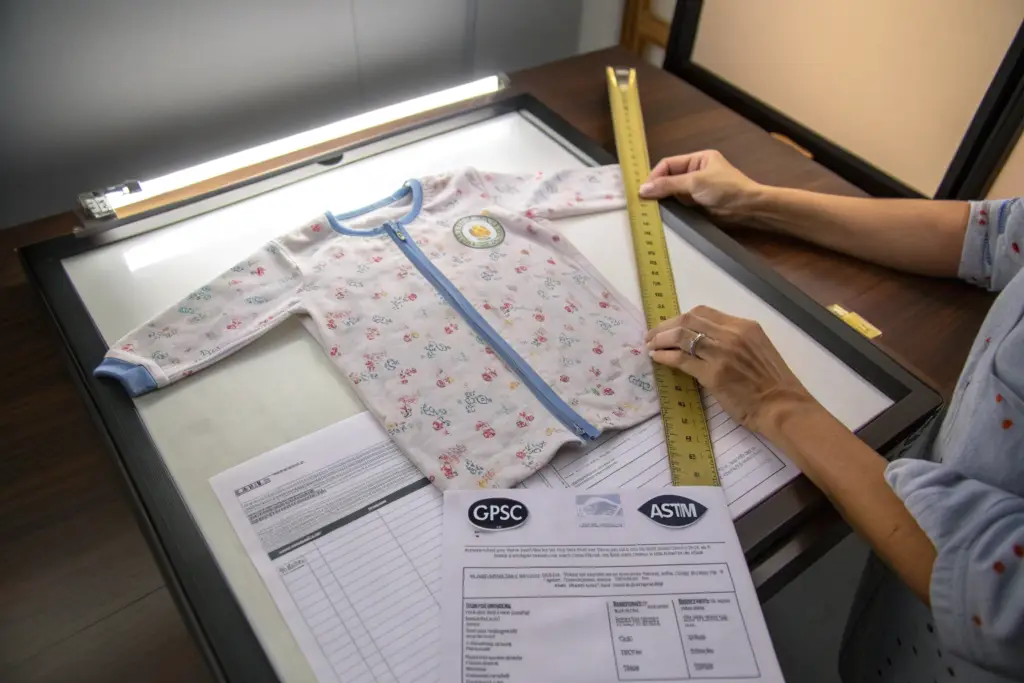
Standard 16 CFR Part 1615 dictates that children’s sleepwear must self-extinguish when exposed to a flame. This eliminates most standard cotton jerseys and fleeces from your sourcing list unless they are treated with flame retardants, which many premium organic brands refuse to use. The alternative is "tight-fitting" sleepwear, which must pass specific maximum dimensions to be exempt, but this introduces a whole new sizing nightmare. When a brand scales aggressively, they often source cheaper greige fabric to manage costs. But a cheaper 100% cotton fleece will fail a flammability test almost instantly. You are forced to either buy expensive inherently flame-resistant fabrics like modacrylic blends or invest in tight-fit pattern engineering. At Shanghai Fumao, we maintain a segregated library of pre-tested, compliant fabrics specifically for the U.S. sleepwear market. We never let standard dress fabric cross-contaminate sleepwear production. For a scaling brand, this means your fabric supplier diversity shrinks to a handful of verified mills, increasing your vulnerability to shortages.
Why Do Lead and Phthalate Testing Costs Skyrocket When You Scale Your SKU Count?
Many brands budget $200 for a lead test. That is a dangerous misunderstanding. A real compliance program tests not just the fabric, but every single component. The printed graphic on the chest needs a lead test. The elastic waistband needs a phthalate test. The zipper puller, the plastic button, the embroidery thread, all need separate tests because they are different substrates. When you scale from 10 SKUs to 50 SKUs, your testing costs do not just multiply by five. They multiply by the number of components. A single hoodie might have seven components requiring testing. If a component fails, you do not just lose that unit. You lose the entire production run while you source a compliant replacement. We guide our brand partners through CPSIA testing requirements for apparel by pre-qualifying trims. We only use zippers and snaps from suppliers who provide a valid CPSC-accepted test certificate. This shifts the testing burden upstream, protecting the brand during the final audit. A brand without this factory support usually discovers a phthalate failure two days before the ship date.
How Can You Solve the Extreme Size Curve Fragmentation Problem When Expanding to Global Markets?
A European brand owner expanding into the U.S. market was stunned when her size 5T dresses started getting returned. The dresses fit perfectly on Italian toddlers. They were too narrow in the shoulder and too long in the torso for American toddlers. She had assumed "Toddler" was a universal body shape. It is not. Asian kids wear is graded for slimmer hips and shorter legs. European kids wear is taller and narrower. American kids wear requires a wider chest and a more generous seat. Scaling globally means you cannot just translate size labels. You need entirely different pattern blocks. Most small brands cut costs by using one "Standard International" block, which ends up fitting no one perfectly. The returns crush your margins.
Solving size curve fragmentation requires abandoning the myth of a universal global grading table. For aggressive scaling, you must adopt market-specific base blocks. A "Size 6" should be drafted to ASTM standards for the U.S. market and EN 13402 standards for the EU market. The specific pain point in kids wear is the disproportional growth rates. A 3-month-old has a completely different head-to-body ratio than a 7-year-old. When scaling, you need "bridge sizing" between baby and toddler, and between toddler and tween. You also need to plan for the market shift: a brand scaling via wholesale must maintain a deeper size curve inventory than a DTC brand because retailers expect full size runs, but the extreme ends of the curve sell out much slower. The solution is a "split grading" strategy where the core sizes are cut and sewn in bulk, while the tail sizes are produced in smaller batches using a flexible, on-demand cutting room.
We had a brand partner who was drowning in XS and XXL inventory. They were cutting equal units across all sizes because it was easier for the factory. We forced a shift to a bell-curve production run, with tight control on the smallest and largest sizes. It created a short-term cost increase as the cutting room adjusted, but within one season, their sell-through rate jumped by 25%. Inventory of unsold sizes is a cash-burning machine. The factory must be willing to handle complex size allocations, not just straight runs.
Why Do You Need Completely Separate Pattern Blocks for Infants, Toddlers, and Tweens?
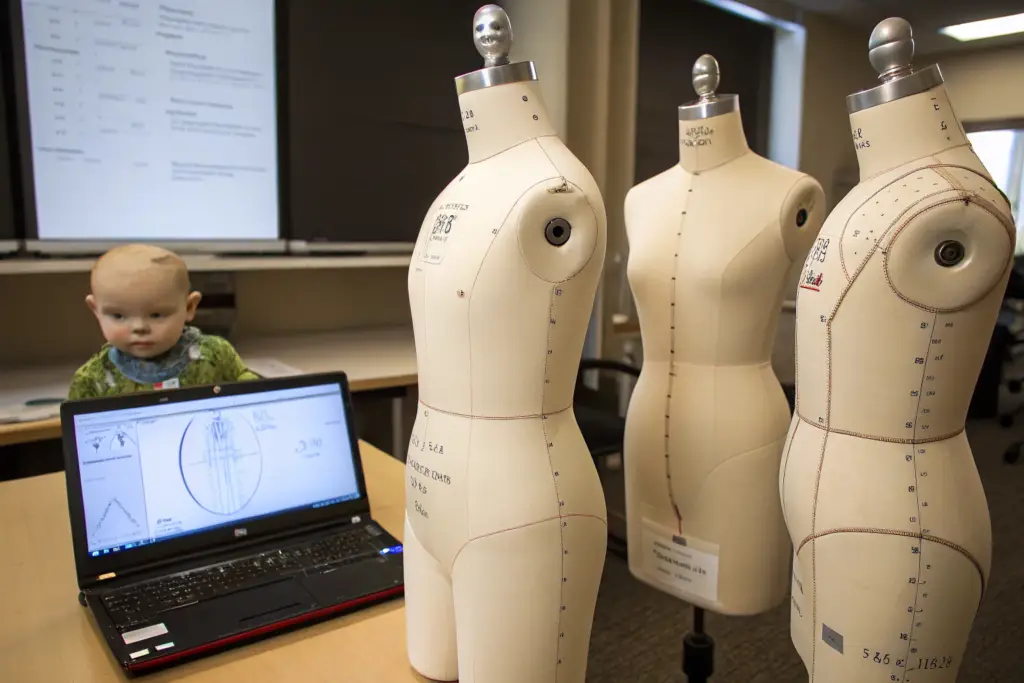
You cannot grade from a 6-month size to a 10-year size. The anatomy is fundamentally different. An infant has a forward head posture, a protruding abdomen, and almost no defined shoulder slope. They also require a much larger neck opening to fit over the head; the standard "head girth" allowance is massive. A tween, on the other hand, starts to take on adult proportions with a defined waist and shoulder, but with awkward limb lengths. We had a brand trying to use the same sleeve block for a 3-month-old romper and a 6-year-old jacket. The romper sleeves were constantly twisting because the bicep ease was too tight for a crawling baby. We forced them to create three distinct base blocks at Shanghai Fumao: an infant block designed for diaper room and prone movement, a toddler block with a "potty ease" adjustment for elastic waists, and a tween block that subtracts the diaper room but adds adolescent limb length. The initial pattern-making cost is higher, but it eliminates the fit returns that kill a brand’s reputation as they scale.
What Is a “Split Grading” Inventory Strategy to Prevent Overstock of Extreme Sizes?
A split grading strategy uses two different production methods within the same style. The core sizes, typically 2T, 3T, 4T, are produced on the main production line at high volume with automated cutting. The tail sizes, 0-3 months and size 12/14, are produced in small, cut-to-order batches. This requires a factory that can economically run small cutting tables without holding up the main line. We implemented this for a brand by scheduling tail sizes during the natural downtime between bulk runs. This prevented the classic scaling problem where a brand has 500 units of Size 0-3 months sitting in a warehouse collecting dust. We also use a size curve forecasting tool that analyzes the previous season’s sell-through at the SKU level to adjust the upcoming production curve. Scaling does not mean making more of everything; it means making more of the right sizes.
Why Does Wholesale Margin Compression Punish Kids Wear Brands Harder Than Adult Brands?
An adult T-shirt has four seams and a screen print. A child’s playsuit has eight snaps, a safety-tested zipper guard, an internal hanger loop, and a choke-proof pocket. The manufacturing complexity is higher, but the parent expects to pay less for a kid’s shirt than they do for their own. This is the margin paradox of kids wear. The brand owner I mentioned earlier was selling a beautifully crafted organic romper for $38 retail. Her landed cost was $14. For wholesale, she had to drop the price to $19, leaving a gross margin of $5 before marketing. One return wiped out the profit from ten sales. Scaling into wholesale, where unit prices drop but complexity does not, is a dangerous trap if you have not engineered the cost out of the garment.
Wholesale margin compression punishes kids wear brands because kids wear is design-complex but price-constrained. An adult dress has a zipper; a kid’s dress has a zipper plus a safety cover, plus a drawstring regulation stop. The physical trims cost more, and the labor time is longer because handling small parts on a sewing machine is slower. When wholesale buyers demand a 50% discount off MSRP, they are demanding that discount on a product that already has a higher baseline manufacturing cost than an equivalent adult item. You cannot fix this by using cheaper fabric because safety regulations and modern parents demand quality. The solution is trim consolidation and Design for Manufacturing. You must reduce the number of snaps, standardize the zipper sizes across your entire line, and use self-fabric ties instead of bought-in drawcords. These engineering decisions, made during the tech pack phase, save the precious dollars that make wholesale profitability possible.
We analyzed a client’s collection and realized they used 14 different types of buttons across 20 styles. This was an aesthetic choice. It was a logistical and financial disaster. We consolidated the line to three approved button styles: one for outerwear, one for knits, and one for wovens. The brand’s trim cost dropped by 40%, and we could bulk-buy with safety certificates. Scaling requires standardization, even if the designer feels it limits their creativity. The alternative is margin bankruptcy.

How Can “Design for Manufacturing” (DFM) Principles Drastically Cut Labor Costs on Complex Children’s Garments?
DFM means simplifying construction without changing the aesthetic. A common example is the shoulder seam. Many designers use a set-in sleeve for toddler tops. It looks sharp. It also takes three minutes of skilled labor to sew. A raglan sleeve takes 90 seconds and is actually more comfortable for a child with a large head. Another example is the crotch snap on onesies. We switched a brand from metal prong snaps, which require a separate hammering station and a strength test, to high-quality poly resin snaps that can be attached by the sewing operator in one step. This change saved $0.40 per unit in labor and removed a safety pinch-point. DFM involves asking the factory’s production manager to review the tech pack not for style, but for "touch time." We reduced one brand’s average sewing time by 22% by eliminating unnecessary topstitching that no customer ever noticed. The lean manufacturing principles for small batch apparel saved the brand’s wholesale margins without sacrificing quality.
Why Does the “Trims Trap” of Multiple Snap and Zipper Sizes Destroy Your Bulk Buying Power?
Every unique trim requires a separate inventory, a separate safety test, and a separate operator setup time. If your size 2T romper uses a 10mm snap and your size 4T romper uses a 12mm snap, you have doubled your testing cost and halved your negotiating power with the snap supplier. The "Trims Trap" is when a brand prioritizes proportional aesthetics over sourcing efficiency. A 12mm snap looks slightly better on a larger garment, but no parent will pay 10% more for it. At scale, you must standardize your zipper gauge, your snap diameter, and your button size across the entire collection. We enforce a strict trim standard library for our scaling brand partners. By limiting zipper options to a single YKK size 3 coil for all dress-through-jacket applications, a brand can buy 10,000 units of zipper tape instead of 500 units of five different tapes. The cost per zipper drops by 35%, which directly protects the wholesale margin.
Conclusion
Aggressively scaling a custom kids wear brand is a brutal shift from creative entrepreneurship to regulatory and operational warfare. The challenges that make scaling incredibly difficult are the very things that made the brand trustworthy when it was small: safety compliance, perfect fit, and premium materials. You cannot compromise on these to chase volume because one CPSC recall, one batch of ill-fitting toddler clothes, or one season of wholesale losses can permanently destroy the trust you have built with parents.
The brands that scale successfully treat compliance as a pre-competitive budget item, not an afterthought. They treat their size curve as a complex engineering problem that requires multiple pattern blocks and a split grading inventory strategy. And they ruthlessly attack their bill of materials, standardizing trims and simplifying construction, to carve out the margin required to survive in the wholesale world. It is not glamorous work. It is the difference between a brand that sells for a profit and a brand that sells for a loss.
At Shanghai Fumao, we have built a specialized kids wear production line designed for exactly this transition. We understand that a toddler’s garment is not a small adult garment. We maintain a compliant trim library, we audit for CPSIA and REACH standards, and we work with our brand partners to engineer their designs for manufacturability without sacrificing the hand feel that premium kids wear demands. We have helped brands consolidate their trims, optimize their size curves, and ship fully compliant garments to multiple continents.
If your brand is hitting the scaling wall, or if you are planning your growth and want to avoid these common traps, reach out to us. At Shanghai Fumao, we can perform a "Scale Audit" on your current tech pack to identify safety risks and DFM opportunities. We can guide you through the size curve fragmentation issue before it results in a warehouse of unsold inventory. Contact our Business Director, Elaine, at elaine@fumaoclothing.com. She can share a compliance checklist for your target market and a trim consolidation case study. Scaling your kids wear brand should be the most exciting chapter of your story. Let’s make sure it is not the last chapter. Let’s build a supply chain that protects your designs, respects your margins, and keeps every single child who wears your clothes perfectly safe.