A few years ago, I sat in a sterile conference room at a major industry trade show. I was on a panel titled "The Future of Sustainable Fashion." Next to me was the head of sourcing for a massive, global fast-fashion conglomerate. He spoke eloquently about their new "conscious collection," made with 20% recycled polyester. When the floor opened for questions, a young, fiercely intelligent boutique owner stood up. She looked directly at him and asked, "Your recycled shirt will still fall apart in ten washes, and you will still sell it for $9. How is a slightly less toxic disposable product any different from the toxic one you made before?" The room went silent. The executive had no answer. In that moment, I saw the future. The conversation was not about making fast fashion slightly "less bad." It was about a wholesale, systemic rejection of the entire fast-fashion economic model. The next generation of buyers is demanding a new paradigm.
Shanghai Fumao will dominate the slow fashion wholesale conversation because we are not just a manufacturer selling durability; we are an integrated, data-rich infrastructure partner that provides the four non-negotiable pillars of a commercially viable slow fashion brand: certified, laboratory-tested garment longevity data; transparent, open-book, cost-plus pricing that decouples our profit from your volume; a low-minimum, on-demand production model that eliminates the waste of overproduction; and a fully digitized, blockchain-verified material provenance chain that provides an unassailable, item-level sustainability proof to the end consumer. Slow fashion is not a trend; it is an economic rebellion against a century of planned obsolescence. And for a rebellion to win, it needs a logistics and manufacturing backbone that is as robust, professional, and scalable as the system it seeks to replace. We have built that backbone. Let me explain the four pillars in detail, and why they form an unassailable argument for a brand to partner with us.
How Does a "Lifetime Warranty" Supply Chain Become a B2B Asset?
In the slow fashion model, a returned garment is not a lost margin; it is a relationship touchpoint. The brand's promise is that the garment is built to last, and when it eventually wears, it will be repaired, not replaced. But this promise is only as strong as the supply chain's ability to actually deliver the repair. A brand that cannot provide spare buttons, matching thread, or replacement panels for a jacket sold three years ago has broken its core promise. The lifetime warranty is a marketing liability if the factory cannot support it with physical parts and labor.
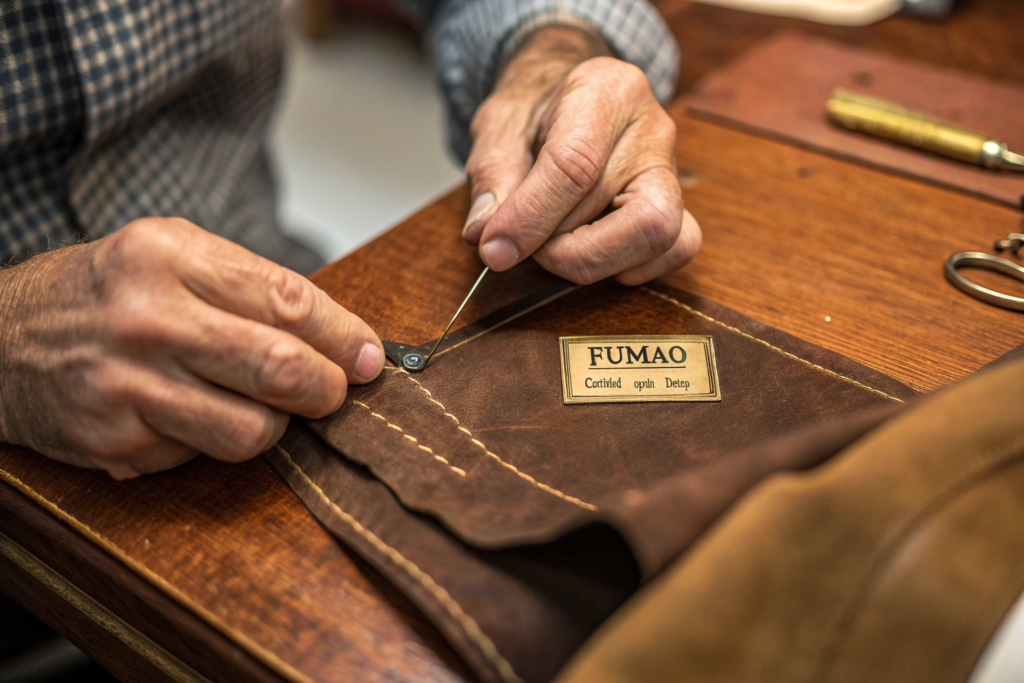
We have built a "Lifetime Support" infrastructure specifically for our slow fashion brand partners. When we manufacture a garment, we automatically archive a small, sealed, climate-controlled kit from the same bulk production batch. This kit contains a spare set of all custom trims: buttons, zipper pulls, snap fasteners, and a small roll of the exact dye-lot fabric for future patching or panel replacement. This kit is bar-coded and linked to the brand's production order number. We store these kits in our warehouse for a minimum of five years. If a brand receives a repair request three years after the garment was sold, they simply request the kit by its order number, and we ship it to them or directly to their certified repair partner within 48 hours. The repair is performed with the original, perfectly matched materials, and the garment's life is extended. This is the quiet, unglamorous, and profoundly powerful infrastructure of a genuine circular economy. It transforms a marketing promise into a physical, executable, and brand-building service, and it is a tangible B2B asset that a generic, high-volume factory cannot offer.
Why Does "Open-Book Costing" Attract Long-Term Wholesale Buyers?
A traditional, transactional factory relationship is based on an information asymmetry: the factory knows its real costs, and the buyer does not. The price negotiation is a zero-sum game of who can bluff better. This model is fundamentally toxic to a long-term, slow fashion partnership, which requires deep trust and aligned economic interests. The volume-based, margin-hiding pricing of a fast-fashion supplier incentivizes the factory to push for larger, more frequent orders, directly undermining the slow fashion principle of making only what is needed.
Open-book costing is the antidote. It is a radical act of transparency. We open our books to our strategic brand partners. We show them the actual, audited invoice from the organic cotton mill. We show them the real cost of the OEKO-TEX certified dye. We show them our true labor cost per minute, calculated from our audited payroll, and our agreed, fixed manufacturing margin. The final FOB price is simply the sum of these visible, verified components. There is no hidden markup. Our profit is a transparent, fixed fee for our manufacturing service. This model completely transforms the buyer-supplier relationship from an adversarial negotiation to a collaborative management of a joint business. The brand can work with us to value-engineer the product, making strategic material choices to hit a target price, because they see exactly where every cent is spent. This radical, honest partnership is what attracts long-term, values-aligned wholesale buyers who are building a business for the next decade, not the next quarter. It is a trust-based, economic partnership.
How Does a "Spare Parts Archive" Support a 10-Year Repair Network?
A garment's failure point is often a single small, custom component. A custom-engraved wooden button, a specifically dyed zipper tape, a unique drawcord toggle. If that component is lost or broken, and a perfect match cannot be sourced, the entire garment is rendered unwearable. A genuine 10-year repairability promise requires a systematic, organized, and accessible archive of these small, critical, custom parts.
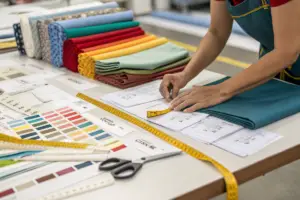
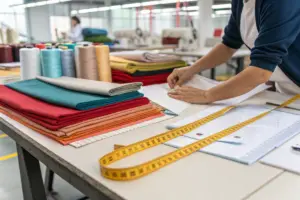
Our spare parts archive is the physical backbone of this promise. It is a dedicated, secure, climate-controlled section of our warehouse, with rows of shelving holding sealed, labeled bins. Each bin corresponds to a specific production order, and it contains a small, carefully packaged kit of all the custom trims and a swatch of the specific dye-lot fabric used in that order. These kits are not random leftovers; they are a deliberate, pre-planned overrun, manufactured as part of the original order. When a brand's repair partner, or even an end consumer, needs a specific button, the brand submits a request with the garment's internal care label code. Our system instantly identifies the exact spare parts bin. We retrieve the needed part and ship it, with a matching thread spool, directly to the repair address. This turns a 10-year repair guarantee from a hopeful, unenforceable slogan into a logistically supported, brand-defining reality. It is a physical monument to the brand's integrity, and it is a service only a manufacturer committed to the slow fashion ethos would ever provide.
What Is Our "On-Demand, Low-Minimum" Production Model?
The single greatest driver of waste in the fashion industry is not a material; it is a business model. The traditional wholesale model forces brands to guess, six to nine months in advance, what will sell, and to commit to large, speculative production volumes to hit an economically viable FOB price from a high-minimum factory. The inevitable result is overproduction, massive unsold inventory, and the ritual, wasteful season-end clearance sale. This is the "markdown economy," and it is the very antithesis of slow fashion.
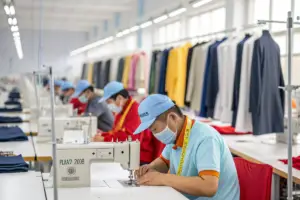
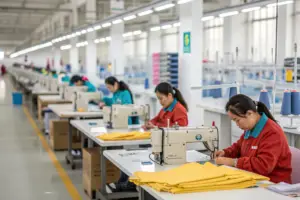
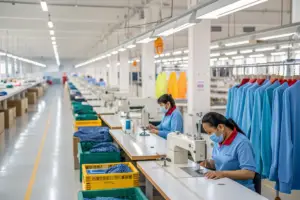
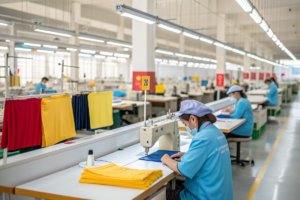
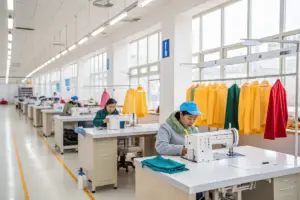
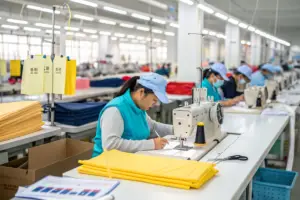
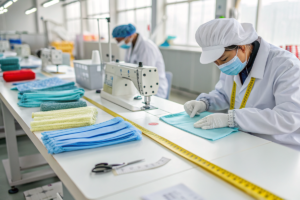
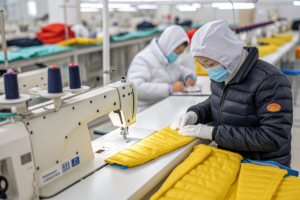
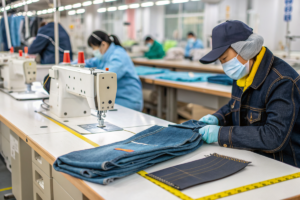
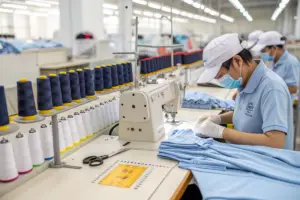
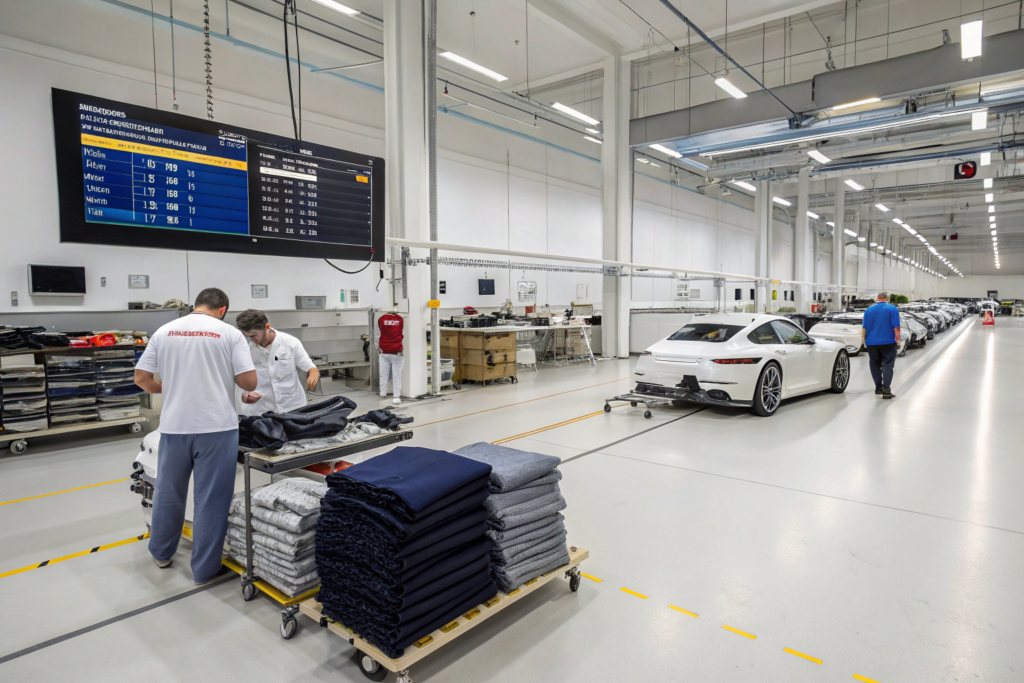
Our answer is our "On-Demand, Low-Minimum" production model. We have invested specifically in a production system, our Porsche Line and its supporting digital infrastructure, that is designed for small, agile, and repeatable runs. The minimum order quantity for a style is as low as 30 units. This is not a concession; it is a strategic capability. It allows a brand to test the market with a small, exclusive capsule, gather real customer feedback, and then reorder only the winning styles in small, continuous batches. The brand is never forced to buy more than it needs. The production is pulled by real, confirmed consumer demand, not pushed by a speculative forecast. This model fundamentally aligns the manufacturing economics with the core slow fashion principle of producing only what is needed and loved, eliminating the colossal waste of the markdown cycle. We are not just a factory; we are an on-demand, just-in-time manufacturing partner for the new fashion economy.
How Does a 30-Unit Minimum Order Enable a "Test-and-Repeat" Wholesale Strategy?
A brand that can order just 30 of a new style can behave like a nimble tech startup. They can launch a small, exclusive "drop" on their direct-to-consumer website or with a few trusted boutique partners. They risk very little capital on unproven designs. They can see, within days, whether the style resonates with their customer. They can gather real-world feedback on the fit, the fabric, and the price. The market data is clean, clear, and fast.
If the style sells out and generates a waiting list, the brand can immediately trigger a replenishment order of 60 or 100 units. This second batch is produced and delivered within our rapid-turn production window, keeping the consumer's excitement hot and capturing the demand without the delay of a traditional, seasonally locked supply chain. If the style does not sell, the brand's loss is limited to just 30 units, a manageable marketing test cost, rather than a catastrophic inventory write-off on a minimum order of 500. This "test-and-repeat" capability is the holy grail of a responsive, customer-driven supply chain. It allows a brand to build a loyal community around exclusive, timely products, completely decoupling growth from inventory risk. It is the operational model of a modern, direct-to-consumer brand, enabled by a factory that has retooled for agility.
Why Does a "Just-in-Time" Replenishment Model Cut a Brand's Markdown Losses?
The markdown is the financial cancer at the heart of the traditional wholesale model. A brand that is forced by its factory's minimums to produce 1,000 units of a seasonal style, but only sells 600 at full price, must liquidate the remaining 400 at a deep discount. The markdown erodes the brand's premium image, trains customers to wait for the sale, and wipes out the profit margin. The cost of the markdown is not just the lost revenue; it is the permanent devaluation of the brand.
Our just-in-time replenishment model surgically removes the root cause of the markdown: overproduction. The brand produces an initial, small batch of, say, 50 units. They sell through at full price. They trigger a reorder of 30, then another 20. The production is matched, nearly one-to-one, with actual, full-price consumer demand. At the end of the season, the brand has sold 98% of its units at full price. There are no warehouse racks of unsold inventory to mark down. The brand's image remains premium and exclusive. The customer pays full price. The profit margin is captured, not lost. This is not just an operational improvement; it is a complete, fundamental re-engineering of the brand's financial model, and it is only possible with a factory partner that has re-engineered its own operations to deliver small, fast, and economically viable replenishment runs. The factory's agility becomes the brand's financial fortress.
How Do We Digitally Prove the Slow Story to the End Consumer?
A slow fashion brand's story is its single most valuable asset. It is the narrative of the artisan, the sustainably farmed material, the clean dye process, and the fair labor that justifies a premium price and builds a deep, emotional connection with the conscious consumer. But in an era of rampant greenwashing, a story is not enough. It must be proven with data. The end consumer is increasingly skeptical, and they demand verifiable, objective evidence, not marketing poetry.
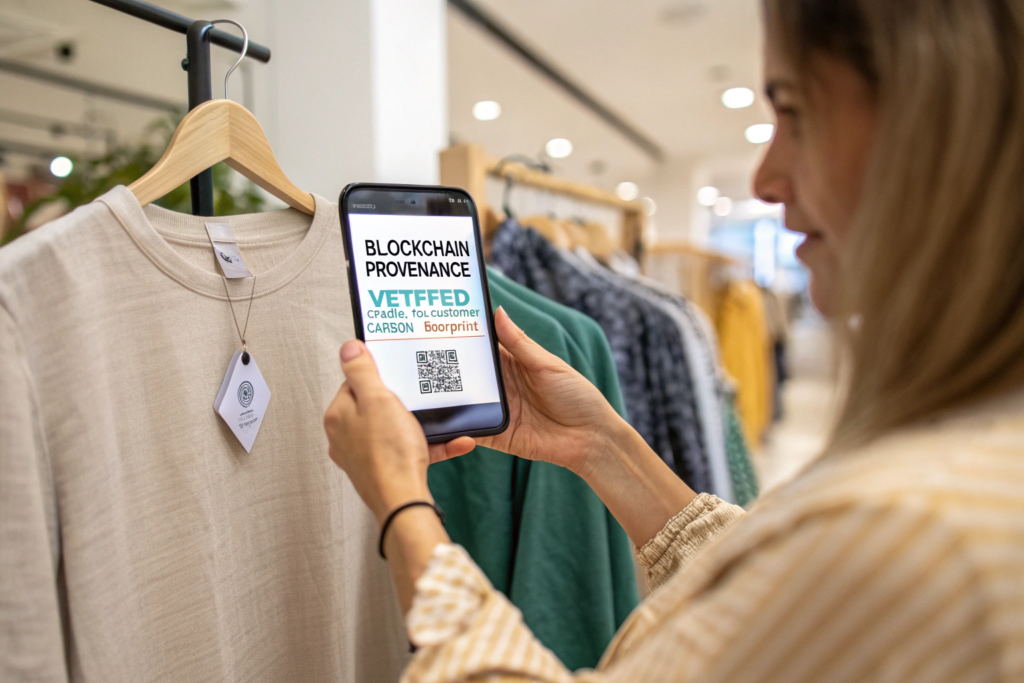
We provide our brand partners with a complete, digital "Proof of Provenance" package. Every garment we manufacture carries a unique QR-coded hangtag. When the consumer scans the code, they are taken to a secure, public page on a blockchain explorer. This is not a curated marketing video; it is an immutable, timestamped, and cryptographically signed digital record of the garment's entire lifecycle. The record shows the specific organic cotton farm, the certified spinning and weaving mill, the OEKO-TEX Annex 4 certification for the dye process, a photograph of the sewer who assembled the garment, and the complete, cradle-to-customer carbon footprint calculated by our Instant LCA Engine. This is the story, but it is told with objective, verifiable, and unalterable data. It transforms a subjective marketing claim into a personal, auditable fact. The customer is no longer buying a brand's story; they are independently verifying the garment's truth. This is the ultimate tool for building the deep, authentic trust that is the foundation of a successful, premium slow fashion brand.
What Data Points Populate a Blockchain-Enabled "Garment Passport"?
The "Garment Passport" is the consumer-facing name for the digital identity record that is anchored to the physical garment. It is a structured, comprehensive, and transparent data file, not a blank, vague statement. When the QR code is scanned, the passport reveals a layered, in-depth timeline of the garment's creation. It begins with the raw material: a verified, geotagged satellite map of the specific regenerative farm, the farmer's name and a photograph, and the date of harvest. It shows the spinning and weaving mill, with a copy of the mill's valid GOTS certificate.
It then details the manufacturing process. It shows our OEKO-TEX and SA8000 social compliance certificates. It displays the date the garment was cut and sewn on our Porsche Line, and the measured energy and water consumption for that specific batch. It includes the full, itemized chemical test report for the fabric, showing a "PASS" for all OEKO-TEX Annex 4 substances. It culminates in a single, verified number: the total cradle-to-customer carbon footprint for that exact garment, expressed in kilograms of CO2 equivalent. The entire record is cryptographically hashed and timestamped on the public Hedera Hashgraph network, an immutable, decentralized ledger. The consumer is not seeing a PDF; they are viewing a live, mathematically authenticated digital birth certificate of their clothing, a concept aligned with the EU's Digital Product Passport initiative.
How Does "Radical Transparency" Convert a $9 Shopper to a $99 Buyer?
A $9 fast-fashion shopper is not buying a garment; they are buying a disposable moment of novelty. They have been trained by the market to expect nothing more. A $99 slow-fashion buyer is making a completely different transaction. They are investing in a durable, beautiful object with a known, positive, and verified impact on the people and the planet who created it. The conversion from one to the other is not achieved by a higher price tag; it is achieved by a fundamental shift in perceived value, driven by radical transparency.
When a consumer scans a QR code and, for the first time, sees the face of the organic cotton farmer, the exact field where the cotton grew, the certification that no child labor was involved, and the precise, audited calculation of the garment's tiny carbon footprint, their perception of value is permanently altered. They are no longer just looking at a piece of fabric; they are holding a documented, verified piece of environmental and social good. The $99 price is no longer an arbitrary premium; it is the fair, logical cost of a product that has paid the true price for its materials, its labor, and its environmental impact. The transparency has done the selling. It has transformed an anonymous, commodity object into a personal, ethically charged, and emotionally resonant artifact. The consumer is not just buying a shirt; they are funding a farm, supporting a skilled worker, and voting for a cleaner planet. This is the profound, conversion-driving power of radical transparency, and it is the ultimate weapon of a slow fashion brand in a market saturated with cheap, empty products.
Conclusion
Our dominance in the slow fashion wholesale conversation is not based on a single product. It is based on a complete, integrated manufacturing philosophy that aligns our entire operational and technological infrastructure with the core economic and ethical imperatives of the slow fashion movement. We provide a "Lifetime Warranty" supply chain, with archived spare parts and open-book costing that builds trust. We offer an "On-Demand, Low-Minimum" production model that eliminates the colossal waste of overproduction and the brand-destroying cycle of markdowns, replacing it with a profitable, just-in-time test-and-repeat strategy. And we deliver a fully digitized, blockchain-verified proof of provenance that transforms a garment's story from a marketing claim into an unassailable, customer-verifiable scientific fact, converting a skeptical $9 shopper into a loyal, values-driven $99 buyer. This is not a better factory; it is a better economic model for making clothes, purpose-built for the brands that will lead the next era of fashion.
At Shanghai Fumao, we do not see slow fashion as a niche aesthetic. We see it as the inevitable, rational, and commercially superior successor to a century of disposable clothing. We have built the factory for that future.
If you are a U.S. brand owner ready to build your business on a foundation of radical transparency, on-demand agility, and certified longevity, we invite you to schedule a virtual deep-dive into our slow fashion partnership model. We can walk you through our open-book costing template, our Porsche Line minimums, and a live demonstration of our blockchain garment passport. Contact our Business Director, Elaine, at elaine@fumaoclothing.com. Tell her you want to explore the slow fashion infrastructure partnership. Let us build the factory for your brand's next century.