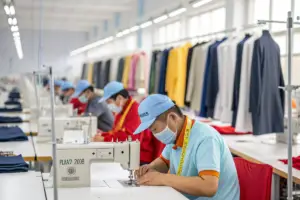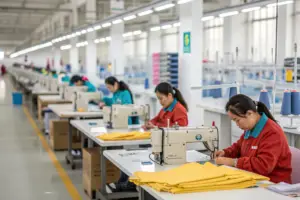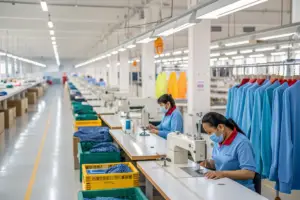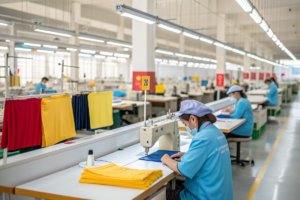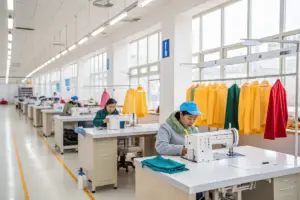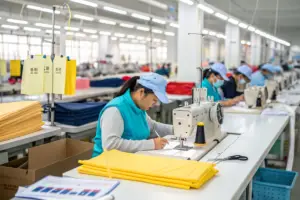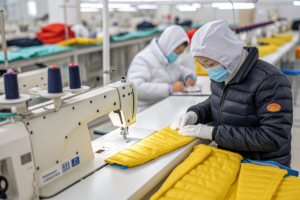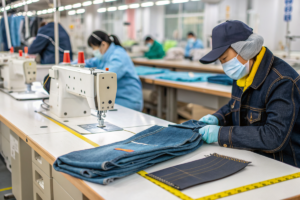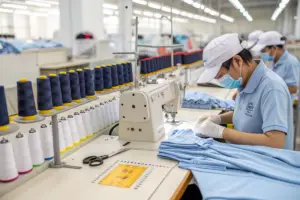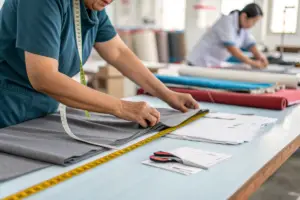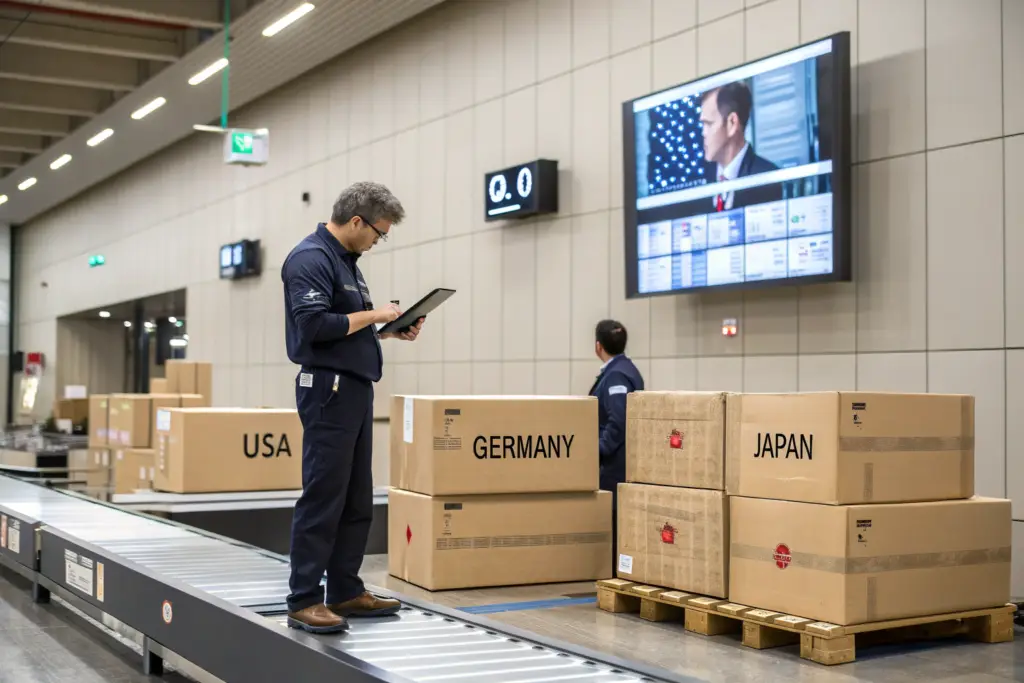
I sat in a coffee shop in London last year with a distributor who had built a $4 million apparel business without ever touching a single garment. He did not own a warehouse. He did not run a factory. He did not ship a single package himself. His business model was beautifully simple. He sourced premium garments from our factory in Shanghai. He listed them on five European e-commerce marketplaces. When a customer in Berlin placed an order, our DDP logistics partner shipped the garment directly from our factory to the customer's doorstep. The distributor never saw the product. His job was marketing, brand building, and customer relationships. His net margin was 35%. His overhead was a laptop, a Shopify subscription, and a small team of virtual assistants. He was not a retailer. He was not a wholesaler. He was a cross-border e-commerce distributor, and he had figured out the most capital-efficient model in the apparel industry.
Cross-border e-commerce is the ultimate model for apparel distributors because it eliminates the three largest capital drains of traditional distribution: inventory holding costs, warehousing overhead, and geographic market limitations. In the cross-border model, the distributor markets and sells products to consumers in high-value markets like the United States, Western Europe, and Australia, while the manufacturer produces the goods in a lower-cost country and ships directly to the end consumer. The distributor never takes physical possession of inventory. They never pay for warehouse rent. They never deal with customs clearance or last-mile delivery. Their capital is deployed entirely into marketing and customer acquisition, which are the highest-return activities in the value chain. The model transforms apparel distribution from a capital-intensive inventory game into a lean, scalable, digital-first business that can be operated from anywhere with an internet connection.
The traditional distributor model is dying. Buying containers of inventory, storing them in a warehouse, and selling to retail accounts is a slow, capital-heavy, margin-thin way to do business. The cross-border model flips the script. The distributor controls the brand, the customer, and the pricing. The manufacturer handles the product, the quality, and the logistics. Each party does what they do best. I want to share exactly how this model works, why the unit economics are so favorable, and how distributors can build a cross-border apparel business that generates significant profit with minimal capital investment.
How Does the Cross-Border Direct-to-Consumer Model Radically Reduce Inventory Risk for Distributors?
A traditional apparel distributor I know has $350,000 tied up in inventory at any given time. That is $350,000 in cash that has been converted into fabric, sewn into garments, packed into cartons, and stored in a warehouse. He cannot use that cash for marketing. He cannot use it for hiring. He cannot use it for anything until the garments are sold, which takes an average of 90 days. During those 90 days, his cash sits on shelves. If a style does not sell, the cash sits longer. If the season changes, the cash sits forever. His inventory is his biggest asset and his biggest risk. The cross-border distributor I met in London has zero dollars in inventory. His factory holds finished goods until an order is placed. When a customer orders a jacket on his website, the factory ships it. He pays the factory only after the customer has paid him. His cash conversion cycle is negative. He gets paid by the customer before he pays the factory. That is not just a business model. That is a financial superpower.
The cross-border DTC model radically reduces inventory risk by inverting the traditional cash flow cycle. In the traditional model, the distributor pays for production upfront, waits for goods to be manufactured and shipped, holds inventory in a warehouse, and recovers cash only when the goods are sold to retailers or consumers. In the cross-border model, the distributor collects payment from the consumer at the point of sale, then pays the manufacturer for the goods and the logistics provider for the shipping. The distributor's cash is never tied up in unsold inventory. They never face the risk of a style that does not sell, a season that underperforms, or a trend that shifts mid-cycle. The inventory risk is transferred to the manufacturer, who is compensated for carrying this risk through a slightly higher per-unit production cost. The trade-off is overwhelmingly favorable for the distributor. A 5% to 10% higher unit cost in exchange for zero inventory risk is a deal every smart distributor should take.
The financial math is compelling. A traditional distributor with $350,000 in inventory and a 15% net margin earns $52,500 on that capital. A cross-border distributor with zero inventory and the same marketing spend can deploy that $350,000 entirely into customer acquisition. If their net margin is 25% after the higher unit costs, they earn $87,500 on the same capital base. The model does not just reduce risk. It multiplies return on invested capital.

Why Is a "Get Paid First, Pay Suppliers Later" Cash Conversion Cycle the Holy Grail of Apparel Distribution?
The cash conversion cycle measures the time between when a business pays for inventory and when it collects cash from sales. A traditional distributor has a positive cash conversion cycle. They pay the factory 30 days before the goods ship. The goods spend 30 days in transit. They spend 60 days in the warehouse before being sold. The distributor's cash is out for 120 days before it returns. A cross-border distributor has a negative cash conversion cycle. The customer pays by credit card at the moment of purchase. The payment processor deposits the funds into the distributor's account within two to five business days. The distributor pays the factory on net-30 terms. The distributor holds the customer's cash for 25 days before paying the supplier. This negative cycle means the business generates cash as it grows. Growth does not require additional capital. Growth generates additional capital. The negative cash conversion cycle in e-commerce is the financial mechanism that allows cross-border distributors to scale without raising outside funding. It is the closest thing to a free growth engine that exists in the apparel industry.
How Does the "Virtual Inventory" Model Allow a Distributor to Test 50 New Styles Monthly Without Bankruptcy?
A traditional distributor testing a new style must commit to a minimum production run, typically 200 to 500 units per style. Testing 50 new styles would require ordering 10,000 to 25,000 units and investing $100,000 to $500,000 in inventory. If 30 of those styles fail, the distributor is stuck with a warehouse full of dead stock. A cross-border distributor with a virtual inventory model tests a new style by listing it on their website and running a small advertising campaign. The factory has the style in their catalog or produces a small pre-production sample run. When orders come in, the factory produces and ships the garments. If the style does not sell, the distributor delists it. No inventory was purchased. No capital was risked. The distributor can test 50 styles in a month, identify the 10 winners, and scale those 10 with confidence. The virtual inventory model turns product development from a speculative bet into an evidence-based process. The virtual inventory management in cross-border e-commerce is the reason cross-border distributors can move faster and take more creative risks than traditional distributors.
What Pricing and Margin Structures Make Cross-Border Apparel Sales Uniquely Profitable?
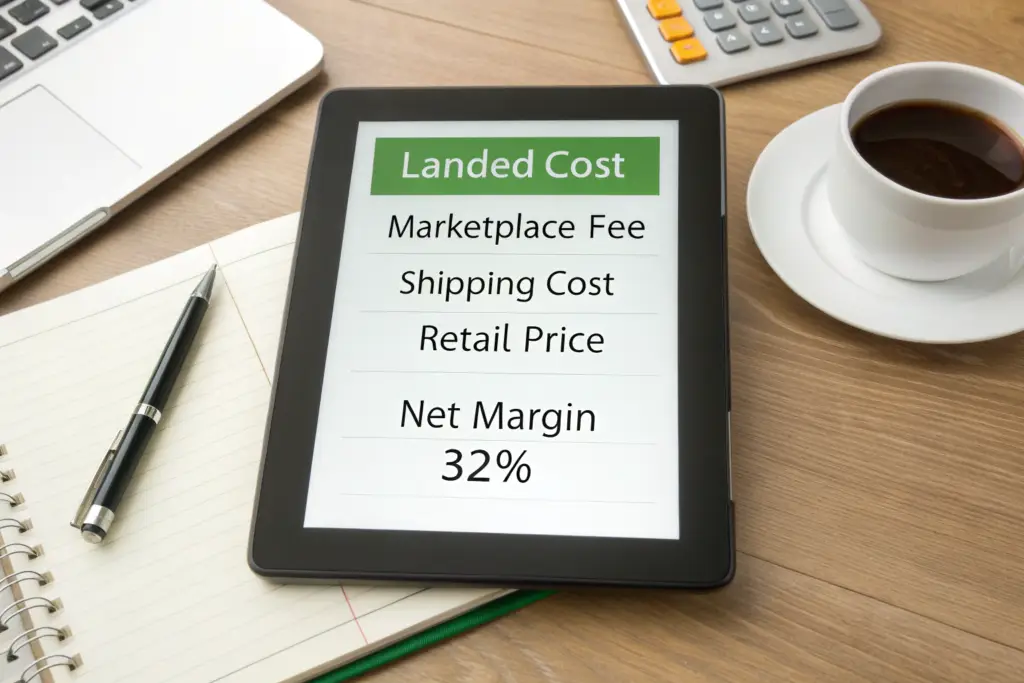
A distributor I work with sells a premium linen shirt. The landed cost from our factory, including the garment, the custom label, the poly bag, and the DDP shipping to the customer's door in Germany, is $18.50. He sells the shirt on his branded website for €79, which is approximately $86. His gross margin is 78%. After marketplace fees, payment processing, and marketing costs, his net margin is 32%. That is $27.52 in net profit per shirt. He sells 200 shirts a month. His monthly net profit from one product is $5,500. He runs this business from a co-working space in Barcelona with two part-time virtual assistants. His total monthly overhead is $2,000. His personal take-home is $3,500 a month from one product. He is now launching three more products. The unit economics of cross-border apparel are not just good. They are transformative for a solo entrepreneur or small team.
The pricing and margin structures of cross-border apparel sales are uniquely profitable because the distributor captures the full arbitrage between the manufacturing cost in a lower-cost country and the retail price in a higher-value market. A garment that costs $12 to $20 to produce and ship can retail for $60 to $120 in the US or European market, reflecting a 4x to 8x markup. The key cost components are the landed cost, the marketplace or platform fee, typically 8% to 15%, the payment processing fee, approximately 3%, and the marketing cost per acquisition, which varies by channel but typically ranges from $8 to $20 for an established brand. When these costs are subtracted from the retail price, the net margin typically falls between 25% and 40%. This margin structure is sustainable because the distributor's operating costs are minimal. No warehouse lease. No retail staff. No inventory financing costs. The margin flows directly to the bottom line.
The arbitrage is not exploitation. It is value creation. The distributor creates value by designing a product, building a brand, and delivering a customer experience that the consumer values at a multiple of the manufacturing cost. The consumer pays for the brand, the design, the convenience, and the trust. The factory is paid fairly for the manufacturing. The distributor earns a profit for the value they created.
How Does the DDP Shipping Model Transform a Complex Logistics Nightmare into a Simple Per-Unit Cost?
DDP stands for Delivered Duty Paid. It is an Incoterm where the seller, in this case the factory or the factory's logistics partner, assumes full responsibility for the goods until they reach the buyer's specified destination. In the cross-border apparel model, DDP means the factory handles everything from the factory loading dock in China to the customer's doorstep in New York or Paris. The factory manages the ocean freight or air freight, the export customs clearance, the import customs clearance, the duty payment, the inland trucking, and the last-mile delivery. The distributor receives one per-unit DDP price that includes all of these costs. There are no surprise charges. No demurrage fees. No customs holds. No angry customer emails about unexpected duty bills. The DDP model transforms a complex international logistics operation into a simple line item on a cost sheet. The DDP shipping for cross-border e-commerce is the logistics innovation that makes the cross-border model accessible to small distributors. Without DDP, the distributor would need to manage a freight forwarder, a customs broker, and a last-mile carrier in every target country. With DDP, the factory handles it all.
Why Can a Distributor Charge a Higher Retail Price by Emphasizing "Designed in London" or "Curated in Paris" While Manufacturing in China?
The country of design origin carries brand equity that the country of manufacture does not. A garment "Designed in London" and manufactured in China benefits from the design cachet of London and the manufacturing efficiency of China. The consumer is not buying a Chinese garment. They are buying a London-designed garment that happens to be produced in China, like an iPhone is designed in California and assembled in China. The value is perceived to reside in the design, not the assembly. The distributor who emphasizes their design origin, their curation process, or their brand story creates a premium perception that justifies a higher retail price. This is not deception. It is branding. The design work, the fabric selection, the fit specification, and the quality control are genuinely performed by the distributor. The manufacturing is performed by the factory. The consumer pays for both, but the premium is attached to the design. The country of origin versus country of design in consumer perception is well documented in marketing research. Smart distributors leverage their design location to command higher prices.
What Technology Platforms and Logistics Partnerships Are Essential for Scaling a Cross-Border Apparel Business?
A distributor I advised was manually processing international orders. When an order came in, she would email the factory with the customer's address and product details. The factory would ship the order and send her a tracking number. She would manually update the customer. This process worked for 10 orders a day. When her business grew to 50 orders a day, the manual process collapsed. Orders were missed. Tracking numbers were lost. Customers complained. She almost lost her business because her operations could not scale with her sales. We integrated her Shopify store with the factory's order management system through an API. Now, orders flow automatically from her website to the factory's packing station. Tracking numbers flow automatically back to the customer. She processes 200 orders a day with the same two-person team. The technology integration transformed her business from a fragile manual operation into a scalable automated machine.
Scaling a cross-border apparel business requires an integrated technology stack that connects the distributor's e-commerce platform to the factory's production and logistics systems. The core platforms are a global e-commerce platform like Shopify Plus or BigCommerce that supports multi-currency selling and international payment processing, a cross-border logistics partner like FlavorCloud or Easyship that provides DDP shipping rates and automated customs documentation, and an order management integration that transmits orders from the website to the factory without manual intervention. The distributor also needs a customer service platform like Gorgias or Zendesk that can handle multi-language inquiries, and a marketing automation platform like Klaviyo that can segment customers by country and send localized email campaigns. The technology stack is the operating system of the business. Without it, the distributor is limited by their own manual capacity. With it, the business can scale to thousands of orders per month with a small team.
The technology investment is not expensive relative to the traditional distributor's overhead. A complete tech stack for a cross-border apparel business costs $200 to $500 per month in software subscriptions. The traditional distributor pays $5,000 to $15,000 per month in warehouse lease, utilities, and warehouse staff. The technology replaces the warehouse. The cost savings fund the marketing budget.
How Do You Integrate a Chinese Factory's Order Fulfillment System Directly with a Western E-Commerce Frontend?
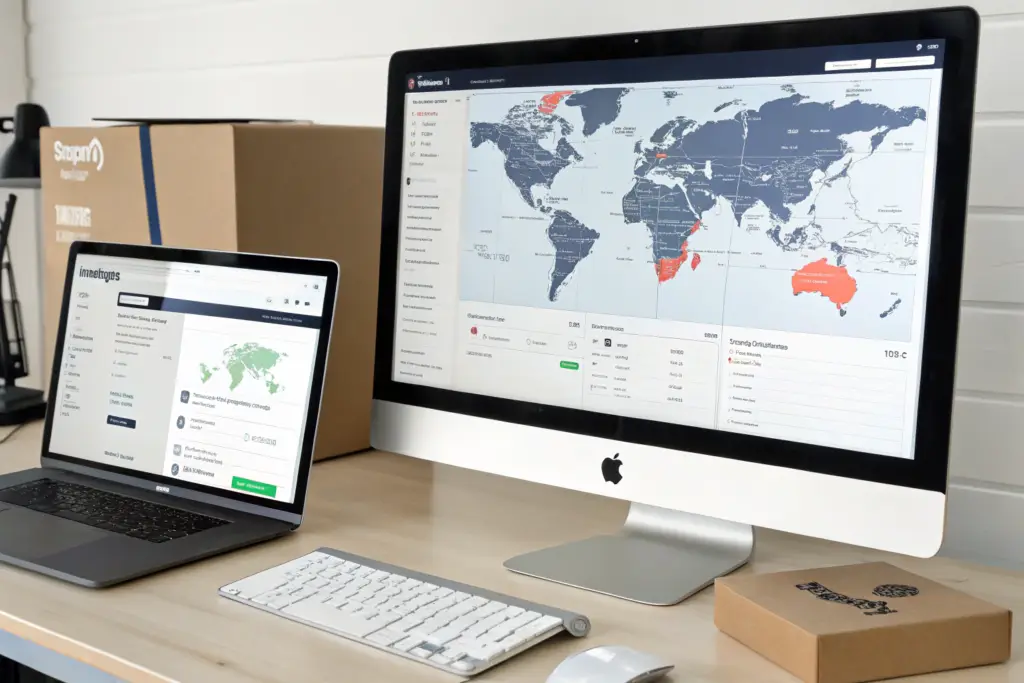
The integration is achieved through an API connection or a middleware platform. The factory's order management system exposes an API endpoint that receives order data: customer name, shipping address, product SKU, size, color, and quantity. The distributor's e-commerce platform, such as Shopify, sends a POST request to this endpoint when an order is placed. The factory's system acknowledges receipt, generates a packing slip, and queues the order for fulfillment. When the order ships, the factory's system sends a PUT request back to the e-commerce platform with the tracking number and carrier information. The e-commerce platform updates the order status and sends the tracking notification to the customer. Middleware platforms like Orderhive or TradeGecko simplify this integration by providing pre-built connectors between common e-commerce platforms and factory systems. The e-commerce and factory order integration eliminates the manual data entry that causes errors and delays. The order flows from customer to factory in seconds, not hours.
What Are the Most Reliable Cross-Border Logistics Partners for Apparel Shipping from China to the US and EU Markets?
The logistics partner is the most critical vendor relationship in the cross-border model. The partner must provide DDP shipping with transparent, predictable pricing, real-time tracking from factory to customer, automated customs clearance, and a customer-facing tracking portal. For shipments from China to the US, reliable partners include FlavorCloud, Easyship, and Passport Shipping. For shipments to the EU, partners like Sendcloud, Seven Senders, and Asendia provide strong European last-mile networks. The distributor should negotiate a blended rate that covers the most common shipping lanes and package weights. A typical DDP rate for a 500-gram apparel package from China to the US is $8 to $12. To Germany, $7 to $10. These rates are all-inclusive of freight, duty, and last-mile delivery. The cross-border logistics partners for apparel e-commerce should be evaluated on delivery speed, tracking reliability, and claims resolution process. A logistics partner that delivers on time 95% of shipments with full tracking visibility is worth a premium over a cheaper partner with inconsistent performance.
Conclusion
The cross-border e-commerce model is the ultimate business structure for apparel distributors because it solves the fundamental capital problem that has constrained apparel distribution for a century. Traditional distributors must convert cash into inventory and wait months to recover it. Cross-border distributors collect cash from customers before paying suppliers. Traditional distributors are limited by warehouse capacity and geographic reach. Cross-border distributors can sell to any consumer in any country with a single website and a DDP logistics partner. Traditional distributors must guess which styles will sell and risk capital on inventory. Cross-border distributors can test dozens of styles virtually and scale only the winners.
The model is not theoretical. It is being executed successfully by thousands of distributors who have abandoned the traditional inventory-heavy approach. The ones who succeed combine a strong brand identity, a reliable factory partner who offers DDP fulfillment, an integrated technology stack, and a disciplined marketing strategy. They work from anywhere. They scale without capital constraints. They earn margins that traditional distributors envy.
At Shanghai Fumao, we have structured our manufacturing services to support the cross-border e-commerce model. We offer DDP shipping to the US, UK, EU, Canada, and Australia. We provide API integration with major e-commerce platforms for automated order processing. We maintain a catalog of private label styles that distributors can brand and sell without custom development. We handle the product, the quality, and the logistics. The distributor handles the brand, the marketing, and the customer relationships.
If you are a distributor looking to transition to the cross-border model, or an entrepreneur looking to launch a cross-border apparel brand, we can help. At Shanghai Fumao, we will provide a DDP landed cost estimate for your target products and markets. We will walk you through our order integration process. We will show you how other distributors have built profitable cross-border businesses using our manufacturing and logistics infrastructure. Contact our Business Director, Elaine, at elaine@fumaoclothing.com. She can share a cross-border distributor case study and a sample cost breakdown for your specific product category. The cross-border model is the future of apparel distribution. The future is already here.