A baby's skin is not just sensitive. It is structurally different from adult skin. The stratum corneum, the outermost protective layer, is 30% thinner. The barrier function is still developing. This means a chemical that barely registers on your arm can trigger a full-body rash on a three-month-old. Yet for decades, the wholesale baby clothing market has treated infant garments as a logistics problem rather than a physiological one. Factories cut the same cheap polyester fabric into smaller patterns, slapped a cute bear print on it, and shipped it. Parents brought it home, washed it once, and watched the seams twist, the color bleed, and the plastic snaps crack. I watched this cycle repeat for years and found it unacceptable. A baby cannot complain about an itchy tag. A toddler cannot explain why their eczema flared up after wearing a new onesie. The responsibility sits entirely with the brand owner and the manufacturer to get it right before the garment touches the crib.
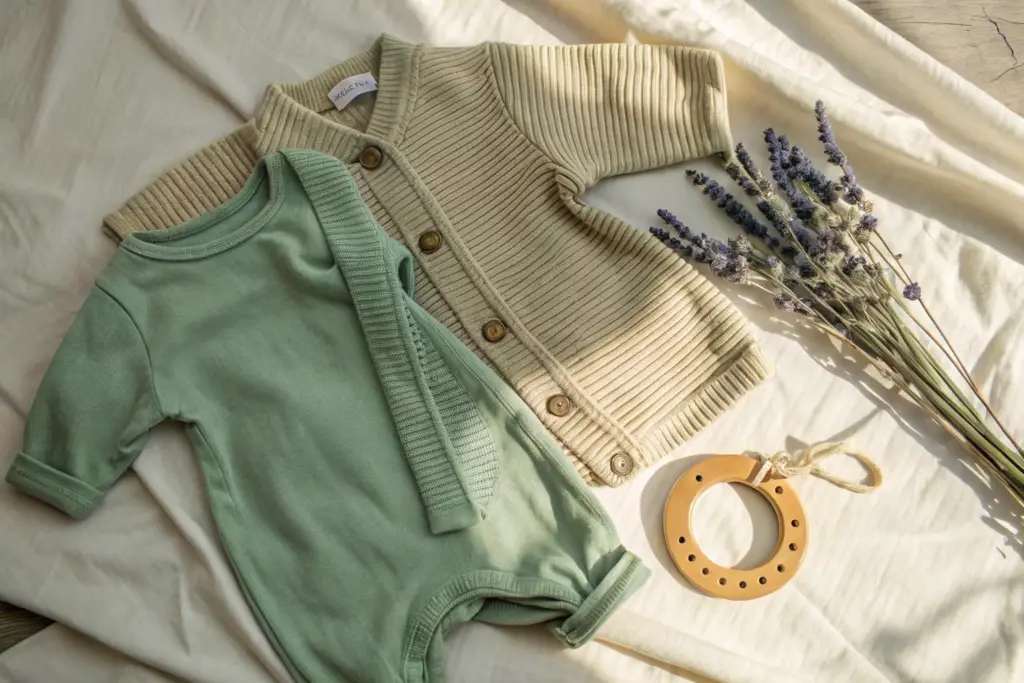
Shanghai Fumao is disrupting the wholesale baby clothing market by applying a medical-grade, safety-first manufacturing protocol to a segment that has historically been treated as an afterthought of fast fashion. We start from the fiber and work outward. Our standard baby garment fabric is OEKO-TEX Standard 100 Class I certified, which means it is legally tested and proven safe for infants from birth to 36 months, the most stringent human-ecological certification available for textiles. We use flat-lock stitching on every internal seam to eliminate raised ridges that can abrade delicate skin. We replace traditional woven neck labels with printed tagless transfers that contain zero phthalates or PVC. We test every metal snap and zipper for nickel release, lead content, and sharp edge points using a calibrated pull-force tester to ensure a snap does not detach and become a choking hazard. This is not a premium upcharge option in our catalog. It is the baseline specification for every baby garment that leaves our production lines. We brought automotive-level quality planning to a category that was waiting for someone to take it seriously.
This approach is resonating with a very specific type of buyer. New millennial and Gen Z parents who research fabric certifications before clicking "add to cart." Boutique brand owners who are tired of explaining to furious customers why a $45 organic onesie developed holes after four washes. Distributors who need a reliable private-label partner that will not destroy their retail relationships with a recall. Let me lay out exactly how we build safety into every seam, how our organic cotton supply chain actually works, and how the production logistics scale from a 500-piece boutique order to a 20,000-piece department store program.
What Safety Standards Should Wholesale Baby Clothes Actually Meet?
Most new brand owners enter the baby clothing market with beautiful designs and zero understanding of the regulatory framework that governs infant products in the United States. They assume the factory knows the rules. They assume "organic" means "safe." These assumptions are dangerous. A single violation of the Consumer Product Safety Improvement Act can trigger a mandatory recall, a fine, and a permanent black mark on your brand's reputation before you have sold your first thousand units.
The safety standard for baby clothing is not a suggestion. It is a federal mandate enforced by the U.S. Consumer Product Safety Commission. At Shanghai Fumao, we build every wholesale baby garment to comply with three non-negotiable regulatory pillars. First, 16 CFR Part 1610, the Standard for the Flammability of Clothing Textiles, which requires that fabrics used in children's sleepwear and general wearing apparel pass a burn-rate test. Second, 16 CFR Part 1303, the ban on lead-containing paint and surface coatings, which applies to any printed graphic, zipper coating, or snap finish on a baby garment. Third, the federal requirements under the Consumer Product Safety Improvement Act for phthalate content in accessible plastic components. Beyond these legal minimums, we hold our production to the ASTM F963 standard for mechanical hazards, which governs the attachment strength of small parts like buttons and snaps. This is the same standard used for toys, and we apply it to garment accessories because a loose snap from a baby jacket is functionally identical to a loose toy part in a choking hazard analysis.
Certifications and standards mean nothing if they are not verified. Let me walk you through the specific tests we perform on every single shipment and why the fabric certification must be baby-specific, not just generic.
Why Does OEKO-TEX Class I Matter More Than Generic "Organic" Labels?
The term "organic cotton" is widely misunderstood. It certifies how the cotton was grown, focusing on the absence of synthetic pesticides and genetically modified seeds during the agricultural phase. It tells you nothing about how the fabric was processed after harvest. Conventional organic cotton can be bleached with chlorine, dyed with heavy-metal-containing azo dyes, and finished with formaldehyde-releasing anti-wrinkle resins. The final garment can carry a GOTS organic fiber label and still be chemically irritating to an infant's skin. This is the gap that hurts brands who think they have checked the safety box.
OEKO-TEX Standard 100 Class I closes this gap. It is not an agricultural certification. It is a chemical safety certification that tests the finished fabric for over 100 harmful substances, including formaldehyde, heavy metals, pesticides, allergenic disperse dyes, and chlorinated phenols. Class I is explicitly designed for products intended for babies and toddlers up to 36 months. The testing assumes mouth contact, which means the limits for substances like extractable lead are set at the lowest possible threshold. For every baby garment we ship, the OEKO-TEX certificate number is traceable on the official label check portal. Type in the number, and you see our factory information, the product description, and the certificate's validity dates. This instant verification protects your brand. When a retail buyer asks for evidence of product safety, you do not send a PDF that looks like it could have been designed in Canva. You send a live database link. Combining this with a clear testing protocol for children's product safety creates a defensible compliance position that survives routine retailer audits and random CPSC spot checks.
How Are Choking Hazards and Sharp Edges Tested on Baby Garments?
Fabric safety addresses the chemical risk. Mechanical safety addresses the physical risk. A baby garment has small parts: snaps, buttons, zipper pulls, decorative bows, silicone appliques. A ten-month-old explores the world through their mouth. If a snap detaches from a bodysuit, it becomes a choking hazard, an airway obstruction, and a potential tragedy. No brand wants their label associated with that outcome.
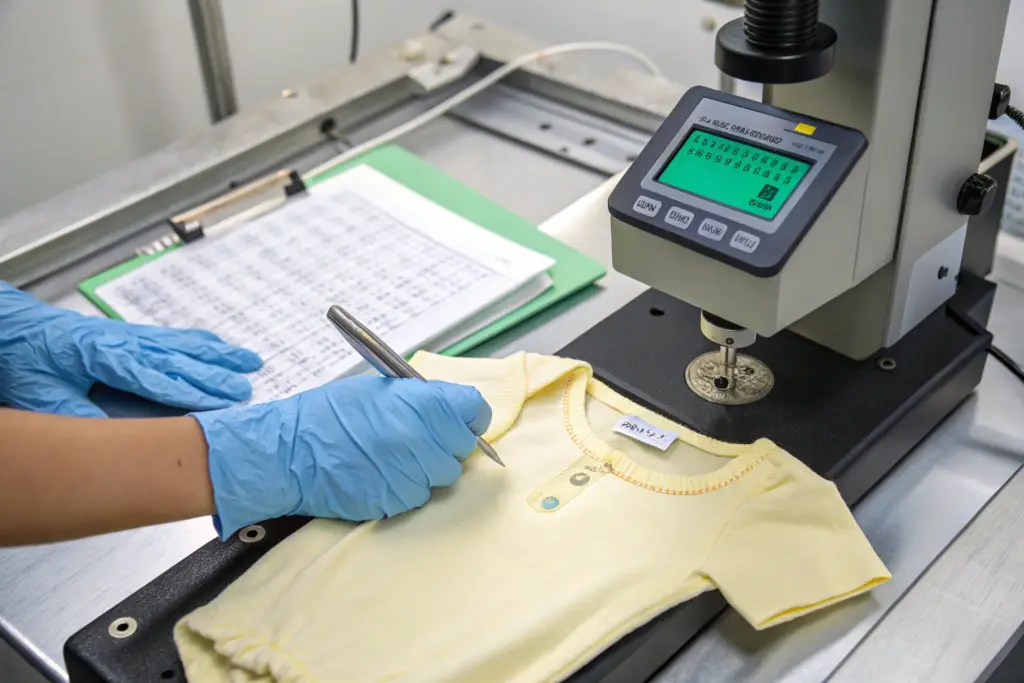
We test every mechanical attachment using a snap pull-off tester calibrated to 15 pounds of force, which exceeds the CPSC's small parts regulation requirement of 10 pounds. The snap must stay attached. If it detaches at a lower force, the entire accessory lot is rejected and replaced with a mechanically secure alternative. We also perform a sharp edge test using a Sharp Edge Tester per 16 CFR 1500.49. This device applies a constant force while rotating a TFE tape-covered mandrel against the edge of a zipper tooth or a decorative metal rivet. If the tape is cut, the edge fails and the component is rejected. For a recent order of 3,000 baby hooded jackets for a Seattle-based boutique, the initial sample submission used a custom-branded metal zipper pull that passed the lead test but failed the sharp edge test due to a burr on the laser-engraved logo. We redesigned the pull with a rolled edge profile, re-tested, and shipped within the original timeline. The client never saw the problem. They only saw a safe, on-time delivery. The small parts testing process is not a bureaucratic hurdle. It is a silent quality filter that catches the defects your customer would otherwise discover in their nursery.
How Can Private Label Baby Brands Scale Without Quality Slips?
Growth kills quality when the production system is built on heroic individual effort rather than standardized workflow control. A small workshop can produce 200 beautiful baby rompers a month when the owner personally inspects every piece. That same workshop collapses when a big-box retailer places a 5,000-unit order with a six-week delivery window. Fabrics get rushed. Stitching gets sloppy. The owner stops inspecting because there is physically not enough time in the day. The brand that looked premium at its launch suddenly looks like a clearance-rack reject.
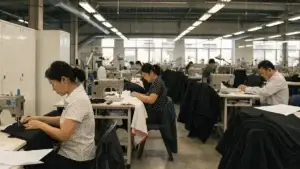
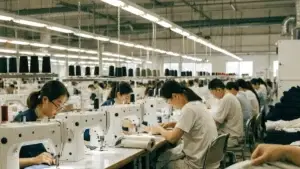
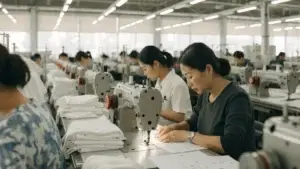
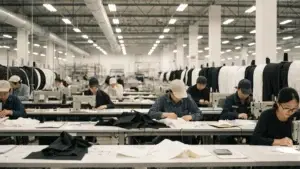
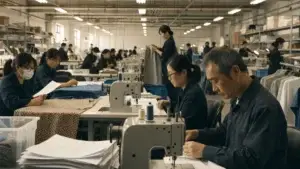
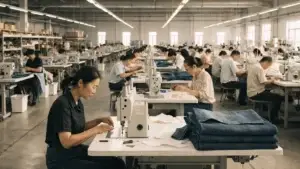
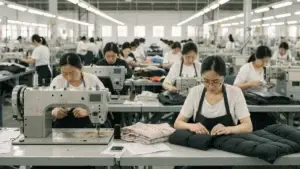
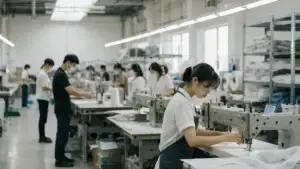
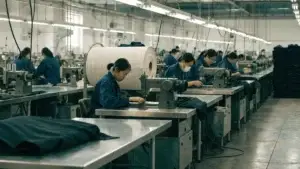
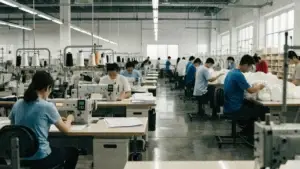
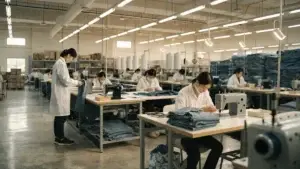
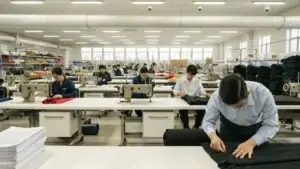
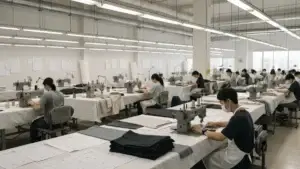
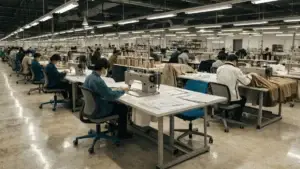
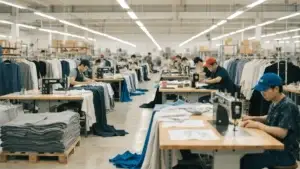
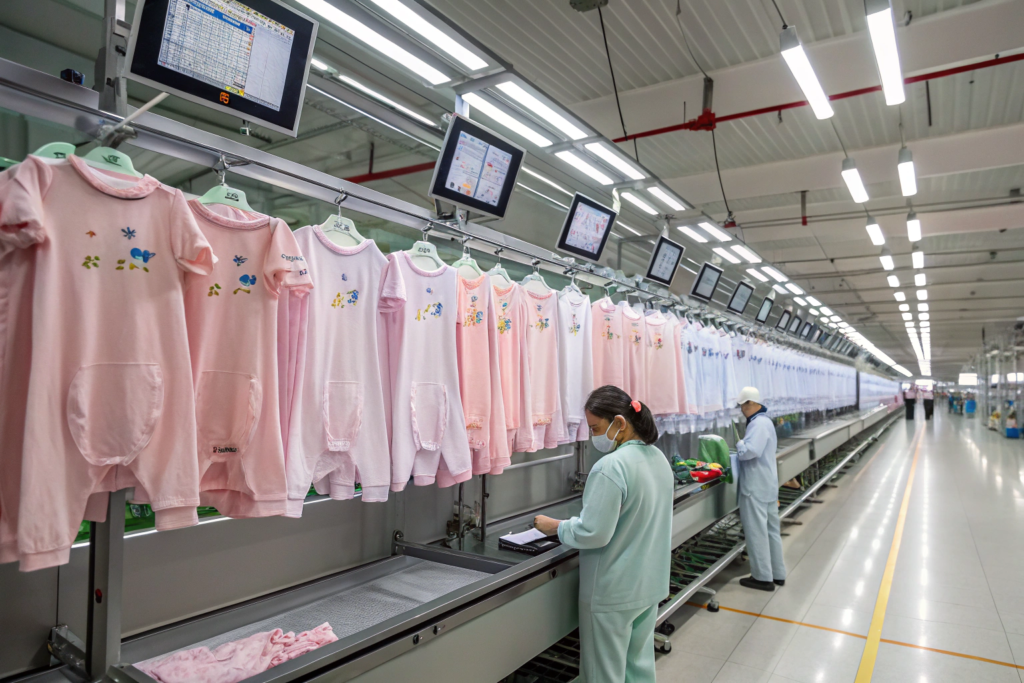
Shanghai Fumao's baby clothing production line is engineered for scalable consistency. We do not rely on a single quality "gatekeeper" at the end of the line who inspects finished goods. We embed quality checks at five sequential stages: incoming fabric inspection, cutting pattern verification, in-line stitching audit at 30% completion, in-line stitching audit at 70% completion, and final AQL 2.5 audit on packed cartons. Each stage has a dedicated inspector with a digital checklist on a tablet. The checklist data flows into our ERP system in real time. If the in-line audit at stage three shows a rising defect rate on a specific seam, the production manager receives an automated alert and pauses the line within the same shift. The problem gets fixed while only 200 units are affected, not after 2,000 units are in the finishing department. This gated process means the quality of a 10,000-piece order is statistically identical to the quality of a 500-piece trial order. The system handles the volume. The people monitor the system. Scale does not degrade the product.
This infrastructure matters most to private label founders who are transitioning from a garage startup to a real consumer brand. Let me explain how the sampling journey works and how we manage the twin concerns of lead time and packaging.
What Does the Sampling Process Look Like for Custom Baby Lines?
The first physical sample is the moment your sketch becomes a product. It is exciting. It can also be crushing if the sample does not match your imagination. I approach baby clothing sampling with a different protocol than adult clothing because the fit tolerances are tighter and the safety surface area is larger. An adult t-shirt with slightly off shoulder seams is a minor annoyance. A baby onesie with a tight neck opening is a struggle to pull over a fragile infant head and a likely customer return.
Our sampling process follows a three-stage model. First is the Proto Sample, made from available stock fabric, used purely to check the pattern shape, the snap placement, and the overall silhouette. You provide feedback on the fit. Second is the Fit Sample, made from your selected OEKO-TEX certified fabric, incorporating all pattern corrections, sent to you for a physical fit test on a mannequin or a test baby. Third is the Pre-Production Sample, which is the exact garment that will go into bulk production, including all labels, tags, and packaging. This is the final sign-off. Last year, we developed a bamboo-cotton blend sleep sack for a direct-to-consumer brand based in Portland. The proto sample revealed that the zipper guard flap was bunching awkwardly because the fabric had more drape than the designer anticipated. We adjusted the pattern, re-cut a fit sample, and had approval within fourteen days. The bulk production of 2,000 units had zero returns for fit issues. An iterative sampling process protects your brand from launching with a product that has not been physically validated. The three-step method costs slightly more upfront in development fees than a single-sample approach, but the cost of a consumer recall or a product relaunch is orders of magnitude higher.
How Do You Manage Lead Times and Seasonal Packaging for Baby Retail?
Baby clothing is heavily seasonal and heavily gifting-driven. Christmas, Easter, baby showers, and back-to-season transitions create sharp demand spikes. Missing a holiday window by two weeks can mean selling through discount channels or holding inventory for an entire year. Lead time management and packaging presentation directly determine whether your wholesale order hits the shelf at full price or the clearance rack.
I publish a transparent lead time calendar for all baby garment categories. A standard custom-cut-sew baby onesie with OEKO-TEX fabric, custom printing, and branded packaging has a production lead time of 30 to 35 working days from the date of the final pre-production sample approval. This is not an estimate of the sewing time alone. It includes the fabric dyeing, the cutting, the sewing, the snap attachment and testing, the finishing, the folding, the poly-bagging, and the carton packing. Our ERP system tracks each milestone. If a dye lot approval takes two extra days, the system recalculates the downstream dates and alerts the account manager, who communicates the update to you proactively. On the packaging side, we offer fully customized gift-ready poly bags, cardboard belly bands, and hangtag design. For a baby gift set project for a client in Boston, we sourced a recyclable kraft cardboard box with a die-cut window and tissue paper, transforming a simple three-piece layette into a shelf-ready gift product that their retail buyer described as "competitive with the major organic baby brands" in a category review. The lead time management and the packaging design are integrated into one project plan, not handled by separate vendors who never speak to each other.
Is Organic Baby Cotton Truly Safer or Just Marketing Hype?
Parents are bombarded with marketing messages about "organic baby clothes." The copy on the website tells them that organic cotton is purer, softer, and safer. The price tag is often 30% higher. But what does organic actually mean when you trace it from the farm in India to the assembly line in China to the retail shelf in California? And is a GOTS-certified garment genuinely safer for an infant, or is it largely an agricultural story that has been cleverly repackaged as a health claim?
The truth lies in the processing, not just the farming. Organic cotton, grown without synthetic pesticides, is a superior raw material in its clean state. However, the safety advantage vanishes if that organic cotton is then bleached with chlorine, dyed with azo colorants, and treated with a formaldehyde-based finish to make it wrinkle-resistant. The agricultural benefit does not survive a chemically aggressive manufacturing process. At Shanghai Fumao, we run our organic baby garments through a "clean chemistry" production chain. This means we use GOTS-approved, non-toxic dyes and auxiliaries. We use hydrogen peroxide bleaching instead of chlorine. We replace plastic-based heat transfers with water-based screen printing inks. The result is a garment that carries both a GOTS organic fiber certification and an OEKO-TEX Class I product safety certification. This dual-certified approach is what actually delivers on the marketing promise. The farming and the finishing are both clean. When I present this to American brand owners, I tell them to think of it as a two-key launch system. Both keys need to turn for the safety lock to open.
Understanding this distinction separates brands that can defend their marketing claims from brands that are one viral TikTok investigation away from a "greenwashing" scandal. Let me explain exactly how the certification chain works and who chooses this fiber today.
What Is the Difference Between GOTS-Certified and Conventionally Processed Organic Cotton?
A garment can legally be labeled "made with organic cotton" even if only 5% of the fiber content is organic. The remaining 95% can be conventional cotton grown with full pesticide loads. This labeling loophole infuriates me because it exploits consumer trust. The customer pays an organic premium for a product that is essentially conventional.
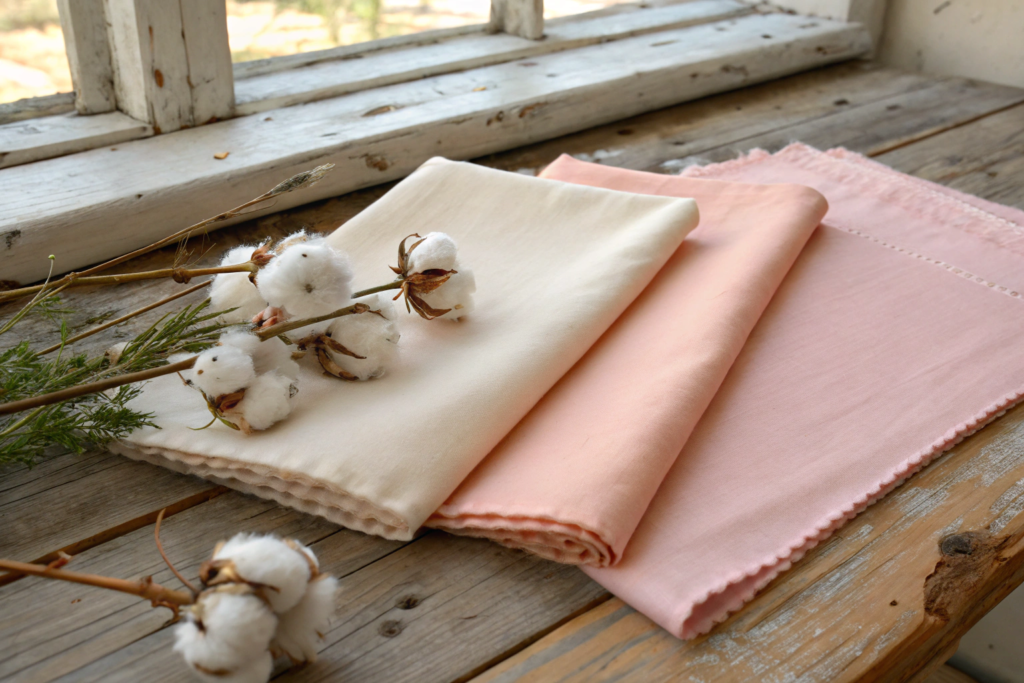
GOTS—the Global Organic Textile Standard—solves this fraud through a comprehensive chain-of-custody certification. A GOTS-certified garment must contain a minimum of 95% certified organic fiber. Crucially, GOTS also governs the entire processing and manufacturing stage. It prohibits the use of toxic heavy metals, formaldehyde, chlorine bleaching, and a wide range of solvents. It requires that wastewater from wet-processing units be treated in a functional effluent treatment plant. And it mandates social compliance criteria based on International Labour Organization conventions, covering minimum wages, working hours, and the prohibition of child labor. When you hold a GOTS-certified baby bodysuit, the certification covers the seed, the soil, the spinning, the knitting, the dyeing, and the sewing. You can verify the GOTS scope certificate on the Global Organic Textile Standard database by entering the certificate number. This traceable chain of custody allows a brand to stand behind its organic claim with evidence, not wishful thinking. The GOTS certification process transforms a marketing word into an audited manufacturing standard.
Which Type of Buyer Demands Certified Organic Baby Clothing?
The demand for certified organic baby clothing is no longer coming from a fringe hippie demographic. It is coming from the mainstream retail infrastructure. Major U.S. retailers now include organic fiber content targets in their corporate sustainability scorecards. Buying departments have internal mandates to increase the percentage of certified sustainable fibers in their baby and children's categories year over year. This trickles down to the brand owner as a requirement: if you want shelf space in this department store, or if you want to be included in the "sustainable baby" collection on this e-commerce platform, you need verified organic certification.
I see this demand pull most acutely from two buyer profiles. The first is the boutique baby brand founder, often a parent who started the business after being frustrated by the lack of genuinely safe options for their own child. This buyer knows the certification landscape intimately and asks detailed questions about dye chemistry and snap materials. The second is the established apparel distributor or large-format retailer that needs to satisfy an ESG purchasing quota. This buyer needs volume, consistency, and instant document retrieval during a third-party audit. Both buyer types converge on the same requirement: a certified organic supply chain that provides transaction-level traceability. I recently quoted a program for a national baby specialty chain that required GOTS transactional certificates for every single purchase order, uploaded into their compliance portal within 30 days of shipment. This is the new standard. The brands that treat organic cotton as a marketing campaign rather than a certified supply chain will find themselves locked out of the channels that matter most.
How Does Fumao Handle Custom Designs for Newborn and Infant Apparel?
Designing baby clothes is deceptively hard. The surface area is tiny, which means every millimeter of a seam, a snap, or a print is magnified. A crooked collar on an adult t-shirt is a minor aesthetic flaw. A crooked collar on a newborn onesie is the only thing the parent sees in a close-up Instagram photo of their sleeping baby. And the functional requirements are unforgiving. The garment must expand over a diaper, withstand frequent high-temperature washing, open flat for easy diaper changes, and have zero irritating internal details. It is engineering disguised as cuteness.
Our custom design process for baby apparel starts with a "functional safety review" before we ever discuss colors or prints. I assign a dedicated development engineer to your project, who reviews your tech pack against our baby-specific design rules: neck openings must be a minimum of 50 centimeters for head clearance, shoulder snaps must not align with car seat strap pressure points, leg openings must have sufficient stretch for a diaper containing a blowout, and all trims must pass the 15-pound pull test before we even consider their aesthetic appeal. Once the functional base is locked, we move to the creative stage. We support custom all-over prints using water-based, phthalate-free inks. We offer a range of OEKO-TEX certified snap colors and shapes, including custom-branded snaps with your logo debossed onto the metal surface. We can apply silicone grippers to the soles of footed pajamas for toddlers learning to walk, a feature that is both functional and highly marketable in a product description. The development engineer stays on the project through pre-production, ensuring that the approved design intent survives the realities of bulk manufacturing without compromise.
This structured approach is what converts a great sketch into a sellable, return-resistant product. Here are the specific print safety details and the practical design features that reduce return rates.

Are Your Custom Fabric Prints Safe for Babies With Eczema?
Printing on baby clothing is a chemical exposure point that many brands overlook. A standard plastisol print—the thick, rubbery ink common on graphic t-shirts—contains PVC and phthalate plasticizers. On an adult t-shirt, this is a marginal risk. On a baby onesie that gets chewed, sucked, and worn against thin, possibly eczema-affected skin, it is an unacceptable risk. Eczema-affected skin has a compromised barrier function, making it even more permeable to external irritants.
We exclusively use water-based or silicone-based screen printing inks for baby garments. These inks penetrate the fabric fibers rather than sitting on top in a thick plastic layer. They contain no PVC, no phthalates, and no volatile organic solvents. The final print is cured at high temperature to cross-link the ink polymers, ensuring no residual uncured monomers remain that could leach onto skin. For a baby bodysuit order we produced for a pediatric dermatologist who launched her own sensitive-skin clothing line, we went a step further. We printed the entire brand logo and care instructions as a tagless transfer on the outside back of the garment, leaving the inside completely print-free and seam-free against the spine. Her customer feedback specifically mentioned the "no scratch, no print" interior as a purchase driver. The water-based textile printing approach is technically more demanding than standard plastisol. It requires precise flash-curing between color layers. But the result is a breathable, soft print that is safe for eczema-prone skin and survives repeated high-temperature sanitizing washes without cracking or peeling.
What Specific Design Features Reduce Return Rates for Infant Clothing?
Returns in baby clothing are driven by a small set of recurring functional failures. The garment is too hard to put on a squirming infant. The snaps pop open during movement. The fabric shrinks unexpectedly in the wash. The sizing is inconsistent with standard age-grade charts. Each of these failures generates a customer service ticket, a negative review, and a refund. They are all preventable through design.
We build in five return-reduction design features. First, a lapped shoulder opening on onesies or a full-length front zipper with a protective guard on sleepers, making the garment easy to dress on an uncooperative baby. Second, nickel-free ring snaps or YKK zippers that are cycle-tested to 500 open-close actions without loosening. Third, pre-shrunk fabric that has been compacted during finishing, reducing post-wash shrinkage to under 3%, eliminating the "it shrank two sizes" review. Fourth, a size set that is graded using validated ASTM D4910 infant body measurement tables, not an arbitrary factory default chart. Fifth, a printed "fold line" indicator on the inner cuff of sleeves and pants that shows parents they can roll the fabric as the child grows, extending the wearable lifespan. For a subscription baby clothing service we supply, these features collectively drove a return rate reduction from an industry average of 8% down to 2.1% over a tracking period of twelve months. The garment fit standards and the functional snap and closure testing are not visible in a flat lay product photo, but they are felt every single time a parent uses the garment at 3:00 AM in a darkened nursery.
Conclusion
Disruption is a word that gets thrown around too casually in the apparel industry. Usually, it describes a new color palette or a slightly different silhouette. But in the wholesale baby clothing market, disruption has a more urgent meaning. It means replacing the default assumption that baby garments are just scaled-down adult clothes with a manufacturing philosophy that starts from the infant's physiology and works outward. We have built that philosophy into every layer of our operation. OEKO-TEX Class I certification is the baseline, not the upgrade. Mechanical safety testing for snaps and zippers is mandatory, not optional. The organic cotton supply chain is GOTS-certified through to the finished garment, so the agricultural purity is not destroyed by downstream chemical finishing. And our custom design process is led by a development engineer who prioritizes neck openings, diaper clearance, and lapped shoulder construction before color approvals.
The brands that win in this market are the ones that treat a baby's safety as a design constraint rather than a legal disclaimer at the bottom of a product page. They sell to parents who read certifications, who read reviews about seam softness and snap reliability, and who will pay a premium for a product that genuinely respects their child's vulnerable developing skin. A cheap, scratchy onesie is not a bargain. It is a betrayal of the trust that a parent places in your label when they dress their newborn in it for the very first time.
If your brand is planning to launch or scale a baby clothing line and you need a manufacturing partner who understands that "baby-safe" is a technical specification, not a marketing phrase, I invite you to speak with our Business Director, Elaine. She can walk you through our current OEKO-TEX and GOTS certification scope, show you a sample of a lapped-shoulder onesie with the tagless label, and build a development timeline that works for your launch calendar. Reach her at elaine@fumaoclothing.com. Let Shanghai Fumao help you dress the smallest customers with the largest commitment to safety and quality.