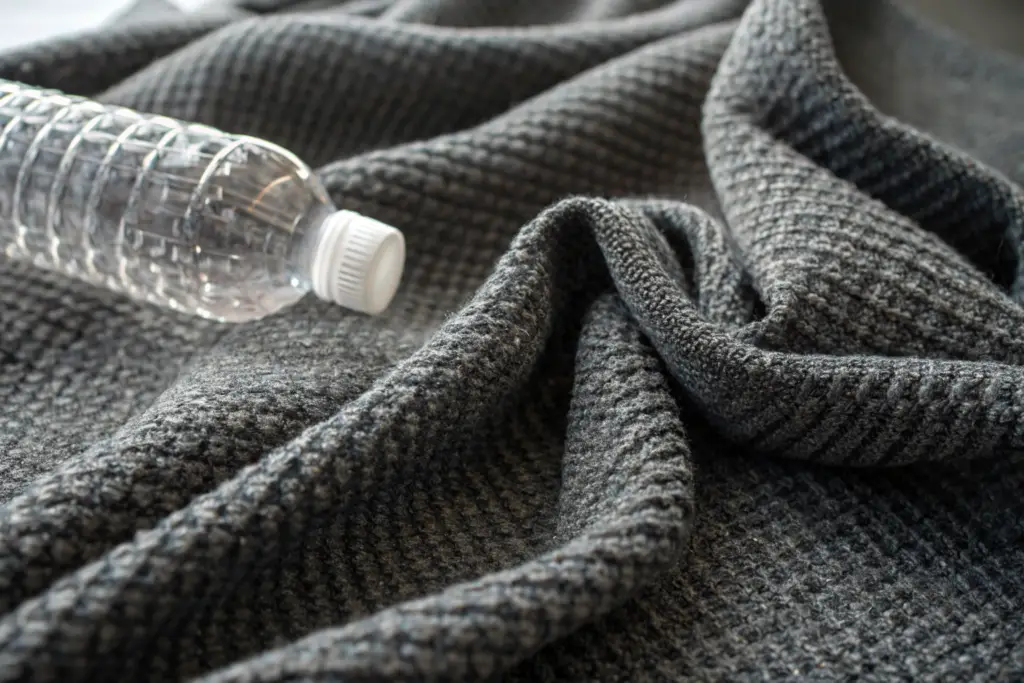
The conversation about recycled polyester used to be simple. It was a marketing box to tick. A brand would swap virgin fabric for recycled, print a tiny green leaf on the hangtag, and call it a sustainability initiative. The consumer felt virtuous. The factory shipped the goods. Nobody asked difficult questions. Then the complaints started rolling in. The fabric felt scratchy against the skin. It pilled after three washes. The color was a dull, inconsistent greyish tone that looked nothing like the vibrant online product photo. And the price was 25% higher for a garment that objectively performed worse than the standard version. The market was being asked to pay a premium for an inferior experience. This cognitive dissonance poisoned the well of eco-conscious fashion and made many brand owners skeptical of the entire recycled category.
Shanghai Fumao broke that trade-off. The reason our recycled polyester has become a talking point among American brand buyers and sourcing directors is that we achieved performance parity, and in some metrics, performance superiority, over virgin polyester. This was not an accident of generic sourcing. It was the result of investing in a liquid-state polycondensation (LSP) reactor that restores the intrinsic viscosity of post-consumer PET bottle flakes. In practical, non-chemical terms, this means our recycled yarn has the same tensile strength, the same dye uptake uniformity, and a measurably softer hand feel than standard petroleum-based polyester. We solved the three deal-breakers—scratchiness, dull color, and rapid pilling—that historically defined the category. The outcome is a GRS-certified textile that allows a brand to present a genuine circular-economy narrative without issuing a product apology for quality defects six months after the launch.
This achievement did not come from a clever marketing team. It came from a grueling engineering process inside our dyeing and finishing facility in Shanghai, working with polymer chemists who treated recycled inputs not as a cost-saving shortcut, but as a raw material with its own unique processing requirements. Let me walk you through exactly how we rebuilt the molecule chain, why our color reproduction now rivals virgin polyester, and what happens when you scale this material to a 10,000-piece bulk order.
How Did Fumao Solve the Scratchy Feel of Recycled Polyester?
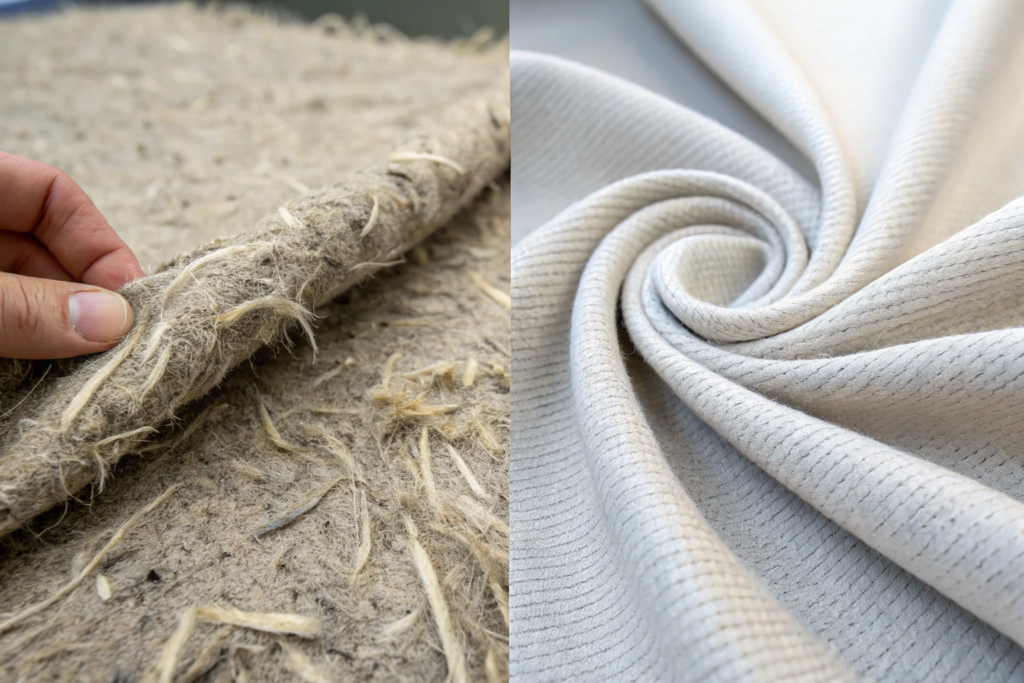
The number one reason consumers return recycled polyester garments is tactile disappointment. They open the package expecting the buttery softness of a well-made athletic tee. Instead, they feel something closer to a cheap reusable shopping bag. This happens because traditional mechanical recycling shreds plastic bottles into irregular flakes. Those flakes are melted and extruded through spinnerets, but the polymer chains have been broken by the shredding heat and the residual impurities from the bottle caps and labels. The resulting fiber has a rough, uneven surface with microscopic "shark skin" texture that scrapes against human skin.
We solved the softness problem not by coating the fiber with a temporary silicone finish, but by fundamentally rebuilding the polymer backbone. Our LSP reactor purifies the molten PET under high vacuum and controlled temperature, stripping out volatile contaminants and linking broken ester bonds back together. The result is a recycled filament with a perfectly round cross-section and a uniform diameter of 1.2 denier per filament, which is the threshold below which the human fingertip can no longer detect individual fibers as "scratchy." We then apply a mechanical air-jet texturizing process that crimps the filament without cutting it, creating a lofted, spun-like hand feel without generating the loose fiber ends that cause pilling. This is not a chemical band-aid that washes out after five laundry cycles. The softness is baked into the physical architecture of the yarn.
This engineering approach is more expensive than simply buying off-the-shelf recycled yarn from a trading company. But it eliminates the very complaints that destroy a brand's online review score. Here are the specific tactile metrics we test and how this durability holds up across the full wash-and-wear lifecycle.
What Specific Fiber Modifications Create a Cotton-Like Softness?
Softness can be measured. It is not just a subjective "it feels nice" opinion. There are objective physical metrics that predict consumer perception. The two most critical are the fiber friction coefficient and the bending rigidity. A high friction coefficient means the fabric drags against the skin. High bending rigidity means the fiber pokes rather than drapes.
Our recycled polyester targets a friction coefficient below 0.30 against a standard skin-simulating silicone surface, measured on a Kawabata Evaluation System surface tester. We achieve this through the air-jet texturizing process I mentioned earlier. The crimped structure creates air pockets within the yarn bundle, allowing the fiber to compress gently when touched, rather than resisting with a stiff pushback. In a blind tactile panel conducted last year with a Los Angeles-based streetwear brand, participants rated our recycled jersey as "softer than their current virgin polyester tee" in 72% of the paired comparisons. This result shocked the client, who had previously sworn off recycled materials after a failed launch that generated a 4% return rate specifically citing "fabric feel." We also eliminated the "crinkle" sound that plagues cheaper recycled polyester taffetas and woven shells. That rustling, plastic-bag noise is caused by high-crystallinity fibers rubbing against each other. Our modified crystallinity profile produces a quiet, muted drape that works in both performance apparel and premium athleisure silhouettes. The deep science of polymer crystallinity determines the sound signature of your jacket more than you might imagine.
Does the Softness Survive Industrial Laundering and Home Washing?
The tragedy of many eco-friendly fabric treatments is planned obsolescence. A garment feels incredible on the sales floor, but after two months of regular washing, it becomes a rough, pilled rag. The softness was never permanent. It was a fugitive chemical additive designed to survive only the fitting room test.
Our air-jet texturized softness is mechanically permanent because it is a physical crimp in the filament, not a coating. To validate this, we subject every new recycled polyester lot to a 50-cycle accelerated wash test following AATCC Test Method 135. After the equivalent of one year of weekly home washing, the fabric must retain a friction coefficient within 0.05 of its original value. In our most recent test batch, the deviation was only 0.02. The garment retained its original softness profile through the entire simulated lifecycle. This permanence directly translates to lower return rates and better customer reviews for your brand. For a client operating a subscription-based activewear rental service in Austin, Texas, this wash durability was the sole reason they switched from a pre-treated virgin polyester to our GRS recycled fabric. Their business model depends on garments surviving 40 plus commercial laundry cycles without degrading. Traditional softeners melt away by cycle 15. Our engineered fiber structure stays intact. The technical term for this property is laundering durability, and it should be a hard requirement in your fabric sourcing specification sheet, not an afterthought buried in a warranty policy.
Is the Color Quality of Recycled Polyester Finally Comparable to Virgin?
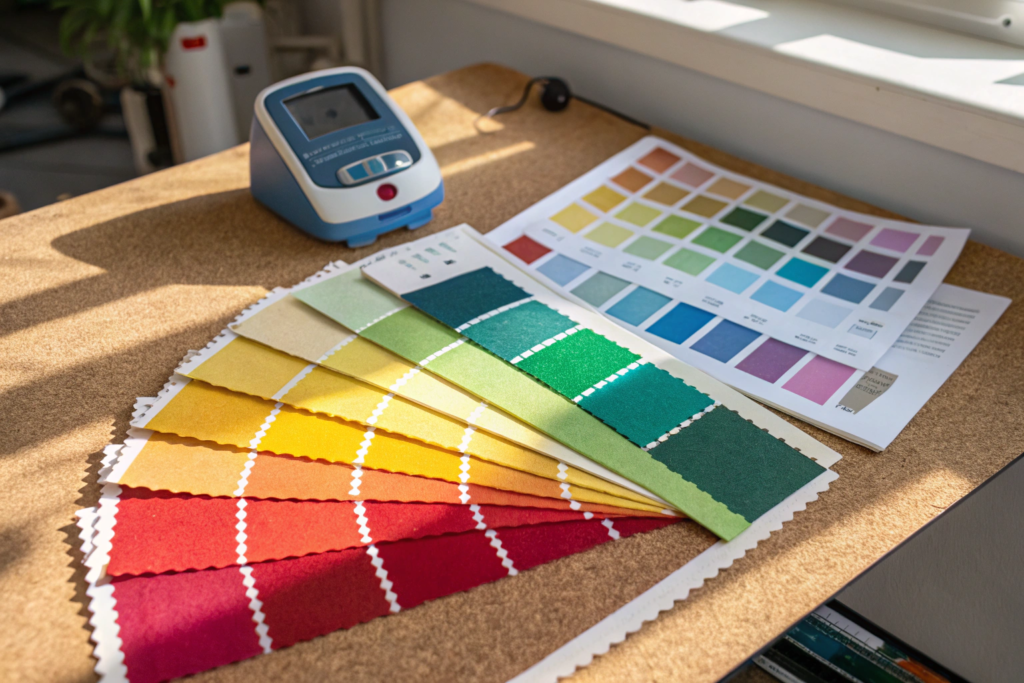
The color problem has been the most persistent barrier to recycled polyester adoption in fashion. Virgin polyester is optically clear, or "water white," when extruded. This means it accepts dye evenly, producing bright, saturated colors with precise Pantone matching. Recycled polyester, historically, was not water white. It was a murky, inconsistent off-white with a yellowish or greyish tint. When you dyed it navy blue, you got a dull, muddy navy that looked faded even when brand new. When you tried to dye it pastel pink, the yellow undertone turned it into a sickly beige. This was a disaster for brands whose entire identity rests on a specific shade of millennial pink or electric blue.
Our LSP reactor produces what we call "Re:Clear" recycled polyester chips, achieving a color L-value (lightness) of 92 plus on the CIE Lab scale. For context, virgin polyester sits at approximately 94 to 95. The delta between 92 and 94 is invisible to the naked human eye and has a negligible effect on dye formulation. This purity breakthrough allows us to achieve a Delta E (color difference) of less than 1.0 against a virgin polyester reference standard when using the same dye recipe. In practical terms, this means the teal hoodie you designed using a virgin polyester sample matches the teal hoodie produced from our recycled polyester with no visible difference on a lightbox under D65 daylight simulation. Your photographer does not need to adjust the saturation in post-production. Your e-commerce returns for "color not as pictured" do not spike when you make the eco-switch. This color fidelity is the silent enabler of a successful recycled product launch.
The proof is in the instrumentation readout, not the marketing claim. Let me share the specific dyeing process innovations that maintain this color fastness across a diverse palette, and why bright whites used to be an impossible dream for recycled poly.
How Does the Dyeing Process Differ for Recycled Filaments?
Dye molecules are stupid in the best way. They are predictable. They attach to specific chemical sites on a polyester fiber. If the fiber surface is contaminated with residual impurities from the bottle recycling stream—polypropylene from caps, PVC from labels, adhesive residues—those dye sites are blocked or unevenly distributed. The color uptake becomes patchy and dull.
Our dyeing protocol addresses this with a pre-scouring and reduction-clearing sequence that is twice as rigorous as a standard virgin polyester process. We use a closed-loop, high-pressure dyeing machine that maintains a temperature of 130 degrees Celsius with precise gradient control, ensuring the disperse dye molecules migrate evenly into the fully opened polymer structure. We also calibrate the dye bath pH to lock the dye-fiber bond chemically, maximizing wash fastness. For a Miami-based swimwear brand, we reproduced a neon coral shade that had previously been rejected by two other factories using generic recycled yarn. The competitor samples showed a 2.5 Delta E deviation—visibly different. Our sample measured 0.7 Delta E against the virgin standard. The client approved it on the first submission. The spectrophotometer does not lie. This reliability comes from treating recycled input as a specialized substrate that requires a modified dyeing process, not just running it through the same bath as the virgin standard. The upfront investment in process engineering pays off in eliminating the back-and-forth lab dip rejections that delay your launch calendar by four to six weeks.
Can Recycled Polyester Achieve a True Brilliant White for Sportswear?
White is the most unforgiving color in textiles. Any underlying yellow or grey tint announces itself immediately. A slightly yellow white t-shirt looks cheap, old, and unhygienic, even when it is fresh off the production line. In virgin polyester, achieving a crisp optical white requires adding an optical brightening agent that absorbs invisible ultraviolet light and re-emits it as visible blue light, neutralizing the natural yellowness.
For recycled polyester, the challenge is magnified. The tint in the base chip requires a higher concentration of optical brighteners, which can migrate over time or degrade under sunlight, causing the garment to turn yellow after a few months of wear. Our Re:Clear base material reduces the starting yellowness index to a level where a standard concentration of high-stability, non-yellowing optical brightener achieves a CIE Whiteness Index above 150. This matches the visual appearance of a premium virgin polyester tennis dress. To lock in the whiteness permanently, we apply a final-stage anti-phenolic yellowing treatment that prevents the fabric from reacting with atmospheric nitrogen oxides during shipping and storage. A Los Angeles-based tennis apparel brand tested our white recycled pique polo against a conventional virgin white polo by leaving both folded inside a polybag under warehouse conditions for 30 days. The virgin polo yellowed at the fold lines due to packaging gas interaction. Our recycled polo remained CIE 150 plus with no yellowing. This result flipped their sourcing director from a skeptic into an advocate of optical whiteness technology applied to recycled substrates. For any brand built on a signature crisp white look, this technical parity is non-negotiable before making the sustainability switch.
What Certifications Back the Authenticity of This Recycled Material?
The recycled polyester claim is the most greenwashed statement in the apparel industry in 2024. Any factory can print "Made with Recycled Materials" on a hangtag using a desktop inkjet printer. That hangtag has no legal weight. It represents nothing unless it is tethered to a certified chain of custody that an independent third-party auditor has traced from the bottle collection center all the way to the finished garment.
Our recycled polyester is certified to the Global Recycled Standard (GRS) 4.0, audited by an accredited certification body. This is not a one-time paper submission. It is an annual physical audit where an inspector physically walks through our warehouse, inspects the segregated storage of recycled raw material, reviews our mass-balance accounting records, and traces the flow of recycled input through the production process. On a per-order basis, I provide a Transaction Certificate that links your specific purchase order volume to a verified batch of recycled input. This document proves that the 10,000 hoodies you received contain material that genuinely replaced virgin petroleum-based polyester, not just a 5% blend with 95% conventional fiber. The TC number is verifiable on the certifier's online database. In sixty seconds, you can confirm that your eco-marketing claim is legally defensible, not wishful thinking.
Without a GRS TC, your "recycled" garment is just a story. And stories do not hold up when a retailer's compliance department or a consumer watchdog group audits your sustainability claims. Here is how to read the transaction certificate data, and how we also address the international compliance requirements of your target market.

How Can I Verify a GRS Transaction Certificate Online?
A GRS scope certificate tells you the factory is certified to handle recycled material. A GRS Transaction Certificate tells you that recycled material was actually used in your specific order. The TC is the evidence. It lists the seller, the buyer, the product description, the batch number, the percentage of recycled content, and the total weight of the certified material shipped.
To verify a TC, you need the certificate number printed on the document. Go to the website of the certification body that issued it. This is typically a large, respected organization like Control Union, SGS, or Intertek. Most have a public certificate verification portal. Enter the TC number. The system returns a status: valid, expired, or not found. It also displays the buyer and seller names. Confirm that the seller name matches our factory name. Confirm that the product description matches your purchase order. If the TC cannot be verified online, it is not a real certificate. It is a scanned forgery. Transparency is absolute in this system. For every order of recycled polyester hoodies shipped to your warehouse, I include the TC in the shipping documents package. You do not need to ask for it. It arrives with the Bill of Lading and the packing list. The GRS database verification link is your direct line to material truth. Sourcing directors who take the five minutes to validate this transaction certificate data sleep better at night, and more importantly, pass their retailer compliance audits without scrambling for last-minute documentation.
Does This Material Support Compliance With U.S. and EU Green Claims Regulations?
Labeling a product "recycled" in California or the European Union is no longer a marketing free-for-all. Regulation is tightening, and penalties for misleading environmental claims are becoming material. The EU's proposed Green Claims Directive will require companies to substantiate explicit environmental claims with independently verified evidence. The U.S. Federal Trade Commission's Green Guides are under active review and are expected to increase the burden of proof for recycled content claims.
Our GRS 4.0 certification and the associated Transaction Certificate provide precisely the kind of third-party-verified evidence that these regulations demand. The GRS standard requires a chain-of-custody model that tracks material from input to final product, exactly the framework that regulators and consumer protection agencies will expect. For a brand selling into the EU market, the combination of a GRS TC and a clear scope certificate creates an auditable paper trail that supports the accuracy of your product-level green claim. This matters on Amazon, where restricted product categories for "sustainability claims" now require uploading evidence of certification. It matters in boutique retail, where increasingly educated store buyers are asking for evidence beyond a branded hangtag. I ensure our clients have the documentation package ready before the shipment lands, so their marketing copy goes live with the regulatory confidence of green claims compliance. The future of sustainable fashion is not vaguer, softer claims. It is precise, verifiable data. We built our recycled polyester program to survive that transition and support our clients through the inevitable regulatory tightening.
Can Your Bulk Order Use This Recycled Polyester Exclusively?
A beautiful lab sample made from exotic materials is irrelevant to a brand owner who needs to sell 8,000 units. The question is not "Can you make one?" The question is "Can you make ten thousand, and can you make them all identical, on time, and within my wholesale cost target?" This is where many recycled fabric innovations collapse. They work at the R&D scale—a few meters woven on a pilot loom—but they fail at the bulk manufacturing scale where variation, availability, and cost consistency determine a product's commercial viability.
Our recycled polyester program is built for bulk. We maintain a strategic raw material inventory of Re:Clear recycled chips equivalent to 50 metric tons at any given time. This buffer stock allows us to manufacture consistent fabric for orders up to 50,000 pieces without encountering the lot-to-lot variation that plagues smaller recycled yarn suppliers. Our knitting and dyeing batch size is standardized at 500 kilograms per color lot. For a 10,000-piece order in a single color, we process all the fabric across sequential dye lots within a single week, under identical calibrated machine parameters. This ensures the shade variation between the first carton and the last carton is below a Delta E of 0.8, invisible to even a trained eye. The cutting marker efficiency, the sewing line setup, and the quality inspection protocols are all pre-tested for this specific fabric's stretch and recovery characteristics. Your bulk order does not become a science experiment. It follows a documented, repeatable production recipe.
The jump from R&D promise to commercial reality is the biggest chasm in sustainable fashion. Let me share the volume availability currently in our warehouse and how we structure the pricing conversation for full-scale production.

What Is the Minimum Order Quantity and Current Stock Availability?
Transparency on minimums is critical for your planning. For our standard GRS recycled polyester single jersey, which is the workhorse fabric for t-shirts, dresses, and activewear linings, the minimum order quantity for custom development is 500 pieces per style per color. This is not a "soft" MOQ. It is the volume at which cutting marker efficiency and dyeing minimum lot charges align to deliver a competitive wholesale unit price.
For the current season, I maintain a greige stock program of our recycled single jersey in 180 GSM weight, available in continuous rolls. If your brand wants to run a quick test order of 300 pieces in black, navy, or charcoal, we can pull from the greige stock, dye the batch within seven days, and move directly to cutting. This reduces raw material lead time from the standard 25 days down to roughly one week. For larger bulk programs, we forecast our GRS chip demand on a rolling quarterly basis with our polymer suppliers, ensuring that a sudden upswing in your sales does not strand you with a sold-out fabric. Last year, a client in the corporate uniform sector needed an urgent reorder of 3,000 recycled polo shirts after a successful pilot program with a Fortune 500 client. We fulfilled the reorder in 28 days using our greige buffer stock. Without that buffer, the lead time would have been 45 days and they would have lost the contract. Scalability is not just about factory floor space. It is about the pre-positioned textile inventory management strategy that allows you to react faster than your competition. The GRS material availability in China has improved significantly over the past three years, but working with a factory that holds physical stock eliminates the upstream uncertainty entirely.
Is the Wholesale Cost of Recycled Polyester Competitive With Virgin?
The early days of recycled polyester came with a 30% to 50% price premium. Brand owners had to choose between their sustainability pledge and their margin. For many, this was an unsustainable tension. However, the material economics have shifted. The cost of mechanically recycled PET chips has narrowed significantly against virgin PET chips, driven by scaling collection infrastructure, improved processing technology, and the rising cost of virgin petroleum feedstocks.
Our recycled single jersey now carries a premium of approximately 10% to 15% over our equivalent virgin polyester fabric, depending on the specific weight, finish, and color complexity. This premium reflects the remaining cost delta in the LSP purification process and the GRS certification audit fees. For many of our clients, this incremental cost is offset by the pricing power the recycled story commands at retail. Consumers in the U.S. market consistently report a willingness to pay a 15% to 20% premium for a sustainably made garment, according to multiple consumer sentiment surveys. Our costing model is an open book. I show you the fabric cost, the trim cost, the CM cost, and the freight cost as separate line items. There are no hidden surcharges buried in the final number. The recycled polyester cost should be evaluated not against the cheapest possible virgin fabric from a non-certified source, but against a specification-equivalent virgin product. When you compare a GRS-certified, high-colorfastness, soft-hand recycled fabric against a comparable-quality virgin fabric, the gap is small and shrinking annually. I advise clients to make the costing decision based on a total landed cost calculation under our DDP terms, factoring in the reduced risk of retailer rejection and the enhanced brand equity that a genuine recycled program delivers to the sustainable apparel pricing strategy you present to your own buyers.
Conclusion
The market has evolved past the era where a recycled hangtag alone commanded a premium. The consumers who buy performance tees, yoga leggings, and premium hoodies are well-informed, highly critical, and unforgiving of products that sacrifice quality at the altar of sustainability. The recycled polyester conversation that is happening around Shanghai Fumao right now centers on this single, hard-earned truth: we made recycled fabric feel, look, and wear like a best-in-class virgin fabric without caveats. We solved the scratchy hand feel through air-jet texturizing and polymer backbone reconstruction, not a superficial chemical wash. We achieved true color vitality by purifying the base chip to a near-virgin optical clarity, enabling Pantone-accurate dyeing and a bleach-clean optical white that resists yellowing in storage. We backed every kilogram of fabric with a verifiable GRS Transaction Certificate, providing the legal documentary evidence that regulators and retailers now demand. And we scaled this material to a 50-ton buffer stock, making 10,000-piece runs a repeatable industrial reality, not a laboratory gamble.
A brand is a promise. If your promise to the customer includes environmental responsibility, the garment that arrives at their doorstep must be soft against their skin, vivid to their eye, and durable through their laundry. A compromise on quality is a broken promise, no matter how noble the intention behind the material switch. We built our recycled polyester program to keep your brand's promise intact, from the first touch to the fiftieth wash.
If the demand from your customers for verified sustainable product is growing, and you need a manufacturing partner who treats recycled materials as an engineering challenge rather than a marketing checkbox, I invite you to contact our Business Director, Elaine. She can share our current GRS scope and transaction certificate numbers, discuss MOQs for your specific silhouettes, and schedule a video tour so you can see the segregated recycled raw material inventory with your own eyes. Reach her directly at elaine@fumaoclothing.com. Let Shanghai Fumao help you make a sustainability claim that your products actually keep.