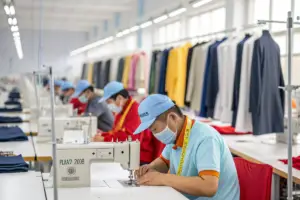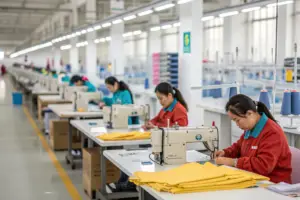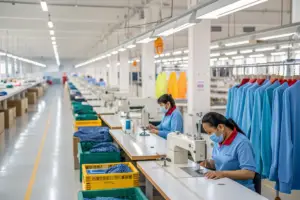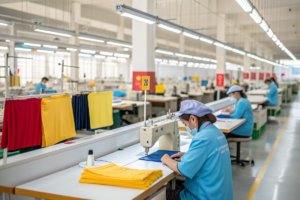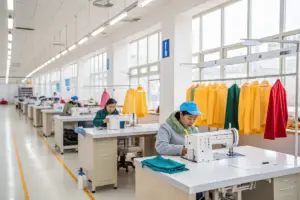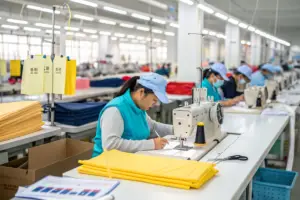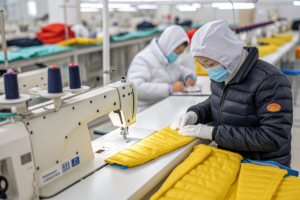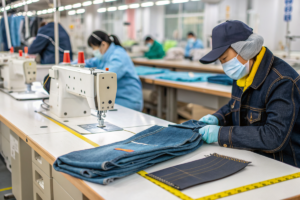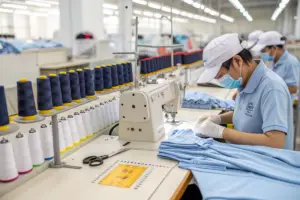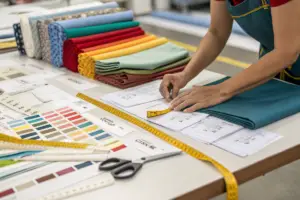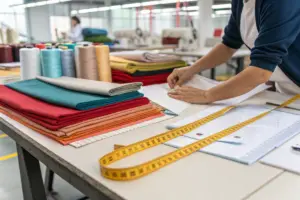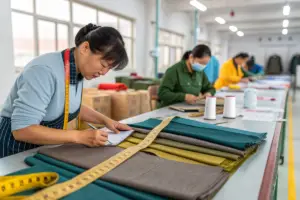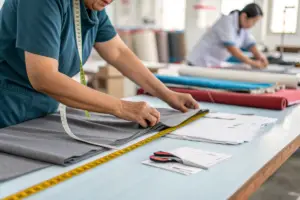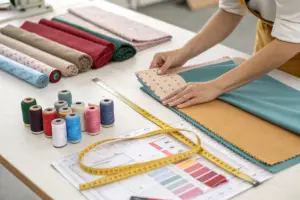
You have a brilliant idea for a clothing line. You have found a unique fabric—maybe a beautiful deadstock print or a sustainable linen you love. You have designed a simple, perfect first collection. You are ready to launch, but you only need 50 units of each style. You contact factories, and the responses are disheartening: "MOQ 500 units." "We only do Full-Package." You start to wonder if your dream is too small for this industry. A brand owner told me, "I felt like the whole system was designed to keep startups like me out. I didn't have $50,000 for inventory. I needed a partner who would grow with me."
Yes, CMT (Cut, Make, Trim) manufacturing can be an excellent and often ideal model for startup clothing brands, particularly those focused on unique materials, premium quality, and small-batch production. It allows a startup to launch with significantly lower inventory risk, maintain complete control over its unique brand-defining fabrics, and partner with a factory that has flexible, low-MOQ production capabilities. It is a model built for agility and creative control.
At Shanghai Fumao, we work with many startup brands in a CMT capacity. We understand the unique challenges and opportunities of launching a new label. We have built our flexible production lines specifically to be the partner that emerging designers need. Let me give you an honest assessment of why CMT can be a perfect fit for a startup, the real-world challenges you must be prepared for, and how to make this model work for you.
Why Is CMT a Smart Financial and Strategic Choice for a Startup?
For a startup, every dollar counts. The biggest killer of new clothing brands is not a lack of creativity; it is being crushed by inventory. The traditional Full-Package model, with its high MOQs, forces a startup to make a massive, risky bet on a single collection. CMT offers a fundamentally different, and much safer, financial and strategic path. It allows you to launch with precision, not with a warehouse full of hope.
CMT is a smart financial choice for startups because it dramatically lowers the barrier to entry and reduces inventory risk. By sourcing your own materials, you can produce in small batches (50-100 units) that align with a flexible factory's capabilities. You are not forced into a high MOQ. This means you can test the market with significantly less capital tied up in stock. Furthermore, you retain complete control over your brand's core identity—the unique fabrics and trims you worked so hard to find.
I recall a brand founder who launched her entire line of silk scarves and tops with just $8,000. She sourced incredible deadstock silk from a jobber and found beautiful, vintage glass buttons. She came to us for CMT. We produced 40 units of her first style. She sold out in two weeks. She used the profits to fund a larger run of her next design. She built her business with zero debt and zero dead stock. The Full-Package model would have required her to order 500 units per style—a $30,000 gamble she could not afford. CMT was not just a good choice for her; it was the only choice that made her business possible. This is the power of the model for lean startups .

How Does CMT Allow You to Launch with a Much Lower Initial Investment?
Your primary cash outlay is for your raw materials—the fabric and trims for a small batch. You then pay the CMT factory for labor on that small quantity. In a Full-Package model, the factory is financing the materials and requires a large order to justify their risk and effort. CMT decouples material financing from manufacturing, allowing you to control the scale of your investment. This is the single biggest financial advantage for a new brand .
Why Is Control Over Your Fabric and Trim Story So Important for a New Brand?
As a startup, you have no legacy. Your story is everything. The fabric you choose—a sustainable linen, a unique deadstock print, a hand-woven textile—is the soul of your brand. CMT allows you to own that story completely. You found it. You sourced it. You can tell that authentic story to your customers. In a Full-Package model, your story is "I picked this from a factory's catalog." CMT gives you a powerful, unique narrative from day one. This is the essence of brand building .
What Are the Realistic Challenges of CMT for a First-Time Founder?
While CMT offers incredible advantages for a startup, it is not a magic wand. It requires you, the founder, to take on a new set of responsibilities that a Full-Package factory would normally handle. You are not just the creative director; you are now also the supply chain manager for your raw materials. Going in with your eyes wide open to these challenges is essential for success.
The primary challenge of CMT for a startup is the increased operational workload. You are responsible for sourcing, purchasing, financing, and shipping all your own fabric and trims. This requires time, organization, and a willingness to learn the basics of logistics and material management. You are also responsible for ordering "buffer stock" to account for cutting waste and defects. This is the trade-off for the control and lower financial risk.
A founder I mentor was so excited by the creative freedom of CMT that she underestimated the logistical side. She found herself spending her Monday mornings tracking a fabric shipment from India and her Friday afternoons coordinating the delivery of buttons from a supplier. She was overwhelmed. She realized she needed to be more organized. She created a simple project management spreadsheet, dedicated specific blocks of time to logistics, and built a good relationship with her suppliers. She mastered it. She now sees this operational skill as a core part of her brand's strength. She told me, "CMT forced me to become a better business owner." This is the reality. CMT requires you to level up your operational skills. This is part of the startup journey .

How Much "Buffer Stock" Should a Startup Plan for in Their First CMT Order?
This is a critical and often overlooked cost. You should always order 3-5% more fabric and trims than your exact calculated consumption. This buffer accounts for cutting waste and any minor defects found in the material. For a first-time founder, it is wise to err on the side of caution and order 5%. The last thing you want is to run short on your first production run and be unable to fulfill pre-orders. We always advise our startup CMT partners on this.
What Is the "Time Tax" of Managing Your Own Materials?
This is the real cost. Be honest with yourself. Are you willing to dedicate 5-10 hours a week to sourcing, emailing suppliers, and tracking shipments? This is time away from designing and marketing. If you are a solo founder, this is a significant commitment. If you have a co-founder or a small team, you can divide these responsibilities. The key is to go in with a plan for managing this new workload. This is a key consideration for any startup considering CMT .
How Does a Startup Find the Right CMT Partner for Small Batches?
Not all factories that offer CMT are a good fit for a startup. Many CMT factories are geared toward large, established brands and still have high internal minimums or a rigid, high-volume mindset. Finding a partner who truly understands and supports the startup journey is essential. You need a factory whose entire operational model is built for flexibility and small-batch agility.
Finding the right CMT partner for a startup requires looking for specific attributes. You need a factory with "Modular Production Cells" that can profitably handle runs of 50-100 units. You need a partner who communicates with transparency and is willing to guide a new brand through the process. Ask specifically about their experience with startup clients and request to speak with references who are at a similar stage. A partner like Fumao, with dedicated small-batch lines and a supportive Project Management model, is ideal.
A new brand founder told me she specifically chose Fumao after asking a simple question on a call: "Can you handle a 60-unit CMT order of a complex dress?" Many factories had said no or quoted a huge premium. We said yes and explained our modular cell setup. She also spoke to one of our startup references who told her, "They treated my tiny order like I was their most important client." That was the deciding factor. She found a partner who would respect her vision and her scale. This is the kind of partner you need to find. This is the value of a truly startup-friendly manufacturer .
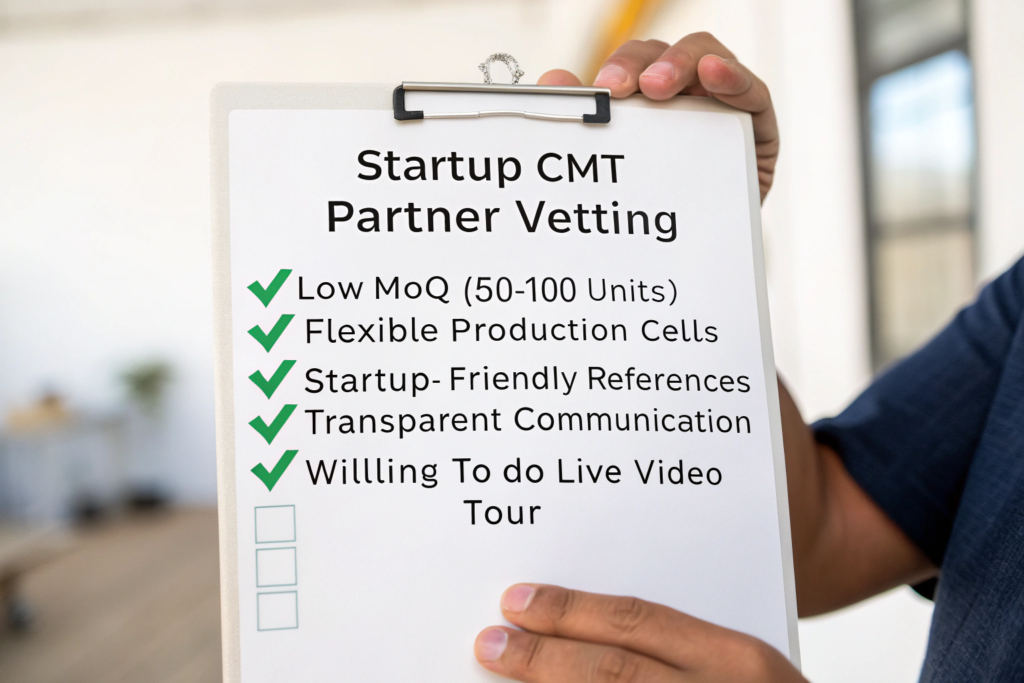
What Specific Questions Should a Startup Ask a Potential CMT Factory?
Beyond the standard vetting questions, a startup should ask:
- "What is the smallest CMT order you have produced in the last six months?"
- "Can you show me how your modular production cells work?"
- "Can I speak to a reference who started with you at a similar size?"
- "How does your Project Management support work for a small brand?"
The answers to these questions will reveal if the factory is truly set up to support a growing business .
Why Are Modular Production Cells a Must-Have for a Startup CMT Partner?
As we've discussed, Modular Production Cells are the physical engine of small-batch production. They are designed for quick changeovers and can profitably run small quantities. A factory with only long, high-speed assembly lines is not a good fit for a startup. Their internal economics will force them to either reject your small order or charge you a massive premium. The presence of modular cells is a key indicator of a flexible manufacturing partner .
How Does Fumao's Flexible Model and Support System Empower Startups?
We know that launching a clothing line is a huge leap. The idea of managing a CMT supply chain can feel overwhelming for a first-timer. That is why we have built our entire startup-focused service model to provide not just the flexible manufacturing, but the supportive guidance and transparent communication that new brands need to succeed. We act as a partner, not just a vendor.
Fumao empowers startups by combining our flexible, low-MOQ production lines with a high level of supportive Project Management. We guide new brands through the Tech Pack creation process, offer advice on material sourcing and buffer stock, and provide the transparent, proactive communication that eliminates the anxiety of remote manufacturing. We are the stable, reliable manufacturing arm that allows a startup founder to focus on their creative vision and building their brand.
A founder who launched her first collection with us recently said, "I couldn't have done this without my Fumao Project Manager. She answered every silly question, helped me understand the process, and made me feel like I had a partner, not just a factory. She made the scariest part of starting my business feel manageable." That is our goal. To be the supportive, expert partner that helps turn a startup's vision into a beautiful, tangible reality. We provide the operational backbone so you can be the creative force. This is the essence of our partnership with emerging brands .

How Does Our Project Management Reduce the Overwhelm for a New Founder?
Your dedicated Project Manager becomes your guide. They provide a clear, step-by-step timeline. They send proactive weekly updates with photos, so you always know the status of your small batch. They are a single, friendly point of contact for all your questions. They absorb much of the coordination burden and demystify the manufacturing process. This is the human element that makes our CMT service so valuable for startups.
Can We Scale with a Startup as It Grows?
Absolutely. This is the beauty of our flexible model. You can launch with a 50-unit CMT run in one of our modular cells. As your brand gains traction and your order volumes grow to 300, 500, or even 2,000 units, we can seamlessly scale our production with you. You do not need to find a "bigger" factory. We are the partner that grows alongside you. This is the foundation of a long-term manufacturing partnership .
Conclusion
CMT manufacturing is not just suitable for startup clothing brands; it is often the smartest and most strategic path to launch. It aligns perfectly with the startup's need for low inventory risk, creative control, and a unique brand story. While it requires the founder to take on the role of material manager, this trade-off is well worth the financial and creative freedom it provides.
At Shanghai Fumao, we are passionate about being the manufacturing partner for the next generation of apparel entrepreneurs. Our flexible production model, our supportive Project Management, and our deep experience with small-batch production make us the ideal launchpad for a design-focused startup.
If you are a startup founder ready to bring your unique vision to life with a partner who understands your journey, let's talk. Our Business Director, Elaine, can walk you through how our CMT model can work for you. Please email Elaine at: elaine@fumaoclothing.com.