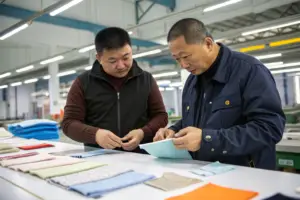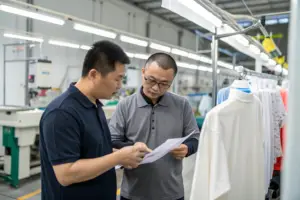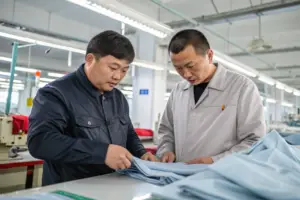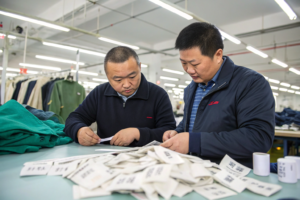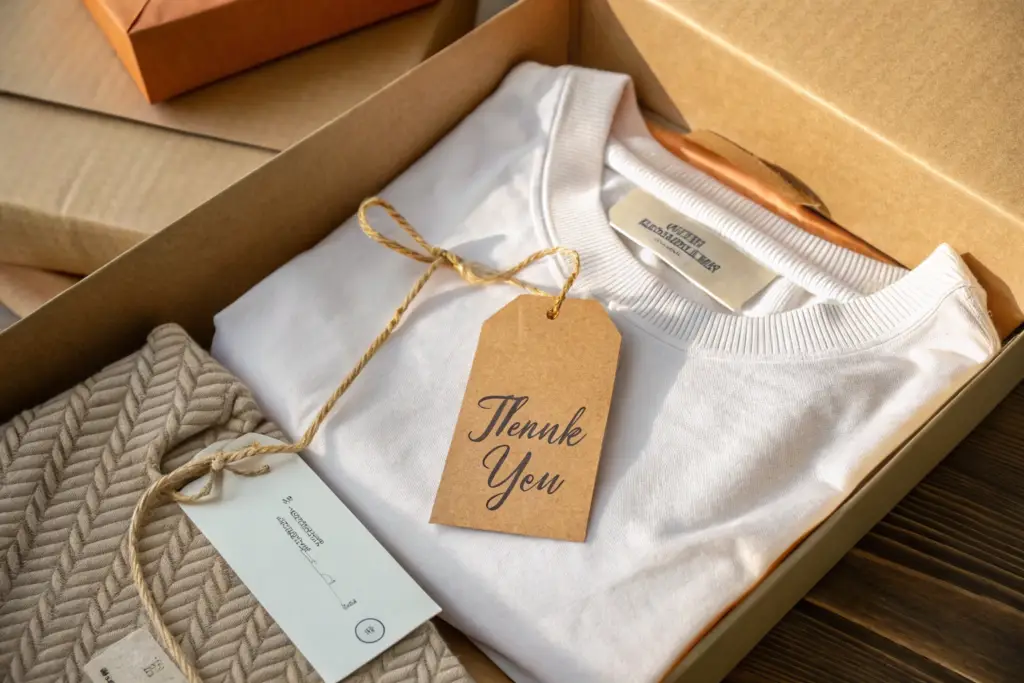
You have found a source for high-quality, affordable garments. The fabric is great. The fit is solid. But they arrive in plain polybags, with no identity. You know that to sell them in the competitive US fashion market, they cannot just be a commodity. They need a soul. They need your brand. But how do you legally and effectively transform a generic import into a desirable, ownable product that commands a premium price? A brand owner told me, "I found the perfect blank hoodie, but turning it into my hoodie felt like navigating a legal and logistical maze. I was terrified of making a costly mistake."
Rebranding imported clothing for the US market is a multi-step process that goes far beyond sewing in a new label. It requires strict legal compliance (meeting FTC and Customs labeling rules), a clear understanding of the different sourcing models (White Label vs. Private Label), a strategy for quality consistency, and a creative approach to adding brand value through custom labels, trims, and packaging. Done correctly, it is a powerful, low-inventory way to launch or scale a brand.
At Shanghai Fumao, we support B2B partners through this exact journey. Whether you are sourcing our curated white label blanks or developing a fully custom private label collection, we ensure the foundation is solid and compliant. Let me walk you through the essential steps to legally and effectively rebrand imported apparel for the US market, transforming a blank canvas into a powerful brand statement.
What Is the Difference Between White Label, Private Label, and Rebranding?
The terms "white label," "private label," and "rebranding" are often used interchangeably, but they represent fundamentally different business models and levels of control. Understanding these distinctions is the first critical step, as it dictates your sourcing strategy, your legal responsibilities, and your brand's unique value proposition. Choosing the wrong model can lead to legal trouble or a brand that fails to differentiate itself.
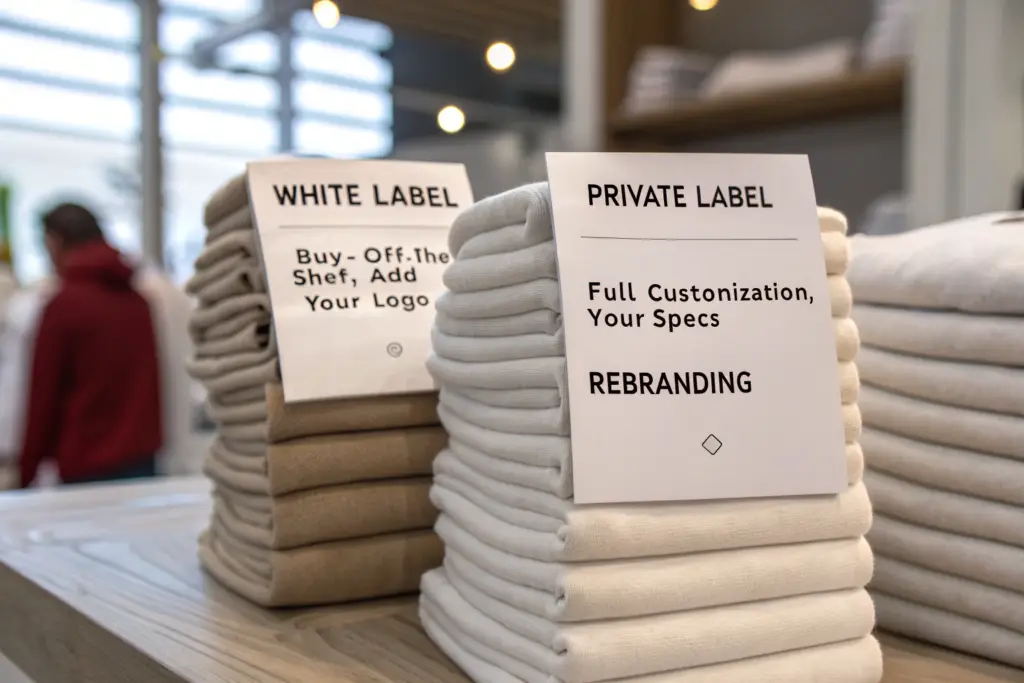
White Label involves buying a pre-made, generic garment and adding your brand's label and hangtag. Private Label involves developing a fully custom garment from scratch, specifying the fit, fabric, and every construction detail. Rebranding is the act of applying your brand identity to a product, and it is most commonly associated with the White Label model, though it applies to Private Label as well. The key difference is the level of control and customization.
I recall a startup founder who thought she was doing "private label" because she was putting her logo on a hoodie. She was actually doing white label. She was buying a generic blank. She had zero control over the fit or the fabric quality. When the factory changed their blank supplier, her "signature hoodie" suddenly fit completely differently. Her customers noticed. She learned the hard way that white label is a game of consistency risk. Private label, while requiring more upfront investment, gives you complete control over your product's DNA. This is the model we specialize in for brands looking to build a defensible, long-term business. Understanding this distinction is foundational to your sourcing strategy .
Is "Rebranding" Legal in the US? What Are the FTC Rules?
Yes, rebranding is completely legal, but it is strictly regulated by the Federal Trade Commission (FTC) and US Customs and Border Protection (CBP) . The key legal requirement is transparency of origin. You cannot remove a "Made in China" label and replace it with "Made in USA." That is illegal and carries severe penalties.
The FTC's Textile Rules require that most textile apparel sold in the US have a permanent label disclosing:
- Fiber Content: (e.g., 100% Cotton)
- Country of Origin: (e.g., Made in China)
- Your Brand's RN (Registered Identification Number) or the company name.
When rebranding, you are applying your brand label, but you must also include a separate or combined label that accurately states the fiber content and country of origin. You are the "Importer of Record," and you are legally responsible for the accuracy of this information.
What Is an RN Number and Why Do You Need One?
An RN (Registered Identification Number) is a number issued by the FTC that identifies the company that is responsible for the product's labeling compliance. It is a way for consumers and regulators to know who is behind the brand. You can apply for an RN number for free on the FTC website . Having an RN number allows you to use that number on your care/content label instead of spelling out your full company name and address. It looks cleaner and more professional. It is a hallmark of a legitimate, compliant brand. We guide all our B2B partners through this process.
What Are the Essential Steps to Legally and Effectively Rebrand Imported Apparel?
Rebranding is not just about slapping your logo on a shirt. It is a structured process that blends creative branding with strict legal compliance. Skipping a step—especially the legal ones—can result in your shipment being seized by customs, fines, or a damaged reputation. A methodical approach protects your investment and builds a solid foundation for your business.
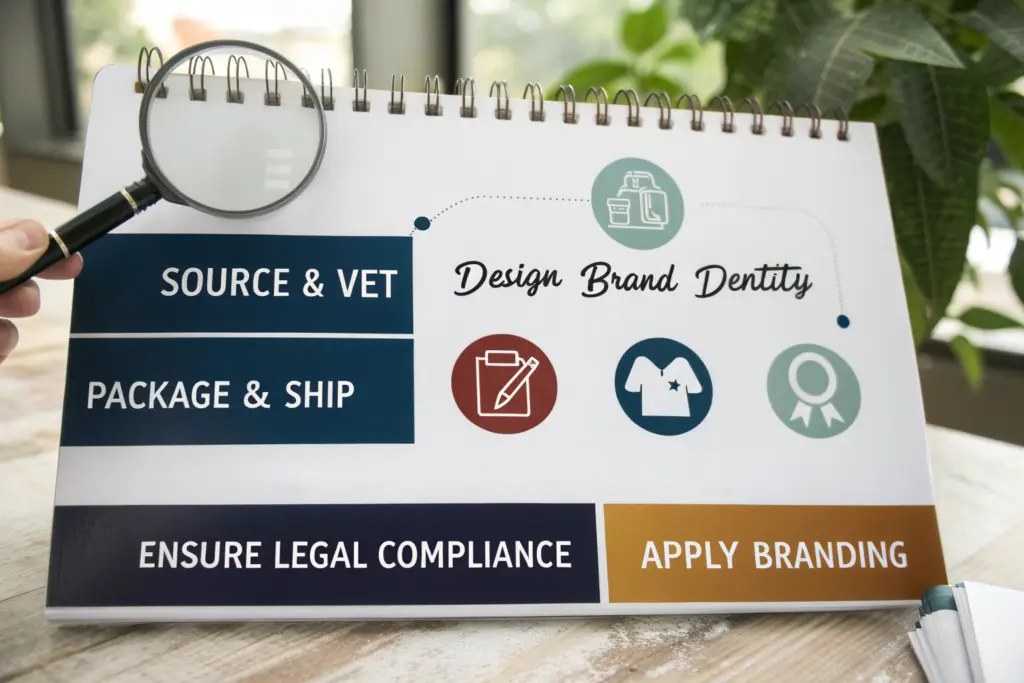
The essential steps to rebrand imported apparel are: 1) Source and Vet a Reliable Blank Supplier (ensuring consistent quality and ethical production), 2) Develop Your Brand Identity (logo, labels, hangtags, packaging), 3) Ensure Strict Legal Compliance (creating FTC-compliant care/content labels, obtaining an RN number), 4) Manage the Branding Application (whether done at the factory or by a US-based fulfillment partner), and 5) Execute a Quality Control Check on the finished, branded product.
A distributor we work with learned the importance of Step 3 the hard way. He imported a batch of beautifully rebranded jackets, but the care label did not include the country of origin. The entire shipment was flagged by CBP. He had to pay for a customs broker to resolve the issue and faced a significant delay. He now uses our compliance service. We ensure every garment we ship, whether it's a custom private label piece or a rebranded white label item, includes a fully compliant label. This is the invisible, essential service that protects your business.
How to Create an FTC-Compliant Care and Content Label?
This is the most important technical label. It must be permanent (sewn in, not a sticker). It must include:
- Fiber Content: Listed in descending order by weight (e.g., "100% Cotton" or "60% Cotton, 40% Polyester").
- Country of Origin: Clearly stated (e.g., "Made in China").
- RN Number or Company Name: Your FTC-issued RN number or your full legal company name.
- Care Instructions: Clear, accurate washing and drying symbols or text (e.g., "Machine Wash Cold, Tumble Dry Low").
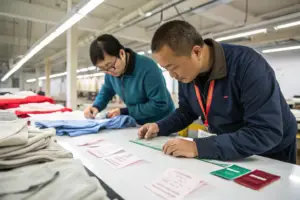
We provide our clients with label templates and can manage the entire label production and sewing process at our factory, ensuring 100% compliance before the goods ever leave China. This is a core part of our full-package service .
Should You Rebrand at the Factory or at a US Fulfillment Center?
This is a strategic logistics decision.
- Factory Rebranding: We apply all labels, hangtags, and packaging in our facility in China. Pros: Lower labor cost, goods arrive in the US "shelf-ready." Cons: Less flexibility if you want to change branding or hold inventory unbranded.
- US Fulfillment Rebranding: You import unbranded blanks to a US warehouse and apply branding there on demand. Pros: Maximum flexibility, lower upfront inventory risk. Cons: Higher per-unit labor cost, more complex logistics.
For most brands, factory rebranding is the most cost-effective and scalable solution for their core products. We offer this as a seamless part of our end-to-end logistics .
You can have the most beautiful, high-quality blank garment in the world, but if it arrives in a clear plastic bag with no identity, it feels like a commodity. The perceived value is low. The "unboxing" experience is forgettable. The details—the labels, the hangtags, the packaging—are where you transform a simple piece of clothing into a coveted brand experience. This is where you justify your price point and build an emotional connection with your customer.
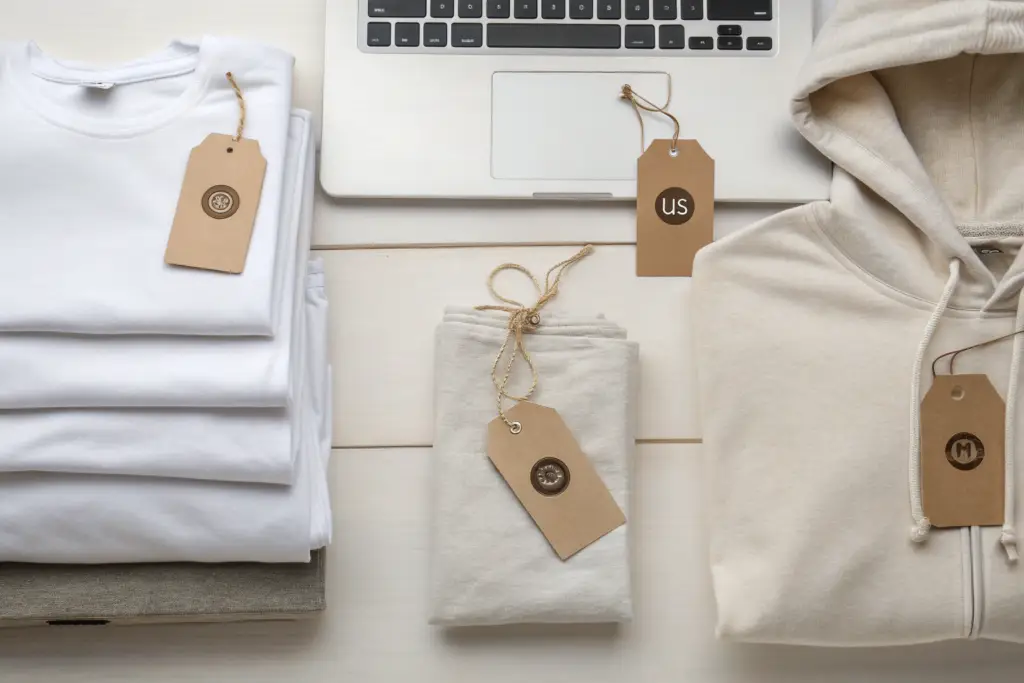
Custom labels, hangtags, and packaging are the tangible touchpoints that communicate a brand's identity, values, and quality. A soft, woven label at the neck signals comfort and luxury. A beautifully designed hangtag tells your brand's story and justifies the price. Thoughtful, sustainable packaging creates a memorable unboxing moment and reduces environmental impact. These details collectively elevate the perceived value of the rebranded garment.
A women's wear client who started with a simple rebranded linen shirt transformed her business by obsessing over these details. She upgraded from a basic satin label to a soft, woven damask label. She designed a beautiful hangtag with her brand story and attached it with natural twine instead of plastic. She wrapped each shirt in branded tissue paper with a simple sticker. The cost per unit increased by about $1.25. Her retail price increased by $20. And her customer reviews were filled with comments about the "beautiful packaging" and "luxurious feel." The details were the difference. This is the power of brand elevation .
What Are the Best Label Types for a Premium Feel?
Avoid the cheap, scratchy satin label. It is the first thing a customer cuts out. The best options for a premium feel are:
- Woven Damask Label: Incredibly soft, with a fine, detailed weave. This is the gold standard for premium brands.
- Woven Taffeta Label: Slightly crisper than damask, but still soft and high-quality. A great mid-range option.
- Heat Transfer (or "Tagless") Label: The softest option, as it is printed directly onto the fabric. Ideal for activewear and basics.
We offer a full range of custom label options and can guide you to the best choice for your garment type and budget. This is a key part of our customization services .
Why Is Sustainable Packaging a Powerful Brand Statement?
For the modern US consumer, especially Millennials and Gen Z, sustainable packaging is no longer a "nice-to-have." It is an expectation. Receiving a beautiful garment wrapped in layers of single-use plastic creates a negative cognitive dissonance. It undermines a brand's values. Using recycled and recyclable polybags, FSC-certified paper hangtags, and compostable mailers sends a powerful, aligned message. It shows that your brand cares about its impact from start to finish. It is a detail that builds trust and loyalty with the conscious consumer.
How Does Fumao Support Brands with Compliant Rebranding and White Label Services?
Navigating the legal and logistical complexities of rebranding can be daunting. The fear of making a compliance error or ending up with a subpar product is real. Our role is to remove that complexity and risk. We provide a clear, guided pathway for brands to transform high-quality imports into compliant, beautifully presented, and market-ready products. We are the operational backbone that makes rebranding a viable and scalable strategy.
Fumao supports rebranding through a combination of compliant manufacturing, expert sourcing, and value-added branding services. For clients using our white-label blanks, we ensure all garments are ethically made and ready for branding. We can manage the entire label and packaging application process in our factory, ensuring 100% FTC compliance. We guide clients through the RN process and provide label templates. We are a single, accountable partner for a high-quality, legally sound product.
A new brand founder came to us overwhelmed by the process. She had found a great blank tee but had no idea how to create a legal label or source custom hangtags. We provided her with a compliant label template. She added her logo and RN number. We produced the labels and sewed them in. We sourced her custom hangtags. We packaged the tees in her branded polybags. She received a shipment that was ready to sell, fully compliant, and beautifully presented. She told us, "You made the scariest part of starting my business feel easy." That is our goal. We are the partner that handles the complex backend so you can focus on your brand's frontend .

What White Label Options Do You Offer for Immediate Rebranding?
For brands looking to start quickly with minimal upfront investment, we offer a curated selection of high-quality "Evergreen Blanks." These are our core basics—tees, hoodies, sweatpants—made from premium fabrics like GOTS organic cotton and available in a range of core colors. They are ethically made in our factory and are ready for your custom branding. This allows you to launch a brand with a superior product in a matter of weeks, not months.
How Do You Ensure Consistent Quality in Ongoing Blank Programs?
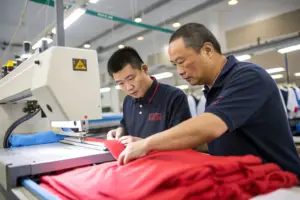
This is the biggest risk in white label sourcing: the dreaded "blank change." We mitigate this by owning our own production. We do not source blanks from a third-party trading company. The high-quality blanks we offer are made on our own five production lines . We control the fabric sourcing, the cutting, and the sewing. This ensures that the blank you order today is identical to the blank you reorder in six months. This consistency is the foundation of a trusted brand.
Conclusion
Rebranding imported clothing for the US market is a powerful strategy, but it is one that must be executed with a blend of creativity and strict compliance. It is about more than just adding a logo. It is about legally and ethically transforming a generic product into a unique brand experience through thoughtful details, quality labels, and compelling packaging.
At Shanghai Fumao, we are the partner that demystifies this process. We provide the high-quality, ethically made foundation—whether through our custom private label services or our curated white label blanks—and we guide you through the essential steps of legal compliance and brand elevation. We handle the complex backend so you can focus on building the story and the community around your brand.
If you are ready to explore rebranding or launching a white label collection with a partner who prioritizes quality and compliance, let's talk. Our Business Director, Elaine, can walk you through our options and explain how we make the process seamless and stress-free. Please email Elaine at: elaine@fumaoclothing.com.