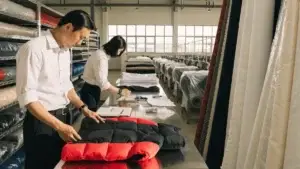
The landscape of global apparel sourcing is shifting under our feet. I talk to brand owners every week, and the pressure they feel is immense. Costs are rising, consumers demand more transparency, and the old ways of doing business just don't guarantee success anymore. One buyer from Seattle told me last month that his biggest fear isn't finding a factory—it's finding one that will still be the right partner two years from now.
For global brand buyers in 2026, the top sourcing trends are defined by a move toward agility, transparency, and strategic partnership. You are no longer just looking for the lowest cost per unit. You are looking for suppliers who offer nearshoring options, who can prove their sustainability claims, and who have the technological capability to handle smaller, faster orders without sacrificing quality.
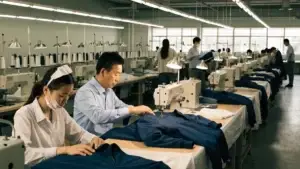
This shift is not a fleeting moment. It is a fundamental change in how the fashion industry operates. Whether you are sourcing from China, Vietnam, or looking at new markets, understanding these trends will help you make decisions that protect your margins and your brand reputation. I have run Shanghai Fumao for over a decade, and I have adapted our five production lines to meet these exact demands. Let me walk you through what I see as the most important trends for you right now.
How is nearshoring changing the sourcing game for US brands?
For years, the equation was simple. Go to Asia for the lowest price. But the pandemic and subsequent supply chain chaos changed everything. Suddenly, a cheap price meant nothing if your containers were stuck at port for months. I saw many of our long-term clients start to ask a new question: "How can we get our products faster, even if it costs a little more?"
Nearshoring—sourcing from countries closer to your home market—has become a major trend for U.S. brands. While China remains the manufacturing powerhouse for its depth of materials and expertise, buyers are increasingly diversifying. They are exploring options in Mexico and countries in Central America for specific categories to reduce transit times and gain more control over the supply chain.
Let me give you a practical example. We work with a brand in Texas that sells western-style shirts. They have a core collection that they make with us in China because of our specialized weaving and washing techniques. But for their "fast fashion" basics, they started sourcing some items from Mexico. Why? Because the lead time from Mexico is two weeks by truck, not five weeks by ship. This hybrid model allows them to react to trends quickly while still relying on us for the high-complexity, high-quality items that are their signature. This is the new reality. You don't have to put all your eggs in one basket. As a full-package manufacturer, we at Shanghai Fumao have even helped clients source specific trims from other regions while we handle the main production, acting as a coordinator for their entire strategy.

Which product categories are best suited for nearshoring?
Nearshoring works best for products that need to hit the market fast. Think basic t-shirts, simple woven tops, and items with short trend cycles. If speed is your priority, proximity helps. However, for products requiring complex techniques, like intricate jacquard knits, heavy outerwear with special coatings, or garments needing rare fabrications, Asia, and particularly China, still offers unmatched expertise. We produce those high-complexity items right here in our Shanghai-area factory.
Does nearshoring actually save money in the long run?
The unit cost is usually higher in nearshore locations. Labor and materials often cost more than in Asia. But you save in other areas. Freight costs are lower. Transit times are shorter, so you need less working capital tied up in inventory on the water. You can also react faster to sales data, ordering a re-run of a hot style in weeks instead of months. For many brands, this reduced risk and increased agility is a net financial gain.
What role does sustainability play in modern sourcing decisions?
Sustainability is no longer a marketing buzzword. It is a business requirement. Your customers, especially the younger generations, are asking hard questions. They want to know where their clothes come from and what they are made of. If you cannot answer those questions, they will buy from a brand that can. I have seen this pressure trickle down directly to us, the manufacturers.
The trend is toward verifiable sustainability. Brand buyers are not just asking for a "green" collection. They are asking for proof. They want to see certifications for organic materials, they want to understand how we manage water and chemical usage in our dyeing processes, and they want transparency about our factory's working conditions. It is about data, not just stories.
I remember a specific conversation with a buyer from a New York-based contemporary brand last year. She came to us with a project for a line of dresses. The first thing she asked about wasn't the price. It was our wastewater treatment process. We were able to show her our system and explain how we recycle a percentage of our water. Then she wanted to see our fabric sourcing policy. We showed her our preferred mill list, which includes suppliers with OEKO-TEX and GOTS certifications. Because we could provide this information clearly and confidently, we earned her trust. She knew we could produce her line without exposing her brand to reputational risk. This is where the industry is heading. You need a partner who treats sustainability as a core operational principle, not a special request. At Shanghai Fumao, we constantly work with our supply chain to improve these practices because we know it matters to you.
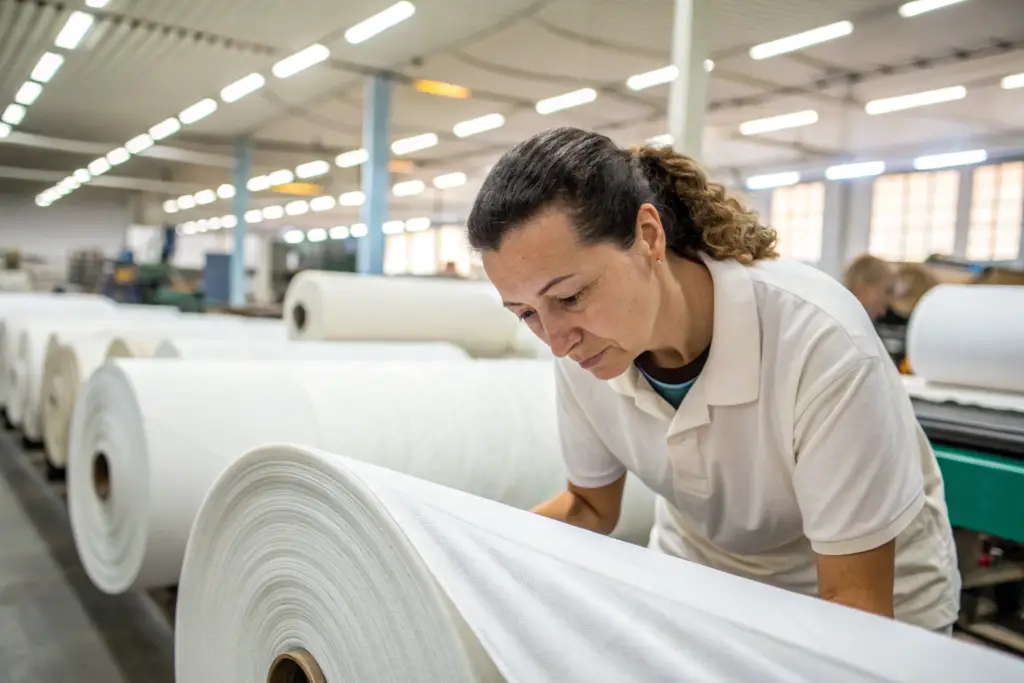
What certifications prove a factory's commitment to sustainability?
Several key certifications act as proof points. For materials, look for GOTS (Global Organic Textile Standard) for organic fibers and GRS (Global Recycled Standard) for recycled content. For the factory's processes, OEKO-TEX STeP is a certification for sustainable textile and leather production facilities. It covers chemical management, environmental performance, and social responsibility. Asking for these specific certifications is a much better approach than just accepting a supplier's word that they are "eco-friendly."
How can buyers verify ethical manufacturing claims?
Beyond certifications, you can ask for supply chain mapping. A transparent supplier should be able to tell you, or even show you documentation, about where their core materials come from. For example, if they use recycled polyester, where is it sourced from? Which mill spins it into yarn? This level of detail is becoming more common. Some buyers also conduct third-party audits or ask for virtual factory tours to see working conditions firsthand. A reliable partner will welcome this scrutiny.
Why are small-batch orders becoming the new standard?
The era of placing one massive order for 50,000 pieces and selling them for six months is ending. The market moves too fast. Data from social media tells you what is trending this week, not last quarter. If you are a brand owner, you know the pain of being left with inventory that is no longer in style. This is forcing a major change in how we produce.
Small-batch orders, sometimes called "quick response" manufacturing, are now a critical requirement for many global buyers. You need a supplier who is flexible enough to handle an initial order of 500 pieces to test a market, and then have the capacity to scale up quickly if that style takes off. This requires a factory with efficient setup processes and a willingness to adapt.
I have lived this change. Ten years ago, almost all our orders were for high volumes. Now, a significant portion of our work is for smaller launch collections, capsule lines, and test runs. A client in California, for instance, came to us with a new streetwear brand. They didn't have the capital to order 5,000 hoodies. We worked with them to produce 300 pieces of three different designs. This allowed them to launch, build hype, and see what their customers actually wanted. Once the data came in, they came back to us for a bulk re-order of the winning styles. We had to be ready to pivot from a small batch to a full production run quickly. This is the agility a modern manufacturer must have. If a factory tells you they only accept large minimums, they are stuck in the past. You need a partner like Shanghai Fumao who understands the value of a low-risk start.
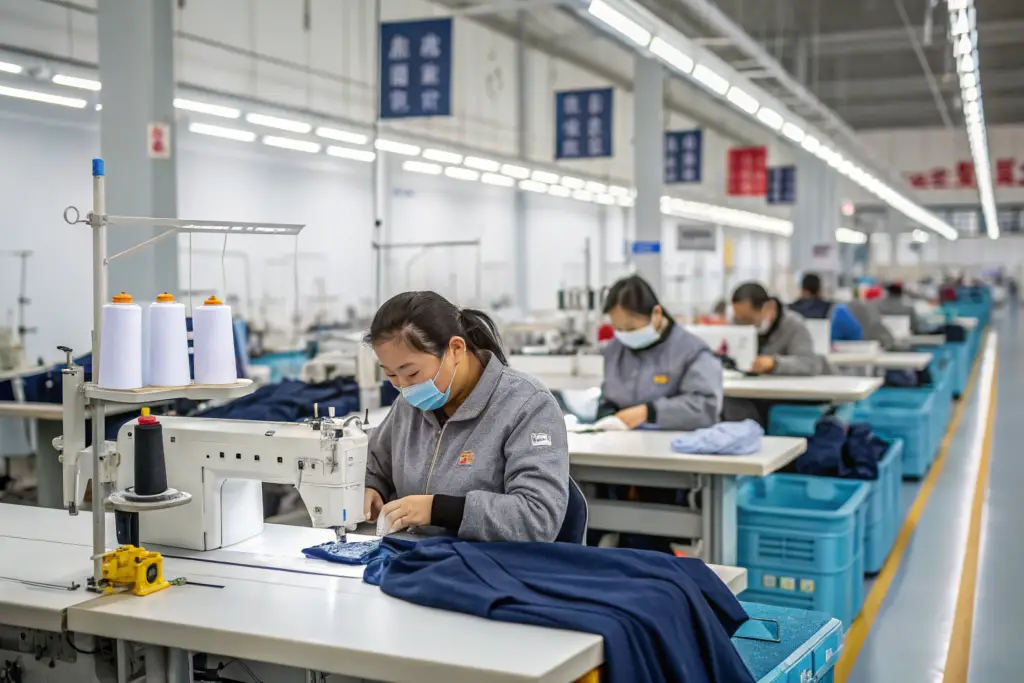
What are the typical minimum order quantities (MOQs) for flexibility?
MOQs vary wildly by product and factory. For simple cut-and-sew items like t-shirts using common fabrics, a flexible factory might offer an MOQ of 300-500 pieces per color and size. For more complex items like jackets with custom hardware, the MOQ might be higher, around 1000 pieces, because of the costs involved in ordering custom zippers or buttons. The key is to find a factory willing to be transparent about these numbers and work with you to find a solution, perhaps by using stock fabrics or simpler trims for initial runs.
How does small-batch production affect pricing per unit?
There is no escaping the fact that small batches cost more per unit. The cost of setting up a production line, cutting the fabric, and preparing the trims is spread over fewer garments. However, you need to look at the total cost of the project, not just the unit price. Small batches prevent overproduction and the need to deeply discount unsold inventory at the end of the season. Often, the higher unit cost is more than offset by selling 100% of your inventory at full price. It is a more profitable model for many brands.
How can digital tools improve your supplier selection process?
Finding a supplier used to be a leap of faith. You met them at a trade show, you visited their booth, and you hoped they could do what they said. Today, technology is pulling back the curtain. It is giving you more data than ever before to make an informed decision. The trend is toward digitization of the entire sourcing and production process.
Global brand buyers are increasingly using digital tools to vet and manage suppliers. This includes everything from using AI-powered sourcing platforms to find factories that match their specific capabilities, to demanding that their suppliers use digital production tracking systems. You want a partner who can give you real-time updates, not just a weekly email. This transparency builds trust and prevents problems before they happen.
I have seen the positive impact of this firsthand. We invested in a production management system that allows us to give our clients a dashboard view of their order. They can log in and see that their fabric has arrived, that cutting is 50% complete, and that sewing is scheduled to start. This level of visibility is incredibly powerful. A few months ago, a client in Florida noticed on the dashboard that the fabric delivery for his order was delayed by three days. He immediately messaged us. Because we had the data, we were able to explain the reason (a typhoon delayed the truck) and adjust the production schedule to make up the time. If we didn't have that system, he would have just waited, growing more anxious, until the shipment was late. This is the peace of mind digital tools provide. When you are evaluating a factory, ask them how they track production. If they say "Excel sheets" or "pen and paper," it is a sign that your order could easily get lost in the shuffle. You want a partner who embraces technology to serve you better.

What digital platforms help find vetted clothing manufacturers?
Platforms like Sourceasy and MakersValley are designed to connect brands with pre-vetted manufacturers. They often include factory profiles, capability data, and sometimes even client reviews. Traditional platforms like Alibaba are also improving their vetting processes, offering "Verified Supplier" badges that include on-site inspections. However, these are starting points. You should always do your own due diligence beyond the platform.
How can virtual factory tours replace physical visits?
While nothing beats being on the ground, virtual tours have become a very effective first step. Using apps like FaceTime, WhatsApp Video, or Zoom, a supplier can walk you through their facility in real-time. You can ask them to stop at the cutting tables, show you the sewing lines, and pan over to the quality control section. It allows you to see the scale and organization of the factory without the cost and time of a flight. We do this regularly for new clients. It builds immediate trust because they can see the operation is real and professional.
Conclusion
The apparel sourcing world is more complex and dynamic than ever. As a global brand buyer, your success depends on staying ahead of these shifts. You need to think about nearshoring as a tool in your strategy, not as a replacement for everything. You need to demand real, verifiable sustainability from your partners. You must find factories that are flexible enough to handle small, test orders and scale them up. And you should use digital tools to bring transparency and efficiency to every step of the process.
At Shanghai Fumao, we have embraced these trends. Our five production lines are set up to handle both small-batch innovation and high-volume production. We hold the certifications that prove our commitment to quality and sustainability. We use digital tools to keep you informed, and we have decades of experience navigating the complexities of global logistics, including DDP shipping, to get your products to your door reliably.
If you are looking for a manufacturing partner who understands the challenges you face and has built a business to help you overcome them, let's start a conversation. We are ready to put our experience to work for your brand. Please contact our Business Director, Elaine, at strong>elaine@fumaoclothing.com</strong to discuss your sourcing needs for the coming seasons.