You've received multiple quotes from different garment factories, and the pricing looks similar. But the true cost of manufacturing extends far beyond the initial quote—it includes quality consistency, reliability, communication effectiveness, and partnership value. Learning to evaluate these intangible factors separates successful long-term manufacturing relationships from costly disappointments.
Evaluating a garment factory requires assessing communication patterns, quality systems, production flexibility, ethical compliance, and problem-solving capabilities—factors that ultimately impact your total cost more than the initial price per unit. Factories that excel in these areas typically deliver 25-40% better overall value despite potentially higher initial quotes, through reduced defects, fewer delays, and stronger partnership benefits. The most successful brands develop comprehensive evaluation frameworks that look beyond pricing to identify truly exceptional manufacturing partners.
This guide provides a structured approach to evaluating garment factories across the critical dimensions that determine long-term manufacturing success.
What Communication Patterns Reveal Factory Reliability?
Communication quality often predicts manufacturing success more accurately than technical specifications. How a factory communicates during the evaluation process typically indicates how they'll perform throughout your partnership.
Proactive, transparent communication prevents the misunderstandings that cause most production problems.
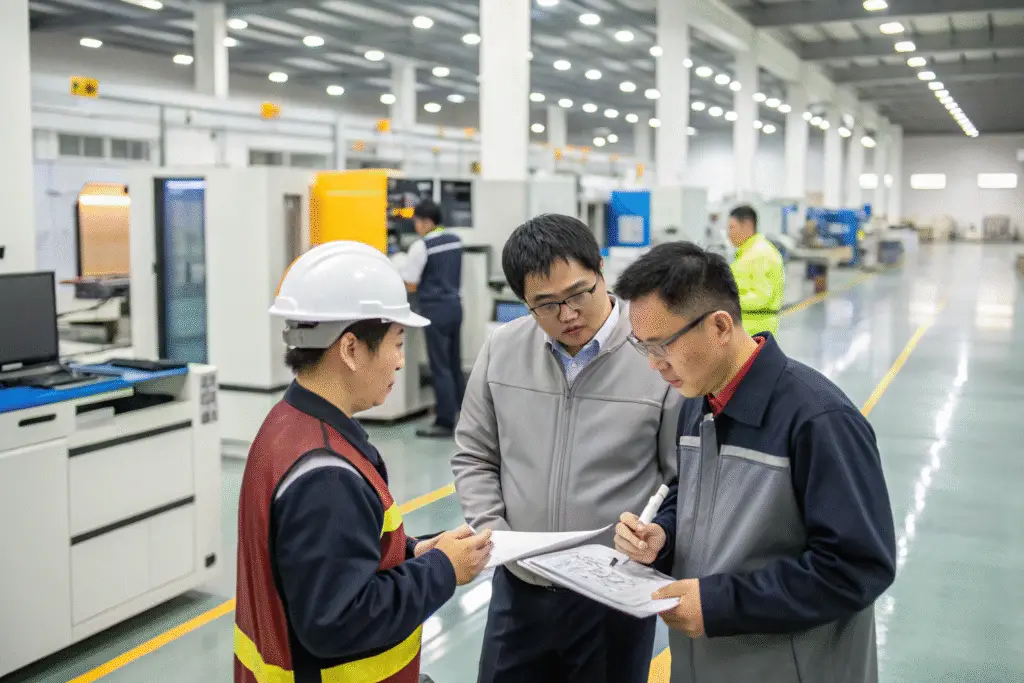
How does response behavior indicate reliability?
Key communication indicators include:
- Response time consistency across different inquiry types
- Information completeness without requiring multiple follow-ups
- Proactive clarification of ambiguous requirements
- Technical understanding demonstrated through relevant questions
- Cultural awareness of your business practices and expectations
A sportswear brand avoided a problematic partnership when a factory's delayed, vague responses during evaluation contrasted with their impressive facility presentation. The communication misalignment signaled potential operational issues. At Shanghai Fumao, we've found that communication patterns reliably predict partnership success.
What communication systems support successful partnerships?
Evaluate their communication infrastructure:
- Dedicated account management with decision-making authority
- Regular reporting protocols with photographic documentation
- Emergency contact availability for urgent issues
- Multilingual capability matching your team's needs
- Technology integration for efficient information sharing
When a luxury brand evaluated factories, they prioritized partners with structured weekly reporting systems, discovering that these factories experienced 60% fewer production emergencies. The systematic communication approach demonstrated operational maturity.
How Do Quality Systems Demonstrate Manufacturing Capability?
A factory's quality systems reveal their commitment to consistency and continuous improvement. Beyond basic certifications, the implementation and evolution of quality processes indicate their ability to maintain standards across production runs.
Quality systems separate manufacturers who can produce good samples from those who can deliver consistent bulk quality.
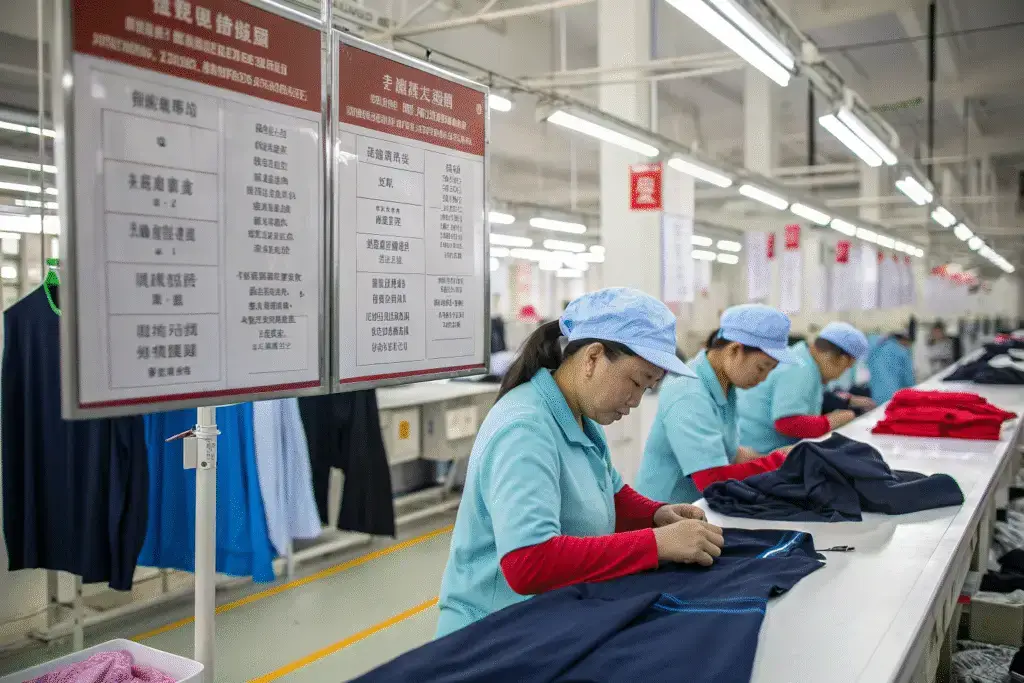
What quality documentation indicates capability?
Comprehensive quality systems include:
- Standardized inspection protocols with clear acceptance criteria
- Measurement documentation from previous productions
- Quality performance data across different product categories
- Corrective action records showing problem-resolution effectiveness
- Supplier quality management for raw materials and components
A denim brand selected a factory based on their detailed quality documentation, resulting in a 75% reduction in defects compared to their previous manufacturer. The quality system transparency accurately predicted performance.
How does in-process quality control demonstrate commitment?
Evaluate their quality integration:
- Multiple checkpoints throughout production flow
- Operator quality ownership and accountability
- Measurement equipment calibration records
- Quality training programs for production staff
- Continuous improvement initiatives with documented results
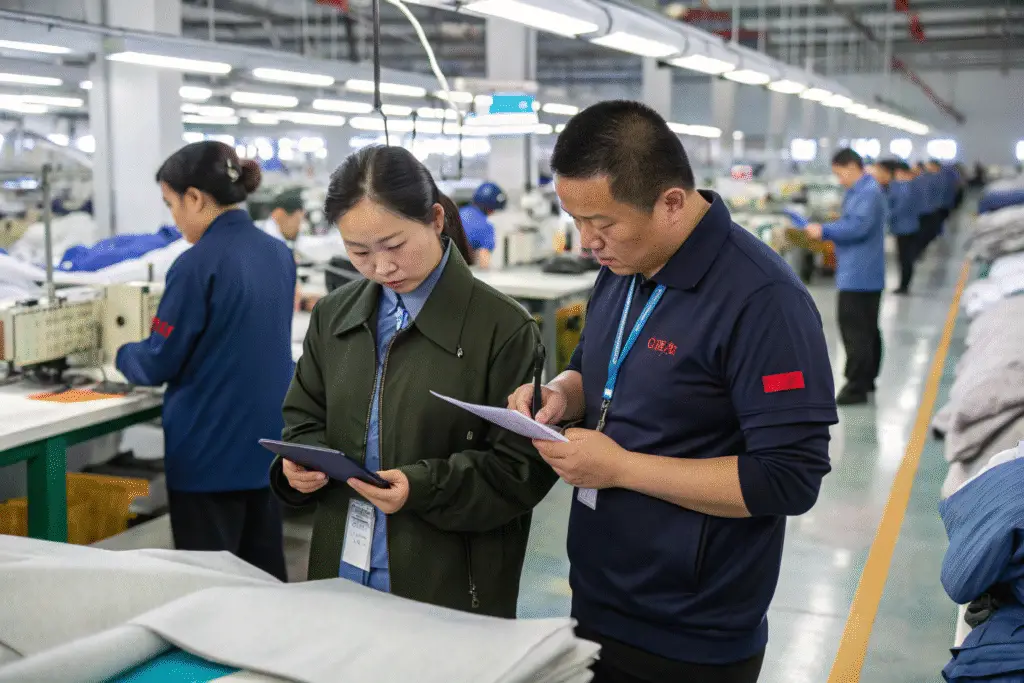
When evaluating a potential partner, a technical apparel brand requested to observe their in-process quality checks, discovering one factory's operators could identify subtle fabric issues by touch that would have caused failures in finished garments. This quality craftsmanship demonstrated exceptional capability.
What Production Flexibility Indicates Operational Excellence?
A factory's ability to adapt to changing requirements, handle different order sizes, and respond to unexpected challenges reveals their operational sophistication and commitment to partnership.
Flexibility often correlates with problem-solving capability and customer focus.
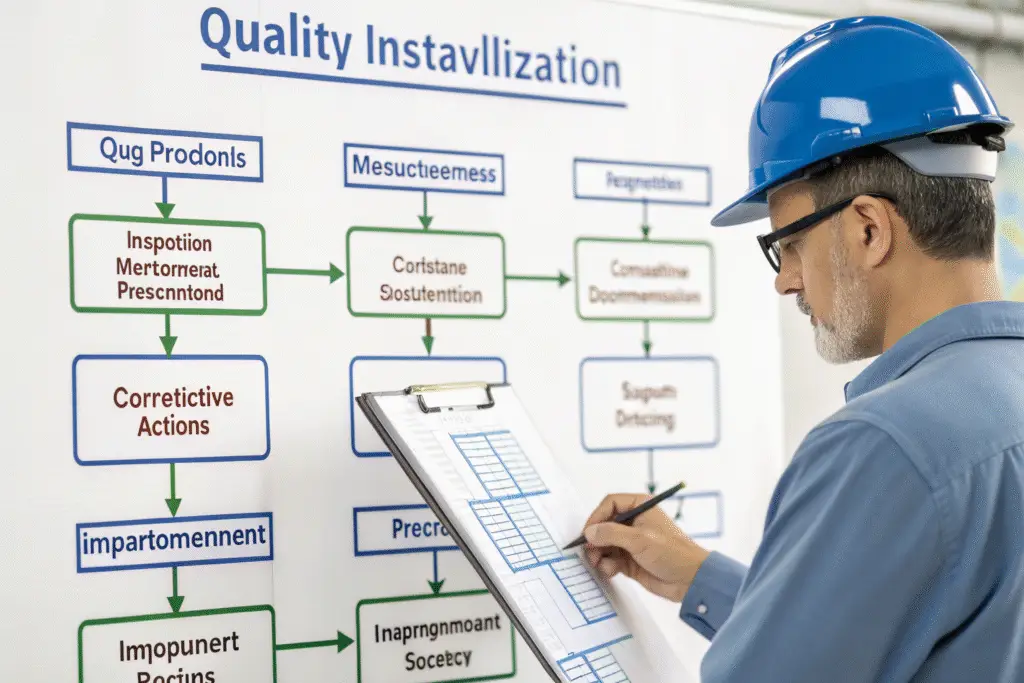
How does order size adaptability demonstrate capability?
Flexibility indicators include:
- Small batch efficiency without excessive premiums
- Volume scaling ability for successful styles
- Rush order handling with reasonable cost structure
- Sample development process for new categories
- Product mix management across different garment types
A contemporary brand valued a factory's ability to produce 200-unit test batches efficiently, then scale successful styles to 5,000 units without quality variations. This scalability capability supported their growth strategy effectively.
How does change management indicate partnership potential?
Evaluate their adaptability:
- Engineering change process for design modifications
- Material substitution experience with cost transparency
- Timeline adjustment capability with realistic commitments
- Problem-solving approach to unexpected challenges
- Communication protocol for requirement changes
When a brand needed urgent fabric substitution due to supply chain issues, one factory presented three approved alternatives with complete cost and timeline implications within 24 hours, while others required weeks for assessment. The responsive adaptability demonstrated true partnership potential.
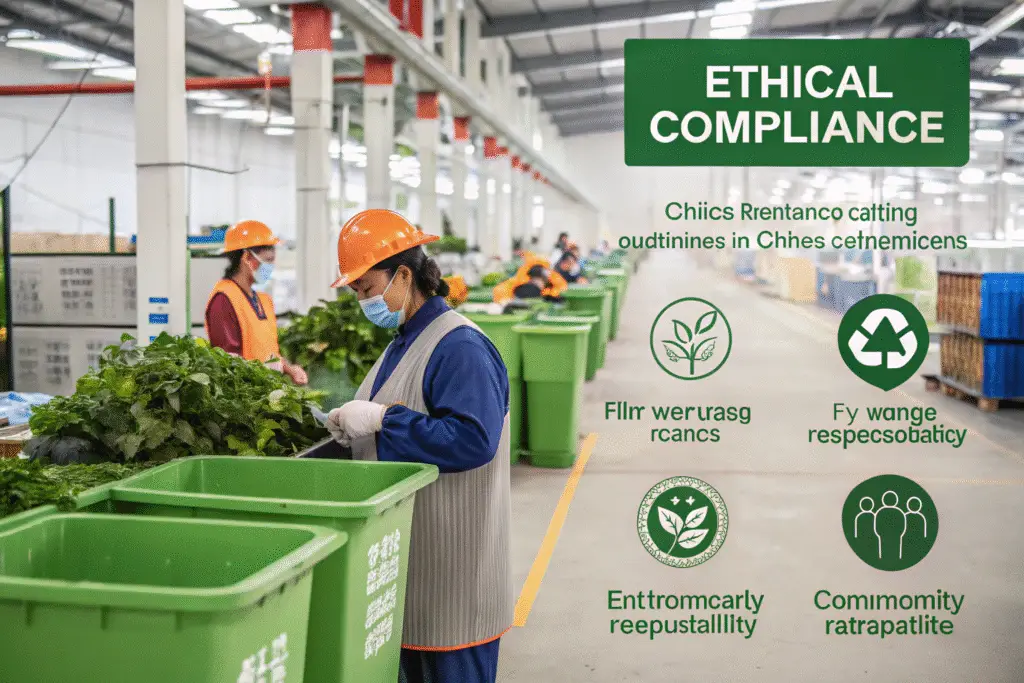
How Does Ethical Compliance Impact Long-Term Viability?
A factory's commitment to ethical manufacturing practices affects not just your brand reputation but also their operational stability and workforce quality. Ethical compliance often correlates with management sophistication and long-term thinking.
Ethical factories typically experience lower turnover, better quality, and more reliable operations.
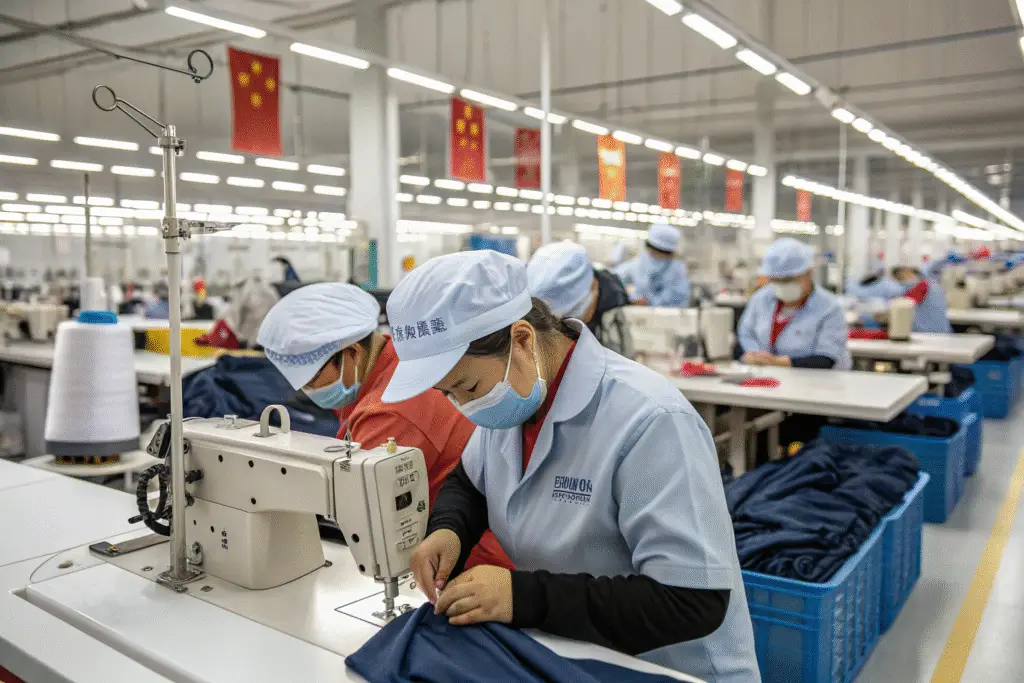
Key ethical evaluation areas:
- Worker treatment and satisfaction through direct observation
- Fair wage practices with transparent payment systems
- Working condition quality including safety and comfort
- Working hour compliance with local regulations
- Worker retention rates indicating job satisfaction
A sustainable brand selected a factory with higher pricing but exceptional worker conditions, discovering their 85% worker retention rate resulted in superior craftsmanship and 40% fewer quality issues. The ethical manufacturing advantage delivered unexpected quality benefits.
How does environmental responsibility indicate management quality?
Environmental commitment signals:
- Resource management through waste reduction and recycling
- Energy efficiency programs with measurable results
- Chemical management for worker and environmental safety
- Sustainable material sourcing with verification systems
- Environmental certification beyond basic requirements
When evaluating factories, a outdoor brand prioritized those with water recycling systems, discovering these factories also had more sophisticated production planning and quality systems. The environmental responsibility correlation with operational excellence proved consistent.
What Problem-Solving Capability Reveals True Partnership Potential?
How a factory handles challenges and unexpected situations demonstrates their technical capability, resourcefulness, and commitment to client success. Problem-solving approach often separates vendors from true partners.
Factories with strong problem-solving capabilities prevent small issues from becoming major disruptions.
How does technical expertise support effective problem-solving?
Evaluate their technical capability:
- Engineering approach to construction challenges
- Material knowledge for performance optimization
- Process innovation for quality or efficiency improvements
- Root cause analysis methodology for issues
- Preventive mindset anticipating potential problems
When a complex design presented production challenges, one factory's engineering team developed custom attachments and modified processes to achieve the desired result, while others simply said it wasn't possible. The technical problem-solving demonstrated exceptional capability.
How does transparency during challenges build trust?
Crisis management indicators:
- Immediate notification of emerging issues
- Solution-oriented communication focusing on resolution
- Shared responsibility approach for mutual success
- Resource commitment to address problems
- Learning application from previous challenges
During a material quality issue, one factory immediately notified clients, presented tested alternatives, and shared cost implications transparently, preserving trust despite the problem. Others attempted to hide the issue until it became unavoidable. The transparent problem-solving approach built stronger relationships.
Conclusion
Evaluating garment factories beyond initial quotes requires investigating communication patterns, quality systems, production flexibility, ethical compliance, and problem-solving capabilities. These factors ultimately determine total cost, product quality, and partnership satisfaction more significantly than per-unit pricing. The most successful manufacturing relationships emerge from comprehensive evaluation processes that assess both tangible capabilities and intangible partnership qualities.
Developing a structured factory evaluation framework helps identify partners who will contribute to your long-term success rather than just fulfilling immediate production needs. If you're seeking a manufacturing partner that excels across all these evaluation dimensions, Shanghai Fumao welcomes comprehensive evaluation of our communication systems, quality processes, ethical standards, and problem-solving capabilities. Contact our Business Director, Elaine, at elaine@fumaoclothing.com to schedule a thorough evaluation and discover how our partnership approach delivers value beyond initial pricing.