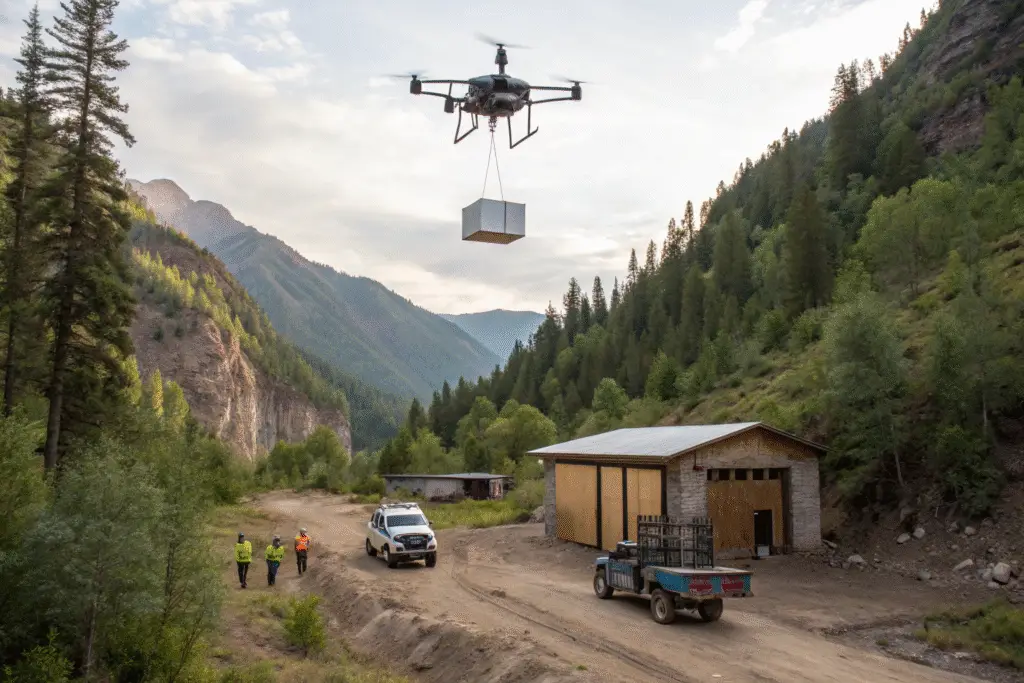
I’ve heard the same story many times from logistics managers: “The truck got stuck on a dirt road, and the warehouse had to wait another day.” Honestly, it sounds small, but when you’re running production lines or stocking urgent supplies, those lost hours hurt. That’s why drones, which used to feel like sci-fi toys, are now being taken seriously.
The simple truth is: drones offer faster, cheaper, and sometimes greener ways to move goods when roads fail or when trucks take too long. They won’t replace trucks tomorrow, not for big pallets at least, but they are surprisingly good at plugging the gaps in remote supply chains.
From my observation, the companies jumping in first are the ones with urgent, lightweight deliveries—medical goods, machine parts, or high-value inventory. I think it’s worth asking: why not use drones when they can skip the frustrations of the last mile?
Overcoming Last-Mile Challenges
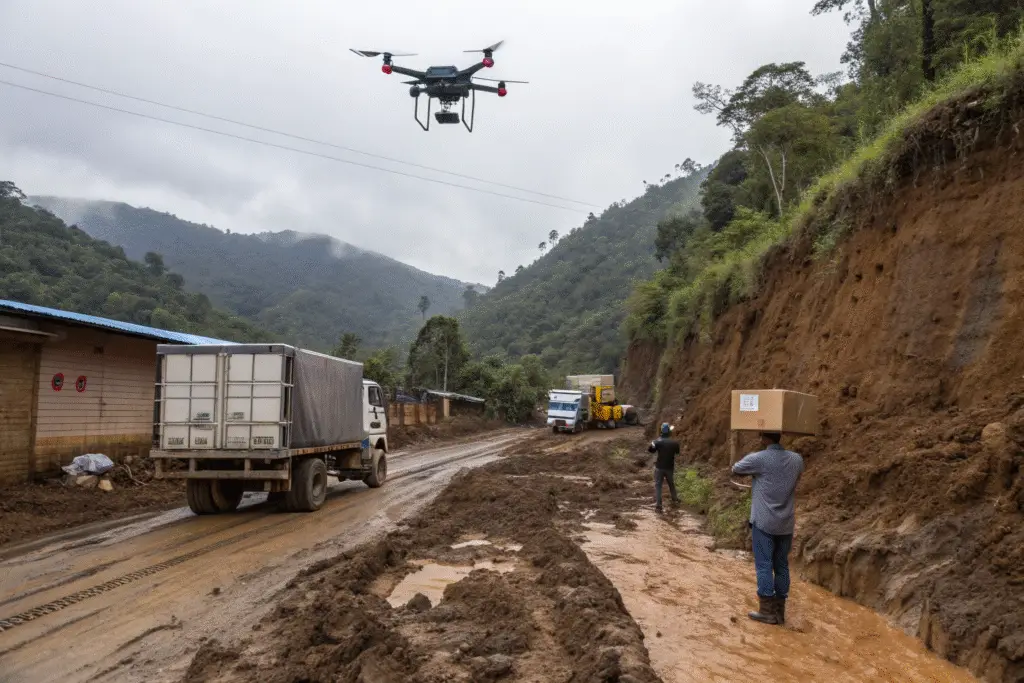
Anyone who has worked in logistics knows the last mile is often the worst mile. Roads wash out, landslides happen, or drivers spend hours dodging potholes.
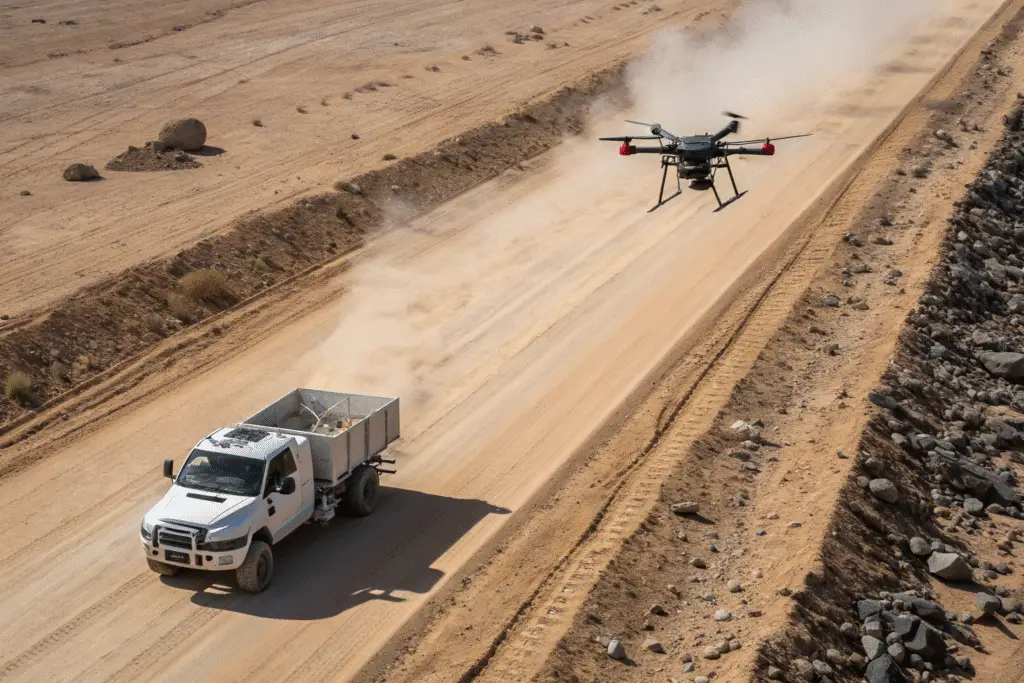
A drone doesn’t care—it flies straight over.
Why does this matter so much?
Well, imagine a warehouse waiting on a replacement part for machinery. If the truck is delayed by a broken bridge, production halts. I’ve seen that happen, and it’s frustrating because the part itself may weigh just a few pounds. Companies like Zipline already use drones to cross rivers and mountains, proving what trucks can’t.
But what about limits?
Yes, drones can’t carry everything. Most commercial ones handle under 50 lbs. From my experience, that’s fine for spare parts or urgent shipments, but obviously not for bulk fabrics or heavy pallets. Still, solving 20% of problems quickly is better than waiting two days for 100%.
Speed and Efficiency
Speed matters. Trucks wind along dirt roads, burning hours. Drones cut those hours down to minutes.
That efficiency keeps warehouses moving instead of waiting.
How much faster are drones?
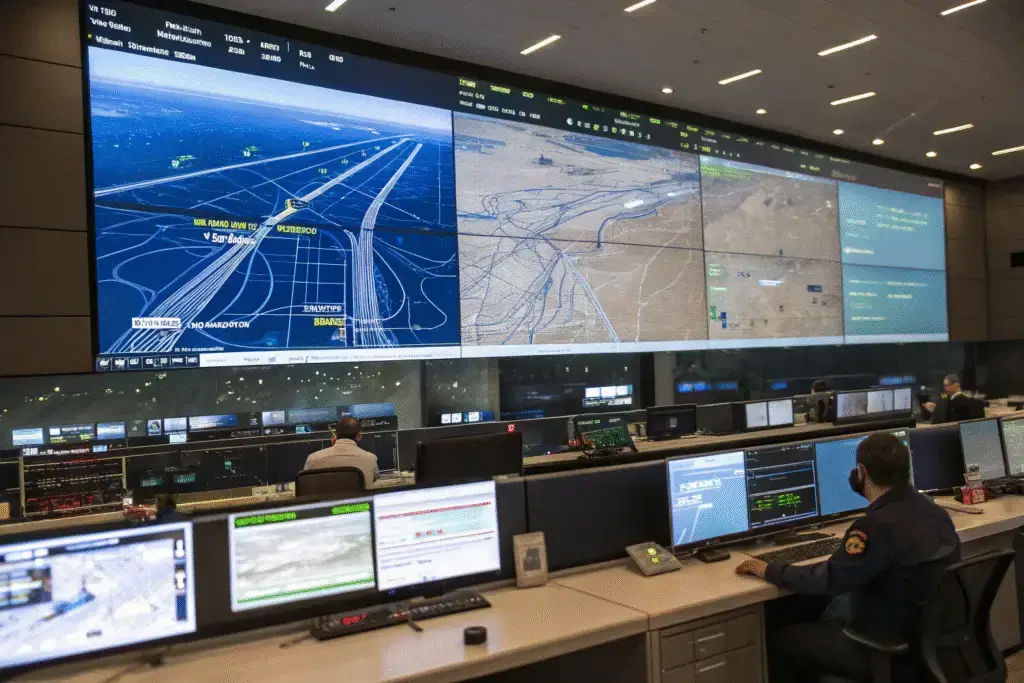
Actually, the math is simple. A 30-mile mountain road can take 90 minutes. A drone covers the same in 20 minutes. Wing, backed by Google’s parent company, has shown drones making dozens of deliveries per hour in suburban areas—imagine that advantage in rural terrain.
Why does this matter in practice?
From my observation, downtime at a warehouse costs more than the delivery itself. If a line stops because of one missing part, every minute bleeds money. A drone drop can prevent that, and surprisingly, customers notice when operations never skip a beat.
Lower Costs for Remote Routes
Running trucks into the countryside isn’t just slow—it’s expensive. Fuel, labor, maintenance, all for sometimes a single box.
Drones reduce those costs by making short, precise runs.
How much cheaper can it get?
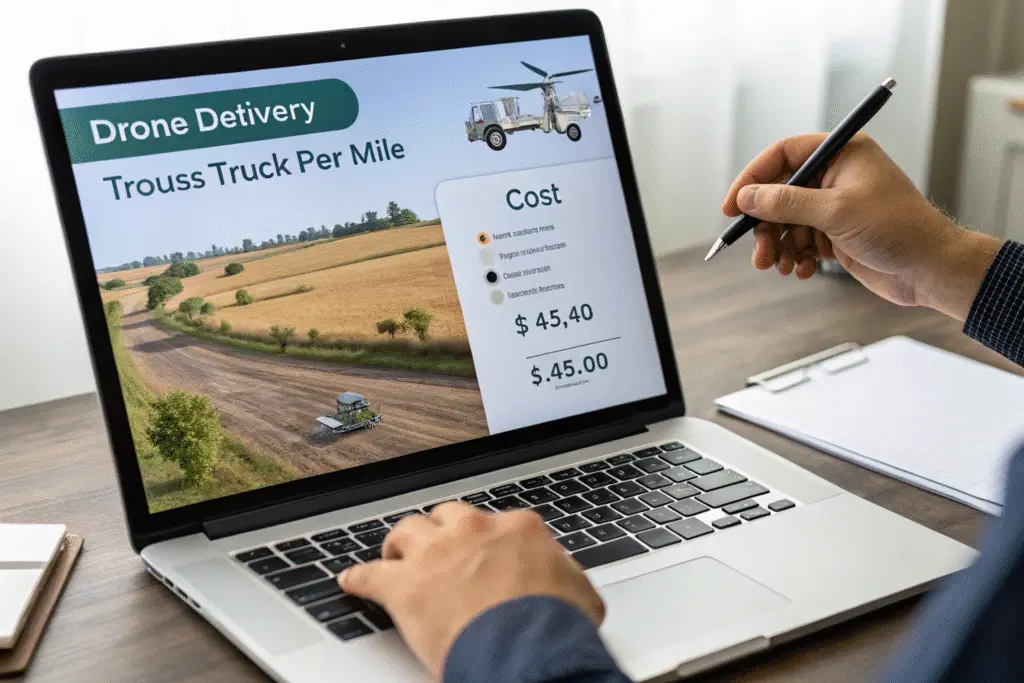
Well, McKinsey once estimated drones could cut last-mile costs by 40% in some cases. From my experience, when I’ve seen trucks burn half a day for a $200 delivery, that number feels realistic. Once drones are deployed, they can do multiple loops in the time a truck does one.
Any catches?
Of course. You need investment in drone fleets, charging stations, and trained operators. But compared to the constant drain of remote truck runs, many buyers I’ve spoken to say the ROI is clear within a couple of years.
Sustainability and Reduced Emissions
Clients are asking more about carbon footprints. Trucks on rough roads guzzle fuel and spit out emissions.
Electric drones are far lighter on the planet.
Why should warehouses care?
Actually, it’s not just about regulations. More brands want greener supply chains because customers demand it. Drones, running on rechargeable batteries, give them a way to cut emissions on the trickiest routes. Companies like Amazon Prime Air are already testing this at scale.
Is it a perfect solution?
Not yet. Batteries are limited, and charging infrastructure isn’t everywhere. In my experience, drones don’t solve every delivery—but they chip away at the dirtiest, least efficient truck miles. And that’s a good start.
Conclusion
Drone-based delivery to remote warehouses isn’t about replacing trucks; it’s about fixing what trucks can’t do well. They overcome washed-out roads, they deliver faster, they lower costs, and they reduce emissions. Sure, weight and range are still limitations, but the benefits are already clear.
As someone who’s worked in apparel exports, I’ve seen how one missing shipment—a bag of zippers, for example—can halt production for days. It’s frustrating. Drones could have solved that in an hour. That’s why I believe they’ll become a normal part of supply chains soon. If you want to explore new logistics solutions, you can contact our Business Director Elaine at elaine@fumaoclothing.com. At Shanghai Fumao, we’re not only producing garments—we’re also watching how delivery innovations like drones can keep global operations moving.