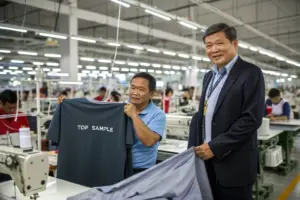
What was once about price and speed is now about ethics, transparency, and risk. U.S. brands aren’t just sourcing—they’re scrutinizing.
U.S. apparel brands are getting tougher on suppliers to meet rising compliance standards, ESG expectations, trade laws, and consumer pressure for transparent, responsible production.
At Fumao, we’ve seen this shift firsthand. Buyers now ask not just about MOQ and lead time—but about labor audits, carbon data, and factory traceability. Here’s what’s driving the change.
What Compliance Standards Do US Apparel Brands Now Demand?
Compliance is no longer a checklist—it’s a survival requirement.
US apparel brands now demand full compliance with social, environmental, and product safety standards, including third-party audits, traceable supply chains, and adherence to both local and international labor laws.

What are the key compliance areas?
| Category | Requirements Examples |
|---|---|
| Labor & Human Rights | No forced labor, fair wages, safe facilities |
| Environmental | Wastewater testing, energy tracking, chemical controls |
| Product Safety | Lead testing, labeling, banned substance lists |
| Documentation | Valid business licenses, audit certificates |
U.S. brands now require:
- SMETA / BSCI / WRAP audits
- Restricted Substances Lists (RSL) compliance1
- Traceable yarn/fabric sources
- Digital records, not just paperwork
At Fumao, we provide GRS-certified fabrics2, in-house QC reports, and audit-ready compliance kits3 to meet these standards proactively.
How do apparel brands enforce ESG practices among suppliers?
It’s no longer optional. ESG is now a contractual obligation.
Apparel brands enforce ESG practices through third-party audits, supplier scorecards, compliance clauses in contracts, and performance-based incentives or penalties.

What does ESG enforcement look like on the ground?
Environmental:
- Require water treatment logs and energy reduction plans
- Ban hazardous dye chemicals
- Score suppliers on carbon output
Social:
- Monthly wage audits
- Anonymous worker interviews
- Fire safety inspections
Governance:
- Digital supply chain mapping
- Anti-bribery clauses
- Data security and reporting protocols
One U.S. client of ours ties 15% of supplier payment4 to passing annual ESG benchmarks. Another runs quarterly scorecards on:
- Chemical waste
- Energy efficiency
- Worker turnover
What support do suppliers need to stay compliant?
- Training materials for line managers
- Audit prep guides (we supply these in Chinese/English)
- Real-time reporting dashboards5
- Certifications aligned with brand goals (e.g., OEKO-TEX, GRS, HIGG)
Fumao supports all of these to ensure we stay ahead—not just compliant.
Why Does Supply Chain Transparency Matter More Than Ever?
If you can’t trace it, you can’t prove it—and in 2025, proof is currency.
Supply chain transparency matters because governments, consumers, and brands demand visibility to verify compliance, avoid legal risk, and build trust in ethical sourcing.

What’s driving this push?
- U.S. Uyghur Forced Labor Prevention Act (UFLPA)6 requires proof that no Xinjiang-sourced cotton is used.
- EU Digital Product Passport (DPP)7 will mandate full traceability data.
- Consumer activism via social media demands brand accountability.
One Fumao buyer was stopped at U.S. customs for lack of proof of origin. Since then, we’ve implemented:
- QR code labels for yarn origin
- Full chain-of-custody logs
- Blockchain-led verification8 for key clients
Transparency prevents reputational and financial disaster.
What transparency tools are U.S. brands now requiring?
- Fabric origin declarations
- Chain-of-custody documents
- Blockchain or ERP-based traceability
- Regular factory GPS/location verifications
The future? Real-time dashboards for buyers. And factories need to be ready.
The Impact of Trade Regulations on Fashion Sourcing
Tariffs are only one part of the equation. Compliance is the bigger iceberg.
Trade regulations are forcing apparel brands to shift sourcing, restructure documentation processes, and choose suppliers that can meet evolving legal and ethical benchmarks.

What trade shifts are affecting sourcing from China and beyond?
| Regulation | Effect on Brands |
|---|---|
| UFLPA (USA)9 | Ban on untraceable cotton = supplier cuts |
| Section 301 Tariffs | Raises costs on China-origin apparel |
| CBAM (EU) | Carbon-based import pricing |
| EPR (Extended Producer) | Forces takeback/recycling accountability |
One client reduced their China production share from 80% to 60%—but kept working with us because we delivered full DDP with traceable fabric certifications.
How can factories prepare for regulatory compliance?
- Use certified yarns10 with QR-coded proof
- Implement digital recordkeeping11 across purchase orders
- Register with platforms like Sedex or Higg Index
- Build compliance reporting templates into ERP
Fumao pre-loads every shipment with compliance folders—one for customs, one for brands, one for internal audit.
Conclusion
U.S. apparel brands are raising the bar—and only suppliers who can prove their people, product, and process ethics will stay in the game. At Fumao, we make compliance part of the product—so buyers can focus on growth, not guesswork.
-
Learn about RSL compliance to ensure your products meet safety and regulatory standards, protecting consumers and the environment. ↩
-
Explore this link to understand the significance of GRS-certified fabrics in sustainable sourcing and compliance. ↩
-
Discover how audit-ready compliance kits can streamline your compliance process and prepare your business for audits effectively. ↩
-
Exploring this resource can provide insights into how financial incentives can drive compliance and improve ESG performance. ↩
-
Understanding the impact of real-time dashboards can enhance your approach to monitoring and reporting ESG metrics. ↩
-
Understanding the UFLPA is crucial for brands to ensure compliance and avoid penalties. Explore this link for detailed insights. ↩
-
The DPP is set to revolutionize product traceability in the EU. Discover its impact and requirements for brands. ↩
-
Blockchain technology offers unparalleled transparency and security in supply chains. Learn how it can benefit your business. ↩
-
Understanding UFLPA is crucial for brands to navigate sourcing challenges and ensure compliance with regulations. ↩
-
Exploring certified yarns can help brands ensure they meet compliance standards and maintain ethical sourcing practices. ↩
-
Digital recordkeeping enhances transparency and efficiency, making it easier for factories to comply with regulations. ↩