The email from the Texas-based startup said they were "exploring all options." They'd been working with a local manufacturer but couldn't scale profitably. After analyzing their situation, we showed them how moving production to our China facility would reduce their cost per unit by 58% while improving quality consistency. They're now in their third year of partnership with us, having grown from 500 to 15,000 units annually.
Partnering with a B2B garment factory in China provides established brands with significant competitive advantages through cost efficiency, manufacturing expertise, supply chain integration, and scalability that's difficult to match elsewhere. While concerns about communication and logistics exist, the right factory partner addresses these through dedicated service teams and proven processes.
The landscape of Chinese manufacturing has evolved dramatically, moving far beyond the outdated perception of cheap labor and basic production. Today's leading factories offer sophisticated, full-service partnerships that become extensions of your brand's operational capacity.
What cost advantages can Chinese factories offer?
The financial benefits extend far beyond labor costs, creating comprehensive savings that impact your entire business model. These advantages come from integrated supply chains, specialized expertise, and economies of scale that have been refined over decades.
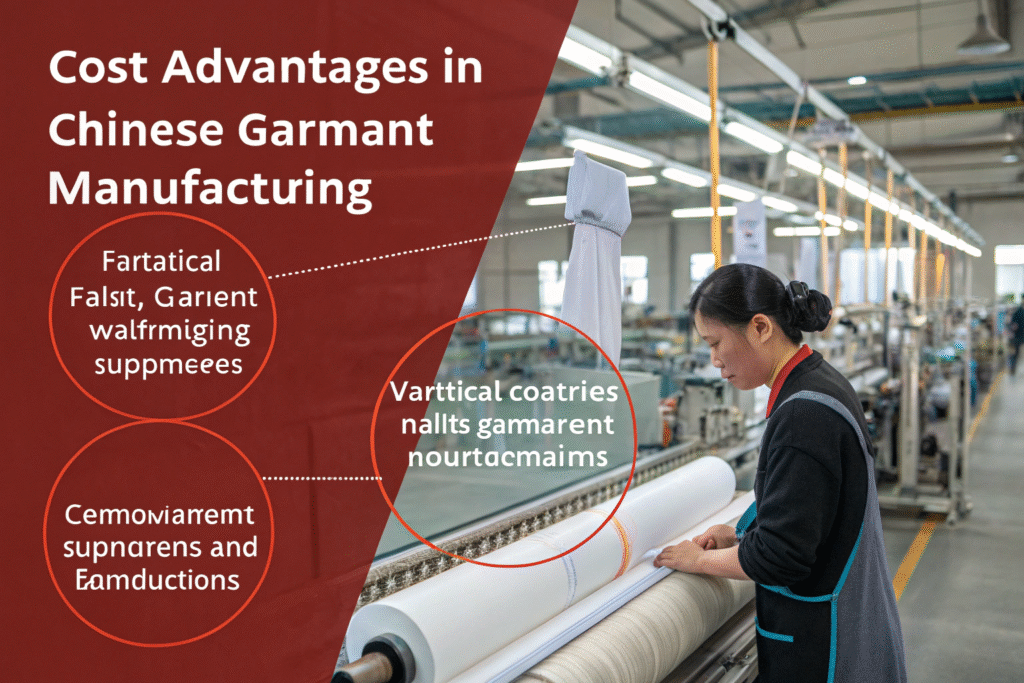
Chinese factories typically offer 30-60% lower production costs compared to Western manufacturers, achieved through vertical integration, bulk material purchasing power, and highly efficient production systems. At Shanghai Fumao, our location in the world's largest textile ecosystem provides access to materials at 15-25% lower costs than regional alternatives. More importantly, our experience across thousands of production runs means we identify optimization opportunities that newer manufacturing regions might miss. A Denver-based outdoor brand we partner with saved $4.75 per unit on their technical jackets by leveraging our existing relationships with zipper, buckle, and waterproof membrane suppliers.

How does vertical integration reduce costs?
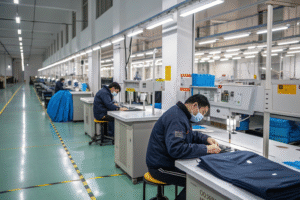
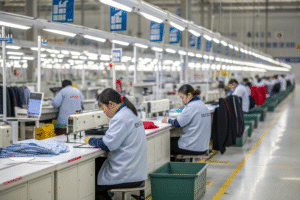
Vertical integration allows factories to control multiple production stages internally, eliminating intermediary markups and reducing coordination costs. Many Chinese factories, including Shanghai Fumao, manage fabric sourcing, trimming production, cutting, sewing, and finishing within their ecosystem. This control translates to faster turnaround times and 18-32% cost savings compared to fragmented production models. The National Council of Textile Organizations acknowledges China's comprehensive supply chain as a significant competitive advantage that's difficult to replicate elsewhere.
What hidden cost savings should brands consider?
Beyond direct manufacturing costs, brands benefit from reduced operational overhead through full-package services. When factories handle fabric sourcing, quality control, and logistics, brands save on staffing, sampling costs, and travel expenses. The table below illustrates typical savings areas:
| Cost Category | Savings Range | Reason |
|---|---|---|
| Material Sourcing | 15-25% | Direct mill relationships |
| Production Labor | 40-60% | Skilled workforce at scale |
| Quality Control | 20-35% | Integrated processes |
| Logistics | 10-20% | Volume shipping discounts |
| Sampling | 50-70% | Efficient development systems |
How does manufacturing expertise benefit your brand?
Four decades as the world's manufacturing hub has created unparalleled expertise across every apparel category. This knowledge translates to better products, fewer development errors, and smoother production runs.
Chinese factories possess deep technical knowledge across diverse product categories, problem-solving experience with complex construction, and familiarity with international quality standards. Our team at Shanghai Fumao includes technicians who've specialized in specific product categories for 10-20 years. This expertise proved invaluable when a London-based fashion brand came to us with a complex bonded seam design that their previous manufacturer couldn't execute properly. Our technical director identified the issue immediately and implemented a solution that improved both durability and production efficiency.
What specialized skills are available?
Chinese manufacturing regions have developed specialized clusters where factories possess deep expertise in specific product categories. The Pearl River Delta excels in denim and knitwear, the Yangtze River Delta specializes in high-fashion and technical apparel, while the Bohai Bay region focuses on outerwear and heavy knits. This specialization means your factory likely has extensive experience with your specific product type. At Shanghai Fumao, our location in the Yangtze River Delta gives us access to technicians with exceptional skills in tailored wovens and technical sportswear that would be difficult to find elsewhere.
How does experience prevent production problems?
Seasoned manufacturers anticipate and prevent common production issues before they occur. From understanding how different fabrics behave during cutting to recognizing potential sewing challenges in complex designs, this preventative knowledge saves time and reduces defects. We recently helped a sustainable activewear brand avoid a costly mistake by identifying that their chosen recycled polyester would react poorly to their desired dye method—a insight that came from our experience with similar fabrics over multiple production cycles.
What supply chain advantages does China offer?
China's comprehensive textile ecosystem provides efficiencies that extend far beyond the factory walls, creating a seamless production experience from raw material to finished product.
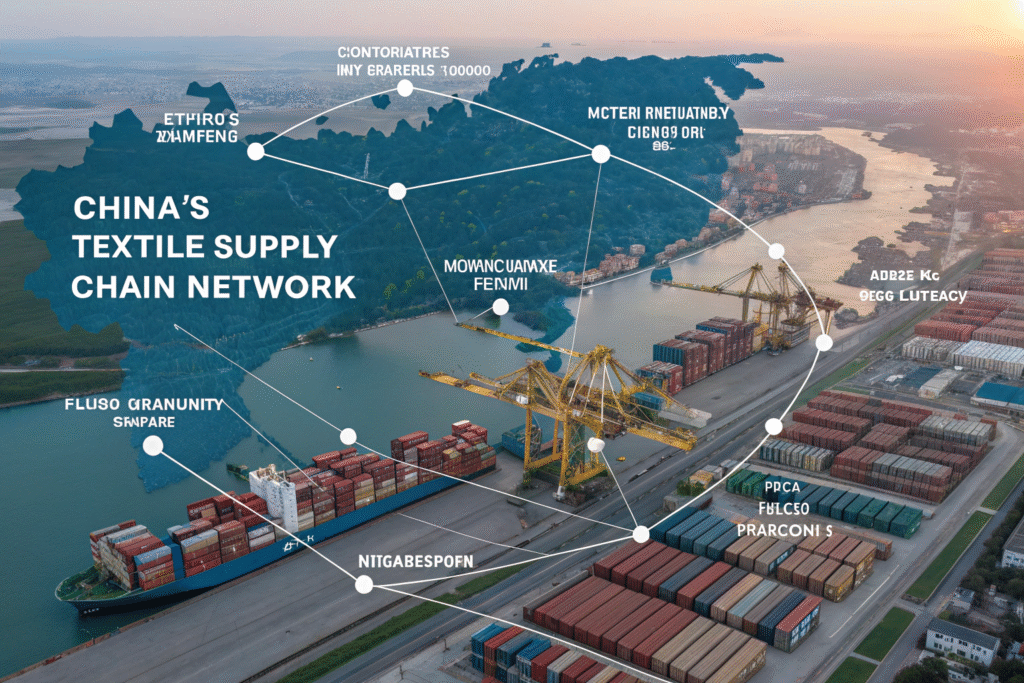
The supply chain advantages include unparalleled material access, reduced lead times through geographic concentration, and logistical infrastructure that supports efficient global distribution. Within a 200-mile radius of our Shanghai Fumao facility, we can access thousands of fabric mills, trim suppliers, and specialty processors. This concentration means we can source materials and components within days rather than weeks. When a Chicago-based retailer needed to add emergency embroidery to an existing order, we sourced the special thread and completed the additional work within 72 hours—a timeline that would be impossible with dispersed suppliers.

How does material access impact production?
Proximity to the world's largest textile market means faster sampling, more material options, and quicker problem-solving when substitutions are needed. While other regions might offer specific specialties, China's material diversity spans every price point and fabric type. Our sourcing team maintains relationships with over 200 mills and can typically provide 15-20 suitable fabric options for any given project within 48 hours. This access proved crucial when a Los Angeles brand's primary fabric failed testing two weeks before production—we identified and certified three alternatives within four days, preventing any schedule disruption.
What logistical benefits support global distribution?
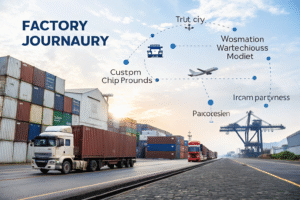
China's export infrastructure, developed over decades of serving global markets, ensures efficient shipping to virtually any destination. Major ports like Shanghai, Ningbo, and Shenzhen offer frequent sailings and competitive freight rates. Our logistics team at Shanghai Fumao has established relationships with major shipping lines that provide priority space allocation and competitive pricing, particularly important during peak seasons when container availability becomes constrained. These relationships helped our European clients navigate the recent supply chain disruptions with minimal impact compared to brands working with less-established manufacturers.
How do modern Chinese factories address common concerns?
The stereotype of poor communication and quality issues no longer reflects the reality of leading Chinese manufacturers who've invested heavily in service infrastructure and quality systems.
Progressive factories address these concerns through dedicated English-speaking account management, transparent communication protocols, robust quality control systems, and compliance certifications. At Shanghai Fumao, we've implemented a client portal that provides 24/7 access to production status, quality reports, and shipping updates. This transparency eliminated the "black box" concern for a New York-based brand that previously struggled with communication from their Vietnamese manufacturer. Their production manager now describes our communication as "more responsive than our domestic suppliers."
What communication systems ensure smooth collaboration?
Modern manufacturers employ structured communication processes including weekly production updates, virtual factory tours, and dedicated points of contact for different time zones. We provide our partners with a primary account manager who understands their business and secondary contacts to ensure coverage across time zones. This system proved invaluable for a West Coast brand whose team could conduct virtual quality checks during their business hours through our live video inspection system, despite the 15-hour time difference.
How are quality and compliance ensured?
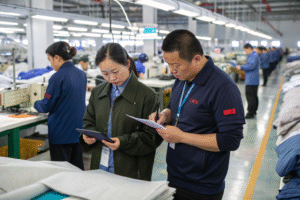
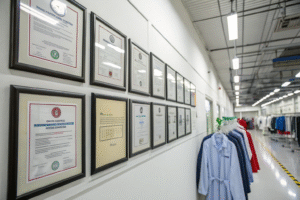
Leading Chinese factories implement rigorous quality control systems that often exceed international standards. These include multiple inspection points, statistical process control, and independent third-party verification. Our quality management system at Shanghai Fumao tracks over 50 different quality metrics throughout production, allowing us to identify and address potential issues before they affect significant quantities. This data-driven approach has helped our clients achieve return rates below 2.5%—significantly better than the industry average of 5-8%.
Conclusion
Partnering with a B2B garment factory in China offers established brands compelling advantages in cost, expertise, supply chain integration, and scalability. The most successful partnerships are built on transparency, clear communication, and mutual commitment to quality. While the initial transition requires careful planning, the long-term benefits create sustainable competitive advantages that support brand growth and profitability.
If you're considering how Chinese manufacturing could benefit your brand, we invite you to experience the Shanghai Fumao difference. Our approach combines manufacturing excellence with partnership-focused service that makes global production seamless and predictable. Contact our Business Director Elaine at elaine@fumaoclothing.com to discuss how we can become the reliable, high-value manufacturing extension your brand deserves.