As a factory owner who has shipped thousands of kids' wear orders to the U.S., I’ve learned that safety is the non-negotiable entry ticket. Recently, a distributor in Colorado halted a large order at the last minute. The reason? Our supplier’s fabric certificate was not specific enough. That moment cost us time and trust. For North American brands, especially for kids' ski wear, OEKO-TEX is more than a label; it's a shield against legal risks and a promise to parents.
North American distributors and brands insist on OEKO-TEX certification for kids' ski wear because it provides a trusted, independent guarantee that the garments are free from harmful substances. This is critical for protecting children's sensitive skin, ensuring compliance with stringent U.S. and Canadian regulations, and building consumer trust in a highly competitive market where safety is the primary purchase driver.
If you're sourcing from Asia, you might see certificates, but do you know what they truly cover? The difference between a general lab report and a valid OEKO-TEX STANDARD 100 certificate can be the difference between a successful season and a costly recall. Let's dive into why this specific certification has become a deal-breaker for savvy North American buyers.
What is OEKO-TEX Certification and Why is it Crucial for Children?
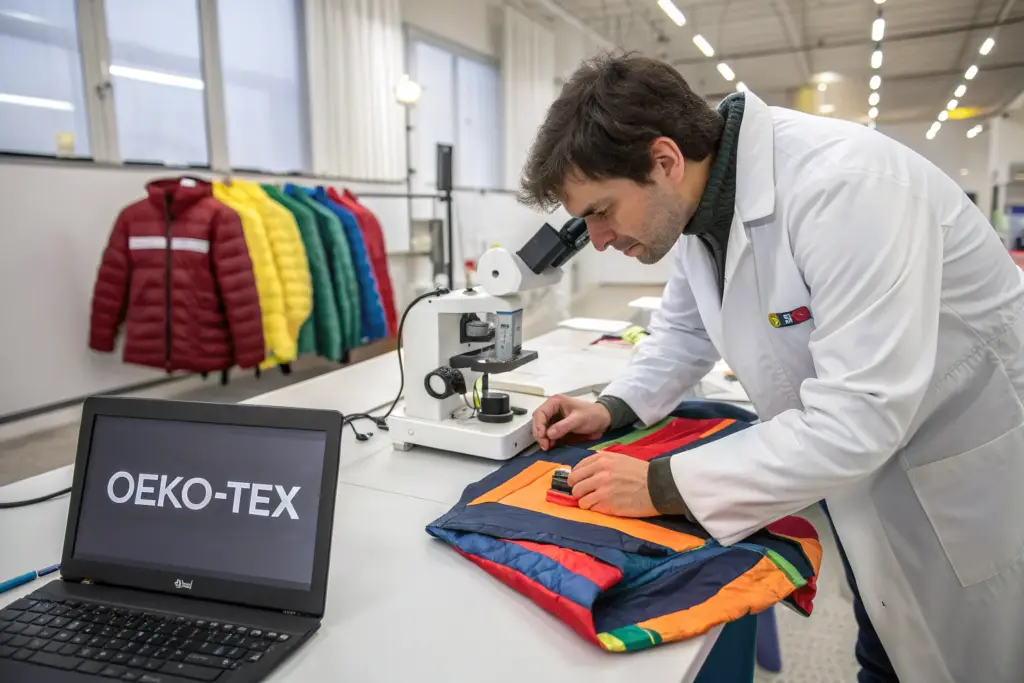
When we talk about safety, we need specifics. OEKO-TEX is not just one test. It's a system. For kids under 3 years old (Product Class I), the limits for harmful substances are the strictest in the industry. They test for over 100 chemicals, from formaldehyde to heavy metals and allergenic dyes. Last year, a client from Seattle asked us to switch to OEKO-TEX certified fabrics for their toddler ski bib line. Their previous supplier in Vietnam provided a "green" material certificate, but it only covered pH and formaldehyde. After testing the finished goods in the U.S., they found traces of a regulated phthalate in the prints. The entire shipment was rejected.
OEKO-TEX certification is an independent, globally standardized testing and certification system for textile raw materials and finished products. For children's apparel, it is crucial because it verifies the absence of harmful substances at levels safe for a child's developing and sensitive body, going beyond basic legal requirements to address consumer safety concerns proactively.
How does OEKO-TEX differ from other safety tests?
Common lab tests are often "pass/fail" for a limited list of substances requested by the buyer. OEKO-TEX is a holistic, product-class-based system. The key differences are in scope and philosophy. Its banned substance list is updated annually, pushing manufacturers to stay ahead. We at Shanghai Fumao learned this the hard way years ago. A client's order for kids' knitted sweaters passed our internal tests but failed a specific OEKO-TEX test for nickel release from metal snap buttons. Since then, we audit our entire supply chain, from fabric mills to trim suppliers, for OEKO-TEX compliance from the start. Understanding standards like the Consumer Product Safety Improvement Act (CPSIA) is important, but OEKO-TEX often goes further.
What are the real costs of skipping OEKO-TEX?
The financial risk is massive. Beyond rejected shipments, consider retailer penalties, recall costs, and lost trust. Major U.S. retailers charge hefty fines for non-compliant products. Managing a public recall is devastating for a brand's reputation and wallet. For our client from Seattle, the near-miss prompted a full vendor reshuffle. They now mandate OEKO-TEX certificates for every component, a policy we fully support at Shanghai Fumao. Investing in quality assurance from the beginning is always cheaper than dealing with a crisis later.
How Does OEKO-TEX Specifically Protect in Ski Wear Conditions?
Ski wear is not ordinary kids' clothing. It faces extreme conditions that can increase chemical exposure risks. The combination of prolonged wear, body heat, sweat, and friction creates a unique environment. A waterproof lamination or a durable water repellent (DWR) finish must be non-toxic. In 2022, we developed a line of kids' ski shells for a Canadian brand. They were adamant about using a PFAS-free DWR. OEKO-TEX certification was their tool to verify that our chosen membrane and coating chemistry were safe, even when the child was active and perspiring.
OEKO-TEX specifically protects in ski wear conditions by testing for substance release under simulated perspiration (both acidic and alkaline). This is vital for ski wear, as sweat can leach chemicals from waterproof coatings, laminated layers, and elastic components, which are then held against the skin for hours in a heated, moist microclimate inside the garment.

Why is sweat resistance testing key for ski wear?
Skiing is a high-output activity. OEKO-TEX uses artificial sweat solutions to test if harmful substances like heavy metals (e.g., lead, cadmium) or phenols can migrate from the textile onto the skin. For ski wear, which often uses recycled materials (where contaminant sources can be complex), this test is a critical safety net. This "whole product" approach is why serious manufacturers like us manage integrated full-package production. We control the sourcing of every component to ensure the final assembled garment passes the certification.
What ski wear components need extra attention?
| Component | Potential Risk | OEKO-TEX Relevance |
|---|---|---|
| Waterproof Membranes | Chemical residues from polymerization. | Tests for monomer residues. |
| DWR Finishes | Historic use of PFAS ("forever chemicals"). | Strictly limits regulated PFAS compounds. |
| Laminated Insulation | Adhesive chemicals (formaldehyde, solvents). | Tests for VOC emissions. |
| Elastic & Cuffs | Organotin compounds (biocides) or allergenic dyes. | Scans for a wide range of harmful substances. |
What Logistics & Sourcing Advantages Does OEKO-TEX Offer Buyers?
From a business owner's perspective, a certificate is not just a piece of paper; it's a supply chain management tool. When a large distributor in the Midwest works with us, they don't have to send every production batch to a third-party lab in the U.S. The OEKO-TEX certificate, issued by an authorized institute like Hohenstein, is their globally accepted proof. This speeds up customs clearance significantly, as it demonstrates due diligence on product safety.
For buyers, OEKO-TEX certification offers significant logistics and sourcing advantages by simplifying compliance verification, reducing the need for redundant testing, accelerating customs processes, and providing a uniform safety standard to audit multiple suppliers across different countries like China, Vietnam, or India.

How does it prevent shipment delays?
U.S. Customs and Border Protection (CBP) can detain shipments for suspected safety violations. Having OEKO-TEX documentation readily available can help resolve these checks faster. It shows pre-emptive compliance, reducing the risk of your goods being stuck at port during a crucial selling season. We structure our DDP (Delivered Duty Paid) shipments with all certifications, including OEKO-TEX, pre-prepared in the shipping documentation. This proactive approach is a core part of our service at Shanghai Fumao.
Can it simplify multi-supplier management?
Absolutely. If you source jackets from Shanghai Fumao and pants from another maker, mandating OEKO-TEX for both creates a consistent safety baseline. You avoid a scenario where one supplier uses a cheap, non-compliant waterproof coating that jeopardizes the integrity of your entire kids' ski line. It turns a subjective quality argument into an objective pass/fail criterion. This is especially valuable for distributors managing complex apparel manufacturing networks.
How to Verify Authentic OEKO-TEX Certificates from Suppliers?
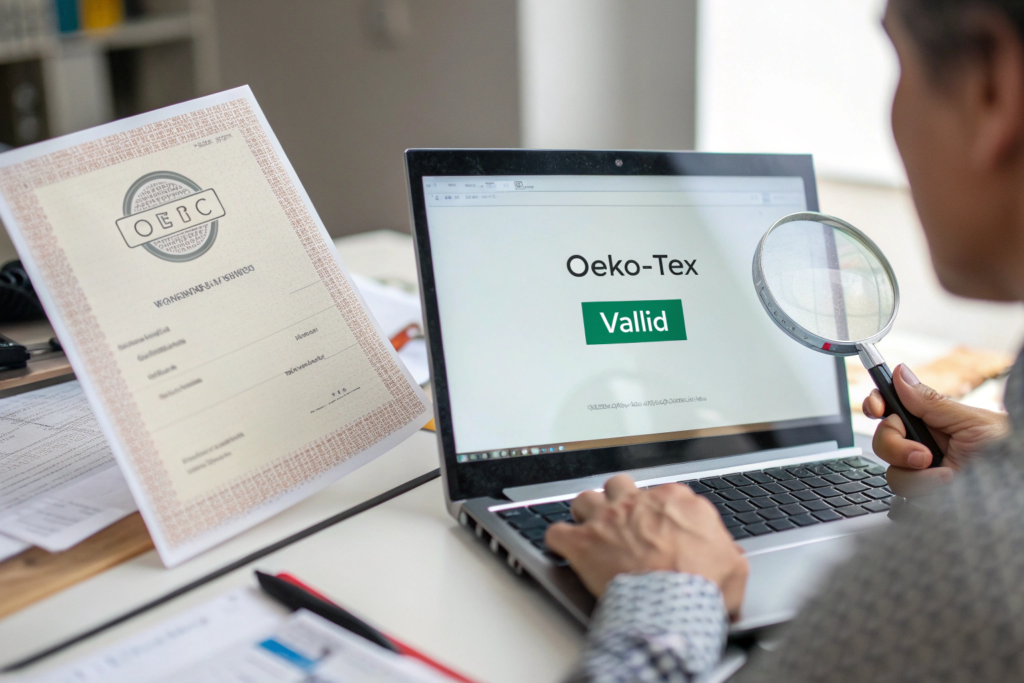
The painful truth is that certificate falsification happens. A distributor client once sent us a certificate from a potential "cheaper" factory for a second opinion. The document looked convincing, but the certificate number format was odd. We checked the official OEKO-TEX certificate database and found it didn't exist. The factory had copied and altered a real certificate. This is a major pain point for buyers like you.
You can verify authentic OEKO-TEX certificates by using the free, public OEKO-TEX certificate database online. Every genuine certificate has a unique number, and you can cross-check the supplier's name, certified product/article, and the validity period in real-time.
What details on the certificate are most important to check?
Always ask for the digital PDF, not just a photo. Then, go to the OEKO-TEX website and use their "Check Your Label" feature. Enter the certificate number. The database will show the company holder, product description, validity, and testing institute. If any detail doesn't match your supplier or product, it's a red flag. As a protective measure, we provide direct, read-only access to our certificate portfolio for key clients.
What if a supplier says "our fabric is OEKO-TEX certified"?
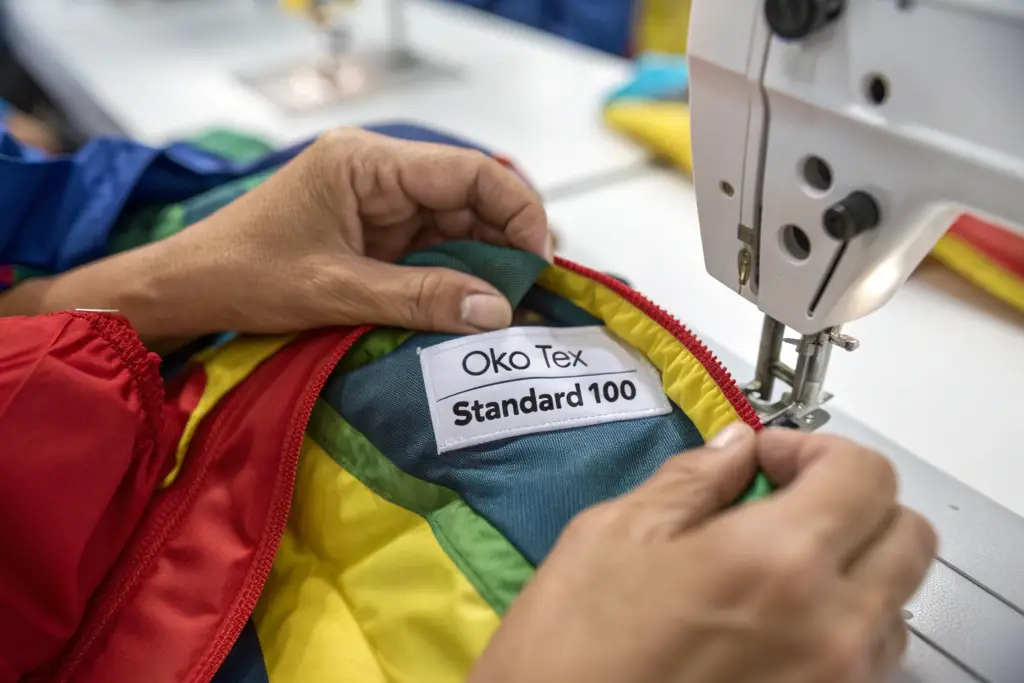
This is a common half-truth. The fabric mill's certificate does NOT certify the finished garment you receive. Dyes, prints, sewing threads, zippers, and other accessories added during garment manufacturing can introduce new substances. The only certificate that matters for your liability is the one issued for the final, assembled product from your direct supplier. Always insist on the finished goods certificate. This is non-negotiable for thorough quality control.
Conclusion
For North American distributors and brands in the kids' ski wear market, insisting on OEKO-TEX certification is a strategic business decision, not just an ethical one. It mitigates legal and financial risk, streamlines supply chain management, and delivers the powerful marketing assurance that modern parents demand. In a market where trust is the real currency, OEKO-TEX provides a globally recognized standard that protects children, brands, and business partnerships.
Navigating these requirements with an overseas supplier doesn't have to be a headache. Partnering with a manufacturer that builds OEKO-TEX compliance into its core process—from fabric sourcing to final inspection—ensures efficiency and peace of mind. If you are looking to develop or source kids' ski wear that combines safety, quality, and reliable delivery, let's talk. At Shanghai Fumao, we integrate these certifications seamlessly into our full-package production service. Contact our Business Director, Elaine, at elaine@fumaoclothing.com to discuss how we can be your trusted partner in bringing safe, high-performance children's apparel to market.