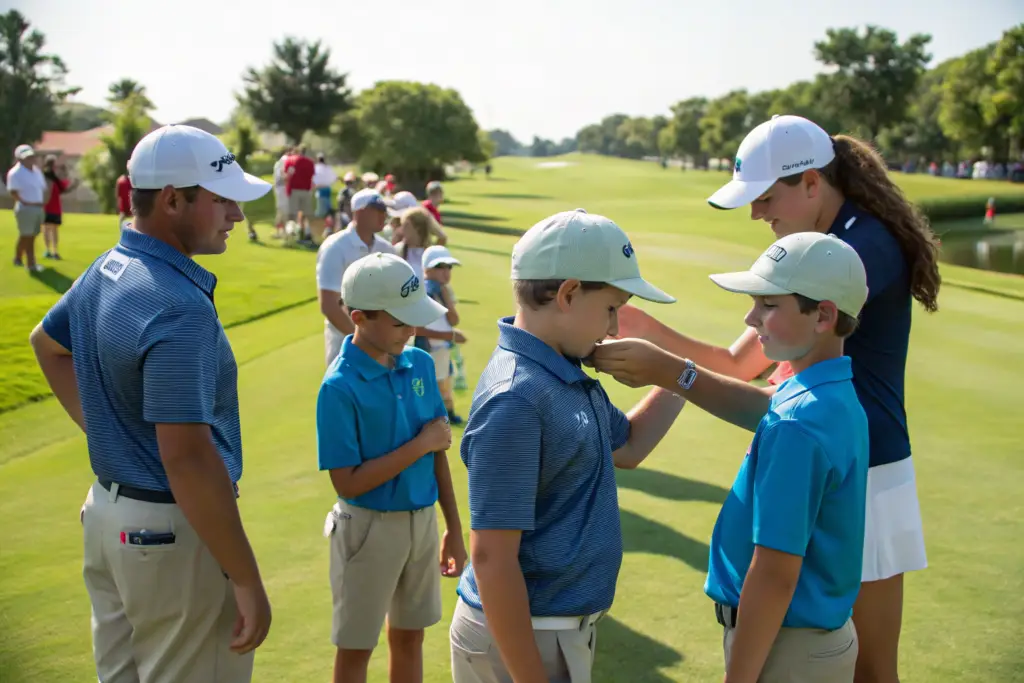
As a buyer sourcing youth golf apparel, you’re not just purchasing clothing. You’re choosing products that will be worn by children and teenagers for hours in the sun, during physical activity, against their sensitive skin. In North America, this responsibility is taken incredibly seriously by retailers, parents, and regulatory bodies alike. The question has shifted from “Is this shirt cute and functional?” to “Is this shirt proven safe?” This is why OEKO-TEX certification has moved from a ‘nice-to-have’ to a non-negotiable requirement for youth lines.
North American buyers insist on OEKO-TEX for youth golf wear because it provides a trusted, science-backed defense against chemical risk, aligns with stringent regulatory trends, and directly addresses the core purchasing driver of safety-conscious parents. In a market with low tolerance for error, it is the most recognized and effective tool for de-risking the supply chain and building brand trust.
Let’s examine the powerful convergence of safety concerns, market demands, and business imperatives driving this shift.
Is Youth Skin Really More Vulnerable to Chemicals?
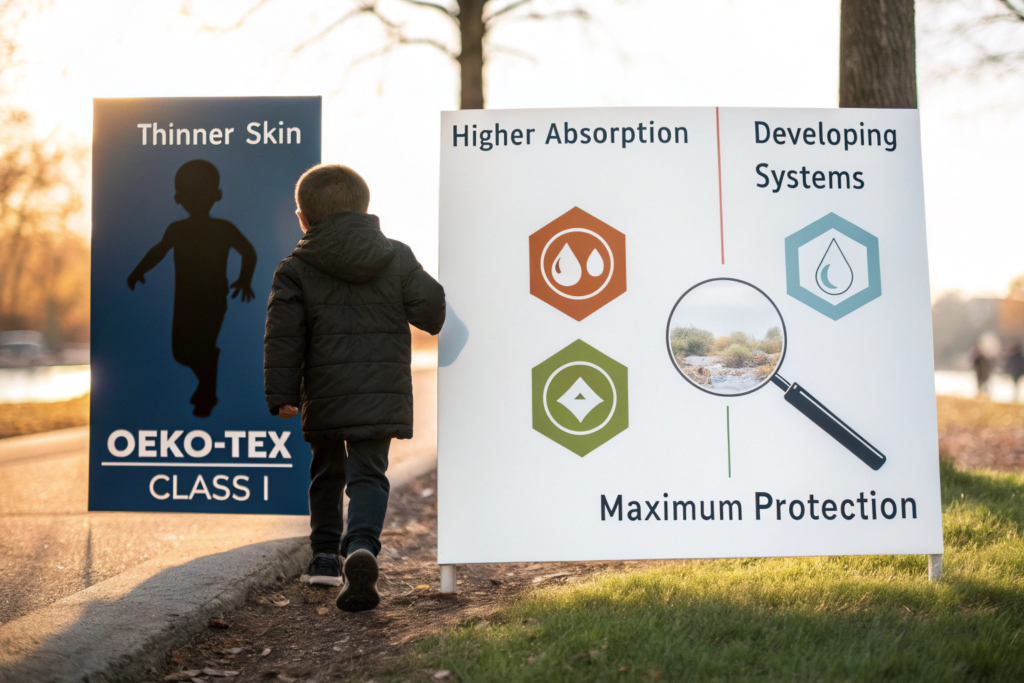
The short answer is yes, decisively. Children are not simply small adults. Their bodies are developing rapidly, with higher metabolic rates, greater skin surface area relative to body weight, and less mature detoxification systems. Their skin is more permeable, making it easier for residual chemicals from textiles to be absorbed.
For youth golf wear, the risk factors are amplified:
- Prolonged Contact: A junior tournament or practice can last 4-6 hours.
- Heat and Sweat: Body heat and perspiration can increase the release and absorption of substances from fabrics.
- Behavior: Younger children may chew or suck on their clothing.
OEKO-TEX STANDARD 100, particularly Product Class I (for baby and toddler items), is designed with this exact vulnerability in mind. Its limits for substances like formaldehyde, heavy metals, and allergenic dyes are the strictest in the standard—often 60-90% tighter than those for standard adult apparel. By mandating Class I for youth wear, buyers are applying the highest possible safety benchmark. A factory like Shanghai Fumao understands this; we specialize in producing youth lines to Class I standards, ensuring every component from fabric to thread meets this rigorous threshold.
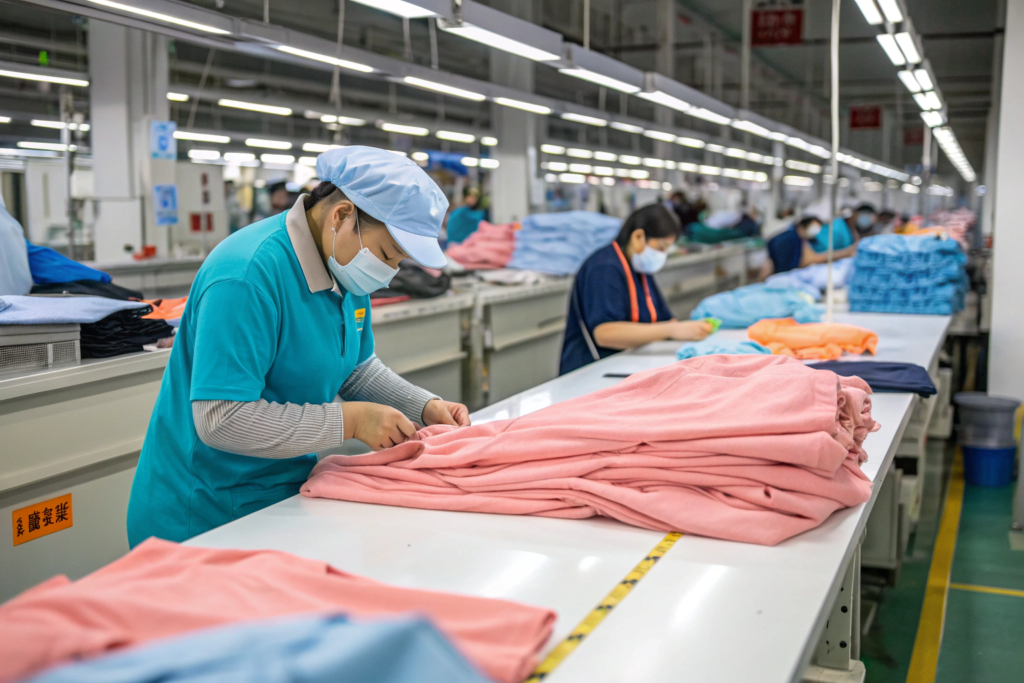
What Specific Chemicals Are Buyers Most Concerned About?
Buyers and their compliance teams are laser-focused on substances linked to health concerns:
- Formaldehyde: A known irritant and sensitizer, restricted in children’s products.
- Heavy Metals (Lead, Cadmium): Toxic and can affect neurological development.
- Azo Dyes: Certain types can break down into carcinogenic amines.
- Phthalates: Often used in prints or plastisols, linked to endocrine disruption.
- PFAS (“Forever Chemicals”): Increasingly regulated for their persistence and potential health effects.
OEKO-TEX proactively tests for these and over 100 other substances, providing a comprehensive safety screen that goes beyond basic legal compliance.
How Does Certification Mitigate Legal and Liability Risks?
The legal landscape in North America is unforgiving for children’s products. Regulations like the Consumer Product Safety Improvement Act (CPSIA) in the U.S. set strict limits and carry severe penalties for violations. A single incident or failed test can lead to massive fines, forced recalls, and devastating brand damage. OEKO-TEX certification serves as documented, third-party proof of due diligence. It demonstrates to regulators, retailers, and plaintiffs’ attorneys that the brand took every reasonable step to ensure product safety. This is a powerful shield against liability.
How Does This Demand Translate to Retailer and Consumer Behavior?
The insistence on OEKO-TEX is a top-down mandate driven by major retailers and a bottom-up demand from informed parents. Retailers act as gatekeepers, while parents drive the final purchase decision.
Major sporting goods chains, department stores, and specialty youth retailers in North America are increasingly embedding OEKO-TEX into their Responsible Sourcing and technical manuals. For a brand, having certification is often a prerequisite to even get on the shelf. It streamlines the retailer’s own compliance process and protects their reputation. Last year, a junior golf brand we partner with secured a nationwide retail partnership specifically because they could provide full OEKO-TEX Class I certification for their entire line—a requirement the retailer had newly instituted.
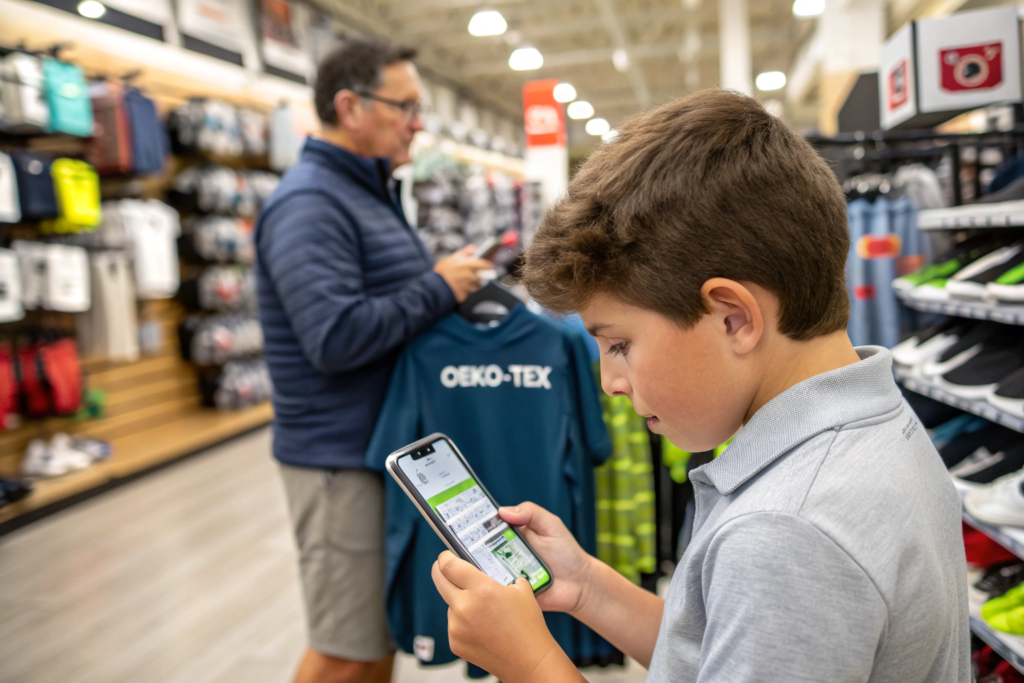
Are Parents Actually Looking for the Label?
Absolutely. The modern parent is a researcher. They read labels, search for “non-toxic” products, and value transparency. The OEKO-TEX label is a recognizable, trusted symbol that translates complex supply chain safety into a simple, credible assurance at the point of sale. It answers the parent’s unspoken question: “How do I know this is safe for my child?” In marketing, this allows brands to move beyond features (stretch, moisture-wicking) to a powerful emotional benefit: peace of mind.
What is the Competitive Cost of Not Having Certification?
For youth wear, the cost is exclusion. Brands without certification are increasingly locked out of:
- Major Retail Channels: Where compliance is mandated.
- School and Team Contracts: Where purchasing committees prioritize safety.
- Online Marketplaces: Which are tightening product safety rules.
- The Consideration Set of Informed Parents: Who will choose a certified competitor.
In the youth segment, lacking OEKO-TEX certification is now a significant competitive disadvantage, often interpreted as a lack of commitment to safety.
What Are the Unique Sourcing Challenges for Certified Youth Apparel?
Sourcing certified youth wear is more complex than scaling down adult sizes. It requires a factory with a specific focus on compliance, smaller-scale precision, and understanding of youth-specific construction.
The challenges are multifaceted:
- Material Sourcing: Finding certified fabrics in smaller, youth-appropriate weights and with vibrant, kid-friendly colors that also meet strict chemical limits.
- Trim Compliance: Ensuring every small component—snaps, zippers, elastics, prints—is certified to Class I standards. This is where many factories fail if they don’t have a controlled system.
- Size-Specific Patterns and Fits: Youth sizing requires different proportions, not just scaled-down patterns. The factory must be adept at this specialization.
Why is Factory Selection Critical for Youth Orders?
The wrong factory can turn a youth order into a liability. You need a partner whose entire quality control system is built for certified production. They must have:
- A vetted library of Class I certified fabric and trim suppliers.
- Segregated production lines to prevent contamination from non-certified adult orders.
- Meticulous tracking to ensure the right certified materials are used for the right size run.
At Shanghai Fumao, our 5-line setup is uniquely suited for this. We can dedicate a line to certified youth production, maintaining the isolation and oversight necessary to guarantee purity from the first XS to the last XL youth size.
How Does "Finished Article" Certification Provide Ultimate Assurance?
For the highest-risk youth category, the gold standard is Finished Article certification. This means the complete, sewn garment in its smallest size is submitted for testing. This certification accounts for any interactions between components and the specific construction of the youth garment. It is the most defensible proof of safety and a powerful tool for brands targeting the most discerning retailers and parents. We guide our youth wear clients through this process to provide them with the strongest possible market credential.
How Can Buyers Verify a Supplier’s True Commitment to Youth Safety?
Given the stakes, due diligence is paramount. Buyers must move beyond asking “Are you OEKO-TEX certified?” to auditing the supplier’s youth-specific systems and mindset.
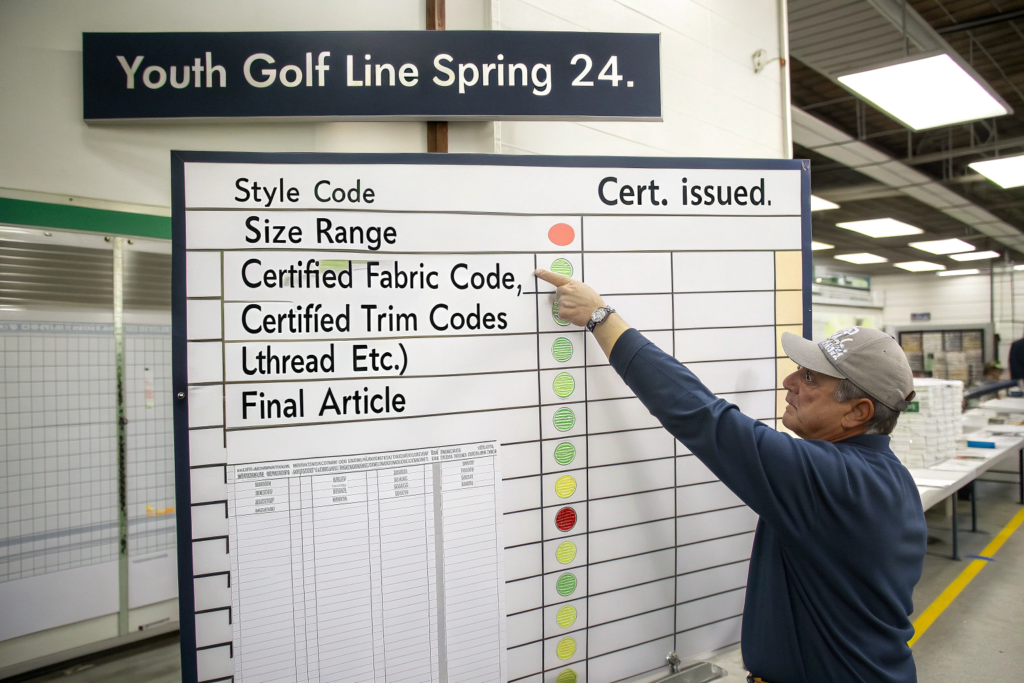
Request to see the actual certificates for the components of a youth sample. Verify they are Class I. Ask for a virtual tour of their warehouse and production floor to see how they segregate youth orders. Inquire about their testing protocols for incoming materials specific to youth projects.
What Are the Red Flags in Youth Wear Sourcing?
- Vague Certificates: A supplier shows a generic fabric certificate that doesn’t specify Product Class I.
- No Component Certificates: Inability to provide OEKO-TEX certificates for threads, labels, or elastics.
- Resistance to Finished Article Testing: Unwillingness to support or facilitate this higher level of verification.
- Mixed Production: A factory that runs youth certified orders back-to-back with uncertified adult activewear on the same line without thorough cleaning.
A trustworthy supplier will welcome this scrutiny as it aligns with their own operational standards.
Why is Partnership More Important Than Transaction for Youth Lines?
Youth apparel sourcing is a long-term partnership based on shared values of safety and quality. It requires a supplier who communicates transparently about material lead times, conducts rigorous in-house checks, and views your brand’s reputation as their own. This collaborative approach is the only way to consistently meet the high expectations of the North American market. At Shanghai Fumao, we view our youth wear clients as partners in a mission to produce safe, high-performance apparel for the next generation.
Conclusion
The insistence of North American buyers on OEKO-TEX for youth golf wear is a rational, market-driven response to an unforgiving landscape of safety concerns, regulatory pressure, and consumer demand. It represents the new baseline for responsible sourcing in this category. For brands, obtaining and verifying this certification is no longer a strategic advantage—it is a fundamental requirement for market access and consumer trust.
Navigating this requirement successfully demands more than just finding a factory with a certificate. It requires a deep partnership with a manufacturer that specializes in the rigorous systems, material knowledge, and production controls necessary to deliver true safety at scale.
If you are sourcing youth golf wear for the North American market, aligning with a partner who has mastered this discipline is your most critical decision. Contact Shanghai Fumao’s Business Director Elaine today. Let us show you our OEKO-TEX Class I certified material library, our controlled production process for youth apparel, and discuss how we can become your reliable, safety-first manufacturing partner. Reach her at elaine@fumaoclothing.com. Let's build a line that parents trust and young athletes love.