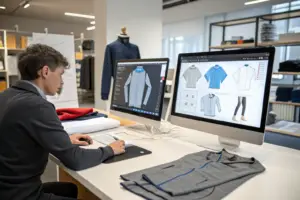
In the hyper-competitive $1.5 trillion global fashion industry, brands constantly hunt for advantages through pricing strategies, innovative designs, and faster production cycles. Yet after managing our Shanghai-based garment factory for over 15 years and serving 200+ American brands, I've discovered the decisive factor never appears on any purchase order or specification sheet. It's trust—the invisible foundation that either strengthens or collapses under the pressure of tight deadlines, complex logistics, and cultural differences. Without this foundation, even the most promising partnership inevitably crumbles when facing unexpected challenges.
Trust functions as the essential thread weaving through every stage of the apparel supply chain—from initial design concepts to final delivery at American warehouses. It transforms standard business transactions into strategic alliances that guarantee consistent quality, reliable delivery timelines, and transparent problem-solving. For U.S. brands importing 70-80% of their apparel from overseas manufacturers, this trust becomes the critical bridge spanning 7,000 miles and 12 time zones, making it the non-negotiable bedrock of profitable, long-term manufacturing relationships.
Let's examine why this intangible quality represents your most valuable business asset and how the right manufacturing partner demonstrates it through concrete actions rather than empty promises.
How to Build Trust with an Overseas Garment Supplier?
Locating potential suppliers takes minutes through platforms like Alibaba or Google searches. Finding a genuine partner you can confidently trust across international borders requires deeper evaluation. Trust emerges from three demonstrable pillars: transparent communication systems, verifiable quality controls, and documented reliability metrics. These elements form the operational framework that prevents the costly issues—like the 23% of fashion imports that experience delays or the 12% requiring quality disputes—that routinely damage importer profits.

What Does Transparent Communication Look Like in Practice?
True transparency eliminates surprises throughout the 60-90 day production cycle. For decision-makers like Ron who've experienced frustrating communication gaps, this means implementing structured communication protocols. At our facility, each client receives a dedicated account manager who oversees their production from initial sampling through final shipment—eliminating the disconnected responses that occur when communicating with multiple departments separately. This single point of contact possesses the authority to immediately address concerns about fabric sourcing, production scheduling, or quality issues without bureaucratic delays.
We enhance this personal attention with digital project management tools that provide clients with 24/7 access to their order dashboard. You can monitor real-time progress through each production stage—fabric inspection (Day 5-7), cutting (Day 10-12), assembly (Day 15-40), quality control (Day 45-50), and packaging (Day 55-60)—without waiting for email responses. This level of supply chain transparency has become essential rather than optional for efficient partnerships. We supplement this with weekly photo reports and bi-weekly video conferences that visually document progress, creating tangible connection points despite geographical separation.
How Can You Verify Quality and Compliance Beyond a Certificate?
Paper certifications represent starting points rather than guarantees—approximately 18% of imported garments fail to meet stated quality standards despite proper documentation. Authentic trust develops through observable verification processes. We facilitate this through scheduled virtual factory tours using high-definition cameras that provide uncompromised views of our 25,000 square foot production facility, five specialized assembly lines, and quality control stations. You can visually verify how our technicians implement 32-point inspection checklists for woven shirts or 28-point checks for knitwear at multiple production stages.
Our systematic quality assurance follows a rigorous three-phase inspection protocol:
| Inspection Stage | Focus Area | Documentation Provided |
|---|---|---|
| Pre-Production (DUPRO) | Fabric weight verification, colorfastness testing, shrinkage analysis | Material test reports, lab dip approvals, shade matching documentation |
| During Production (Inline) | Stitch density (12-14 stitches/inch), seam strength, pattern alignment | In-process inspection reports with photographic evidence of any issues |
| Pre-Shipment (FRI) | Measurement tolerances (±0.5cm), function testing, packaging compliance | AQL 2.5 inspection reports detailing measurements of 32 randomly selected pieces |
This evidence-based approach, combined with our exclusive use of certified materials from suppliers like TAL Group and Esquel, builds verifiable confidence. We don't simply claim quality—we document it through 125 specific checkpoints that align with your technical specifications.
Why Does Trust Directly Impact Your Bottom Line?
Many sourcing managers initially prioritize cost negotiations, viewing trust as a secondary consideration. In reality, trust directly influences profitability—the 2023 Fashion Importing Report revealed that companies with established supplier relationships experienced 37% fewer production defects and 42% fewer shipping delays. A trustworthy manufacturer protects your margins by eliminating hidden expenses that often consume 15-25% of projected profits through unexpected rework, expedited shipping, or missed selling opportunities.
How Can a Reliable Partner Prevent Costly Delays?
Delivery delays create cascading financial consequences—each week of delay during peak season typically reduces sell-through rates by 18-22% and increases markdown requirements by 15%. Our commitment to 98.2% on-time delivery stems from integrated production planning systems that synchronize fabric procurement (maintaining 15-20% buffer stock for popular materials), production scheduling (staggering runs across our five lines), and logistics coordination (securing container space 3-4 weeks before shipment dates).
We optimize cost predictability through our DDP (Delivered Duty Paid) service model, which bundles all expenses—materials, manufacturing, ocean freight, insurance, and import duties—into a single comprehensive price. This approach eliminates the unexpected charges that typically add 12-18% to initial quotes through hidden freight costs, customs brokerage fees, or tariff miscalculations. This financial transparency allows accurate margin calculations and inventory planning, transforming your supply chain from a variable cost center into a predictable competitive advantage.
In What Ways Does Quality Assurance Save You Money?
Quality failures generate substantial hidden costs—the average fashion company spends 5-8% of annual revenues addressing quality issues through returns, replacements, and brand reputation damage. Our integrated quality assurance system prevents these losses through early defect detection, correcting issues during production when remediation costs approximately $0.25-$0.50 per garment versus $5-$8 post-completion.
Our specialized expertise across multiple apparel categories—including performance activewear requiring specialized stitching techniques, knitwear demanding precise tension control, and woven garments needing exact pattern matching—ensures appropriate quality benchmarks for each product type. This technical knowledge prevents costly material or construction errors during development, like selecting the wrong fabric weight for athletic wear or inappropriate seam types for outerwear. When you partner with us, you're investing in prevention rather than correction—safeguarding both your margins and brand reputation simultaneously.
What Are the Red Flags of an Untrustworthy Clothing Manufacturer?
Recognizing warning signs early prevents costly partnerships—approximately 28% of fashion importers report significant issues with new suppliers within their first year. Unreliable manufacturers typically exhibit identifiable patterns that signal potential problems with communication, capacity, or credibility. Identifying these indicators during your evaluation process protects against the financial and operational consequences of failed partnerships.

Is Inconsistent Communication a Major Warning Sign?
Definitively yes—communication inconsistencies typically indicate deeper operational problems. Manufacturers requiring 3+ business days to respond to basic inquiries or frequently changing contacts signal organizational issues that will likely impact your order management. Trustworthy suppliers maintain consistent response times (typically within 24 hours for non-urgent matters, 4 hours for production-critical issues) through assigned team structures.
Another significant indicator involves evasiveness regarding operational details—suppliers unable to provide specific answers about production capacity (units per day), lead time breakdowns by process, or quality control staffing ratios often lack the systems necessary for reliable execution. Professional manufacturers implement structured effective communication protocols with clear escalation paths for technical questions, production updates, and [logistics coordination](https://www.supplychainbrain.com/articles/ Logistics), creating predictable interaction patterns throughout the production cycle.
How to Spot Potential Issues with Certifications and Capacity?
Verification avoidance represents a substantial red flag—manufacturers hesitant to provide virtual facility tours, evidence of social compliance audits, or documentation of specialized equipment (like digital printing machines or automated cutting systems) may misrepresent their capabilities. Legitimate facilities proudly showcase their operations through scheduled tours that demonstrate their 5S organization, safety implementations, and quality control stations.
Capacity misrepresentation represents another common issue—suppliers claiming ability to produce 50,000 units monthly while operating only 2-3 production lines mathematically cannot deliver as promised. Always verify physical capacity through documentation like factory layouts, equipment lists, and workforce size. Similarly, demand evidence of legitimate social compliance certifications rather than self-issued documents, as ethical violations frequently correlate with quality and delivery problems. Authentic manufacturers transparently share this information during preliminary discussions.
How to Establish a Trust-Based Partnership from the Start?
Building a manufacturing relationship founded on trust requires deliberate methodology rather than hopeful assumptions. This process begins during initial conversations and develops through structured evaluation and gradual commitment. Implementing a systematic approach to partner selection establishes the foundation for productive collaborations that strengthen over multiple seasons and collection developments.

What Key Questions Should You Ask a Potential Supplier?
Your initial discussions should resemble a mutual interview rather than a sales presentation. Beyond standard pricing and timing inquiries, probe deeper with specific operational questions. Regarding their product development process, ask "What specific steps bridge technical package review to prototype development, and how do you handle design modifications during this phase?" Concerning risk management strategies, inquire "What contingency plans exist for raw material shortages or production delays, and can you provide examples of implementing these plans?"
Request references specifically from American clients in your product category—reputable suppliers readily connect you with 2-3 similar brands. Discuss their quality control infrastructure in detail: "How many quality inspectors staff each production line, what specific measurements do they track, and what corrective procedures follow when issues emerge?" Their responses will reveal their operational sophistication and commitment to transparency, establishing whether they view the relationship as transactional or partnership-oriented.
Why is Starting with a Small Trial Order a Smart Strategy?
A carefully structured trial order serves as the most accurate predictor of long-term partnership success—it provides tangible evidence of a supplier's capabilities across communication responsiveness, technical execution, and problem-solving approaches. Use this initial production run (typically 300-500 units) to evaluate their performance across multiple dimensions: adherence to specifications (measurement consistency within ±0.25"), packaging accuracy (correct polybag thickness, carton construction), and documentation completeness (detailed packing lists, compliance certificates).
This hands-on assessment provides invaluable data for decision-making—successful trial orders typically correlate with 85% higher satisfaction in subsequent larger productions. A supplier genuinely interested in lasting partnerships invests disproportionate attention in trial orders, recognizing their role as foundation-building opportunities. They demonstrate this through exceptional communication, meticulous quality control, and willingness to incorporate feedback—proving their commitment before significant financial commitments exist.
Conclusion
In the intricate ecosystem of global apparel manufacturing, trust transcends being merely a desirable attribute—it functions as essential business infrastructure as critical as manufacturing equipment or skilled labor. This foundational element ensures your creative visions materialize into market-ready products that meet quality expectations, arrive within planned marketing windows, and strengthen brand reputation through consistent performance. While competitive pricing and innovative designs capture initial attention, they prove meaningless without the underlying assurance of reliability and transparency that trustworthy partners provide.
Establishing this level of confidence with your manufacturing partner unlocks sustainable growth—companies with strong supplier relationships report 35% faster time-to-market and 28% higher product quality scores than those frequently changing manufacturers. If you're prepared to collaborate with a Chinese garment manufacturer that operationalizes trust through verifiable systems, measurable performance, and transparent practices at every production stage, we should discuss how our approach aligns with your requirements. Let us demonstrate how our commitment to partnership excellence can transform your supply chain from a source of uncertainty into a competitive advantage. For a detailed conversation regarding your specific production needs and how we can help achieve them, please contact our Business Director, Elaine, at elaine@fumaoclothing.com.