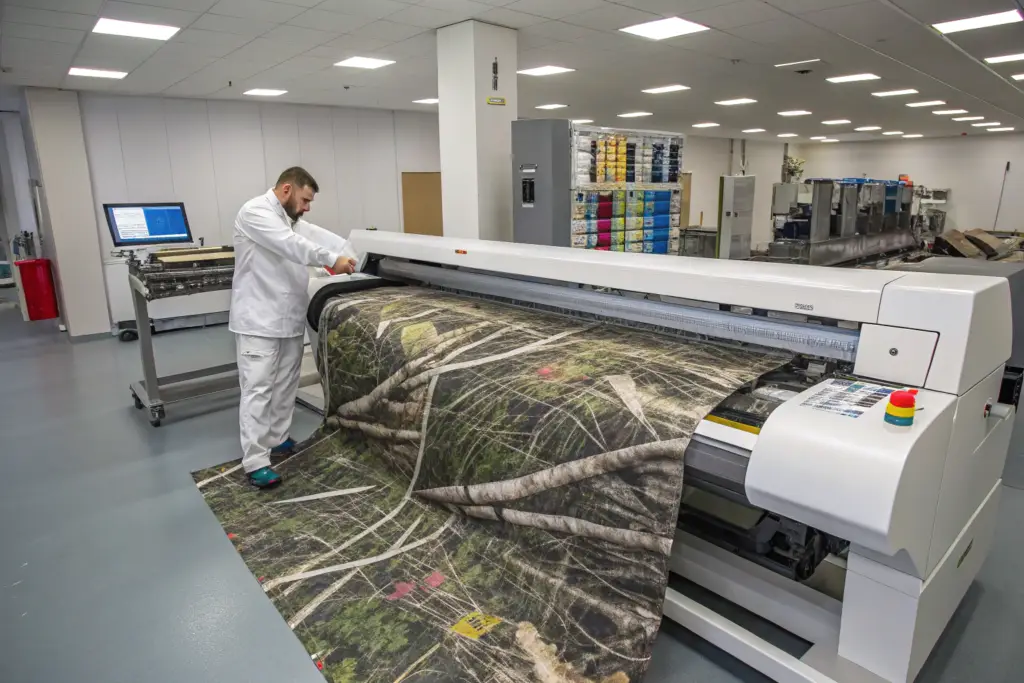
Is your camouflage apparel suffering from inconsistent colors, blurred patterns, or production delays due to fabric printing bottlenecks? Outsourcing fabric printing introduces multiple points of failure that can compromise the integrity of your most important design element.
Sourcing from a factory with integrated in-house printing is superior for camo designs because it ensures absolute color accuracy and pattern fidelity, drastically reduces lead times through streamlined production, enables unparalleled customization and sampling flexibility, and provides rigorous, consistent quality control from ink to finished garment.
As a manufacturer with our own advanced printing facilities, Shanghai Fumao has seen firsthand how this vertical integration solves the core pain points of brands producing licensed and custom camouflage. Control over this critical first step defines the quality of everything that follows. Let's examine the concrete advantages.
How does in-house printing guarantee pattern fidelity and color accuracy?
The essence of camouflage is in the precise replication of its pattern—every shadow, leaf, and branch must be sharp and correctly colored to perform its function and meet licensor standards. External printers often work with multiple clients, leading to potential specification drift.
Vertical integration means the same team that receives your tech pack oversees the color matching and printing process, maintaining end-to-end accountability.

Why is direct color management critical for licensed patterns?
Licensed patterns like Mossy Oak Bottomland or Realtree Edge have exact Pantone color formulas provided by the licensor. An in-house printing department operates with a calibrated color management system from screen to print head. Technicians can perform live adjustments and immediately print new lab dips until a perfect match is achieved under standard lighting (D65). For a major U.S. client last season, we matched a complex 8-color Mossy Oak pattern within 48 hours, a process that typically takes weeks when outsourcing, as it eliminates the communication lag and sample shipping time between separate factories.
How does it prevent pattern distortion and misalignment?
Camo patterns are often engineered with a specific pattern repeat and alignment. In-house control allows for precise adjustment of the print parameters (like step and repeat) directly on the cutting table. This ensures the pattern is printed straight on the fabric grain and that key elements align correctly across seams for pattern matching. Outsourced printing can result in skewed patterns, leading to wasteful cutting and garments where the camouflage appears "broken" at the seams—a sign of poor quality. Our integrated process guarantees the pattern is printed with the final garment construction in mind.
How does it accelerate production timelines and improve flexibility?
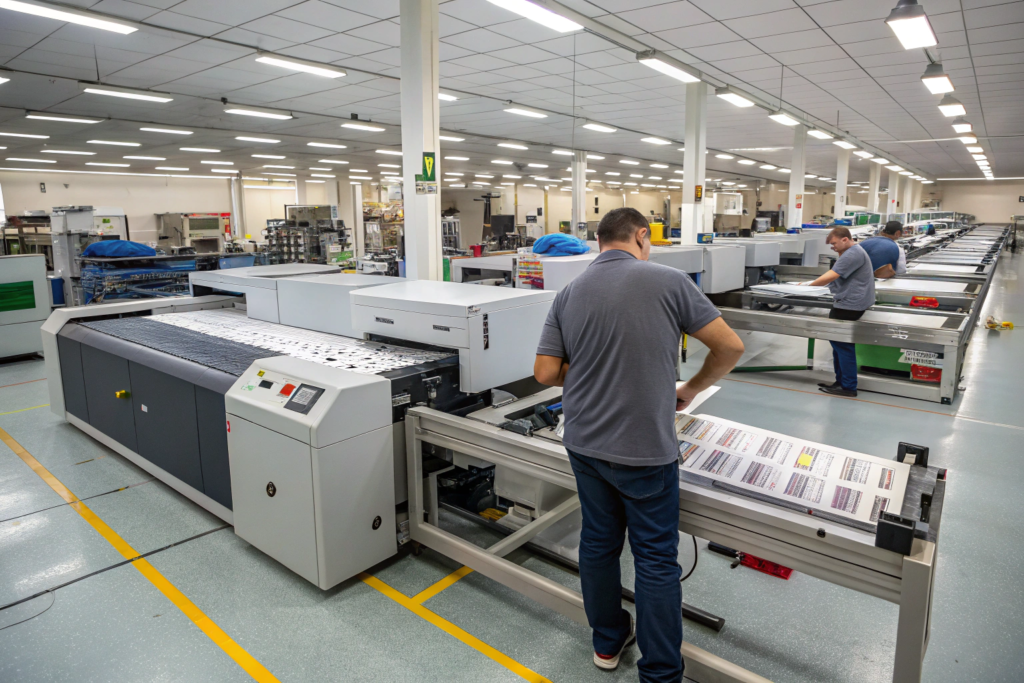
Time-to-market is crucial in the apparel industry, especially for seasonal hunting lines. Every day saved in production is a day gained for selling. In-house printing is the engine of speed and agility.
It collapses the supply chain by removing the external supplier step, turning a sequential process into a parallel one.
What lead time savings are achievable?
Eliminating the external printer immediately cuts 2-4 weeks from your production timeline. There's no need for separate fabric PO placement, shipping of greige goods to the printer, waiting in their queue, and then shipping printed fabric to the CMT factory. Fabric printing becomes one internal department passing work to the next. For urgent sampling or small-batch production, the savings are even more dramatic. We've enabled clients to go from approved design to pre-production samples in under 10 days, a feat impossible with outsourced printing.
How does it enhance responsiveness to design changes?
When design adjustments are needed—a color tweak, a scale change, or last-minute customization for a specific client—the response is immediate. The design and printing teams are in the same building. In early 2024, a client requested a last-minute alteration to the scale of their custom camo pattern for a limited edition run. Because our printing was in-house, we adjusted the digital file and had new fabric printed for cutting within 72 hours, without delaying the overall production schedule. This design flexibility is a key competitive advantage.
How does integrated quality control ensure superior results?
Quality control for printed fabric isn't just a final check; it's a continuous process throughout printing, curing, and washing. In-house facilities embed QC at every stage, catching defects before they become costly waste.
This results in a higher first-pass yield and more consistent bulk production.
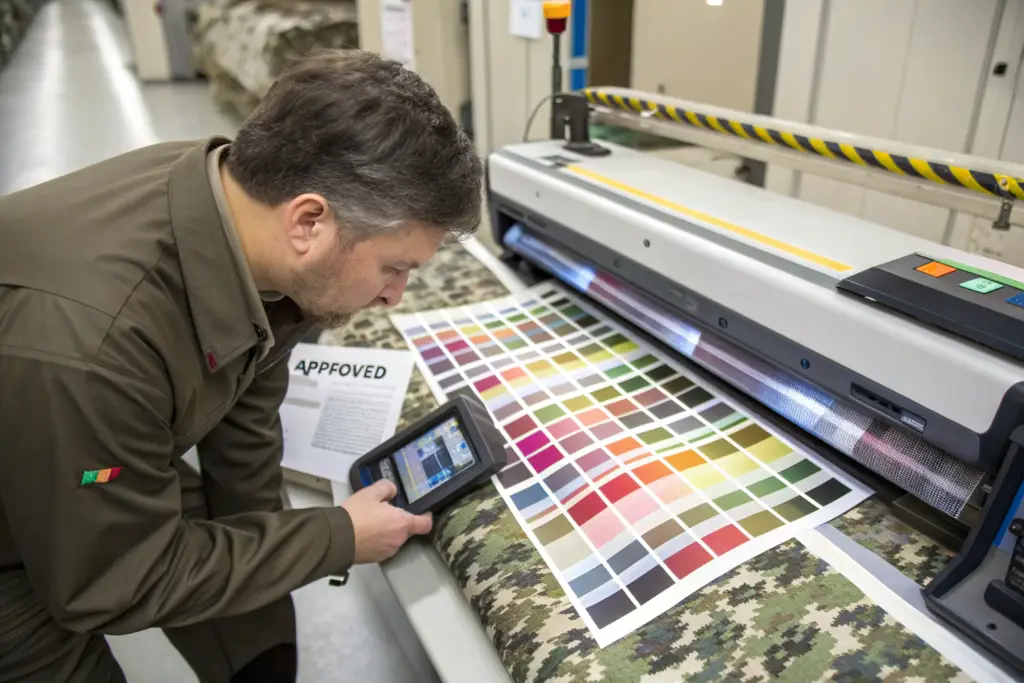
How is defect detection and rectification faster?
Issues like banding, nozzle streaking, or uneven curing can occur during printing. In an integrated setup, machine operators and QC inspectors work side-by-side. A defect spotted on the output roll triggers an immediate diagnosis and machine calibration. This real-time correction prevents the production of hundreds of meters of faulty fabric. Contrast this with an external printer, where defects might only be discovered after the entire batch is delivered to the garment factory, leading to weeks of dispute, re-order, and delayed production.
How does it ensure consistent fastness properties?
The color fastness (to washing, rubbing, light, and perspiration) is determined by the ink chemistry, curing process, and fabric pretreatment. An in-house facility manages this entire ecosystem. We perform standardized fastness tests (using ISO or AATCC methods) on every new fabric-ink combination as part of our routine. For instance, we ensure all our printed camo fabrics meet a wash fastness rating of 4-5 and a rubbing fastness of 4 before they are cleared for cutting, guaranteeing the garment's longevity and performance.
What are the cost and sustainability benefits?
While the initial investment in printing machinery is high, the long-term economic and environmental benefits for the brand are significant. Reduced waste, lower logistical overhead, and better material utilization translate into cost savings and a reduced carbon footprint.
Vertical integration offers efficiency that dispersed production cannot match.
How does it reduce material waste and cost?
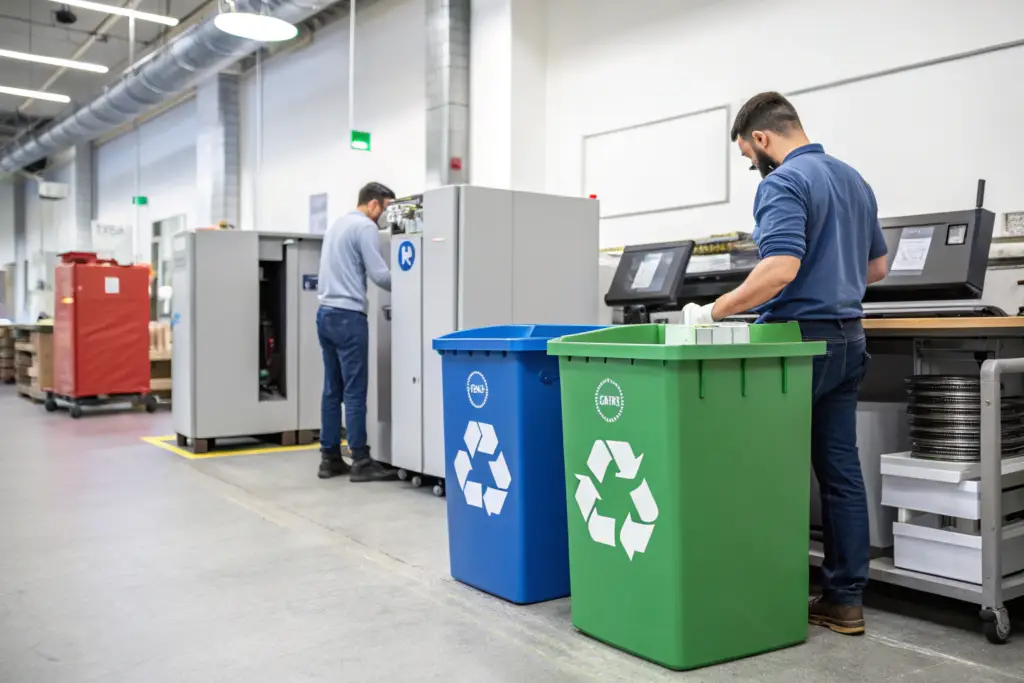
In-house printing allows for just-in-time fabric production. You print only the amount of fabric needed for the order plus a small controlled buffer, minimizing deadstock of printed material. Furthermore, because the printing and cutting teams coordinate directly, the print layout can be optimized for the specific marker (the cutting plan), minimizing fabric waste at the edges. This precise calculation can reduce fabric waste by 5-10% compared to ordering pre-printed fabric in set yardages from an external mill.
How does it lower the carbon footprint of production?
Consolidating printing and garment manufacturing at one site significantly reduces logistics-related emissions. It eliminates the transportation of fabric between multiple factories, often across long distances. Additionally, integrated water treatment and ink recycling systems are more feasible in a large, dedicated facility. At Shanghai Fumao, our in-house printing enables us to use more efficient, low-waste digital printing for smaller batches and stricter control over chemical use, aligning with the growing demand for sustainable manufacturing from global brands.
Conclusion
Choosing a factory with in-house printing for your camouflage designs is an investment in quality, speed, control, and ultimately, brand integrity. It transforms the most critical and vulnerable part of the supply chain—the application of your pattern—from a risky outsourcing gamble into a core, controlled competency.
This level of integration ensures that the camouflage on your apparel is not just a design feature, but a guarantee of performance and consistency. For brands that view their camo as a strategic asset, the choice is clear. Shanghai Fumao offers this complete vertical integration, giving you direct control from the digital pattern file to the finished garment. To experience the difference in-house printing makes, contact our Business Director, Elaine, at: elaine@fumaoclothing.com.