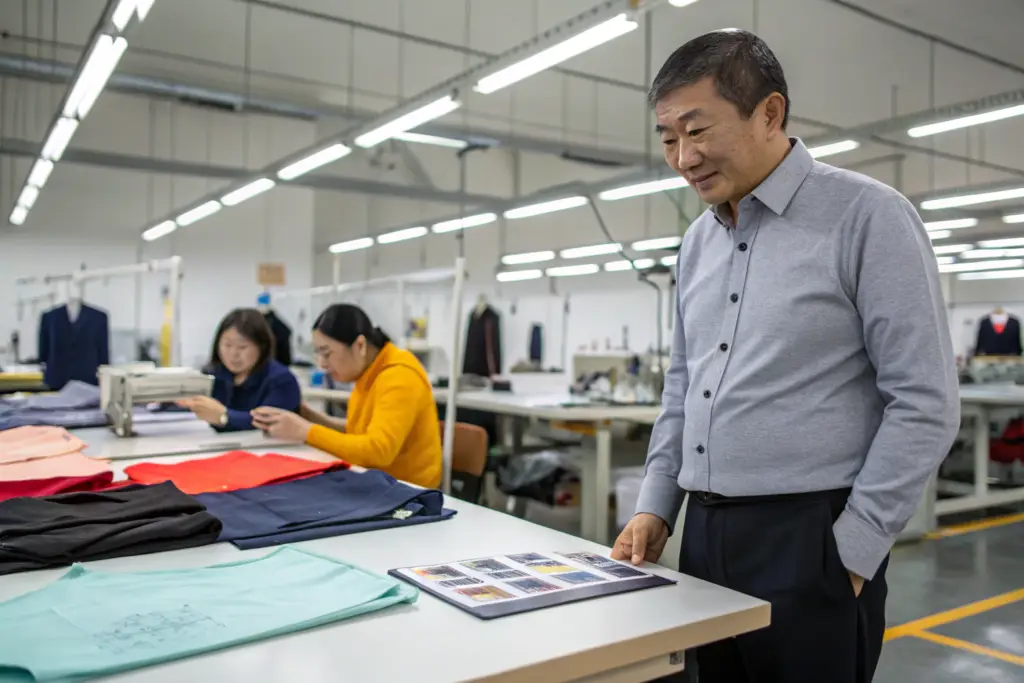
You have a design. You find a factory. You send them your tech pack. They say they can make it. You wait. Weeks pass. They send you a sample. It is wrong. The fabric is not what you asked for. The fit is off. The construction is sloppy. You go back and forth. More samples. More time. Your launch date slips. You lose money. Or maybe you skip the sample stage. You go straight to production. The bulk order arrives. Nothing fits. The quality is terrible. You are stuck with thousands of garments you cannot sell. I have seen both scenarios play out many times in my 20 years of manufacturing. The common thread is always the same: the sample development process was either missing or mishandled.
Based on our experience producing millions of garments for brands across North America and Europe, sample development is not just a step in the process. It is the foundation of successful production. It catches issues before they become costly mistakes. It aligns expectations between the brand and the factory. It validates that the design can be made at scale. For example, last year we worked with a startup brand from Miami. They had a great design for a women's jumpsuit. They had never produced clothing before. They thought they could go straight to production. We insisted on a sample process. The first sample revealed that the design had a construction flaw. The zipper placement made it impossible to put on. We worked together to redesign it. The second sample was perfect. The bulk production was flawless. The brand launched successfully. If they had skipped samples, they would have had thousands of unwearable jumpsuits. That is the value of sample development.
So, why is sample development crucial? Let me break it down. I will explain what happens at each sample stage. I will show you the risks of skipping samples. I will share real examples of how samples saved our clients from disaster. And I will give you the framework for a successful sample process.
How Does Sample Development Catch Design and Construction Issues Early?
Designs look perfect on paper. But paper does not account for gravity, fabric drape, or human movement. I learned this with a client from New York. They designed a dress with a complex cutout. It looked amazing in the sketch. The first sample revealed that the cutout gaped open. The fabric did not hold the shape. The design had to be adjusted.
The first sample, or development sample, is where design concepts meet reality. It reveals issues that are invisible on paper. Fabric may not drape as expected. Seams may not align. Details may not work at scale. For the New York client, we caught the cutout issue in the first sample. We worked together to reinforce the cutout with a stabilizing tape. The second sample worked perfectly. If we had gone straight to production, thousands of dresses would have been defective. For complex designs, we often go through three or four development samples. Each round refines the design. Each round catches issues before they become expensive.
We also test construction methods during development. A seam that works in one fabric may not work in another. We test to find the right combination.
What Design Flaws Are Only Visible in a Physical Sample?
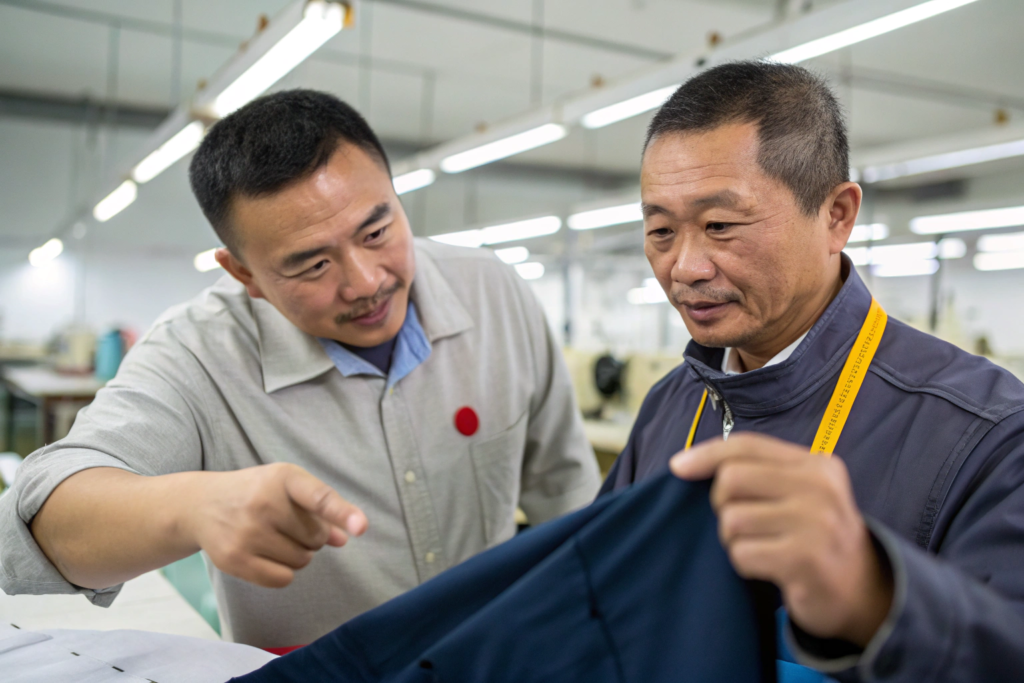
Many flaws only appear in physical form. Darts may point to the wrong place. A neckline may gap. A sleeve cap may have excess fabric. A pocket may be placed too low. A zipper may be too short. For a women's blouse client, the first sample showed that the bust darts were positioned too high. The pattern was corrected. The second sample was perfect. The client would never have seen this from the tech pack alone.
How Do You Test Construction Methods During Sampling?
During sampling, we test different construction methods. We try different seam types. We try different stitch lengths. We try different finishing techniques. For a denim client, we tested three different thread types for the topstitching. One thread was too heavy. One thread was too light. One thread was perfect. The sample revealed what the tech pack could not specify.
How Does Sample Development Ensure Fit and Sizing Accuracy?
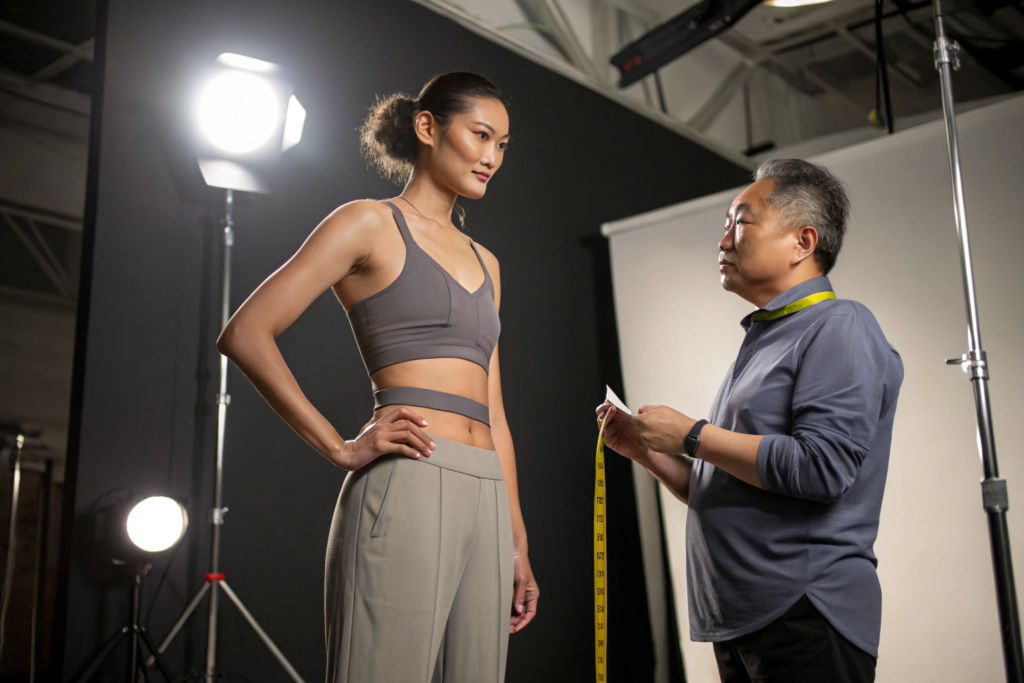
Fit is subjective. What looks good on a sketch may not look good on a body. I remember a client from Chicago. They designed a tailored jacket. They sent measurements. The first fit sample was made to those measurements. It looked terrible on the fit model. The shoulders were too wide. The waist was too narrow. The client had never tested the measurements on a real body.
Fit samples are made to test the garment on a real body. They use the same construction methods that will be used in bulk. The fit model represents the target customer. Adjustments are made based on how the garment looks and feels on the body. For the Chicago client, we did three fit rounds. The first adjusted the shoulders. The second adjusted the waist. The third was perfect. The client's final product fit well. For workwear, we test fit with the wearer moving. The garment must allow bending, lifting, and reaching. A static fit sample is not enough.
We also do size sets. A size set is the same style made in multiple sizes. This ensures the grading works across the size range.
How Many Fit Rounds Does It Take to Perfect a Garment?
The number of fit rounds varies by complexity. A simple t-shirt may take one fit round. A tailored jacket may take three or four. For a women's dress client, we did two fit rounds. The first round adjusted the bust and waist. The second round was approved. For a tailored blazer, we often do four rounds: one for the body, one for the shoulders, one for the sleeves, and one for the collar. The investment in fit rounds reduces returns.
What Is a Size Set and Why Does It Matter?
A size set is a sample made in the smallest, base, and largest sizes. It ensures that the pattern grading is correct. If the grading is off, a size small may fit differently than a size large. For a denim client, we made a size set from 26 to 36. The size 36 had a different rise than the size 28. We corrected the grading. The final jeans fit consistently across all sizes.
How Does Sample Development Validate Production Feasibility?
A design can be beautiful. A sample can be perfect. But can it be produced at scale? I learned this with a client from Los Angeles. They had a beautiful design with intricate hand stitching. The development sample was stunning. But when we tried to produce it in bulk, the hand stitching took too long. The cost was prohibitive. The design was not feasible for production.
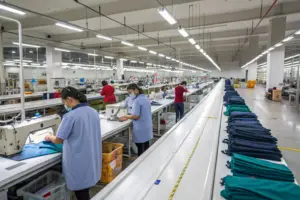
The pre-production sample, or PP sample, is made exactly as the bulk will be made. It uses production fabrics, production trims, production machines, and production operators. It validates that the design can be produced efficiently at scale. For the Los Angeles client, the PP sample revealed the hand stitching issue. We worked together to find a machine stitching alternative that looked similar. The cost came down. The design became feasible. For fast fashion, we use the PP sample to set production standards. The operators know exactly how to sew the garment. The quality is consistent.
The PP sample also validates the fabric. The development sample may have used a small piece from a sample roll. The PP sample uses fabric from the production lot. If there is a color or texture difference, it is caught now.
What Production Issues Can Only Be Caught in a Pre-Production Sample?
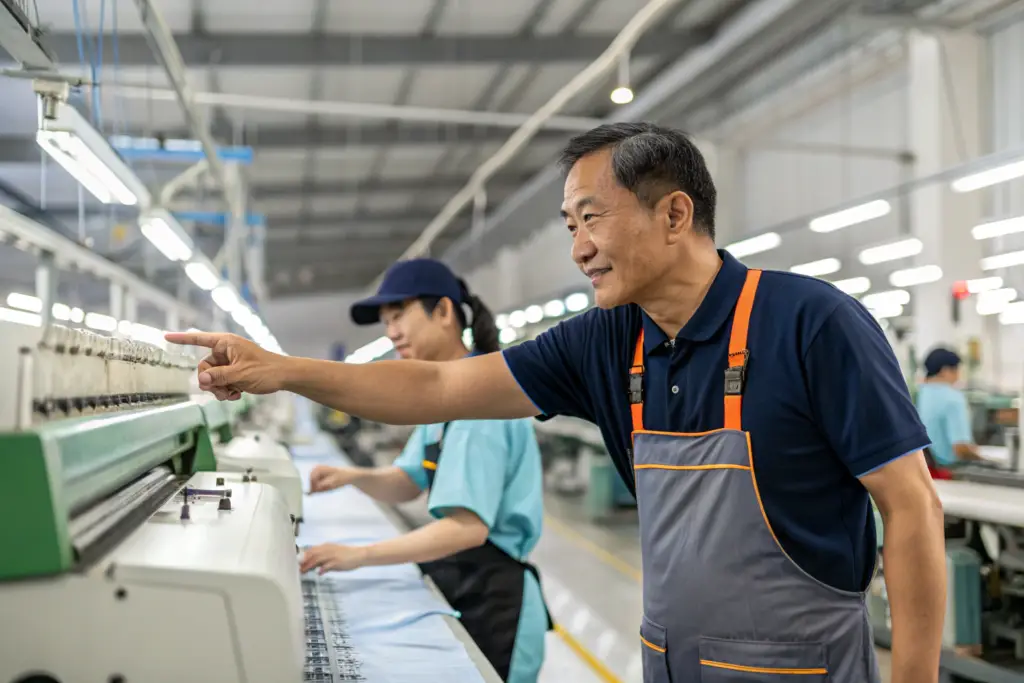
The PP sample catches issues that only appear in production conditions. The fabric may behave differently in bulk. The sewing machines may have different tensions. The operators may have different skill levels. For a sportswear client, the PP sample revealed that the production fabric had more stretch than the sample fabric. We adjusted the pattern to compensate. If we had not caught this, the bulk garments would have been too loose.
How Does the PP Sample Set Production Standards?
The approved PP sample becomes the standard. Every bulk garment is compared to it. The QC team uses it to check measurements, color, and construction. The sewing operators use it as a reference. For a workwear client, the PP sample is kept in the production line. Operators can check their work against it. This ensures consistency across thousands of units.
How Does Sample Development Align Expectations Between Brand and Factory?
Misalignment is the biggest source of conflict between brands and factories. The brand thinks they asked for one thing. The factory thinks they delivered it. The sample is the proof. I remember a client from Seattle. They approved a sample. The bulk production came back. The client said the color was wrong. The factory said it was the same. The sample had been lost. There was no reference.
The sample process creates a shared reference point. The approved sample becomes the standard. The brand knows what to expect. The factory knows what to deliver. For the Seattle client, we now keep a reference sample for every order. The client also keeps a reference. There is no dispute. For large retailers, the approved sample is part of the contract. The retailer inspects the bulk against the sample. If the bulk does not match, the order is rejected.
The sample process also builds trust. When a factory delivers good samples, the brand gains confidence. When a brand provides clear feedback, the factory knows what is expected.

Sample approval is a formal process. The client reviews the sample. They note any changes. They approve the sample. The approved sample is documented. It becomes the reference. For a denim client, the approved wash sample is kept in the lab. Every production wash is compared to it. If the wash is off by more than 10%, it is rejected. The standard is clear.
What Happens When There Is No Sample Reference?
Without a sample reference, disputes are common. The brand says the bulk is wrong. The factory says it is right. There is no proof. The brand may refuse to pay. The factory may refuse to redo. Both lose. For a t-shirt client, we had a dispute over color. The client had lost the sample. We had lost the sample. There was no reference. We ended up splitting the cost. That was a loss for both. Now we always keep reference samples.
Conclusion
Sample development is not a luxury. It is a necessity. It catches design and construction issues before they become costly. It ensures fit and sizing accuracy. It validates that the design can be produced at scale. And it creates a shared standard that aligns expectations between the brand and the factory.
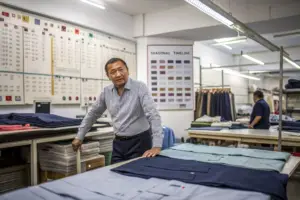
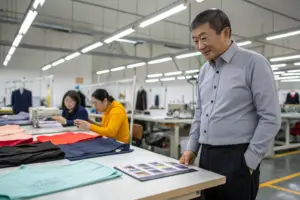
At Shanghai Fumao, we have built our reputation on a rigorous sample development process. We have a dedicated sample room. We have experienced pattern makers. We have fit models. We have a systematic approval process. We do not skip steps. We do not rush. We believe that good samples lead to good production.
Let us show you our sample process. Contact our Business Director, Elaine, directly at elaine@fumaoclothing.com. Send us your tech pack. We will walk you through the sample development journey.