
For decades, the global logistics industry has run on a complex dance of schedules, routes, and inventories. We've pushed classical computers to their limits, using sophisticated software to find efficiencies. Yet, challenges like unpredictable delays, fuel costs, and the sheer scale of variables continue to eat into profits and reliability. As a garment manufacturer exporting worldwide, we feel these pains directly. The question is no longer if we can do better, but what revolutionary technology will take us there. Quantum computing, once a theoretical concept, is now emerging as the key to unlocking unprecedented optimization in global supply chains.
Quantum computing is optimizing global logistics by solving complex combinatorial optimization problems—like route planning and warehouse management—exponentially faster than classical computers. By evaluating countless variables and potential outcomes simultaneously, quantum algorithms can find the most efficient paths, inventory levels, and scheduling options, leading to reduced costs, lower carbon emissions, and enhanced resilience against disruptions.
This isn't a distant future fantasy. Major logistics players and researchers are already achieving tangible results. Understanding this shift is crucial for any business reliant on the physical movement of goods. Let's explore how this powerful technology is transforming the backbone of global trade.
How Does Quantum Computing Solve Complex Routing Problems?
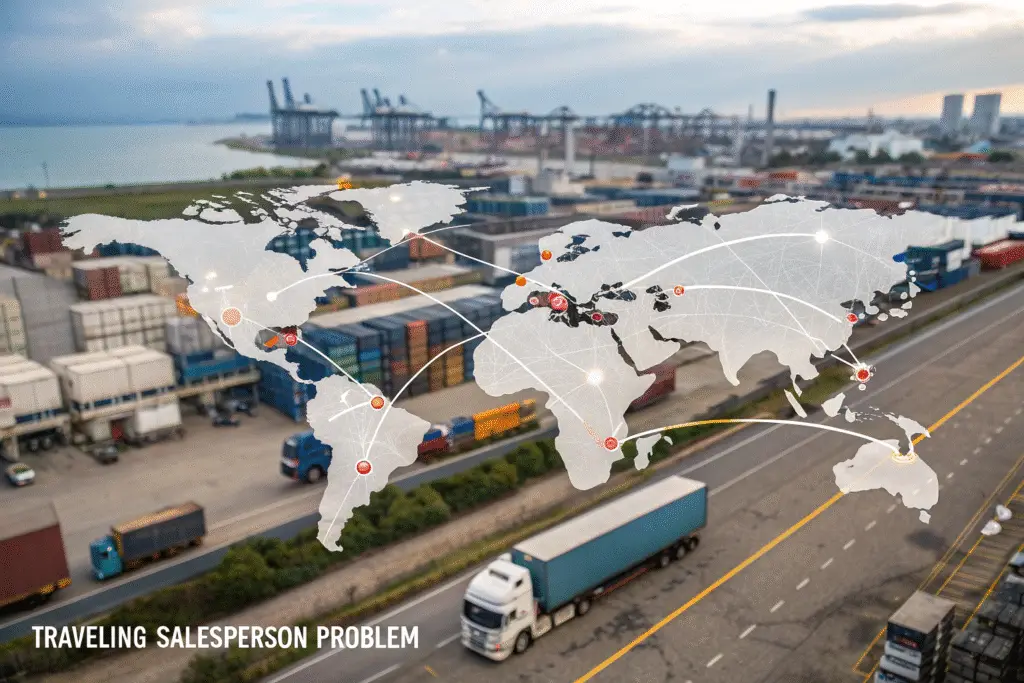
The "Traveling Salesperson Problem" is a classic example of a logistics challenge. Finding the shortest possible route that visits a set of cities once is simple for a few locations but becomes astronomically difficult for a fleet of trucks making hundreds of deliveries. Classical computers must check each route one after the other, a process that becomes impractically slow. This is where quantum computing offers a paradigm shift.
What is Quantum Supremacy in Optimization?
Quantum supremacy in this context refers to a quantum computer's ability to find a superior solution to a specific optimization problem much faster than the best-known classical algorithm. Quantum bits, or "qubits," can exist in a state of superposition, meaning they can represent both 0 and 1 simultaneously. This allows a quantum computer to explore a vast number of possible solutions at the same time. For global routing, a quantum algorithm can evaluate millions of potential routes, weather patterns, port congestions, and fuel prices concurrently, pinpointing the single most efficient option in a fraction of the time.
Are Companies Already Using This Technology?
Yes, we are moving from theory to real-world testing. Companies like DHL and UPS are actively researching quantum algorithms for vehicle routing. For instance, a leading logistics firm is exploring how quantum computing can optimize the last-mile delivery process in urban areas, a major cost and congestion pain point. In the shipping world, major ports are partnering with tech companies to model the best ways to manage container movement in their yards, reducing ship turnaround times. These early pilots are proving the concrete value proposition of quantum-powered logistics.
What Impact Will Quantum Computing Have on Inventory Management?
Beyond transportation, quantum computing revolutionizes how we manage inventory across complex, multi-tiered supply chains. The goal is to balance having enough stock to meet demand without incurring high holding costs or risking obsolescence. This is a massive challenge when dealing with countless SKUs, uncertain demand forecasts, and long lead times from suppliers in different countries.
How Can Quantum Computing Predict Demand More Accurately?
Accurate demand forecasting is the holy grail of inventory management. Quantum computers can run sophisticated machine learning models that analyze vast datasets—including historical sales, social media trends, economic indicators, and even weather forecasts—to identify subtle, non-linear patterns that classical models miss. This leads to a more precise prediction of what products will be needed, where, and when. For a garment manufacturer, this means producing the right quantity of a seasonal item, drastically reducing both overstock and stockouts.
Can It Create a Truly Resilient Supply Chain?
Modern supply chains are vulnerable to disruptions, as recent global events have shown. Quantum computing can enhance resilience by simulating countless "what-if" scenarios. It can model the impact of a factory closure, a port strike, or a sudden spike in demand. By identifying critical single points of failure and evaluating alternative pathways in advance, companies can build flexible and adaptive supply networks. This proactive approach to supply chain risk management is becoming a competitive necessity.
How Does Quantum Computing Reduce the Environmental Footprint of Logistics?
Sustainability is no longer optional; it's a core business imperative. The logistics sector is a significant contributor to global carbon emissions. Quantum optimization offers a direct path to a greener supply chain by minimizing waste and maximizing efficiency.
What is the Link Between Optimization and Emissions?
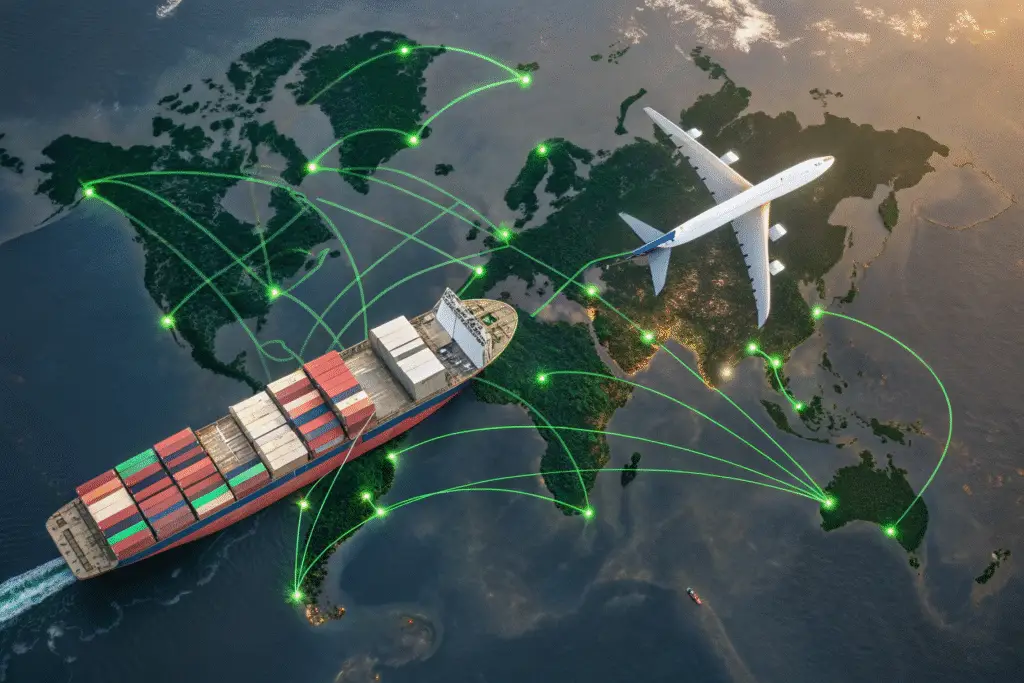
The most direct way to reduce emissions is to burn less fuel. Inefficient routes, half-empty containers, and poor load planning all lead to unnecessary fuel consumption. Quantum algorithms can solve these problems holistically. For example, they can calculate the most fuel-efficient route considering real-time traffic and weather, while also optimizing how goods are loaded into containers to maximize space. This green logistics approach, supercharged by quantum computing, turns environmental goals into operational efficiencies.
Can It Optimize for Circular Economy Models?
The future of manufacturing and logistics is circular, focusing on recycling and reusing materials. Quantum computing can optimize the reverse logistics required for a circular economy. It can solve the complex problem of efficiently collecting used garments from consumers, sorting them, and routing them to the appropriate recycling or refurbishment centers. This creates a closed-loop system that minimizes waste, a key goal for sustainable apparel manufacturing practices.
When Will Quantum Computing Become Mainstream for Logistics?
It's important to have a realistic timeline. While the potential is enormous, widespread, practical application is still on the horizon. The industry is in a phase of active exploration and development.

Are We in the Noisy Intermediate-Scale Quantum (NISQ) Era?
Currently, we are in the NISQ era, where quantum computers have a limited number of qubits that are somewhat prone to errors ("noise"). This means the most complex problems cannot be solved reliably yet. However, significant progress is being made in developing error-correcting codes and more stable qubits. Companies are focusing on developing hybrid algorithms that leverage the strengths of both classical and quantum computing to solve practical problems today.
What Should Businesses Do Now to Prepare?
The time for preparation is now. Businesses should not wait for quantum computers to be universally available. They can start by building internal expertise, partnering with quantum computing firms on pilot projects, and ensuring their data is clean, structured, and ready for when quantum-powered solutions become commercially viable. Educating leadership and logistics teams about the potential and implications of this technology is the crucial first step toward building the supply chain of the future.
Conclusion
Quantum computing is not just an incremental improvement; it is a fundamental shift that promises to redefine efficiency in global logistics. From creating unsolvable routing solutions and resilient inventory systems to paving the way for sustainable supply chains, its potential is transformative. For apparel brands and manufacturers, this evolution means faster, cheaper, and more reliable delivery of goods to market, all while reducing environmental impact. The journey to mainstream adoption is underway, and forward-thinking companies are already laying the groundwork. The future of logistics is quantum, and it will optimize our world in ways we are only beginning to imagine.