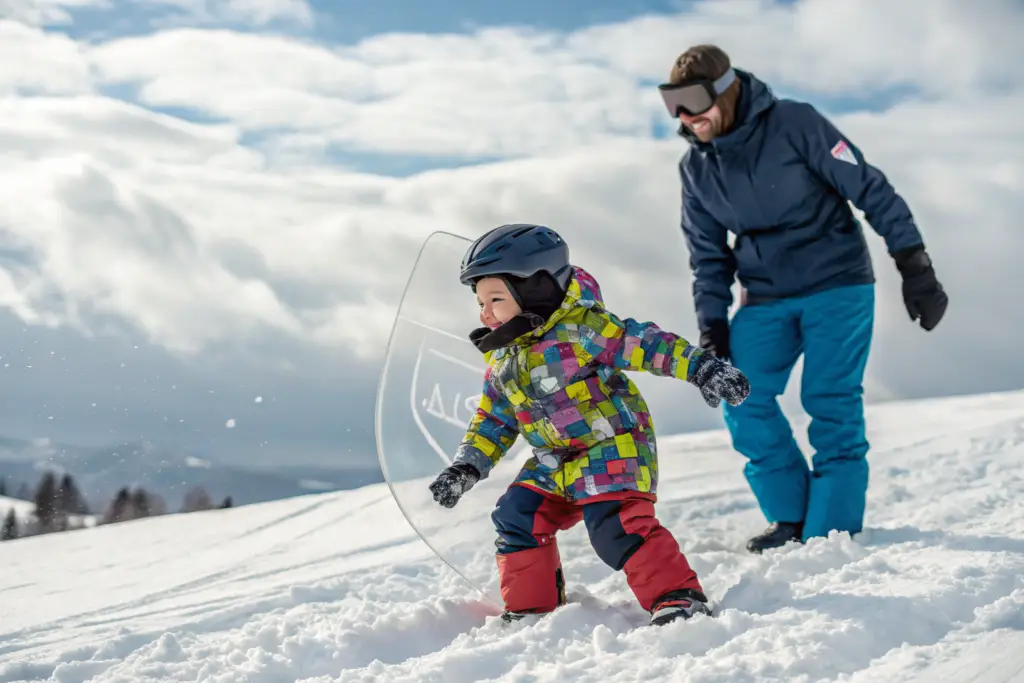
As a brand owner or buyer sourcing children's ski wear, you balance vibrant colors, playful designs, and tough performance. But beneath the surface lies a responsibility far greater: ensuring absolute safety for your smallest, most vulnerable customers. When it comes to chemical safety, not all certifications are equal. For baby and kids' apparel, OEKO-TEX STANDARD 100 Product Class I isn't just a higher standard—it's the only standard that matches the real-world risks children face. Settling for a general "OEKO-TEX certified" claim without the Class I designation is a critical oversight.
OEKO-TEX Class I certification is non-negotiable for baby and kids' ski wear because it is specifically designed for articles for babies and toddlers up to 3 years old, applying the strictest human-ecological safety limits in the entire standard. It accounts for infants' higher skin permeability, tendency to put clothing in their mouths, and developing organ systems, providing a level of assurance that general adult apparel certifications (Class II or III) simply cannot match.
This isn't about marketing; it's about physiology. A child's body processes toxins differently, and their exposure during activities like skiing—where gear is in close contact for hours—is significant. Let's examine why Class I is the indispensable foundation for trustworthy kids' ski wear.
What Physiological Risks Make Class I Certification Essential?
Children are not miniature adults. Their bodies are in a critical stage of development, making them more susceptible to harm from chemical exposures. OEKO-TEX Class I's extreme strictness is a direct response to these unique vulnerabilities.
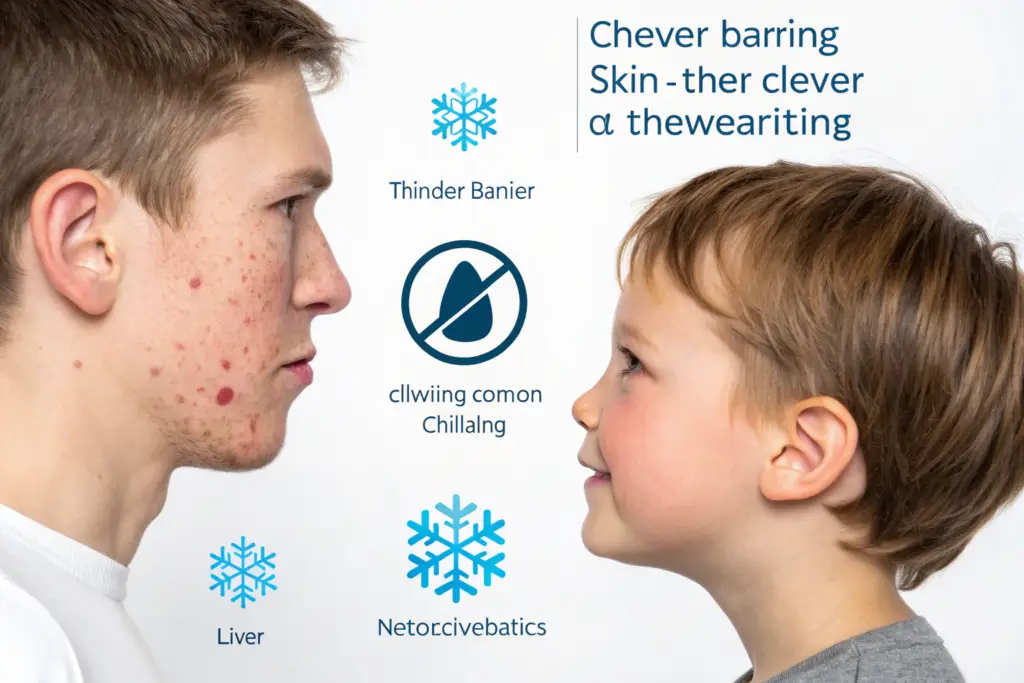
A baby's skin is thinner and more permeable than an adult's, allowing substances to pass into the bloodstream more easily. Their metabolic and detoxification systems (liver, kidneys) are still developing, making it harder to process and eliminate toxins. Most critically, they have a natural oral exploration phase—they will chew on their jacket cuffs, glove pulls, and even the fabric itself. Ski wear, with its zippers, velcro, and trims, presents multiple points for this mouthing behavior. A Class II certification (for adult garments) does not include the rigorous saliva and perspiration fastness tests at the same stringent levels. At Shanghai Fumao, we witnessed the importance of this firsthand. A brand we consulted with was using a Class II certified fabric for a toddler ski bib. When we conducted an internal pre-check simulating saliva, we detected dye migration that would have failed a Class I test. Switching to a true Class I compliant fabric and trim was the only responsible choice.
How do the specific test limits differ for Class I?
The numerical limits for harmful substances in Class I are often 20-50% stricter than those for Class II (garments worn directly on skin). For example:
- Formaldehyde: The limit is significantly lower.
- Heavy Metals (like Cadmium & Lead): Tolerances are near-zero.
- Colorfastness to Saliva & Perspiration: The test is mandatory and the pass/fail criteria are much tougher. The fabric must show virtually no color transfer.
- pH Value: The acceptable range is tighter (pH 4.0 to 7.5), perfectly aligned with a baby's delicate skin.
These aren't arbitrary numbers. They are based on pediatric health research and are designed to create a margin of safety for chronic, low-level exposure. The American Academy of Pediatrics (AAP) consistently highlights the importance of reducing children's exposure to environmental chemicals, underpinning the need for such rigorous standards.
What unique ski wear components require Class I scrutiny?
Every single part of the garment is evaluated under the Class I lens:
- Zipper Pulls & Sliders: Often made of metal or plastic, tested for heavy metals and phthalates at strict Class I limits.
- Printed Graphics & Logos: The inks and plastisols used must be free of restricted plasticizers.
- Insulation & Padding: The synthetic fibers and treatments must comply.
- Elastic Cuffs & Waistbands: Often contain latex or chemical softeners that are tightly regulated.
- Hook-and-Loop (Velcro) Fasteners: Both the hooks and the loop fabric are tested.
Missing any one component voids the entire certification. This holistic approach is what makes a Class I certificate from a full-package manufacturer so valuable—it's a guarantee of complete safety.
How Does Class I Certification Mitigate Real-Use Scenarios in Skiing?
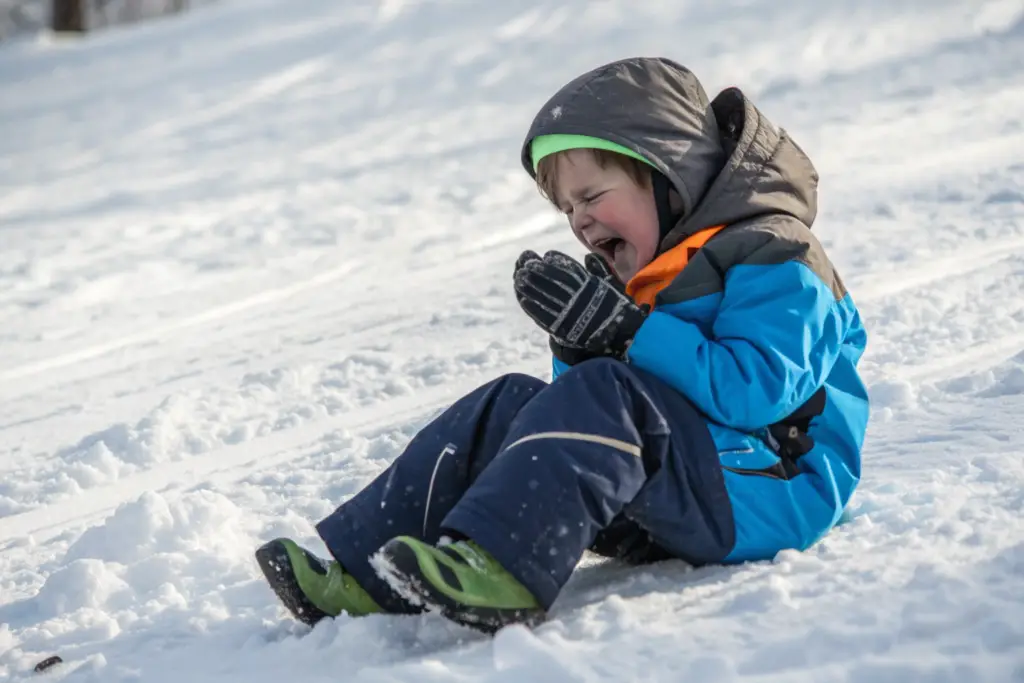
Skiing creates a unique micro-environment for clothing. The combination of physical activity, sweat, friction, and cold intensifies the interaction between the child's body and their gear. Class I testing is designed to simulate these exact conditions, going beyond a static material check.
The perspiration fastness test is crucial. A child working hard on the slopes will sweat. If dyes or finishing chemicals are not locked into the fabric, they can leach out with sweat and be absorbed through the skin. Class I ensures this won't happen. Furthermore, abrasion from backpack straps, ski edges, or simply playing in the snow can cause microscopic wear, potentially releasing fibers or particles. While not a direct OEKO-TEX test, the high-quality materials required to pass other Class I parameters are inherently more durable and less prone to problematic degradation. We advise our clients that using Class I certified materials isn't just about safety—it often correlates with better overall quality and longevity of the garment.
What about the risk of ingestion from chewing?
This is the paramount scenario. A teething toddler on a chairlift or in the lodge will chew on whatever is accessible. The saliva fastness test is therefore a cornerstone of Class I. The fabric and any trims are soaked in an artificial saliva solution and mechanically agitated. The solution is then analyzed for any color transfer or chemical leaching. A pass means that even if the child sucks on the fabric for an extended period, the risk of ingesting dyes or harmful substances is minimized. For a kids' ski mitten line we produced, we specifically sourced Class I certified dyed polyester thread and plastic buckle trims because we knew the mittens would constantly be near and in children's mouths.
How does cold weather factor into safety?
Cold, dry air can make skin more sensitive and prone to irritation. A fabric with an improper pH balance (too alkaline or acidic) can disrupt the skin's natural acid mantle more easily in these conditions, leading to chapping or dermatitis. The tight pH range mandated by Class I (4.0-7.5) ensures the fabric is as skin-neutral as possible, providing a protective layer rather than an irritant. This is a detail that discerning parents, especially those with children who have eczema or sensitive skin, are increasingly aware of and value.
What Are the Sourcing and Production Implications of Class I?
Choosing Class I certification fundamentally changes your supply chain strategy. You cannot simply "upgrade" a Class II garment to Class I. It must be designed and sourced as Class I from the very beginning, as every component must meet the stricter criteria.
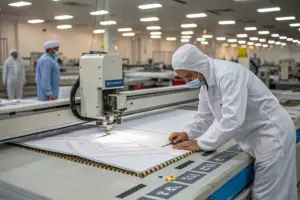
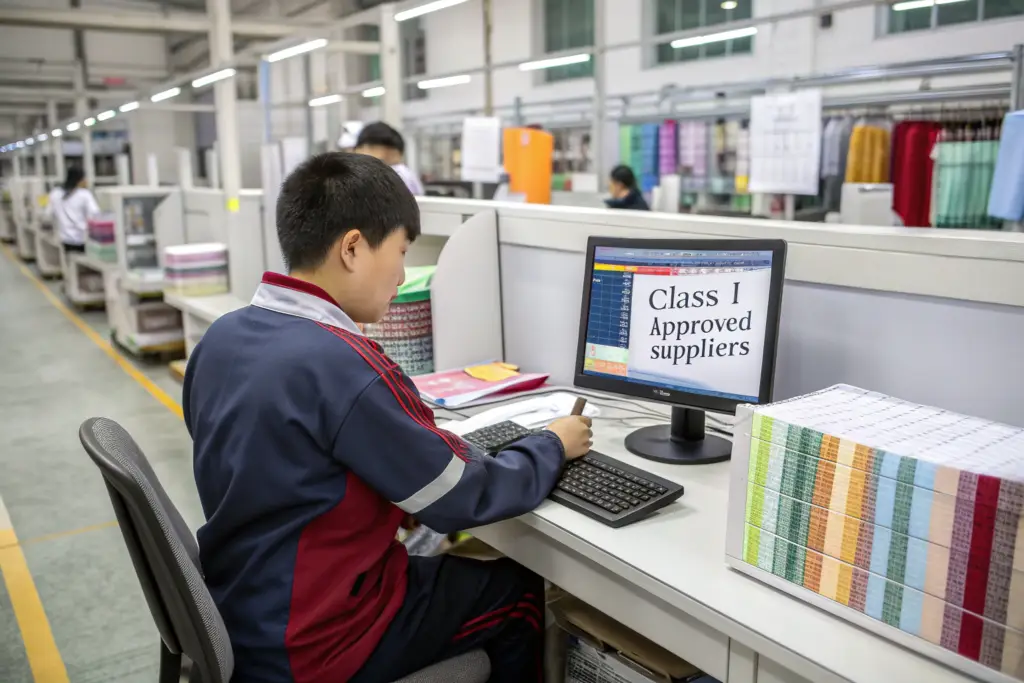
This means your manufacturer must have established connections to specialized mills and trim suppliers who produce Class I compliant materials. The availability of certain colors, prints, or functional finishes may be more limited. For instance, achieving a very specific, vibrant neon color with Class I compliant dyes can be more challenging and expensive. At Shanghai Fumao, we maintain a separate, curated Class I Material Library. When a client approaches us for a kids' line, we start the conversation here. Last year, a brand wanted a unicorn-themed print on a fleece jacket. Our design team worked within our Class I-approved print techniques to create a beautiful, compliant design, rather than starting with an unconstrained print that might later fail compliance.
How does it impact development timeline and cost?
Expect a longer development timeline and a higher cost per unit.
- Timeline: Sourcing Class I materials takes longer. Each new component (a new zipper, a new print) may require pre-testing. The certification process itself for the finished garment is more rigorous. Add 3-5 weeks to your standard schedule.
- Cost: Class I compliant raw materials (fabrics, trims) carry a premium, often 10-30% higher than their Class II or non-certified equivalents. Laboratory testing fees are also higher. However, this cost is a direct investment in product integrity and brand trust. It should be factored into your pricing as a core value proposition, not hidden. Transparent brands often communicate this: "We invest in the strictest Class I safety certification because your child's well-being is priceless."
What documentation is critical for Class I products?
The OEKO-TEX Transaction Certificate (TC) is your legal proof. For Class I, this document is paramount. It must clearly state "Product Class I". Retailers, especially major ones in North America and Europe, will demand to see this TC for every shipment of kids' wear. It is your shield in case of any market surveillance or consumer inquiry. We provide this TC as a non-negotiable part of every Class I shipment, along with a summary of the key test parameters for our brand partners' own records. This practice aligns with the due diligence expected by regulatory bodies like the U.S. Consumer Product Safety Commission (CPSC).
How to Communicate Class I Value to Parents and Retailers?
Owning a Class I certification is one thing; effectively communicating its life-critical importance is another. Parents are overwhelmed with claims. Your job is to educate them on why Class I matters, making it a decisive factor in their purchase.
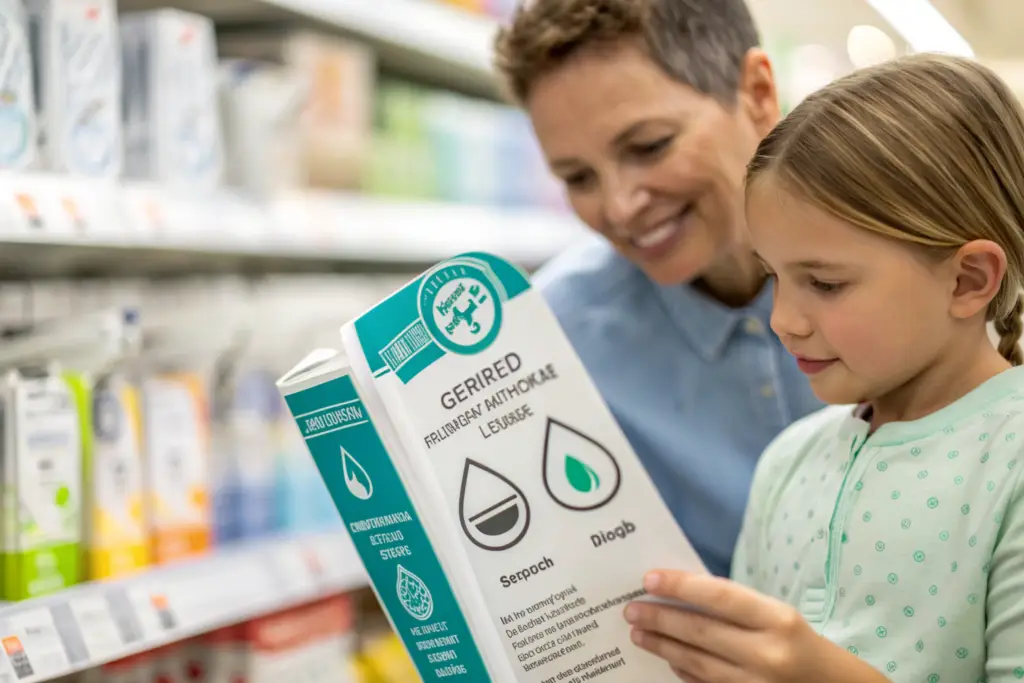
Move beyond the logo. Use clear, empathetic language. Instead of "OEKO-TEX Certified," say "Certified to the Strictest Baby Safety Standard (OEKO-TEX Class I)." Explain the "why": "Because babies explore with their mouths, every part of this suit is tested for safety against saliva and sweat." Use your product pages, hangtags, and marketing to tell this story. A brand we partner with added a small icon of a baby with a checkmark shield next to their Class I claim and saw a measurable increase in conversion on their kids' product pages.
What marketing assets are most effective?
- Micro-Videos: Create a 15-second video showing a fabric swatch being tested with a liquid (representing saliva), with text: "We test for this, so you don't have to worry."
- Comparison Charts: A simple, honest chart on your website showing how Class I limits are stricter than general standards.
- Expert Endorsements: Quote pediatricians or organizations about the importance of reducing chemical exposure in children.
- Transparent Storytelling: Blog posts or social media content titled "Why We Chose the Hardest Safety Standard for Our Kids' Line," featuring your factory partner's process.
This builds a narrative of care and expertise, positioning your brand as a true guardian of children's health.
How to equip your retail partners?
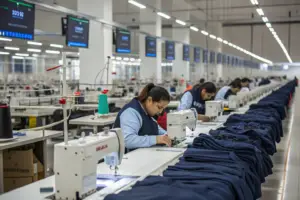
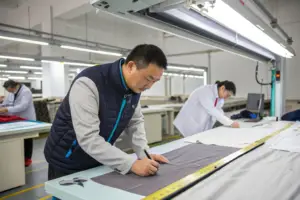
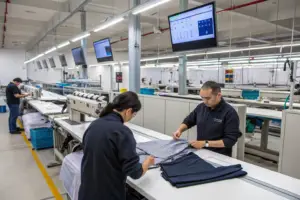
For wholesale brands, educate your retailers. Provide them with a one-page sell sheet that explains OEKO-TEX Class I in simple terms and gives their sales staff key talking points. Retailers are more likely to promote and highlight brands that make their job easier and give them a compelling, ethical story to tell. This turns your certification into a sales tool for the entire channel. We support our brand clients by providing them with factory-level imagery and explanations they can share downstream, strengthening the entire chain of trust.
Conclusion
For baby and kids' ski wear, OEKO-TEX STANDARD 100 Product Class I is non-negotiable. It is a specialized, science-backed standard that addresses the profound physiological differences and behavioral realities of children. It mitigates the unique risks posed by skiing—mouthing, sweating, and cold-weather exposure—through its unprecedentedly strict limits and mandatory performance tests.
Sourcing for Class I requires a dedicated, knowledgeable manufacturer and a commitment to higher costs and longer timelines. However, this commitment is the very definition of responsible business. It builds unshakable trust with parents, ensures compliance with retailer and regulatory expectations, and, most importantly, provides a genuine safeguard for the well-being of the children who will wear your products.
Do not compromise on the foundation of safety for your youngest adventurers. Partner with a manufacturer who understands that Class I is the baseline, not an option. At Shanghai Fumao, our specialized kids' wear production system is built around OEKO-TEX Class I compliance from the material library up. Contact our Business Director, Elaine, to develop kids' ski wear that combines fun, function, and fundamental safety. Reach her at elaine@fumaoclothing.com.