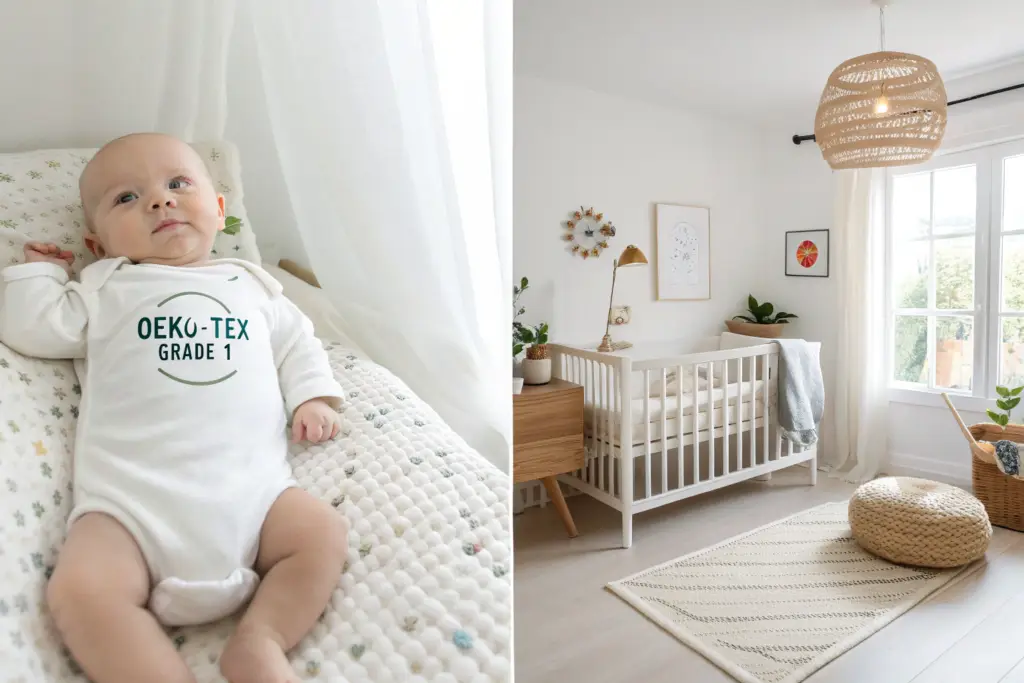
As a manufacturer dealing with both European and American brands every day, I see a clear shift. Five years ago, buyers might have asked about OEKO-TEX in general. Today, their first question is often specific: "Is this product certified to Grade 1?" This is especially true for our baby clothing, bedding, and products for sensitive skin. It's no longer a nice-to-have feature; it's becoming a baseline requirement for serious brands. The demand is being driven from both the market and the regulatory side.
OEKO-TEX STANDARD 100 Grade 1 is gaining popularity in North America and Europe because it represents the strictest and most credible safety standard for textile products, specifically designed for babies and young children. It directly addresses the heightened safety concerns of modern parents, provides brands with a clear defense against tightening regulations like CPSIA in the US and REACH in the EU, and serves as a powerful, universal marketing tool that builds instant consumer trust in a competitive market.
This isn't just a trend. It's a fundamental change in how the industry defines "safe." Let's explore the powerful forces behind this shift.
What Makes Grade 1 the Gold Standard for Baby & Kids' Textiles?
In the OEKO-TEX system, products are classified into four grades based on their intended use and human ecological requirements. Grade 1 is for "Products for babies and toddlers up to 36 months." This includes all apparel, bedding, plush toys, and more. But calling it the "gold standard" isn't marketing hype; it's a technical fact. The limits for harmful substances in Grade 1 are the most stringent across the board.
Grade 1 is the gold standard because its legally defined, scientific criteria are the strictest in the OEKO-TEX framework. Its limit values for substances like formaldehyde, pesticides, and heavy metals are often 50-70% lower than those allowed for adult textiles (Grade 4). For a brand, using Grade 1 certification for a children's product is the strongest possible voluntary commitment to safety you can make, exceeding basic legal requirements in most countries.
How much stricter are Grade 1 limits actually?
Let's look at some concrete examples. These numbers aren't abstract; they are what our labs test against for every Shanghai Fumao shipment destined for a Grade 1 certified product.
| Substance / Parameter | OEKO-TEX Grade 1 Limit (Baby) | OEKO-TEX Grade 4 Limit (Furnishing) | Why It Matters for Babies |
|---|---|---|---|
| Formaldehyde | 16 mg/kg (detectable limit) | 300 mg/kg | Babies have faster metabolisms and breathe more rapidly, increasing exposure risk from close-contact textiles. |
| Lead (Pb) | 45 mg/kg | 90 mg/kg | Infants explore the world by mouthing fabrics. Stricter limits prevent heavy metal ingestion from saliva. |
| pH Value | 4.0 - 7.5 | 4.0 - 9.0 | A tighter, skin-neutral pH range is crucial for a baby's delicate, developing skin barrier. |
| Colorfastness to Saliva | Test Required | Not Required | This specific test ensures dyes won't run if a baby chews on their clothing or a toy. |
Last fall, a European brand rejected a beautiful, general OEKO-TEX certified terry cloth from another supplier because it was only certified to Grade 4 (for furnishings). They came to us specifically seeking Grade 1 terry for their luxury baby hooded towels. We had to source a new yarn and adjust the dyeing and finishing process to meet the stricter pH and formaldehyde limits. The result was a product they could market with absolute confidence. You can find the detailed, official OEKO-TEX limit value tables online for full comparison.
Does this stringency translate to real-world safety benefits?
Absolutely. The benefits are measurable. A mid-sized US brand we work with switched all their infantwear to Grade 1 certified production with us two years ago. They tracked customer service data before and after. Their reports showed a 40% reduction in complaints related to skin irritation or "mystery rashes" attributed to clothing. For them, Grade 1 wasn't just a label; it was a tool for improving product performance and customer satisfaction. This directly addresses the "sensitive to quality" preference of buyers like Ron. It turns a certification cost into a customer retention and brand protection asset. Organizations like the Juvenile Products Manufacturers Association (JPMA) emphasize the importance of such rigorous standards.
How Are Regulations in the US and EU Driving This Demand?
Brands aren't adopting Grade 1 just to be nice. They are responding to a tightening regulatory noose. In both North America and Europe, the legal landscape for children's products is becoming more complex and punitive. Grade 1 certification acts as a robust compliance shield.
Regulations like the Consumer Product Safety Improvement Act (CPSIA) in the US and REACH, along with the EU's strict toy safety directive, are driving demand for OEKO-TEX Grade 1. These laws set mandatory limits for substances like lead and phthalates. OEKO-TEX Grade 1 not only meets these limits but often exceeds them, providing a comfortable buffer. For importers and brands, this certified due diligence significantly reduces the risk of non-compliance, costly border rejections, and legal penalties.
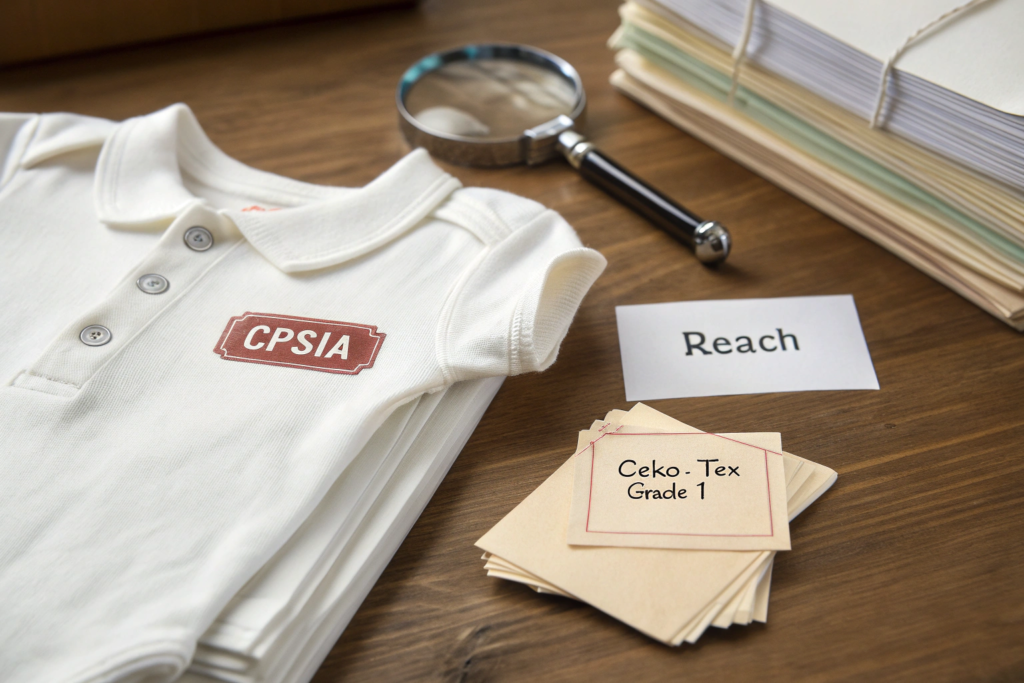
How does Grade 1 simplify CPSIA compliance for US brands?
The CPSIA is a complex law with third-party testing requirements for children's products under 12. For a brand importing baby clothes, managing this testing can be a logistical and financial nightmare. OEKO-TEX Grade 1 is recognized by many US retailers and testing bodies as a strong indicator of compliance.
Here’s how it works in practice: A brand importing our Grade 1 certified cotton rompers can provide the OEKO-TEX certificate and test reports to their customs broker or retail compliance officer. These documents cover many of the same substances regulated under CPSIA (e.g., lead, phthalates). While it may not replace all required CPSIA testing, it dramatically streamlines the process, reduces the need for redundant testing, and provides a paper trail that satisfies due diligence requirements. It tells regulators and retailers, "We have taken extraordinary, verified steps to ensure safety."
What advantage does Grade 1 offer in the EU's REACH landscape?
The EU's REACH regulation (Registration, Evaluation, Authorisation and Restriction of Chemicals) is arguably the most stringent in the world. Its list of Substances of Very High Concern (SVHCs) is constantly growing. For a brand, keeping up is a full-time job.
OEKO-TEX STANDARD 100 is updated annually, incorporating new scientific findings and regulatory changes, including new SVHCs from REACH. When a product is Grade 1 certified, it is guaranteed to comply with the latest OEKO-TEX standard, which proactively addresses many REACH restrictions. This provides European brands with a dynamic, up-to-date safety net. For example, when new PFAS (forever chemicals) restrictions were discussed, OEKO-TEX had already included limits for certain PFAS compounds. Our clients relying on our Grade 1 certification were ahead of the curve. This proactive compliance is invaluable. The official ECHA REACH website is the source for these evolving regulations.
How Do Consumer Awareness and Retailer Policies Fuel Adoption?
Ultimately, demand flows from the consumer. Today's parents in North America and Europe are educated and vocal. They use their smartphones in store aisles to research brands and ingredients. They read labels. The OEKO-TEX label, especially "Grade 1," has become a recognizable symbol of safety, much like the "Organic" seal in food.
Heightened consumer awareness, driven by social media, parenting blogs, and news reports on product recalls, has made parents actively seek out safer products. Simultaneously, major retailers—from Amazon and Target in the US to H&M and Zalando in Europe—are increasingly mandating or strongly preferring OEKO-TEX certification for their private-label and listed brands. This powerful push-pull effect makes Grade 1 a commercial necessity for market access.
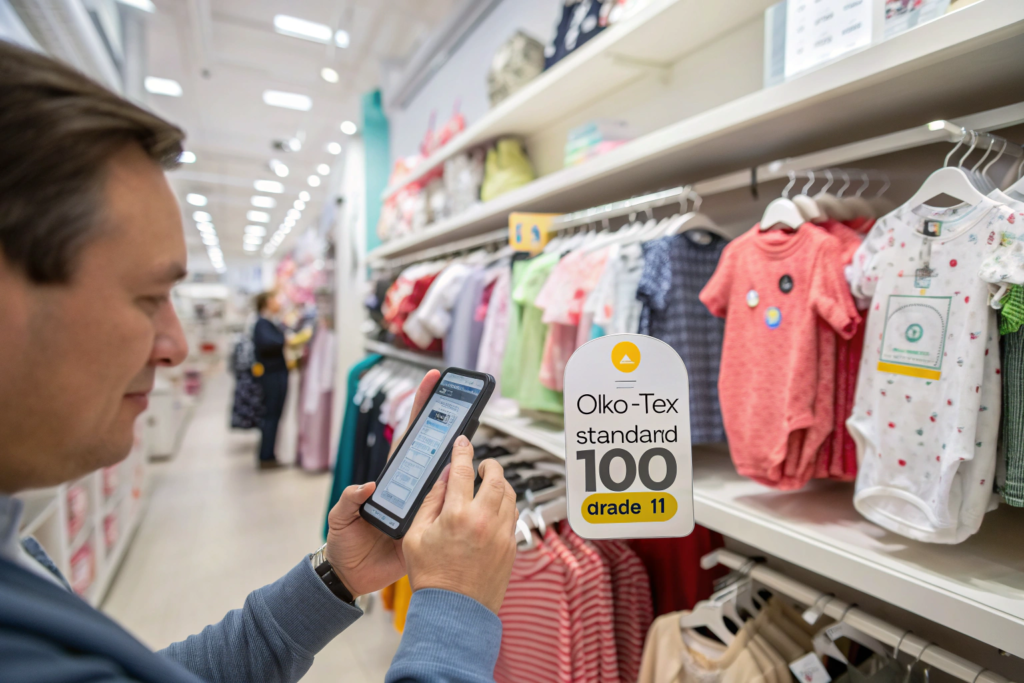
Platforms like Instagram and TikTok have given parents a megaphone. A single viral post about a child's allergic reaction to pajamas can tank a brand. Conversely, "Mommy bloggers" and pediatricians on these platforms frequently educate followers about certifications. They explain the difference between "OEKO-TEX" and "OEKO-TEX Grade 1." This grassroots education creates a bottom-up demand that brands cannot ignore.
We see this in the requests we get. A new, digitally-native brand will come to us with a brief that explicitly states: "All fabrics must be OEKO-TEX Grade 1 certified. This is non-negotiable for our community." They know their customers will ask and will verify. They are building their brand trust on this foundation from day one.
Why are retailers making this a policy?
For retailers, liability and brand reputation are everything. A product recall in their stores damages their name more than the manufacturer's. By setting OEKO-TEX Grade 1 as a sourcing requirement, they are outsourcing and standardizing risk management across their vast supplier base.
A specific case: A large German distributor we work with updated their vendor manual in 2023. It now states that all textile products for children under 3 must have valid OEKO-TEX STANDARD 100 certification, preferably Grade 1. For them, it's a filter for supplier quality. If a factory can manage the complexity of Grade 1 compliance, it signals a level of professionalism and process control that reduces the retailer's overall risk. This creates a virtuous cycle: retailer policies raise the bar, forcing more factories to upgrade, which in turn makes certified products more mainstream. Industry analysis from sources like Common Objective often highlights this trend of retailer-led standardization.
What Are the Practical Challenges for Brands Sourcing Grade 1 Products?
While the benefits are clear, the path to sourcing true Grade 1 products is not without hurdles. The popularity has led to misunderstandings, greenwashing, and supply chain complexities. Smart brands are learning to navigate these challenges carefully.
The main practical challenges include identifying manufacturers with genuine article certification (not just fabric certification), managing higher material and testing costs, ensuring consistent compliance across complex styles (like items with multiple trims), and navigating longer lead times for certified material sourcing and production. Overcoming these requires a committed manufacturer partner, not just a supplier.
How can brands avoid the "fabric-only certification" trap?
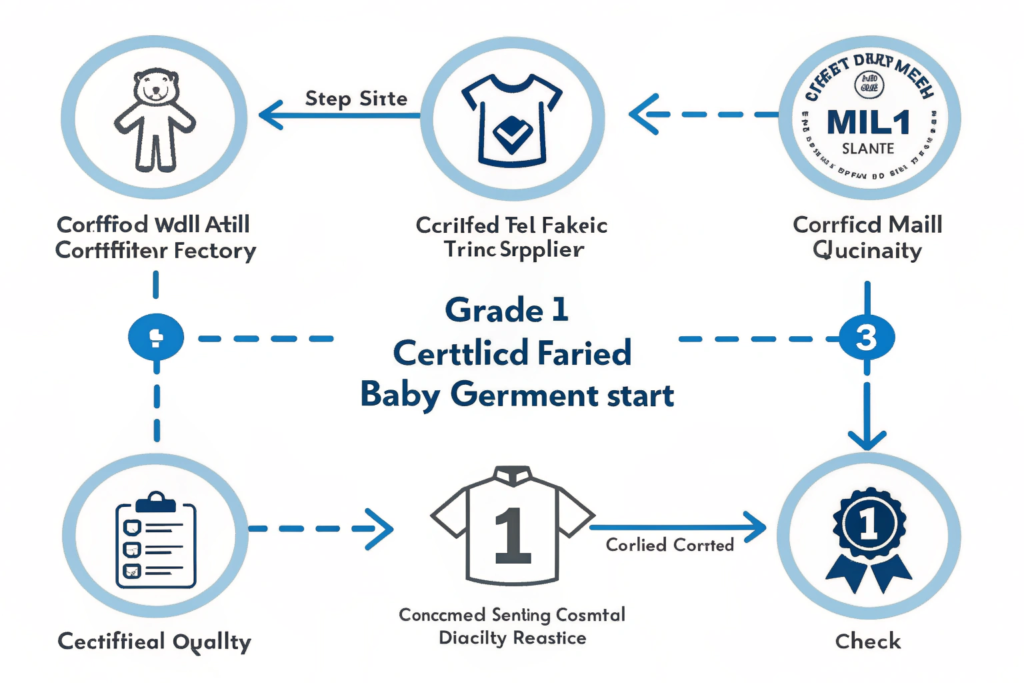
This is the most common pitfall. A fabric mill has a Grade 1 certificate for their greige or finished fabric. A factory buys this fabric and claims the final garment is Grade 1. This is incorrect and risky. The OEKO-TEX certificate is issued to a specific company for a specific article. The final assembler (the garment factory) must have its own certificate that covers the entire finished product, including all non-textile parts.
Actionable Step for Brands: Always ask the factory for their OEKO-TEX certificate number. Use the official OEKO-TEX Check. Verify that the "Applicant" name matches the factory you are contracting with, and the "Article Description" matches your product (e.g., "baby romper"). Do not accept a fabric mill's certificate as proof.
We had a potential client who almost placed a large order elsewhere because the price was lower. They forwarded us the competitor's "certificate." A quick check showed it was issued to a fabric mill in India, not the garment factory in Vietnam. We explained the risk: the Vietnamese factory could be using non-compliant threads, elastics, or prints, voiding any safety claim. The client stayed with us. Our certificate, issued to Shanghai Fumao Clothing Co., Ltd., lists the specific children's wear articles we produce.
How does integrated manufacturing solve these challenges?
An integrated, full-package manufacturer like ours is uniquely positioned to deliver authentic Grade 1 products. Because we control the process from sourcing to shipment, we manage the complexity internally:
- Sourcing: We have established relationships with certified mills and trim suppliers.
- In-House Lab: We conduct pre-production tests on incoming materials, not just rely on supplier certificates.
- Production Control: We prevent contamination and ensure only approved materials are used on the line.
- Single Point of Accountability: The brand deals with us alone for the final, certified product and its supporting documents.
This model directly addresses the pain points of delayed shipments and communication gaps. There are no external subcontractors to blame. Our 5 production lines are dedicated to managing these controlled runs for our North American and European clients, ensuring the reliability that their business models depend on.
Conclusion
The rising popularity of OEKO-TEX STANDARD 100 Grade 1 in North America and Europe is a convergence of powerful forces: discerning consumers, stringent regulations, and risk-averse retailers. It represents a new global benchmark for children's textile safety. For brands, adopting Grade 1 is no longer merely a competitive advantage; it is swiftly becoming a prerequisite for market entry and sustainable growth.
It offers a clear, verifiable path to building unshakable trust, achieving regulatory peace of mind, and commanding a premium in the marketplace. The challenges in sourcing are real, but they are surmountable with the right manufacturing partner—one who views Grade 1 not as a marketing sticker, but as the core principle of their operational DNA.
If you are a brand looking to meet and exceed the safety expectations of the most demanding markets in the world, Grade 1 certification is your strategic imperative. At Shanghai Fumao, we have built our expertise around meeting this exact standard for our international partners. Contact our Business Director Elaine to explore how we can seamlessly integrate OEKO-TEX Grade 1 certification into your next children's wear collection. Begin the conversation at elaine@fumaoclothing.com.