Three months ago, a major U.S. golf retailer announced a new vendor policy: all apparel must have third-party chemical safety verification by 2025 Q1. Panic spread through their supply base. Brands that had treated certification as a future "maybe" suddenly faced a hard deadline. One brand, already working with us on their OEKO-TEX certified line, simply forwarded the email with a note: "Thank you for pushing us to do this last year." They were ready; their competitors were scrambling. This isn't an isolated event. It's a tipping point.
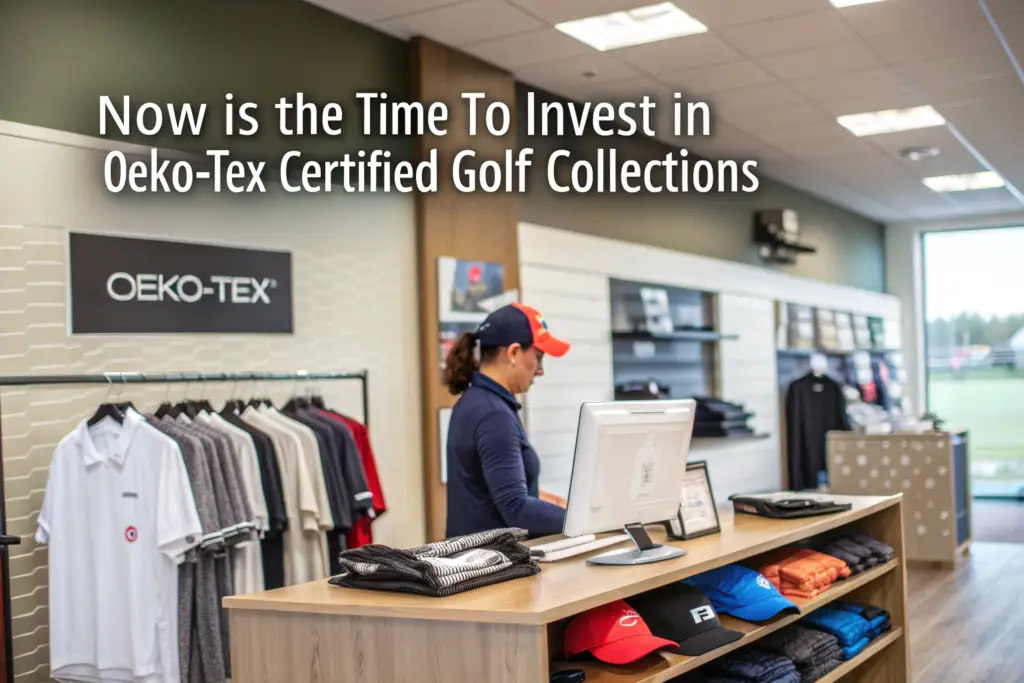
Now is the time to invest in OEKO-TEX certified golf collections because a perfect storm of market demand, regulatory pressure, and competitive advantage has made it a strategic imperative, not a discretionary upgrade. Delaying means risking immediate sales, ceding market share to forward-thinking brands, and incurring higher future costs during a rushed, reactive compliance scramble. For brands and buyers, this investment is the most effective way to future-proof your business against rapidly evolving standards while capturing the growing segment of conscious consumers today.
The window for a planned, cost-effective transition is closing. Let's examine the converging factors that make immediate action not just wise, but urgent.
How Is Consumer Demand Changing the Golf Apparel Landscape?
Leading paragraph: The golfer of five years ago prioritized brand logos and classic style. Today's golfer is different. They are younger, more health-conscious, and digitally native. They read labels, research brands, and share experiences online. A 2023 survey by a major golf association found that 68% of regular golfers under 40 consider "sustainable or ethically made" attributes when buying apparel. This isn't a niche trend; it's the new mainstream.
Featured paragraph: Consumer demand is shifting decisively toward verified safety and responsibility. Golfers are increasingly aware of issues like "forever chemicals" (PFAS) in water-repellent finishes and allergens in dyes. They don't just want promises; they want proof. The OEKO-TEX label provides an instantly recognizable, globally trusted proof point. For brands, this shift represents a massive opportunity: you are no longer just selling a shirt; you are selling peace of mind and alignment with values. Brands that communicate this certification effectively are seeing stronger customer loyalty and higher average order values. At Shanghai Fumao, we've observed that orders incorporating certification storytelling in their packaging and marketing see a significant reduction in post-purchase inquiries about "chemical smell" or "skin comfort."

What Does the Data Say About Willingness to Pay?
Market research is conclusive. Studies consistently show that a substantial portion of consumers, particularly in the premium sportswear segment, are willing to pay a price premium for products with credible sustainability and safety certifications. While OEKO-TEX certified materials may increase your COGS (Cost of Goods Sold) by 5-15%, the ability to command a 10-20% retail price increase while enhancing brand perception makes the economics compelling. It transforms a cost center into a value driver. A brand we partner with introduced a certified line alongside their standard line; the certified line achieved a 22% higher sell-through rate at full price.
How is Social Media Amplifying This Demand?
Social media platforms, especially Instagram and TikTok, have become discovery and education channels. Influencers and micro-influencers in the golf and wellness spaces are increasingly discussing topics like "clean beauty" and "non-toxic living," which naturally extend to apparel. A single post from a trusted figure questioning the safety of common textiles can drive thousands of questions to brands. Having OEKO-TEX certification provides a ready, reputable answer that can be easily communicated in captions, stories, and comments, turning a potential vulnerability into a community-building strength.
What Regulatory Pressures Are Making Certification Inevitable?
Leading paragraph: Consumer sentiment is one thing; government regulation is another. The regulatory environment in key markets like the European Union and U.S. states (e.g., California) is moving with unprecedented speed to restrict harmful chemicals in consumer goods, including textiles. Compliance is shifting from a "best practice" to a legal requirement.
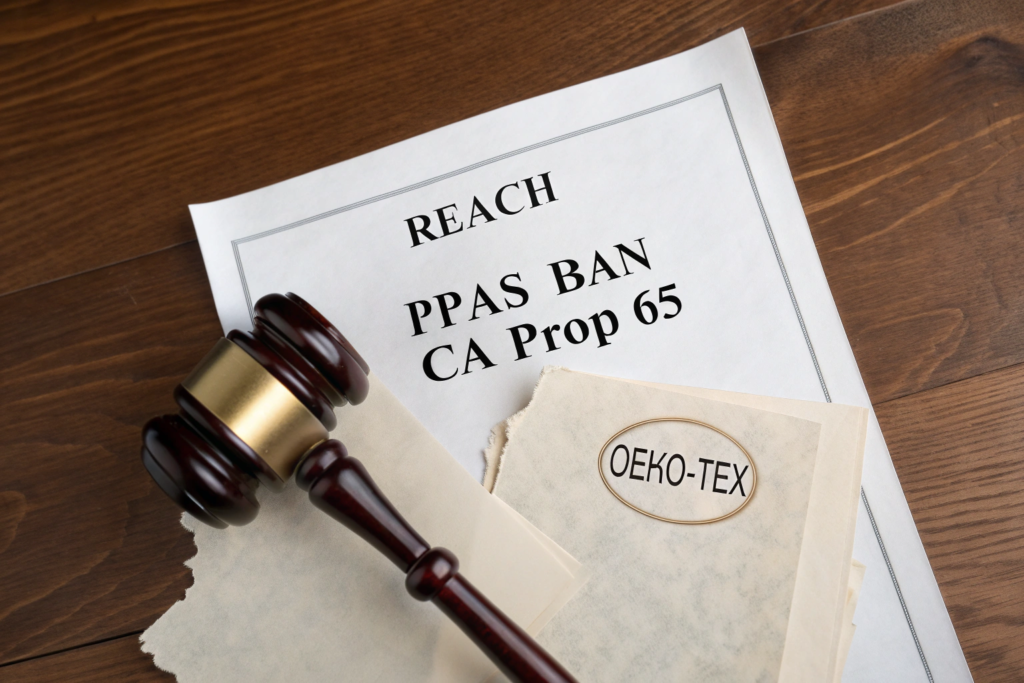
Featured paragraph: Regulatory pressures are making certification inevitable by tightening restrictions and increasing enforcement. The EU's REACH regulation and its SCIP database (requiring declaration of Substances of Concern In Products) create a complex compliance burden. In the U.S., states are enacting laws like the California Safer Consumer Products regulations. OEKO-TEX STANDARD 100 is explicitly designed to help companies comply with these evolving global regulations. For an importer or brand, using certified materials is the most efficient risk management strategy. It provides a defensible "safe harbor" during customs checks or product safety audits. We have seen shipments for non-certified goods held for weeks for random testing, while certified shipments clear smoothly.
Are There Specific Bans on the Horizon That Affect Golf Wear?
Yes. Two critical areas are:
- PFAS (Per- and polyfluoroalkyl substances): Used in durable water repellent (DWR) finishes on golf outerwear and rain suits. Multiple U.S. states and the EU are moving toward near-total bans. OEKO-TEX already severely restricts PFAS.
- Microplastics from Synthetic Fibers: The EU is finalizing broad restrictions on intentionally added microplastics, which includes certain fabric finishes. OEKO-TEX's ecological criteria help navigate these coming rules.
Investing in a certified collection now means your products are already aligned with these future bans, avoiding costly last-minute reformulations and inventory write-offs.
What is the Cost of Reactive vs. Proactive Compliance?
The cost differential is staggering.
- Proactive (Now): Planned fabric sourcing, integrated testing, gradual brand transition. Cost is an investment.
- Reactive (Later): Emergency fabric replacement, expedited testing fees, potential stock obsolescence, missed order deadlines, and reputational damage from being "behind." Cost is a penalty.
A brand that waited until their retailer's deadline faced a 300% surcharge for expedited fabric testing and had to air freight their initial stock to meet the launch window, erasing their margin for the season.
How Does Early Adoption Create a Sustainable Competitive Moat?
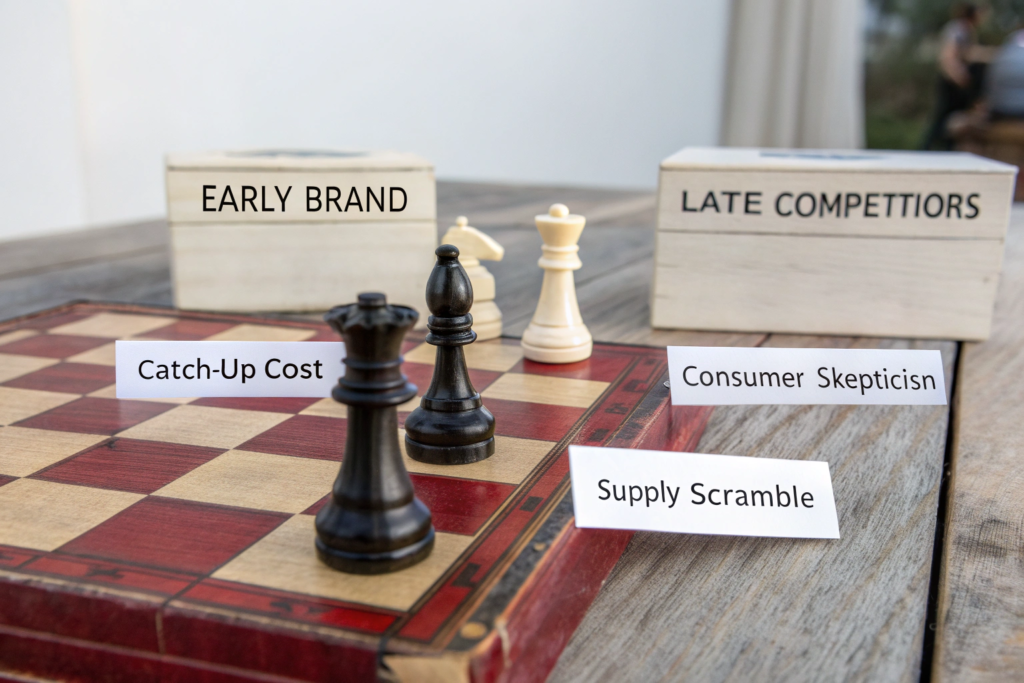
Leading paragraph: In business, a "moat" is a durable competitive advantage. When a new standard emerges, the first movers who build expertise, supplier relationships, and brand recognition around it create a moat that is difficult for latecomers to cross quickly. In the certification space, this moat is built on trust, efficiency, and market positioning.
Featured paragraph: Early adoption of OEKO-TEX certification creates a sustainable competitive moat by establishing your brand as a trusted leader in safety and responsibility. You build internal expertise, secure preferential access to certified fabric capacity at mills, and develop efficient production processes. This allows you to offer certified products at better margins and with greater reliability than competitors who are just starting. Retailers and consumers come to associate your brand with this forward-thinking standard. For example, a brand that launched its certified line two years ago is now the "go-to" recommendation in online forums for golfers with sensitive skin—a powerful, organic marketing asset.
How Does This Affect Relationships with Key Retailers?
Retailers are desperate for brands that simplify their risk. By being certification-ready, you become a low-risk, high-value partner. You help them meet their own ESG (Environmental, Social, and Governance) goals and compliance requirements effortlessly. This can lead to preferential shelf placement, inclusion in "conscious" collections, and stronger negotiating power. A mid-sized brand we work with secured a prime spot in a national golf retailer's "Performance & Planet" section specifically due to their certified status, outperforming larger, non-certified brands in that category.
Can This Moat Protect Against Economic Downturns?
Yes. During economic uncertainty, consumers become more deliberate. They may buy less, but they seek durable value—products that last longer and align with their values, justifying the spend. A certified golf collection, positioned as a safer, longer-lasting investment, often proves more recession-resilient than unbranded, purely price-driven commodity apparel. It creates a reason to choose your brand when budgets are tight.
What Are the Immediate First Steps to Launch a Certified Line?
Leading paragraph: The case for action is clear. But moving from decision to execution can feel overwhelming. The process is methodical and benefits greatly from partnership with an experienced manufacturer. The goal is to start with a manageable, impactful pilot that proves the concept and builds internal confidence.
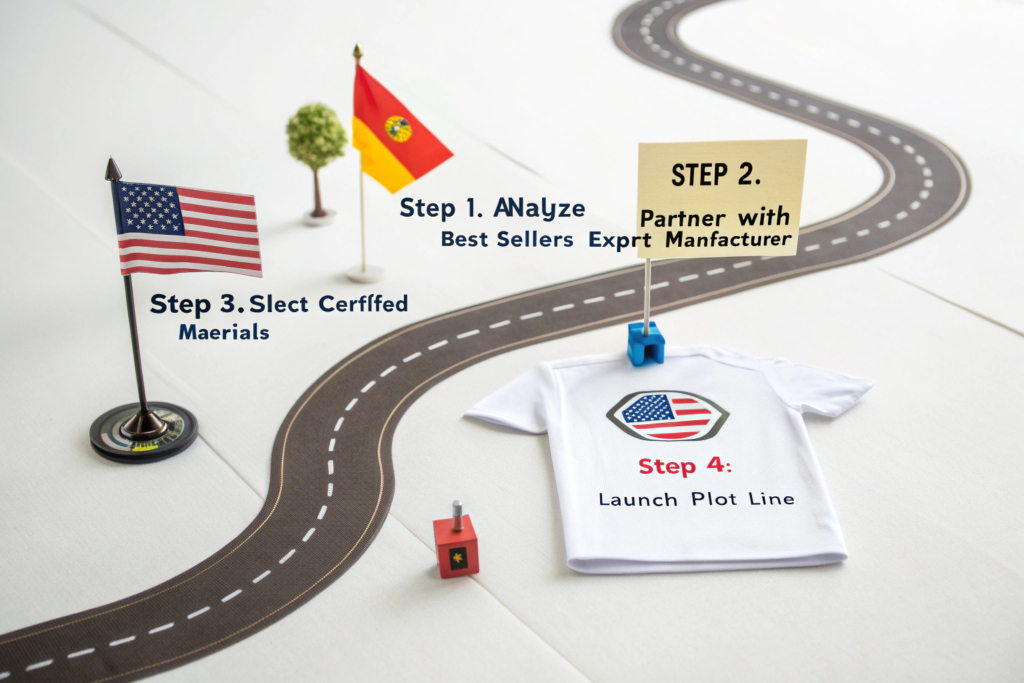
Featured paragraph: The immediate first steps are: 1) Portfolio Audit: Identify 1-2 best-selling, fabric-simple styles (e.g., a core polo, a basic performance short) for your pilot collection. 2) Partner Selection: Engage a factory like Shanghai Fumao with proven OEKO-TEX experience, pre-certified material options, and full-package manufacturing capabilities. 3) Material Selection: Work with the factory to choose from their library of pre-certified fabrics that match your performance and price needs. 4) Sample & Test: Develop a pre-production sample and submit it for certification. This phased approach minimizes risk, controls cost, and delivers a market-ready product in 3-4 months.
How to Budget for the Initial Investment?
Budget with a pilot mindset. Key cost components:
- Certification Testing Fees: $500 - $2,000 per article, depending on complexity.
- Potential Fabric Cost Increase: 5-15% for certified versus standard equivalent.
- Labeling/Hangtag Updates: Minimal cost.
The total additional cost for a pilot of 2 styles is often less than $5,000—a modest investment to de-risk a full-line transition and gather market data. Our team at Shanghai Fumao helps clients model this precisely, often finding that bulk purchasing efficiencies offset a large portion of the perceived premium.
What is the Most Common Mistake to Avoid in the First Step?
The most common mistake is over-complication. Brands try to certify their entire, most complex line all at once. This leads to delays, cost overruns, and frustration. Start simple. Choose a high-volume, low-complexity product. Use a standard, pre-certified fabric. Succeed there, learn the process, and then scale. Success with a simple polo creates the momentum and internal knowledge to tackle jackets, patterned garments, and more complex constructions later.
Conclusion
The convergence of informed consumer demand, tightening global regulations, and the opportunity to build a lasting competitive advantage has created a narrow, critical window of opportunity. Investing in an OEKO-TEX certified golf collection today is not merely adapting to a trend; it is strategically positioning your brand for leadership, resilience, and growth in the next era of the apparel industry.
Delay is the greatest risk. The costs of catching up later—in dollars, market share, and brand relevance—will far outweigh the investment required to lead now.
The journey begins with a single, deliberate step. As a factory that has guided numerous brands through this exact transition, Shanghai Fumao is equipped to be your partner in this essential evolution. From certified material sourcing to seamless DDP mode export, we provide the stability and expertise you need. Contact our Business Director Elaine to schedule a consultation and start your certified pilot project: elaine@fumaoclothing.com. The future of golf wear is certified. Build yours today.