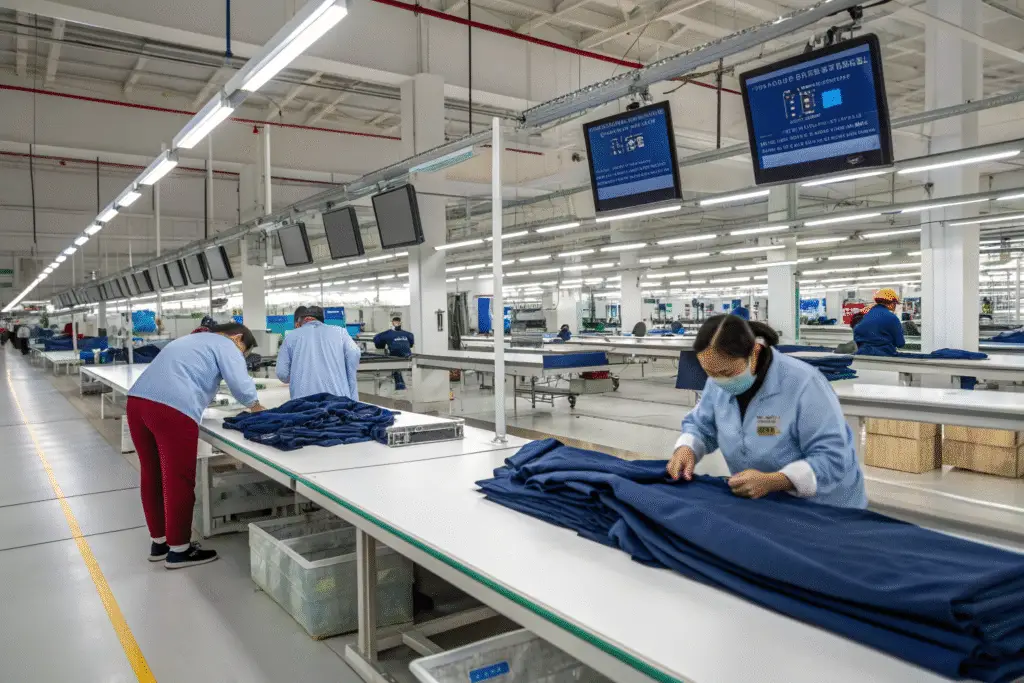
When I first learned about lean manufacturing many years ago, I didn’t imagine how much it would transform our clothing production. As a factory owner, I used to think efficiency was just about working faster. But in reality, lean is about eliminating waste, improving quality, and creating a system that consistently delivers better results.
Lean manufacturing is vital because it enables apparel factories to produce high-quality garments faster, with less waste, and at lower costs. This system benefits both the manufacturer and the buyer, ensuring smoother operations and stronger partnerships.
In this article, I will explain how lean principles work in the apparel industry, why they are critical for quality, how they reduce waste, and how they improve delivery speed. These insights come directly from our experience at Fumao Clothing, where we have applied lean to every stage of production.
Understanding Lean Principles in Apparel
When people hear “lean manufacturing,” they often think it means cutting costs aggressively. In reality, lean is about identifying and removing activities that do not add value to the customer.
In apparel production, lean focuses on value stream mapping, continuous improvement, and empowering workers to solve problems at their level. This means every step, from fabric cutting to final packing, is optimized to reduce unnecessary movement, waiting, overproduction, and defects.
Lean was originally developed by Toyota for the automotive industry, but it adapts perfectly to clothing production. In our factory, we use Kaizen meetings weekly to discuss improvements, and we implement 5S workplace organization to keep production areas clean and efficient.
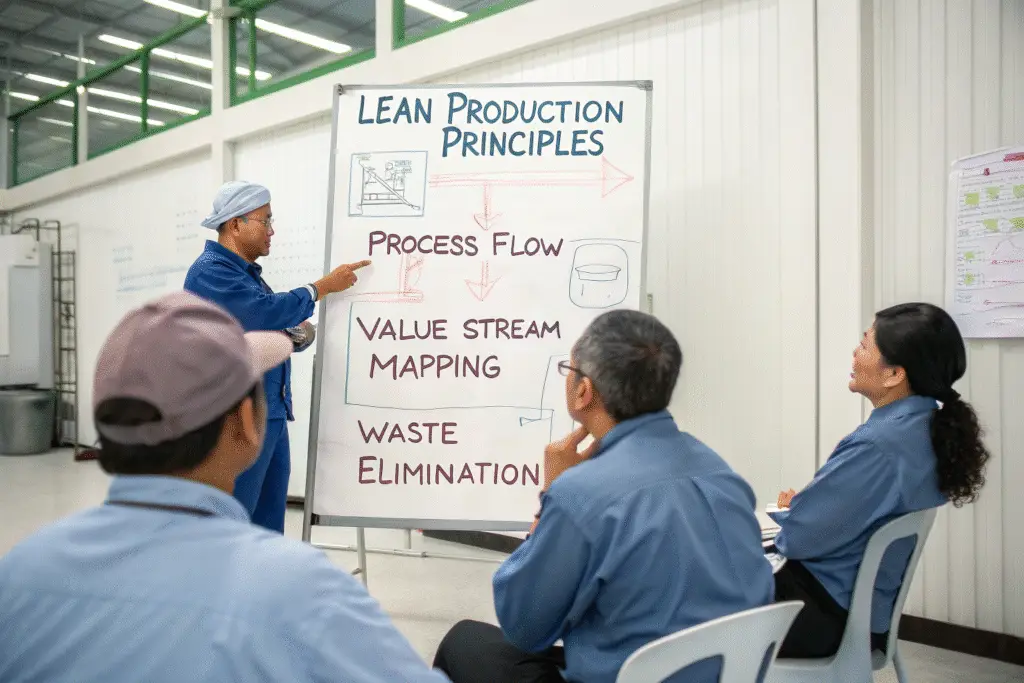
What are the core lean manufacturing principles?
According to Lean.org, the five core principles are:
- Define value from the customer’s perspective
- Map the value stream
- Create flow
- Establish pull
- Seek perfection
These principles help apparel factories align every process step to customer needs. When we apply them, we prevent waste such as overstocking, unnecessary transportation, and defective sewing.
How does lean benefit both factory and buyer?
For buyers, lean means consistent quality and predictable delivery. For factories, it improves worker morale, reduces rework, and boosts output without needing more space or machines. Platforms like Manufacturing.net often highlight lean’s role in increasing profitability and competitiveness.
How Lean Improves Clothing Quality
In the clothing industry, quality is everything. No matter how trendy a design is, if stitching fails or fabric pills after one wash, customers will not buy again. Lean manufacturing directly addresses this by embedding quality into every production step.
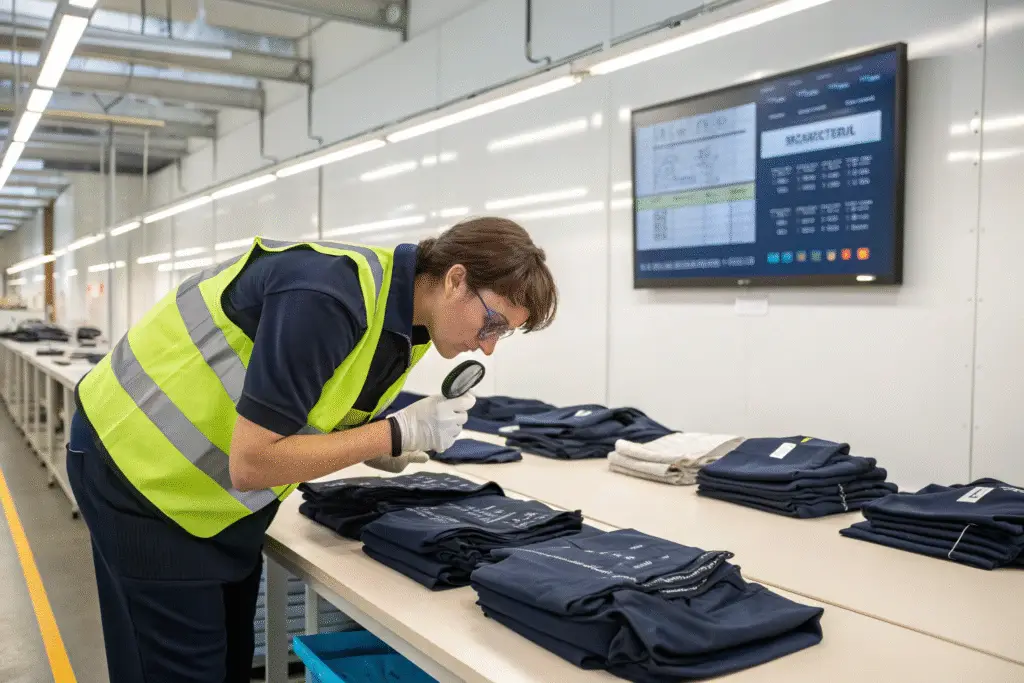
Lean systems use in-process quality control instead of end-of-line inspection alone. This means we catch defects early, when they are cheaper to fix.
In our factory, each sewing line has a designated quality checker who inspects pieces at regular intervals. This reduces the number of defective garments reaching the final stage.
How does lean prevent quality issues?
We use tools like Poka-Yoke (mistake-proofing) to avoid errors. For example, sewing machines are set with guides to ensure straight seams. According to Quality Digest, these small changes dramatically reduce defects.
We also rely on root cause analysis when a defect is found, instead of just fixing it temporarily. This ensures the same mistake doesn’t happen again.
Why is consistent quality a competitive advantage?
When buyers receive consistent quality, they build trust in the supplier. This trust leads to repeat orders and long-term contracts. Platforms like Just-Style often report that brands choose suppliers with proven quality records over those with lower prices but higher defect rates.
Reducing Waste in Garment Production
Waste in clothing production is not just physical—like fabric scraps—but also time, energy, and overproduction. Lean manufacturing targets all forms of waste systematically.
By reducing waste, lean helps apparel factories save costs and become more sustainable. This matters to both the environment and the bottom line.
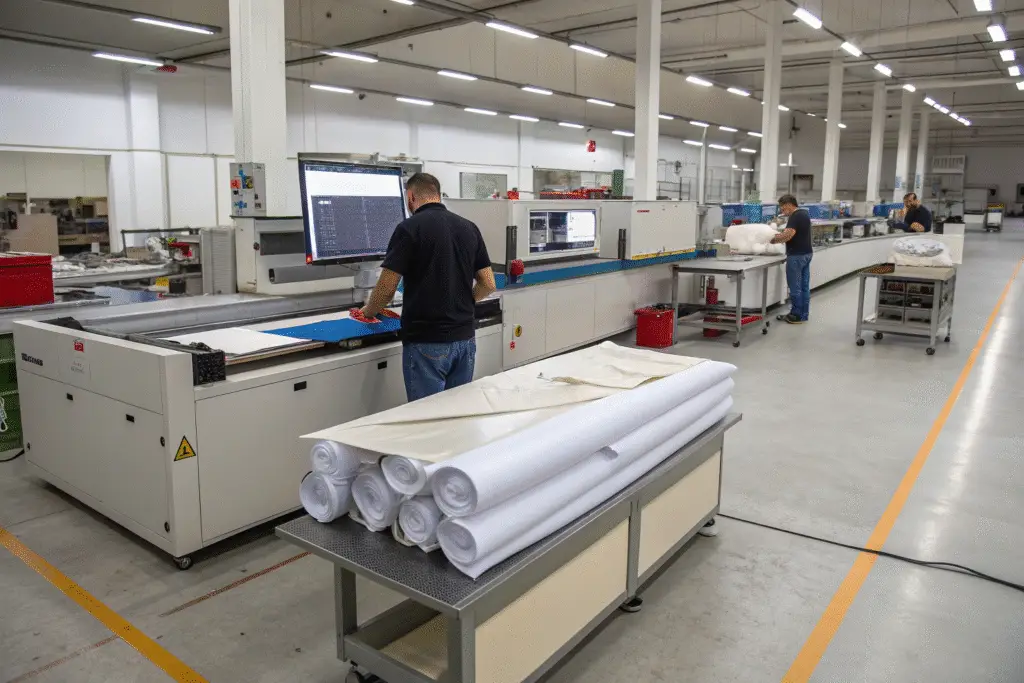
At Fumao Clothing, we have reduced fabric waste by implementing marker optimization software, which arranges patterns on fabric to use as much material as possible.
What are the main types of waste in apparel production?
The “Seven Wastes” from lean include:
- Overproduction
- Waiting
- Transportation
- Overprocessing
- Inventory
- Motion
- Defects
Sources like Lean Enterprise Institute explain how these apply in manufacturing, including apparel.
How can waste reduction increase profits?
Less waste means lower costs per unit, which allows competitive pricing without sacrificing margins. Brands increasingly value suppliers that show waste reduction efforts, especially for sustainability reports, as noted by Sourcing Journal.
Boosting Efficiency and Delivery Speed
In apparel manufacturing, speed is not just about working faster—it’s about eliminating bottlenecks so the process flows without interruptions.
Lean improves delivery speed by aligning production pace with customer demand and removing unnecessary delays.
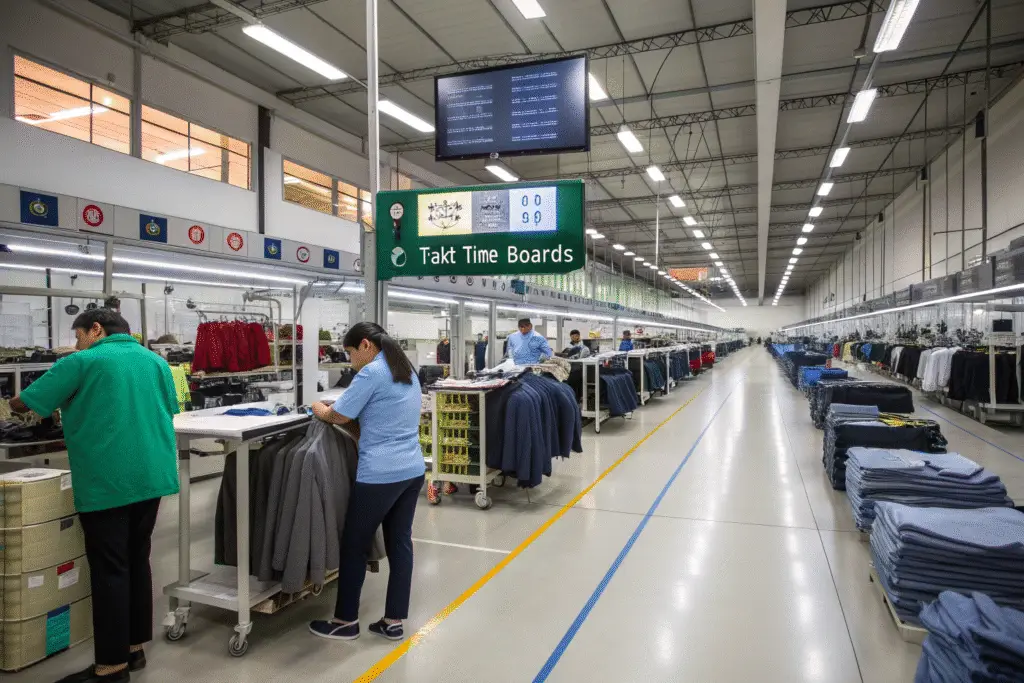
In our factory, we use takt time to balance workloads across sewing lines, ensuring no station is overburdened while another waits.
How does lean shorten lead times?
By eliminating non-value-added steps, orders move from fabric cutting to shipping faster. As Industry Week explains, this approach reduces both manufacturing and waiting times.
We also apply pull systems so production starts only when there is a confirmed order, avoiding excess stock that slows operations.
Why is faster delivery a market advantage?
Fashion trends move quickly. Being able to deliver in weeks instead of months can mean winning a contract over a competitor. Many buyers choose suppliers who can consistently meet tight deadlines, as seen on FashionUnited.
Conclusion
Lean manufacturing is not a passing trend—it is a proven system that transforms clothing production. By focusing on value, improving quality, reducing waste, and speeding delivery, lean makes apparel factories more competitive and sustainable.
At Shanghai Fumao Clothing, lean is part of our DNA. We believe in delivering consistent quality, on time, at a competitive price. If you want a production partner who applies these principles every day, contact our Business Director Elaine at elaine@fumaoclothing.com.