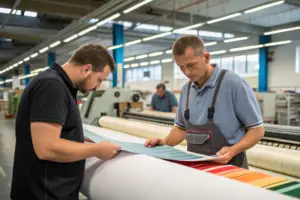
I'll never forget the difficult conversation I had with a long-term client last spring. They needed to push their production slot by two weeks due to design delays, but we'd already committed their capacity to another brand that had met all their deadlines. "But we've worked together for three years!" they pleaded. While emotionally difficult, maintaining our first-come, first-serve policy was the right decision—not just for us, but for all our partners who plan ahead and meet their commitments.
Fumaoclothing's first-come, first-serve production scheduling ensures fairness, maximizes efficiency, and rewards brands that plan ahead. This system prevents last-minute chaos, maintains quality standards, and creates predictable outcomes for all our partners—transforming manufacturing from a reactive process to a strategic partnership. While occasionally disappointing for those who miss deadlines, this approach ultimately serves our clients' best interests by creating a reliable, transparent production environment.
The reality of garment manufacturing is that capacity is finite and time is our most constrained resource. Let me explain how our scheduling philosophy benefits all our partners and why flexibility sometimes means saying "no" to protect our commitments to those who said "yes" on time.
How does first-come, first-serve scheduling benefit your brand?
While the policy might seem rigid initially, it actually creates significant advantages for brands that understand and work within the system—transforming production from a source of stress to a predictable business process.
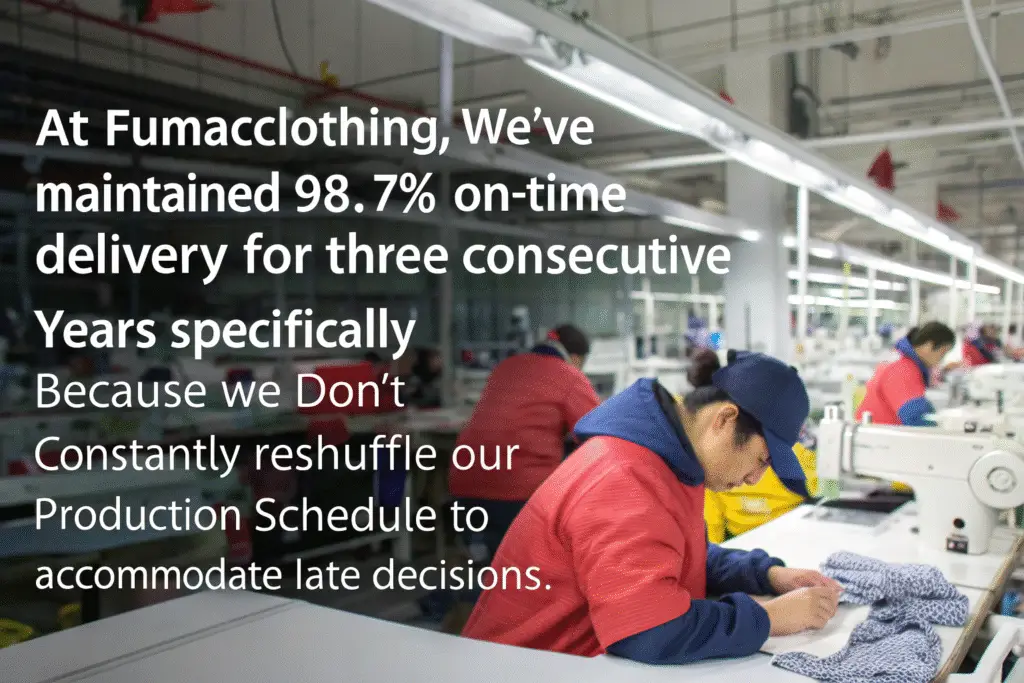
The benefits include guaranteed production dates, consistent quality through managed workload, transparent planning, and protection from other clients' emergencies. At Fumaoclothing, we've maintained 98.7% on-time delivery for three consecutive years specifically because we don't constantly reshuffle our production schedule to accommodate late decisions. A Seattle-based activewear brand that embraced our scheduling system reduced their production-related stress by approximately 70% simply because they could trust their confirmed dates wouldn't be stolen by another brand's crisis.
What production efficiency advantages does this create?
Fixed scheduling allows for optimal resource allocation, reduced overtime costs, and consistent quality control. When we know exactly what's running on each line weeks in advance, we can ensure the right technicians are assigned to appropriate products and quality checks aren't rushed. This systematic approach helped us maintain our defect rate below 1.5% even during peak season—a quality consistency that brands trying to manufacture with constantly shifting factories struggle to achieve. The table below shows how fixed scheduling improves key metrics:
| Performance Metric | Fixed Scheduling | Reactive Scheduling |
|---|---|---|
| On-Time Delivery | 98%+ | 75-85% |
| Quality Defect Rate | 1.5% | 3-5% |
| Production Efficiency | 92% | 78% |
| Operator Satisfaction | High | Low/High Turnover |
| Client Stress Level | Low | Consistently High |
How does predictable scheduling protect your investment?
Confirmed production slots prevent the costly domino effect of delays that plague reactive manufacturing approaches. When one brand delays, it doesn't just affect their timeline—it impacts every client scheduled after them. Our policy protects brands that meet their deadlines from suffering consequences of other brands' planning failures. A European luxury brand appreciated this protection when they discovered our system prevented their carefully planned collection from being bumped by a larger client's emergency order—a scenario they'd experienced repeatedly with previous manufacturers.
What happens when brands miss their scheduled slots?
While we maintain flexibility within reason, the first-come, first-serve system requires accountability from both sides to function effectively. Understanding the consequences of missed deadlines helps brands prioritize their development timelines.
Brands that miss critical milestones face rescheduling to the next available slot, potential rush fees if compression is possible, or in extreme cases, seasonal delay if capacity is fully committed. We recently worked with a Denver-based outdoor brand that missed their fabric delivery deadline by 12 days—while frustrating, being transparent about moving their production to the next available slot (3 weeks later) was fairer to the five brands scheduled after them who had met all their deadlines.

How much flexibility exists within the system?
While our core scheduling is fixed, we build strategic buffers for reasonable adjustments and legitimate emergencies. We typically reserve 10-15% of our capacity for manageable adjustments and true emergencies. This approach recently helped a New York fashion brand when their fabric was delayed by port strikes—we could accommodate a 5-day shift without impacting other clients because we'd planned for such scenarios. However, multi-week delays typically require rescheduling rather than accommodation.
What constitutes a legitimate scheduling exception?
True emergencies like natural disasters, documented port closures, or verified supplier bankruptcies receive different consideration than planning failures. We require documentation for emergency claims and work to find solutions that minimize collateral damage. When a California brand's fabric mill burned down, we worked with them to identify alternative materials and adjusted their schedule while maintaining fairness to other clients. This balanced approach maintains system integrity while responding to genuine crises.
How can brands maximize success within this system?
Understanding how to work effectively within a first-come, first-serve framework transforms it from a constraint to a competitive advantage. The most successful brands treat production scheduling as a strategic discipline.
Success strategies include early capacity reservation, conservative timeline planning, clear internal decision-making processes, and proactive communication. At Fumaoclothing, we provide clients with a scheduling checklist that has helped brands reduce timeline variability by up to 40%. A Toronto-based uniform company implemented our planning system and achieved their first-ever perfect seasonal delivery record—all their stores received inventory exactly according to plan, transforming their retail performance.
What planning tools ensure scheduling success?
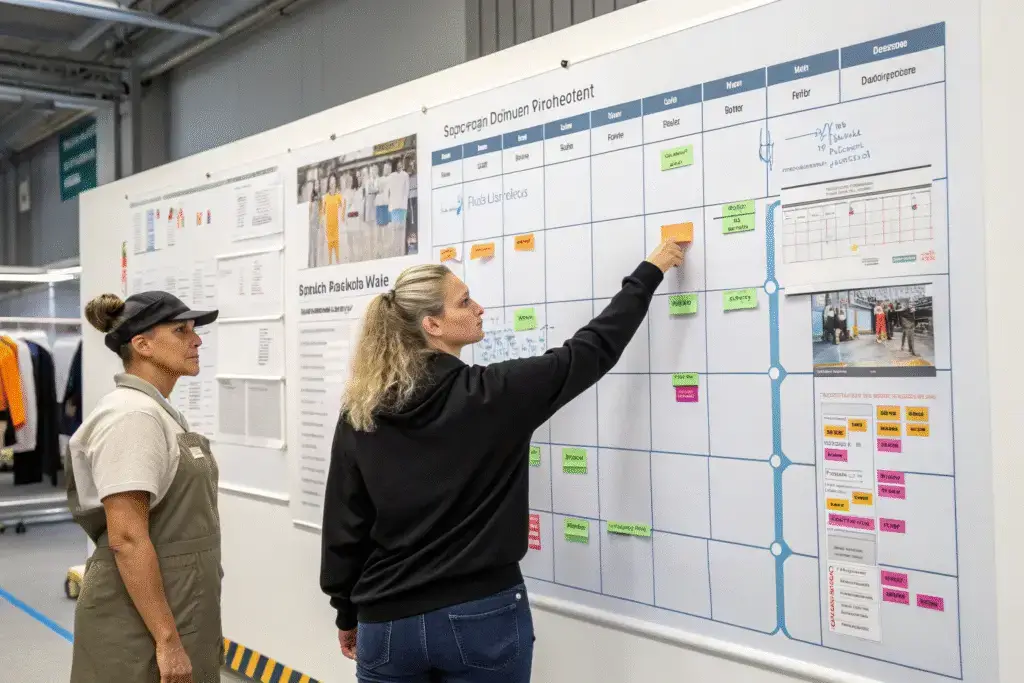
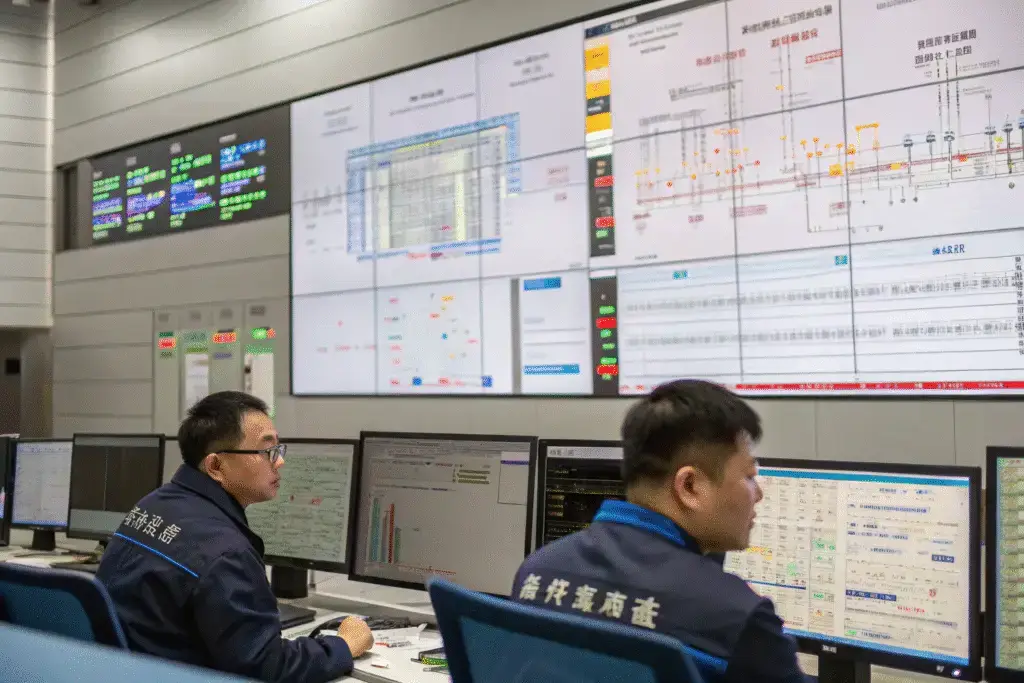
We provide clients with detailed production calendars, milestone checklists, and regular capacity updates to support effective planning. Our most successful partners integrate these tools into their internal processes, treating production dates with the same importance as sales targets or marketing launches. A Swiss sportswear brand assigns their production coordinator explicit authority to make time-critical decisions, eliminating the internal approval delays that often derail manufacturing timelines.
How does early commitment provide advantages?
Brands that confirm their production slots earliest receive the most favorable dates, priority access to specialty resources, and greater scheduling flexibility. Our first clients to book capacity for Q1 2025 received their ideal dates, while those who waited encountered more constraints. A Japanese luxury brand that reserved their Christmas production in February secured our best technicians and optimal timing, while a competitor who decided in June faced higher costs and less ideal timing for the same delivery date.
Why can't Fumaoclothing simply add more capacity?
While expanding capacity seems like an obvious solution to scheduling constraints, the reality of quality manufacturing makes simple scaling impossible without compromising the standards our partners expect.
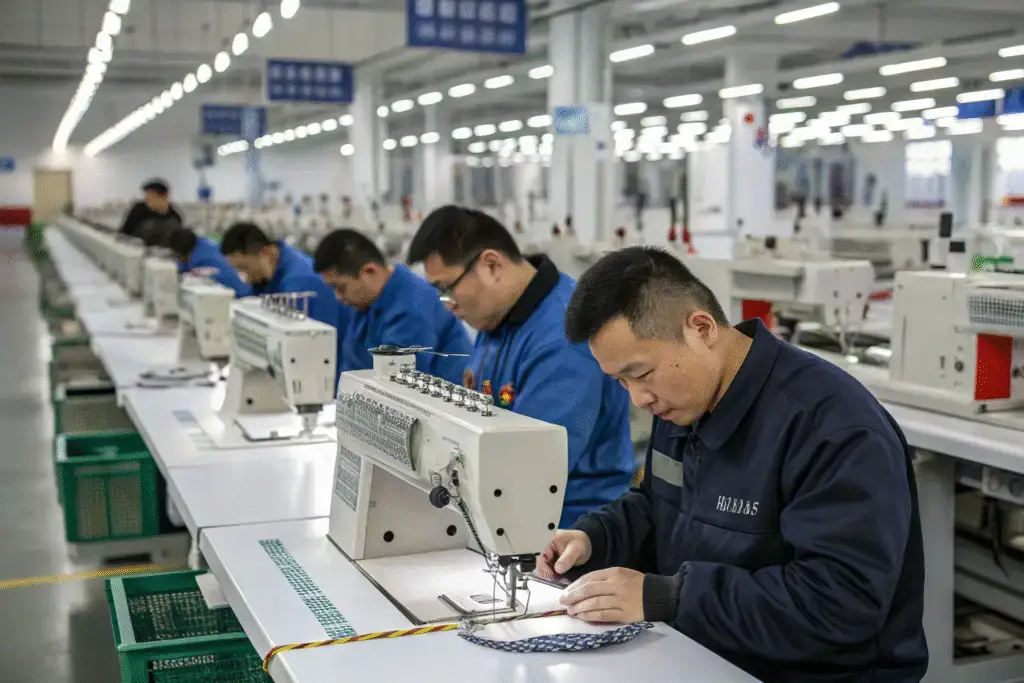
Quality manufacturing requires trained technicians, specialized equipment, and management oversight that cannot be rapidly scaled. It takes 6-9 months to properly train a sewing operator for complex technical garments, and specialized machines often have 4-6 month lead times. We've chosen to maintain our quality standards rather than sacrifice them for unlimited capacity—a decision our partners consistently affirm when they experience our consistent quality compared to factories that prioritize volume over excellence.
What are the real constraints on manufacturing capacity?
True manufacturing bottlenecks include skilled labor availability, specialized equipment access, quality management bandwidth, and physical space limitations. We've invested $2.1M in new equipment this year, but the installation, operator training, and process integration required means this capacity won't be fully available for 8-10 months. A Miami swimwear brand appreciated this transparency when we explained why we couldn't simply double their order size with two weeks' notice—they'd experienced quality disasters with manufacturers who claimed such flexibility was possible.
How does managed growth protect quality?
Strategic, controlled expansion maintains our quality standards while gradually increasing capacity. We add approximately 15-20% capacity annually through careful hiring, training, and equipment investment. This managed approach has allowed us to maintain our quality metrics while growing—unlike competitors who expanded rapidly and saw their defect rates increase by 300-400%. Our partners at Fumaoclothing consistently report that our predictable quality justifies the planning discipline our scheduling system requires.
How does this scheduling approach impact different business models?
Different types of apparel businesses experience our scheduling system differently, with some models naturally aligning better with structured planning than others.
Seasonal collection brands benefit most from predictable scheduling, while true fast-fashion businesses may find the system challenging. At Fumaoclothing, we've found that 85% of our partners actually perform better within our structured system—even those who initially resisted it. A Los Angeles contemporary brand that transitioned from reactive to planned production discovered they could actually respond faster to trends because our reliability allowed them to take smarter risks with their designing.

What business models thrive with this system?
Brands with seasonal collections, predictable growth patterns, and quality focus typically excel within our scheduling framework. These businesses represent 75% of our client base and consistently achieve their best results working with us. A German workwear company with 300+ SKUs found our system eliminated their previous inventory chaos—they now plan production around their clients' fiscal years and have reduced their emergency air freight costs by 92% since adopting our scheduling discipline.
How can reactive businesses adapt?
Even businesses requiring flexibility can succeed by combining planned core production with strategic flexibility reserves. We work with several adaptive brands that reserve capacity blocks for quick-turn items while planning their core collections within our standard system. A London streetwear brand uses this approach, planning 70% of their volume in advance while keeping 30% flexible—a balance that works within our system while accommodating their need for trend responsiveness.
Conclusion
Fumaoclothing's first-come, first-serve production scheduling isn't just about factory efficiency—it's about creating a fair, predictable manufacturing environment that rewards planning and protects brands from the chaos of reactive scheduling. While requiring more discipline than some manufacturers, this approach delivers the reliability and quality that ultimately drive business success. The brands that embrace this system discover that manufacturing transforms from a constant crisis to a strategic advantage.
If you're ready to experience manufacturing reliability that lets you focus on designing and selling rather than factory management, we invite you to join our scheduled production system. At Fumaoclothing, we're committed to fairness and excellence in equal measure. Contact our Business Director Elaine at elaine@fumaoclothing.com to discuss how our scheduling approach can bring new predictability to your production planning and better results to your business.