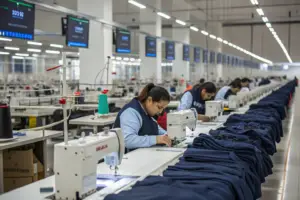
The textile and apparel industry is one of the most resource-intensive and complex supply chains in the world. Every year, it produces more than 92 million tons of textile waste and is responsible for nearly 10% of global carbon emissions, according to the Ellen MacArthur Foundation. For decades, consumers only saw a paper label stitched inside a garment—“100% cotton” or “Made in China”—while the real story about how the product was grown, dyed, transported, and its potential recyclability remained hidden. This lack of visibility has led to problems such as greenwashing, mistrust, and massive inefficiencies in recycling systems.
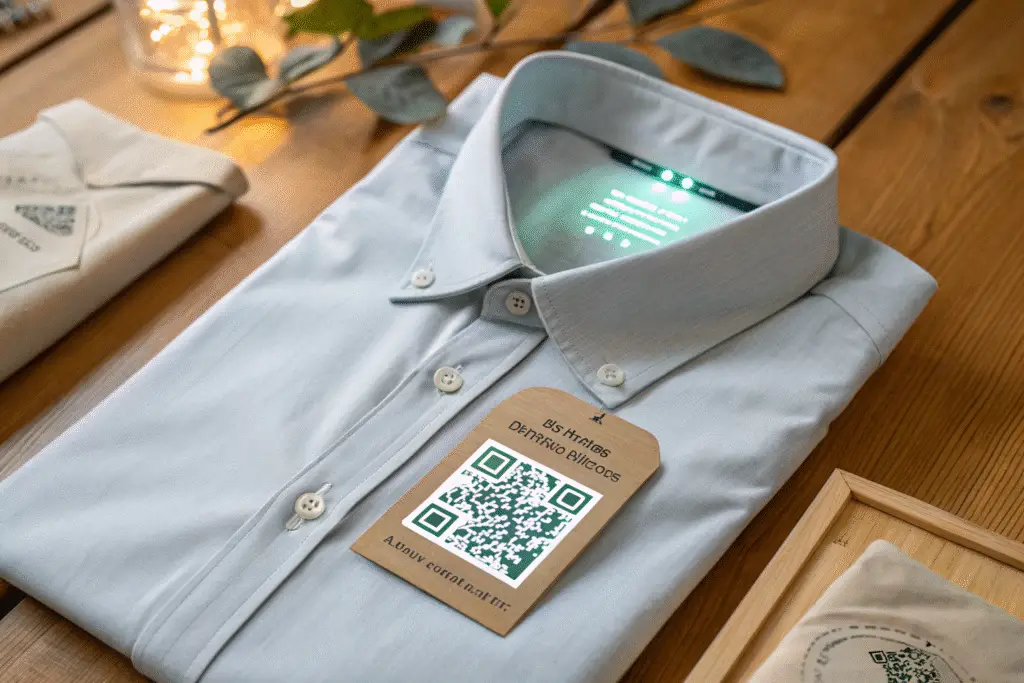
The Digital Fiber Passport, often referred to as the Digital Product Passport (DPP), is revolutionizing textiles by embedding a digital identity into each garment that records its full journey from fiber to finish. This small innovation—usually in the form of a scannable QR code or NFC chip—has the power to change how clothes are produced, sold, reused, and recycled. It provides precise fiber composition, environmental impact data, and end-of-life instructions that can be accessed by retailers, regulators, recyclers, and even consumers with a single scan.
As sustainability regulations tighten in the European Union and consumer demand for transparency grows, the Digital Fiber Passport is moving from a futuristic concept to an industry standard that will soon be mandatory for textile exporters worldwide.
Transparency From Fiber to Finish
Traditional textile labels provide only the bare minimum of information. For example, a consumer buying a dress might see “80% polyester, 20% cotton,” but this does not reveal whether the polyester was recycled, if the cotton was organic, or what kind of chemicals were used in dyeing. These gaps allow companies to market products as “sustainable” without solid proof, fueling consumer mistrust.
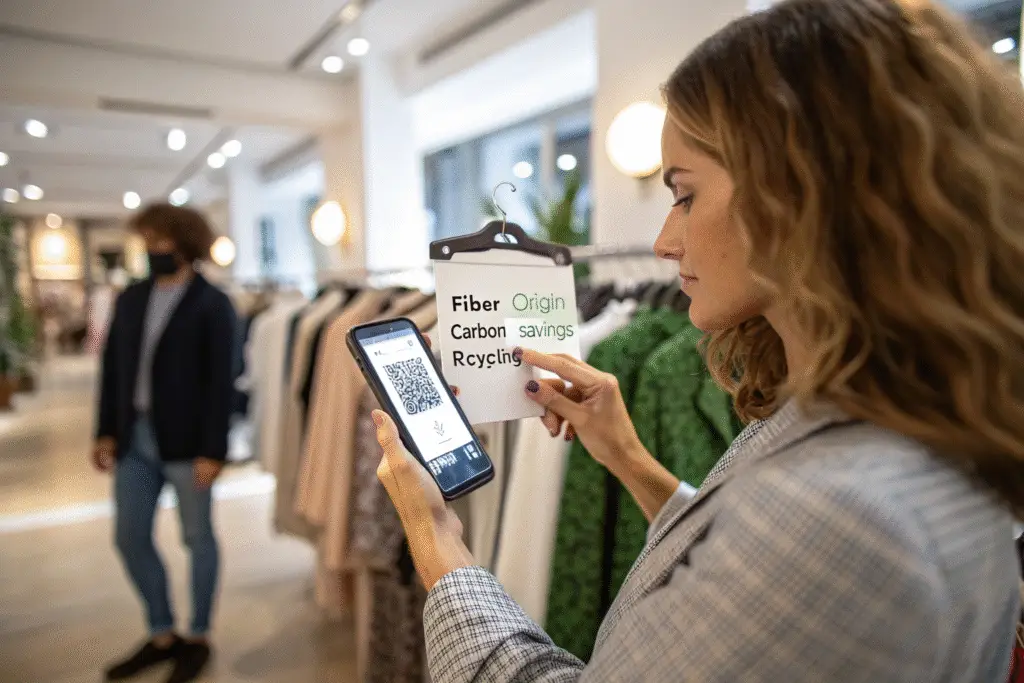
The Digital Fiber Passport replaces vague labels with a digital record that contains granular details such as fiber origin, farm certifications, dyeing processes, carbon footprint per unit, water usage, and care instructions. This data is permanently linked to the garment, accessible through a QR code or NFC tag.
For instance, a shopper in New York scanning a sportswear T-shirt tag could immediately see that it was made with recycled polyester sourced from certified PET bottle recyclers in Taiwan, that production saved 32 liters of water compared to conventional fabric, and that it meets Global Recycled Standard (GRS) criteria.
How Does the Passport Provide Fiber-Level Detail?
The DPP system integrates with databases from certification bodies such as OEKO-TEX and Better Cotton Initiative. When a garment is made with organic cotton, the passport can display the exact farm cooperative it came from and even whether pesticides were avoided. For example, European retailer C&A has tested blockchain-enabled digital passports to trace cotton from farms in India directly to store shelves.
Why Does This Build Consumer Trust?
Surveys consistently show that younger shoppers, particularly Gen Z, demand transparency. A McKinsey report revealed that 67% of consumers consider sustainable materials an important factor in their buying decisions. By providing verifiable data instead of generic claims, the Digital Fiber Passport reduces the risk of greenwashing and gives consumers confidence that they are investing in products aligned with their values.
Enabler of the Circular Economy
One of fashion’s biggest challenges is that textiles are rarely recycled back into new garments. Globally, less than 1% of used clothing is recycled into new clothing fibers, while most ends up in landfills or is incinerated. A key reason is that recyclers cannot easily identify fabric blends or fiber quality.
With the Digital Fiber Passport, every garment includes instructions on how it should be handled after use, making recycling, resale, and repair far more efficient.
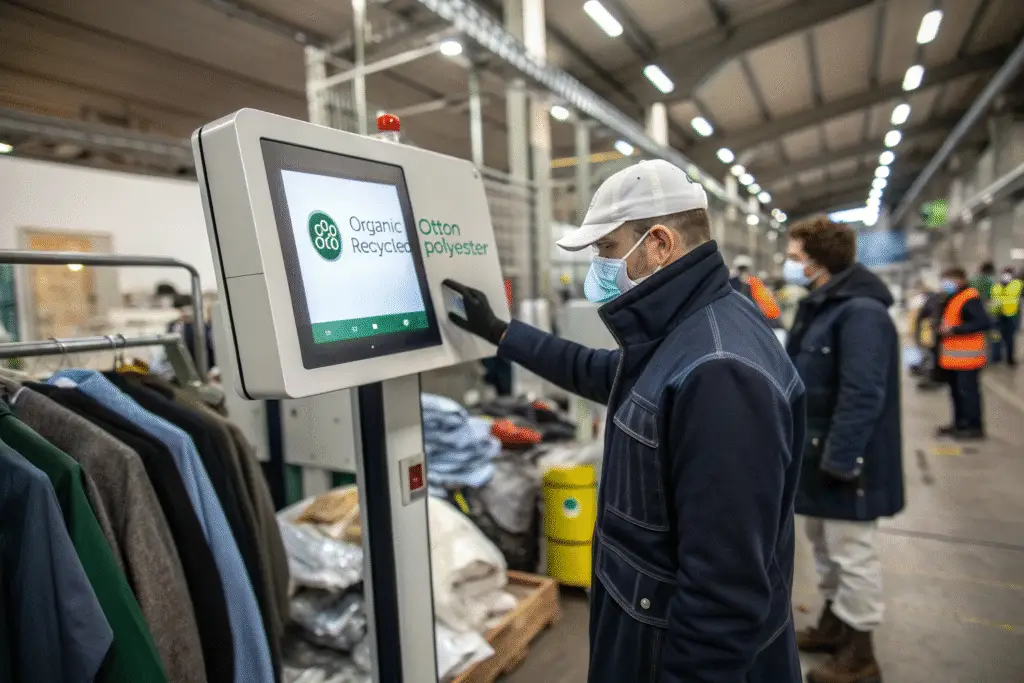
For example, a recycling facility in Germany can scan a jacket’s passport to confirm it is 60% organic cotton and 40% recycled polyester, instantly knowing whether it should be mechanically shredded, chemically recycled, or separated for reuse.
How Does It Streamline Recycling?
Instead of manual sorting, DPP-enabled clothes can be scanned in seconds, with software instructing recyclers on optimal methods. For example, when Carbios tested polyester chemical recycling, having detailed fiber composition data sped up processing and improved recovery rates by more than 20%. By documenting fiber blends, the Digital Passport prevents garments from being mislabeled as non-recyclable.
Why Is Circularity Essential for Future Fashion?
The global apparel market produces over 100 billion garments annually, but most are discarded within three years. According to Ellen MacArthur Foundation, embracing circular systems could reduce fashion’s carbon footprint by 44% by 2030. The Digital Fiber Passport provides the missing infrastructure by ensuring products are designed and labeled for efficient reuse, repair, or recycling.
Regulatory Compliance and Market Access
Europe is leading the charge toward mandatory Digital Product Passports. Under the Ecodesign for Sustainable Products Regulation (ESPR), all textile products sold in the EU will require DPPs by 2030, with phased introduction starting in 2027.
For manufacturers in China, Vietnam, India, and other major sourcing regions, adopting the passport is no longer optional—it is critical for retaining European market access.

How Do Regulations Drive Adoption?
The EU Digital Product Passport will require details on fiber type, recyclability, durability, repairability, and environmental footprint. This data must be accessible to regulators, consumers, and recyclers. Companies like Adidas and Inditex are piloting DPP systems early to ensure compliance and avoid future penalties.
Why Is This Important for Exporters?
According to Euratex, the EU textile industry imports nearly €60 billion worth of apparel annually, much of it from Asian manufacturers. Suppliers without DPP-ready garments risk losing contracts with European buyers. Early adoption also positions exporters as preferred partners for global fashion brands committed to sustainability.
Boosting Consumer Trust and Brand Reputation
In today’s competitive market, reputation is everything. Brands can no longer rely on marketing slogans alone—consumers expect transparency backed by evidence.
The Digital Fiber Passport enables brands to prove their claims, enhance resale markets, and foster long-term loyalty.

How Does the Passport Enhance Resale Markets?
DPPs support secondhand fashion by providing buyers with verified product information. A resale shopper on ThredUp can scan a coat’s passport to confirm fabric quality and care history, boosting trust. Brands like Chloé are already experimenting with digital passports to support luxury resale markets, extending product lifespans.
Why Does This Improve Long-Term Brand Value?
By proving authenticity and sustainability, brands reduce returns and build credibility. According to Deloitte, companies with strong ESG practices enjoy higher customer loyalty and increased sales resilience during downturns. A brand using DPPs not only meets regulations but also gains a competitive edge in winning eco-conscious consumers.
Conclusion
The Digital Fiber Passport is reshaping textiles by introducing a digital backbone for sustainability and accountability. It addresses four key challenges facing the industry today:
- Transparency: Offering verifiable data on fiber origin, processing, and impact.
- Circularity: Enabling efficient recycling, repair, and reuse of garments.
- Compliance: Meeting EU regulatory requirements for sustainable products.
- Trust: Strengthening consumer loyalty and opening resale opportunities.
By making every garment digitally traceable, the Digital Fiber Passport ensures textiles no longer disappear into the shadows of global supply chains but remain part of a connected, circular system.
At Shanghai Fumao Clothing, we are actively preparing our production systems to align with Digital Product Passport requirements. This means our global partners can count on us not only for quality apparel but also for future-ready compliance and sustainability. To discuss how we can support your apparel sourcing needs with DPP-ready manufacturing, contact our Business Director Elaine at elaine@fumaoclothing.com.