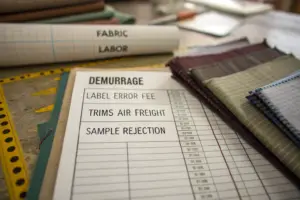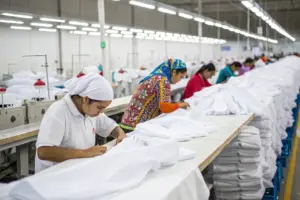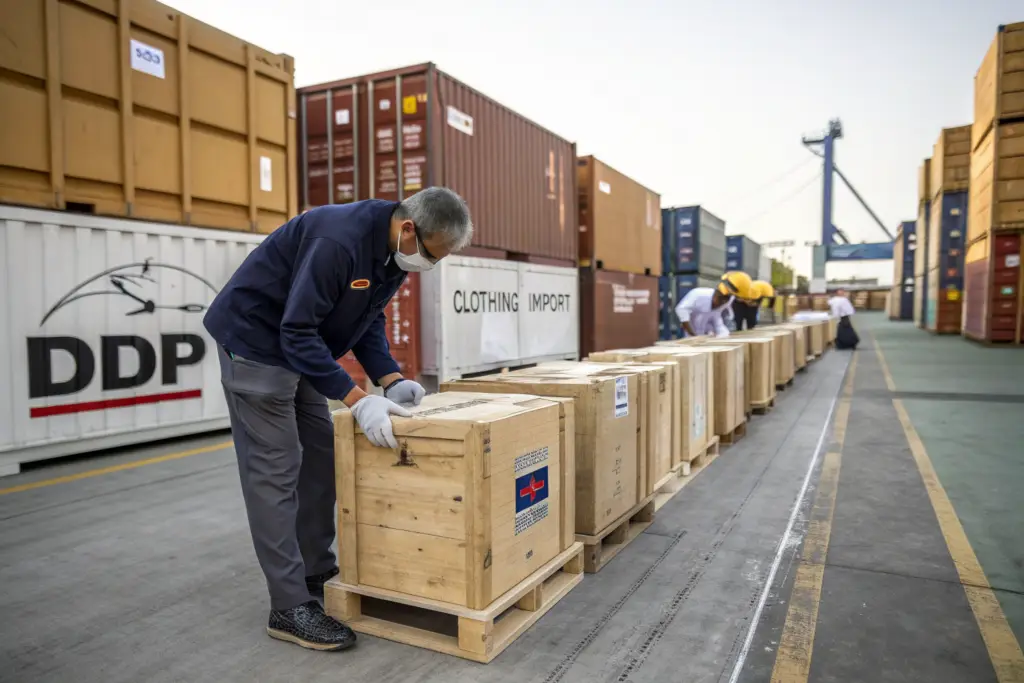
You’ve just received your first major shipment from an overseas garment factory. The goods cleared production on time, but now you’re dealing with a maze of freight forwarder emails, surprise port fees, a confusing customs bill, and unexpected duty charges that blow your budget. The shipment is stuck, your launch date is in jeopardy, and you’re spending hours managing logistics instead of sales. This stressful scenario is the daily reality for importers who use terms like FOB or CIF, where the complexity and risk of international logistics fall squarely on their shoulders.
DDP (Delivered Duty Paid) service is critically important for clothing importers because it transfers the entire burden and risk of international logistics from the buyer to the supplier. Under DDP, the supplier is responsible for delivering the goods to your designated warehouse, with all costs—freight, insurance, customs clearance, duties, and taxes—calculated and paid upfront. This provides unparalleled cost predictability, simplicity, and risk mitigation, allowing you to focus on your core business: selling clothes.
For brands that value time, predictable margins, and operational simplicity over micro-managing freight, DDP is not just an option; it’s a strategic advantage. Let’s break down exactly why this Incoterm is a game-changer, especially for growing and mid-sized apparel businesses.
How Does DDP Eliminate Cost Surprises and Aid Budgeting?
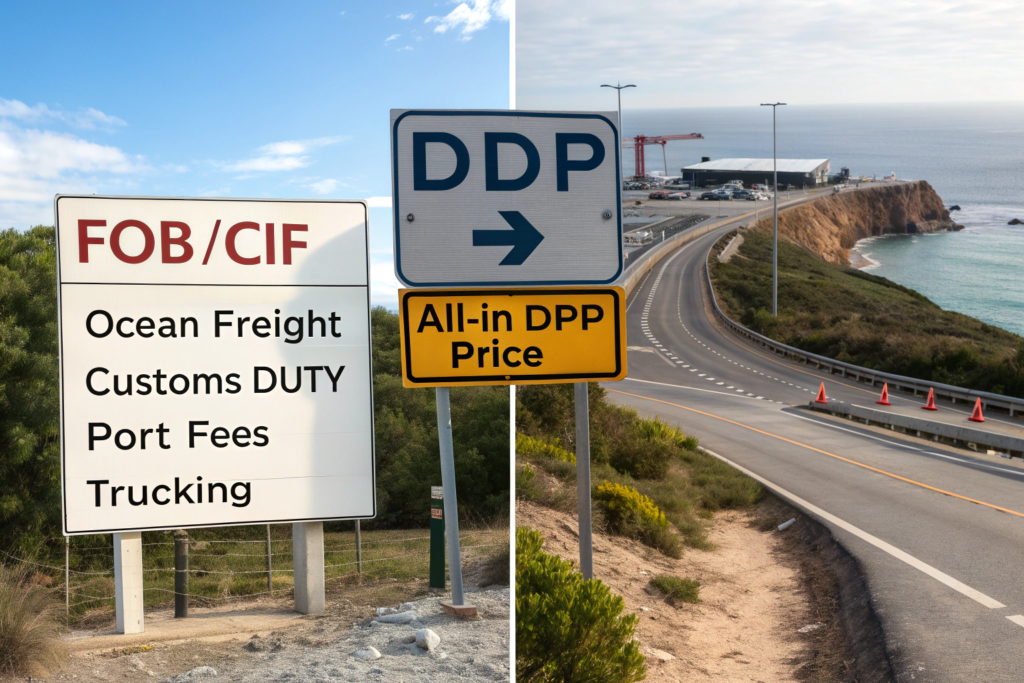
One of the biggest challenges in importing is the "unknown unknown"—hidden costs that appear after you’ve locked in your FOB price. These can include volatile freight rates, peak season surcharges, customs bond fees, customs duty assessments, and local delivery charges.
DDP eliminates cost surprises by providing a single, all-inclusive landed cost per garment before you place the order. This price includes every expense to get the goods to your door, transforming a variable, unpredictable cost structure into a fixed, manageable line item in your budget. This is essential for accurate margin calculation and financial planning.
What Costs Are Typically Hidden in Non-DDP Shipments?
Under FOB (Free on Board), you are responsible for (and must budget for):
- Main Ocean/Air Freight: Rates can fluctuate weekly.
- Fuel Surcharges (BAF) & Peak Season Surcharges (PSS): Added by carriers.
- Marine Cargo Insurance: Often forgotten until too late.
- Customs Clearance & Brokerage Fees: $300-$800 per shipment.
- Import Duties & Taxes: Calculated on a value that includes freight and insurance.
- Last-Mile Trucking (Drayage): From port to your warehouse.
A client of ours using FOB once budgeted $3,500 for sea freight. A sudden peak season surcharge added $1,200, and they were hit with a 16% duty on a higher-than-expected landed value. Their total landed cost was 28% over budget. With DDP, that 28% overage would have been our responsibility as the supplier, not theirs.
How Does DDP Enable Precise Pricing?
When you receive a DDP quote from a supplier like Shanghai Fumao, it is calculated based on exact dimensions, weight, commodity code (HTS code), and destination. We factor in all known costs and assume the risk of fluctuations. You can then take that $12.50 DDP price per unit, add your markup, and set your retail price with absolute confidence. This is transformative for e-commerce brands where margin transparency is key.
How Does DDP Simplify Operations and Reduce Managerial Burden?
Importing requires expertise in international trade compliance, logistics coordination, and documentation. For a fashion brand owner, this is a distraction from design, marketing, and sales.
DDP simplifies operations by making the supplier your single point of contact and responsibility for the entire logistics chain. You are removed from the complex coordination between freight forwarders, customs brokers, and trucking companies. This saves countless hours of management time and reduces the risk of errors due to inexperience.
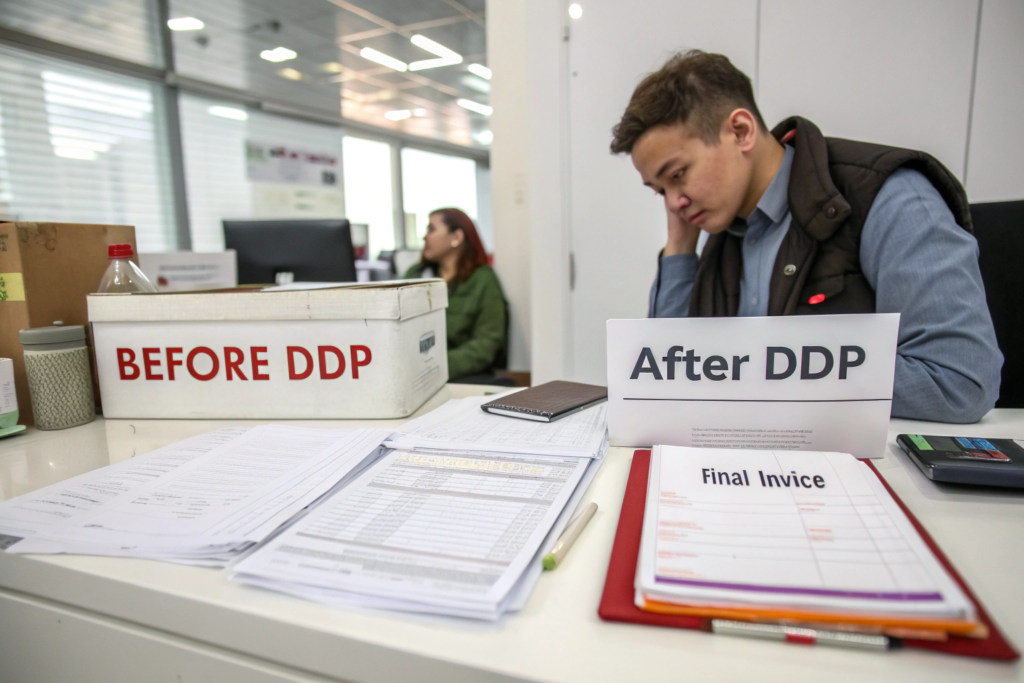
What Logistical Tasks Does DDP Remove From Your Plate?
With DDP, you no longer need to:
- Research and negotiate with freight forwarders.
- Handle export documentation from the origin country.
- Arrange for marine cargo insurance.
- Hire and manage a customs broker in your country.
- Respond to Customs and Border Protection (CBP) inquiries or hold requests.
- Arrange and pay for final trucking.
This allows you to reallocate that time to higher-value activities. One of our DDP clients, a founder of a sustainable apparel brand, told us that switching to DDP freed up 15-20 hours per shipment, which she now spends on customer engagement and product development.
How Does DDP Reduce Risk of Compliance Errors?
Customs compliance is a minefield. Incorrect HTS code classification or valuation can lead to fines, seizures, and lengthy delays. Under DDP, the supplier (or their appointed agent) is responsible for accurate classification and declaration. Their expertise and incentive to deliver successfully minimize this risk. We invest in trained trade compliance staff because under DDP, any customs penalty is our cost and our problem to solve.
How Does DDP Mitigate Risk and Ensure On-Time Delivery?
Time is the ultimate currency in fashion. Missing a selling season can be catastrophic. Under FOB/CIF, delays can occur at multiple handoff points where responsibility is blurred. DDP aligns all incentives toward one goal: on-time delivery to your door.
DDP mitigates risk by giving the supplier end-to-end control and accountability. Since they pay all costs and face the penalties for delays, they are highly motivated to choose reliable logistics partners, expedite processes, and proactively solve any problems that arise during transit. Their success is directly tied to your on-time receipt.
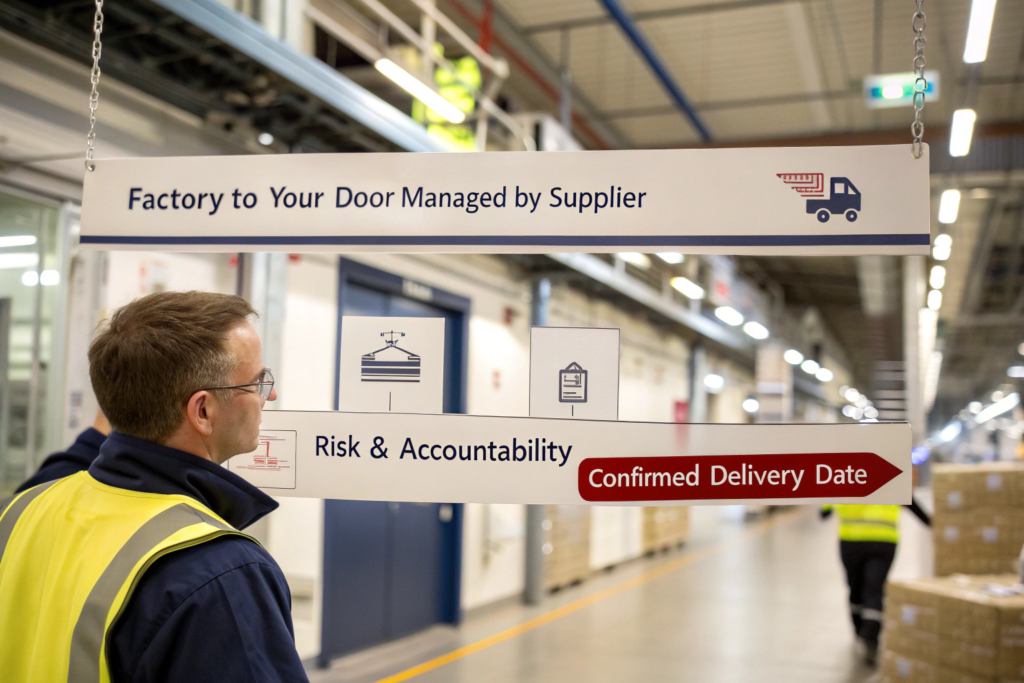
What Happens When There’s a Delay Under DDP?
If a shipment is delayed at port due to customs documentation, under FOB, you would be scrambling to pay extra for your broker to fix it. Under DDP, it is the supplier’s agent on the ground who is scrambling and covering any expediting costs. The supplier has the local expertise and relationships to resolve issues faster. Last season, a DDP shipment faced unexpected port congestion. Because our logistics partner had a direct relationship with the port authorities, they secured a priority slot, avoiding a 7-day delay at no extra cost to our client.
How Does DDP Protect Against Damage and Loss?
A professional DDP provider will include comprehensive cargo insurance in the price. If goods are lost or damaged in transit, it is the supplier’s responsibility to file the claim and either compensate you or replace the goods. This transfers a significant financial risk away from your business.
Is DDP Right for Every Clothing Importer?
While DDP offers immense benefits, it is not a one-size-fits-all solution. Its value depends on your business size, expertise, and priorities.
DDP is ideal for small to mid-sized brands, e-commerce businesses, and first-time importers who prioritize simplicity, cost predictability, and risk reduction over achieving the absolute lowest possible freight cost. It may be less attractive for giant corporations with dedicated, sophisticated logistics departments that can achieve economies of scale and manage risk internally.
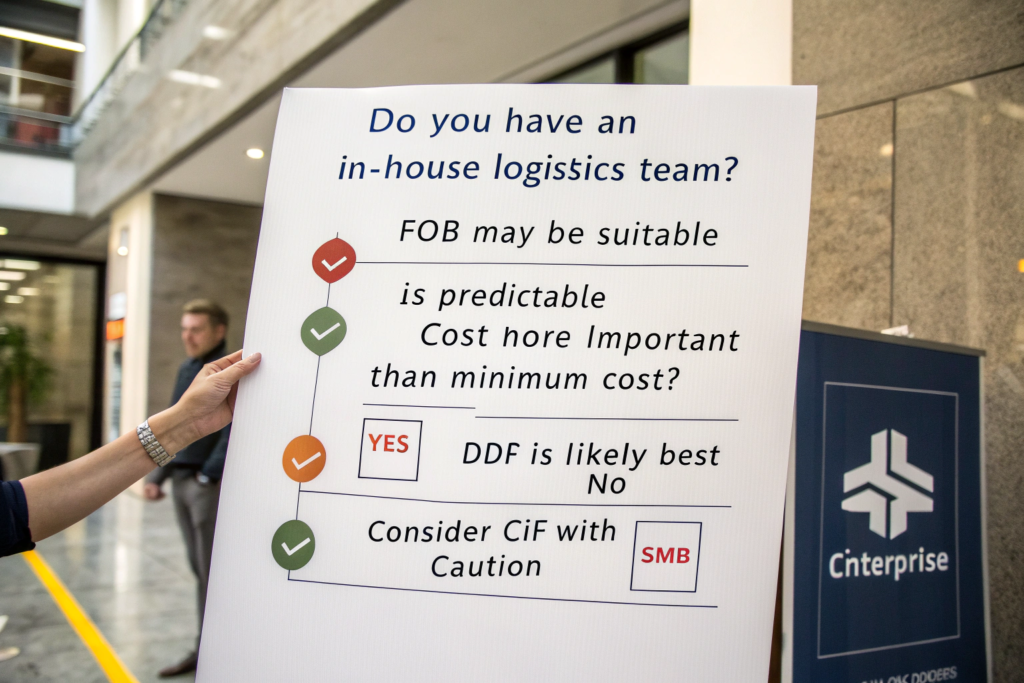
When Might FOB Be a Better Choice?
- For Very Large, Established Importers: If you ship hundreds of containers a year, you have the volume to negotiate superior freight rates and the staff to manage logistics efficiently. The cost savings of managing it yourself (FOB) may outweigh the convenience of DDP.
- For Extreme Cost-Minimizers: If your sole focus is the lowest possible FOB cost and you are willing to accept all the hidden risks and management burdens, you might choose FOB. But this is a high-risk strategy.
How Can You Vet a Supplier’s DDP Capability?
Not all factories offer true, reliable DDP. Ask these questions:
- Who is your logistics partner in my country? (They should name a reputable forwarder/broker).
- Can you provide a detailed breakdown of the DDP cost?
- What is included in your cargo insurance coverage?
- What is your process if there is a customs hold or delay?
At Shanghai Fumao, we have established partnerships with major global logistics providers. We provide a transparent DDP quote and a single point of contact who manages the shipment from our loading dock to your warehouse, with full tracking visibility.
Conclusion
For the majority of clothing importers—especially those focused on growth, brand building, and operational efficiency—DDP service is not just important; it is a strategic necessity. It transforms international shipping from a complex, risky variable into a simple, predictable, and reliable extension of your production order. By providing cost certainty, eliminating managerial headaches, and mitigating a wide array of risks, DDP allows you to invest your energy where it matters most: in building your brand and serving your customers.
Choosing a supplier like Shanghai Fumao that has the expertise and partnerships to execute DDP flawlessly means you gain a logistics partner, not just a manufacturer. It’s a commitment to a seamless, stress-free supply chain.
If you are tired of unpredictable costs and logistics fires and want a truly turnkey solution for your next collection, let’s discuss how our DDP service can work for you. Contact our Business Director, Elaine, at elaine@fumaoclothing.com to get a clear, all-inclusive quote.