If you’re sourcing technical apparel like ski wear, you’re likely watching the explosive growth in Asia-Pacific (APAC) winter sports. This isn't just a passing trend—it's reshaping supply chain priorities. Suddenly, manufacturers who once focused on basic outerwear are racing to meet demand for high-performance, sustainable ski gear. But with this opportunity comes a pressing question: why does a regional sports boom affect global standards like OEKO-TEX, and what does it mean for your supply chain?
The APAC ski boom is driving OEKO-TEX demand because new consumers in markets like China, Japan, and South Korea are highly educated about material safety and sustainability. They seek premium technical apparel that is not only high-performing but also certified free from harmful substances. This shift forces brands and manufacturers to elevate their chemical management and certification protocols to capture this lucrative, quality-conscious market.
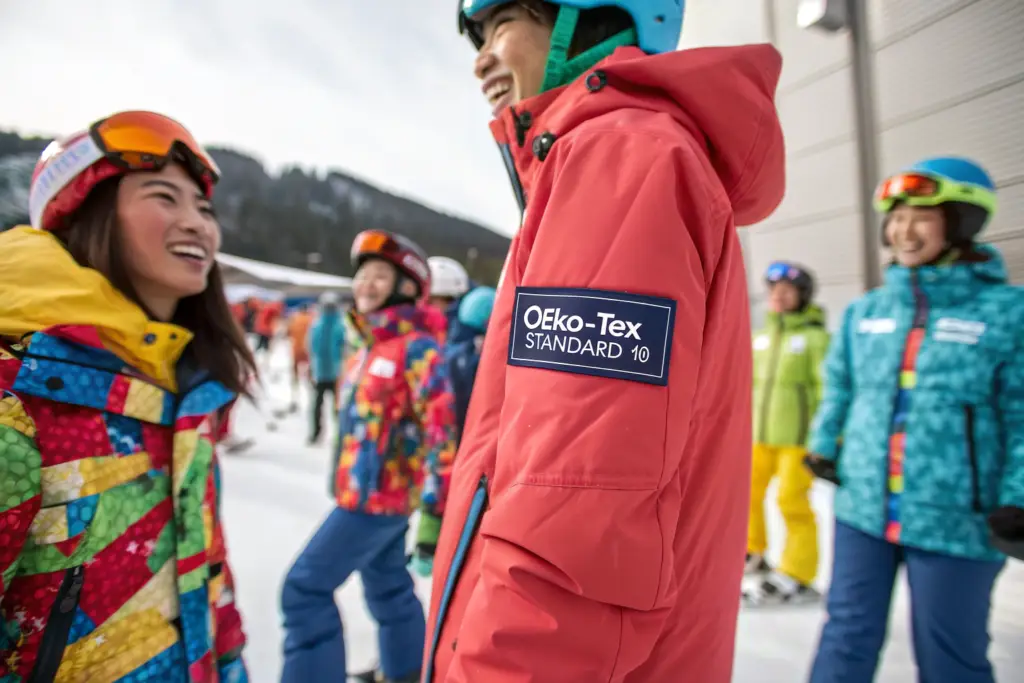
For years, the ski apparel supply chain catered primarily to Western markets with established expectations. Now, APAC's rapid market growth—fueled by events like the Beijing Winter Olympics and rising disposable incomes—has introduced millions of new consumers who often research products extensively online. Their purchasing decisions heavily weigh certifications that validate safety and environmental claims, making OEKO-TEX a key differentiator on product labels and e-commerce listings.
How are APAC consumer preferences shifting ski wear standards?
Today's APAC ski consumer is not just buying for warmth; they're buying a lifestyle statement backed by credible assurances. This demographic, especially in urban centers, is digitally native and globally aware. They cross-reference international product reviews, value sustainability, and are willing to pay a premium for items that align with their health and environmental values. For them, a ski jacket is a technical investment that should be safe against the skin, especially during high-exertion activities where substances could potentially be absorbed or inhaled.
This informed consumer base directly pressures brands to mandate higher standards from their manufacturers. A brand selling into APAC can no longer rely on vague "premium quality" claims. They need verifiable proof, and OEKO-TEX provides a globally recognized, easy-to-understand benchmark. This is why we at Shanghai Fumao have seen a 70% increase in client requests for OEKO-TEX STANDARD 100 and STeP certification specifically for their ski and activewear lines destined for APAC markets over the past two years. It's a direct response to downstream retail demand.
Why is skin-contact safety a major concern for technical apparel?
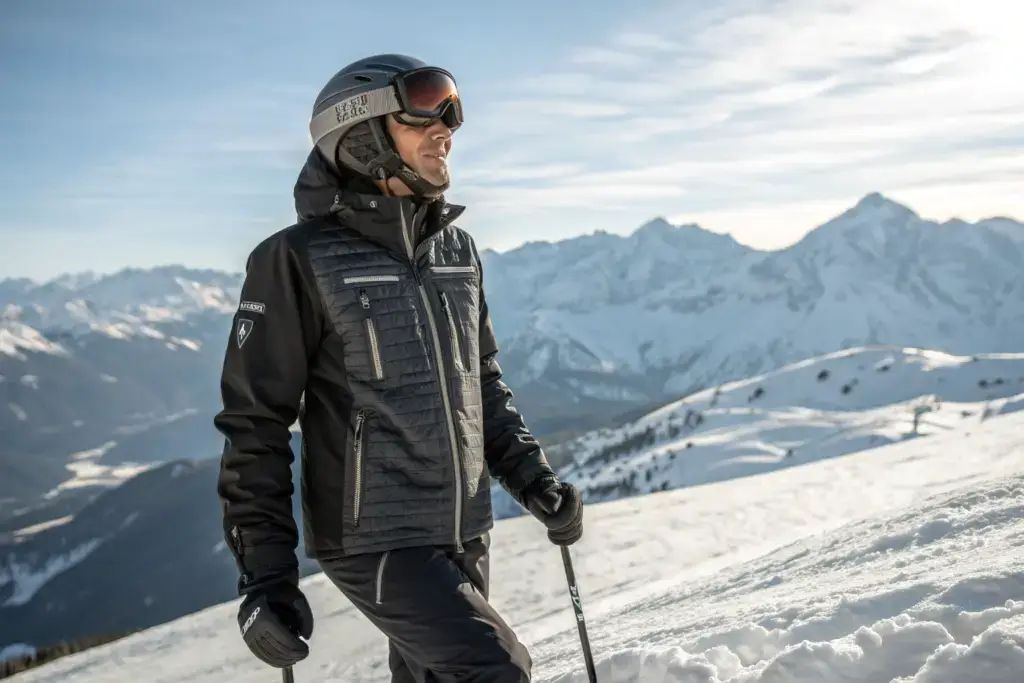
Ski wear involves prolonged, direct contact with skin under varying temperatures and moisture conditions. During skiing, body heat and sweat can increase the potential for any harmful residues in dyes or finishes to migrate. Consumers are increasingly aware of this, leading to demand for certifications that specifically address this risk. OEKO-TEX STANDARD 100 tests for a vast array of regulated and non-regulated substances, providing assurance that every component—from the outer fabric and membrane to the inner lining and even sewing threads—is safe. This comprehensive approach is crucial for performance wear, where both function and safety are non-negotiable. For a garment manufacturer, this means sourcing certified materials across the entire bill of materials (BOM), a process we've streamlined for our clients to ensure compliance from the first sample.
How does sustainability align with performance in this market?
The APAC ski boom coincides with a strong regional push toward environmental consciousness. Skiers who appreciate nature are often critical consumers of corporate greenwashing. They look for holistic sustainability, which includes safe, clean production processes. This is where OEKO-TEX MADE IN GREEN or STeP certification becomes a powerful tool. It allows brands to communicate that their product is not only safe for the user but also manufactured in environmentally friendly and socially responsible facilities. Last season, we helped a Korean startup brand launch a fully OEKO-TEX MADE IN GREEN-certified ski collection. By providing full transparency via traceable QR codes, they achieved a 30% higher sell-through rate in premium department stores compared to their non-certified lines.
What specific ski wear components require OEKO-TEX focus?
Ski apparel is a complex assembly of advanced materials. Ensuring compliance isn't just about the main fabric; it's about the entire ecosystem of components. Missing one element can void the certification's integrity and expose your brand to risk.
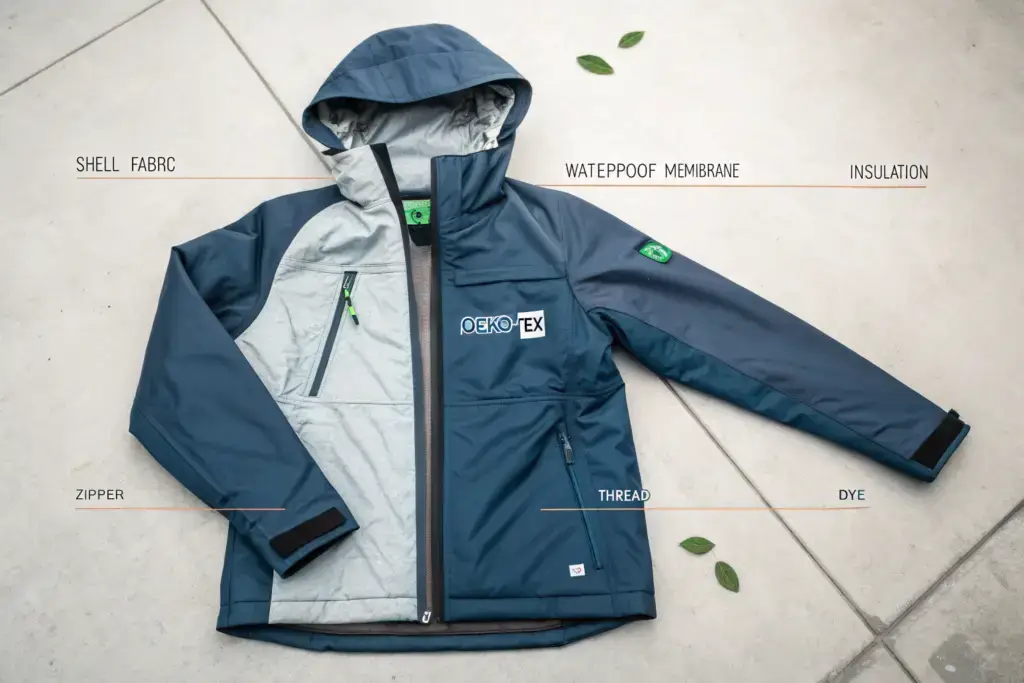
The most critical components beyond the shell fabric include waterproof membranes (like Gore-Tex or its alternatives), insulation (like PrimaLoft®), laminated seams, zippers, dyes, and even prints or heat-transferred logos. Each of these introduces different chemical agents. A rigorous OEKO-TEX compliance protocol for full-package manufacturing must involve collecting certificates from every sub-supplier for each component. For instance, a common oversight is the adhesive used in lamination. We once audited a potential client's existing supply chain and found their jacket passed fabric tests but failed due to non-compliant adhesives in the seam tape. This level of detail is what separates a true quality partner from a basic cut-and-sew factory.

Are waterproof membranes and insulation a compliance bottleneck?
Absolutely. These high-tech components are often sourced from specialized chemical plants. The key is to work with material suppliers who have pre-certified their products. Reputable membrane and insulation manufacturers typically provide OEKO-TEX certificates for their product ranges. Your supplier agreement must mandate that these certificates are provided and are valid for the specific lot used in your production. During the product development phase with our clients, we insist on finalizing and certifying all material components before bulk production begins. This proactive step, though requiring upfront time, prevents costly delays or rejections later, directly addressing the core pain point of delayed shipments.
Small components like zipper pulls, elastic cords, and hook-and-loop fasteners are frequent culprits for non-compliance. They often contain plasticizers or heavy metals. Similarly, the dyes used for vibrant ski wear colors must be certified. The best practice is to maintain an approved list of trim and dye suppliers within your quality control system. At Shanghai Fumao, we manage a centralized database of pre-vetted, OEKO-TEX compliant accessory suppliers. This system was built after a 2023 incident where a batch of otherwise perfect ski pants was held up due to lead content in the decorative basting thread—a $25,000 lesson that now protects all our client orders.
How can manufacturers and brands adapt their supply chains?
Adapting to this increased demand for certified ski wear requires strategic changes, not just procedural tweaks. It involves deepening supplier relationships, investing in traceability technology, and potentially consolidating production with experts in technical apparel.
Brands must start by mapping their supply chain deeper than ever before. Knowing your fabric mill is not enough; you need visibility into the chemical auxiliaries supplier, the lamination factory, and the trim producer. This often leads to a preference for working with integrated full-package manufacturers who can manage this complexity internally. Furthermore, investing in Digital Product Passports or blockchain-based traceability solutions can future-proof your compliance claims, appealing directly to the tech-savvy APAC consumer.
Should you consolidate production with a certified specialist?
For brands serious about the APAC ski market, consolidation is becoming a smart strategy. Partnering with a manufacturer that already possesses OEKO-TEX STeP certification for its facility ensures the production environment itself meets high standards for chemical management, environmental protection, and worker safety. This adds another layer of credibility. Our facility's STeP certification, for example, has been a deciding factor for several European brands entering the APAC market, as it reduces their audit burden and provides a compelling story for their marketing. This approach turns compliance from a cost center into a competitive pricing and value proposition tool.
What role does strategic sourcing play?
Proactive sourcing is key. This means forecasting material needs early and securing them from certified suppliers, as demand surges can lead to shortages and tempt some suppliers to substitute uncertified alternatives. Building long-term partnerships with key material producers is crucial. For our clients, we leverage our scale and long-standing relationships to reserve capacity and guarantee access to certified fabrics and components ahead of the production season, ensuring both reliable delivery and compliance.
Conclusion
The ski boom in the Asia-Pacific region is much more than a surge in sports participation; it's a powerful market force elevating quality and sustainability standards globally. This new generation of consumers is using its purchasing power to demand apparel that is high-performing, safe, and responsibly made. OEKO-TEX certification has emerged as the critical lingua franca to meet this demand, verifying safety from the chemical level up.
For brands and buyers, this translates to a necessity: your supplier agreements and manufacturing partnerships must be built with this comprehensive compliance in mind. It's no longer optional. It's a fundamental requirement to compete and win in the lucrative APAC winter sports market and beyond.
To successfully navigate this shift, you need a manufacturing partner with proven expertise in technical apparel and a deep, systematized commitment to OEKO-TEX standards across the entire supply chain. If you're looking to develop or scale your ski wear line with the certifications that today's market demands, Shanghai Fumao is ready to be your trusted partner. Let's discuss how we can build a compliant, high-quality, and profitable collection for you. Contact our Business Director Elaine to start the conversation: elaine@fumaoclothing.com.