I have seen too many beautiful designs die on the factory floor. A few years back, a brand from San Francisco sent us a tech pack for a jacket they were excited about. It had a complex, curved zip pocket and an unusual bonded hem. They had already sent it to three other factories. All of them said they could make it. But the samples came back wrong. The pocket pulled. The hem was stiff and ugly. The brand was out thousands in sampling fees and months of time. When they came to us, they were defeated. They thought their design was impossible.
A factory's in-house expertise is the difference between a design that exists on paper and a garment that exists on a hanger. When a factory has deep technical knowledge, we don't just follow instructions. We see the problems before they happen. We know how a fabric will behave on a curve. We know which stitch will work best for a seam that needs to stretch. We protect your vision by understanding the physics and chemistry of making clothes. An order-taker with a sewing machine will ruin your complex design. A true manufacturing partner will save it.
My name is [Your Name], and I own Shanghai Fumao. Our team has spent decades solving the problems that other factories walk away from. We've learned that complex designs are not just orders; they are puzzles. And solving them requires a specific kind of knowledge that lives inside the heads of our pattern makers, cutters, and sewers. It cannot be replaced by a simple email chain. Let me explain why that in-house expertise is the most critical factor you should look for when your designs get complicated.
How Does In-House Pattern Making Prevent Design Failures?
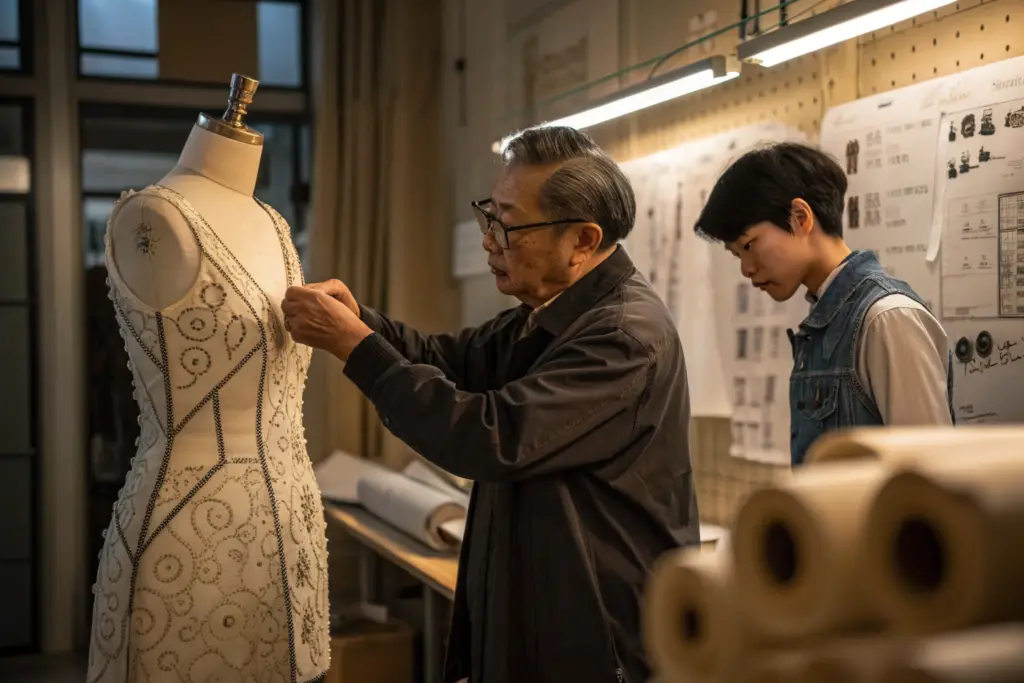
The pattern is the blueprint of your garment. A bad pattern means a bad fit, no matter how good the sewing is. Many factories, especially the larger ones, outsource their pattern making to freelancers or separate shops. This creates a dangerous disconnect. The pattern maker never sees the fabric. They never talk to the sewer. When a complex design comes in, like a dress with a bias-cut skirt or a shirt with a complex yoke, the pattern needs to be engineered for that specific material. An in-house pattern maker can touch the fabric, feel its drape, and adjust the pattern immediately.
What is the difference between 2D patterns and 3D draping for complex shapes?
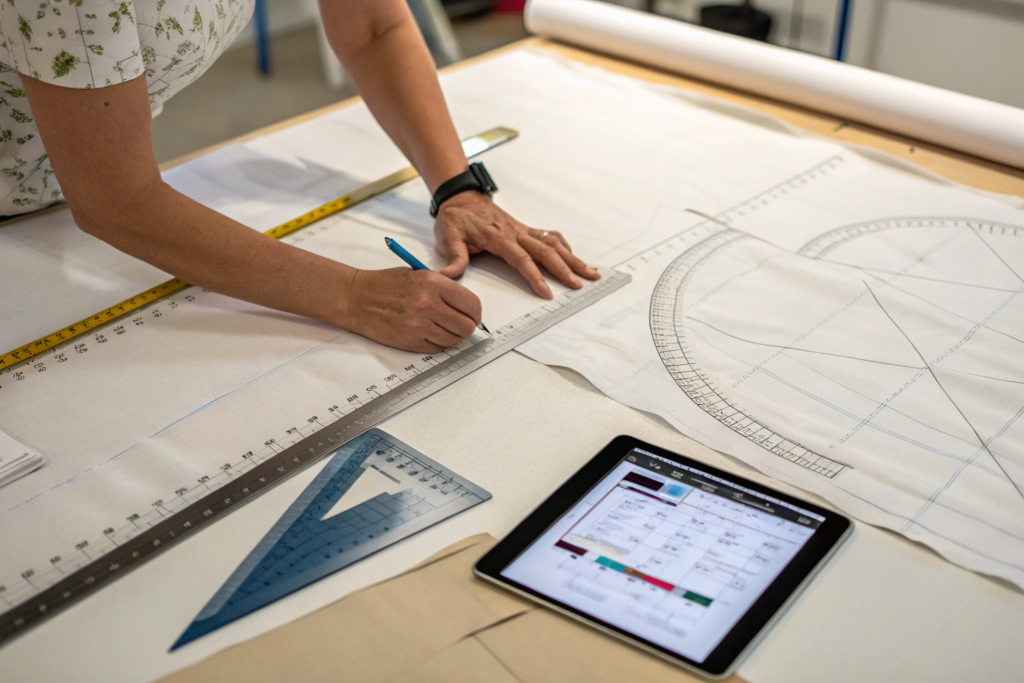
For simple shapes, a standard 2D pattern block works fine. But for complex, sculptural designs, 2D patterns often fail. An expert in-house team will use 3D draping techniques. They take the actual fabric and pin it directly onto a dress form to create the pattern. This is an art form. It allows them to see how the fabric will fall, where the tension points will be, and how to cut the fabric for the perfect shape. A few years ago, a New York designer came to us with a gown that had an asymmetrical, flowing neckline. A 2D pattern would have been a disaster. Our pattern maker, who has 30 years of experience, draped it in muslin first, then in the final silk. It was perfect in one sample. This level of skill cannot be emailed in from an outside freelancer. To understand the true artistry of pattern making, resources like The Cutting Class offer deep dives into advanced techniques.
How does a pattern maker account for fabric behavior?
This is where in-house expertise saves your entire production run. Different fabrics behave differently. A woven cotton has almost no stretch. A jersey knit can stretch 25%. A silk charmeuse is slippery and shifts as you cut it. An expert pattern maker inside our factory knows this instinctively. They will add "ease" where it's needed. They will change the grainline to improve the drape. They will adjust the seam allowance for a fabric that frays easily. When we work with a client on a complex design at Shanghai Fumao, the pattern maker is in the room during the initial sample review. They might say, "This fabric will pull at the shoulder if we keep this seam angle. Let's adjust it by 5 degrees." This tiny adjustment, made by a true expert, prevents returns and unhappy customers. You can learn more about fabric and pattern interaction from educational sites like the Textile & Apparel Program at NC State.
Why Is Deep Knowledge Of Material Science Critical For Innovation?
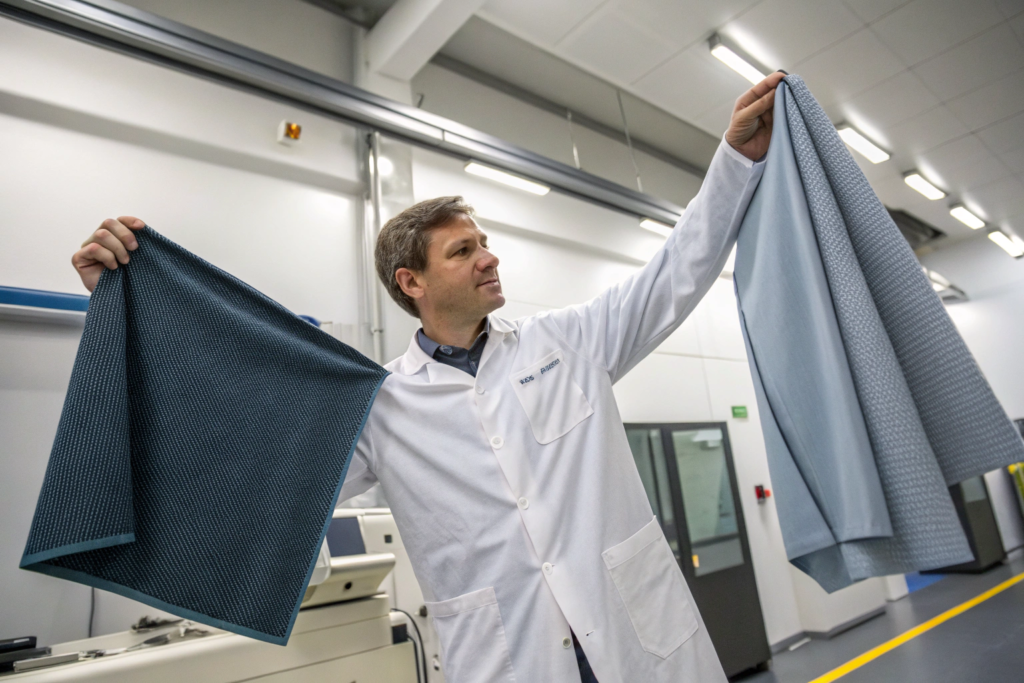
Complex designs often require complex materials. Maybe you are using a fabric that is coated for water resistance. Or maybe it's a stretch fabric with high elastane content. Or a delicate lace. These materials don't sew like cotton broadcloth. They require specific needles, thread types, and machine tensions. A factory without deep material knowledge will use the same settings for everything. And your complex garment will be ruined.
What happens when a factory uses the wrong needle or thread?
It seems like a small detail. It is not. Using a regular sharp needle on a stretch fabric will cut the elastane fibers. This creates "needle cutting" or "needle damage," which causes holes or runs in the fabric later. Using a standard polyester thread on a garment that needs to stretch a lot will cause the seams to pop. An in-house expert knows to use a ballpoint needle for knits and a stretch thread with more give for activewear. A few years ago, a client from Colorado came to us with a sample from another factory. It was a beautiful technical hiking shirt. But after two washes, the seams on the shoulders were puckered and weak. The other factory had used a standard thread and needle. We re-sampled it with a stretch needle and a core-spun thread, and the problem vanished. The garment passed all our durability tests. This knowledge is material science, not guesswork. You can explore thread and needle specifications on the websites of major manufacturers like Coats or Schmetz.
How do we handle performance finishes like waterproofing or anti-microbial treatments?
Complex designs often have complex finishes. Maybe the jacket needs a DWR (Durable Water Repellent) coating. Or the activewear needs an anti-microbial finish to stop odor. These finishes are applied in specific ways, often at specific temperatures. If a factory doesn't understand this, they can ruin the finish during garment construction. For example, if you sew a waterproof jacket and the needle holes are too big, water will leak through the seams. You then need seam-sealing tape applied by a special machine. An in-house expert knows to specify a finer needle and plan for the seam-sealing step. At our facility, when we handle technical garments, we have a separate protocol for "performance finishes." We test the finished seams, not just the fabric, for water penetration. We learned this the hard way a decade ago with a European client, and now it's standard practice. For authoritative information on textile performance standards, the American Association of Textile Chemists and Colorists (AATCC) is an excellent resource.
How Does In-House Sampling Accelerate Problem-Solving For Complex Details?
Sampling is where complex designs are proven or disproven. When you work with a factory that sends all its sampling to an external "sampling house," you lose all the learning. The sampling house figures out how to make it, but that knowledge never transfers to the production floor. Then, when production starts, the production team struggles because they weren't part of the problem-solving. This creates massive delays and quality issues.
What is the "sample room to production floor" knowledge transfer?
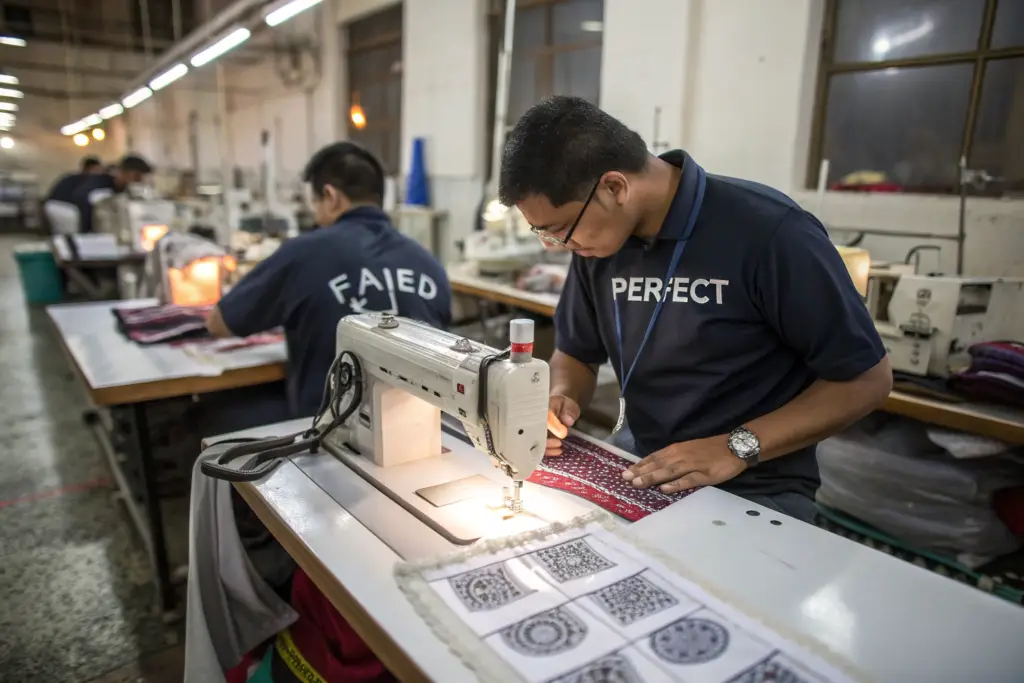
When sampling and production are under the same roof, the knowledge stays in the building. The sewer who figures out the tricky technique on the sample can teach the production sewers. The pattern maker who solved the fit issue can write the notes for the cutting room. This is invaluable. I remember a project for a brand in Boston. They had a coat with a complex, inset sleeve pocket. Our sample room spent three days trying different methods until they found one that was both beautiful and repeatable. The lead sample sewer then spent two hours on the production floor, showing the team exactly how to do it. The production run of 1,200 pieces had zero defects on that pocket. If the sampling had been done elsewhere, that knowledge would have been lost, and production would have been a nightmare. This seamless transition is a key benefit of working with a fully integrated manufacturer like Shanghai Fumao.
How many sampling rounds should a complex design need?
A good in-house team should reduce your sampling rounds. A bad factory might need five or six rounds, charging you each time, because they are guessing. An expert in-house team aims for one or two rounds. In the first round, we identify the problems. In the second round, we fix them. We have the tools and the brains right there to make decisions fast. For a recent complex design for a streetwear brand from Los Angeles, we did the first sample and realized the zipper placket was too bulky. Our pattern maker and sewer discussed it immediately, created a new pattern, and had a revised sample ready in 48 hours. The client approved it. That speed is only possible when expertise is in-house. For more on lean sampling processes, resources from the Garment Technology Expo often feature articles on efficient product development.
How Do We Troubleshoot Production Problems For Complex Styles In Real-Time?
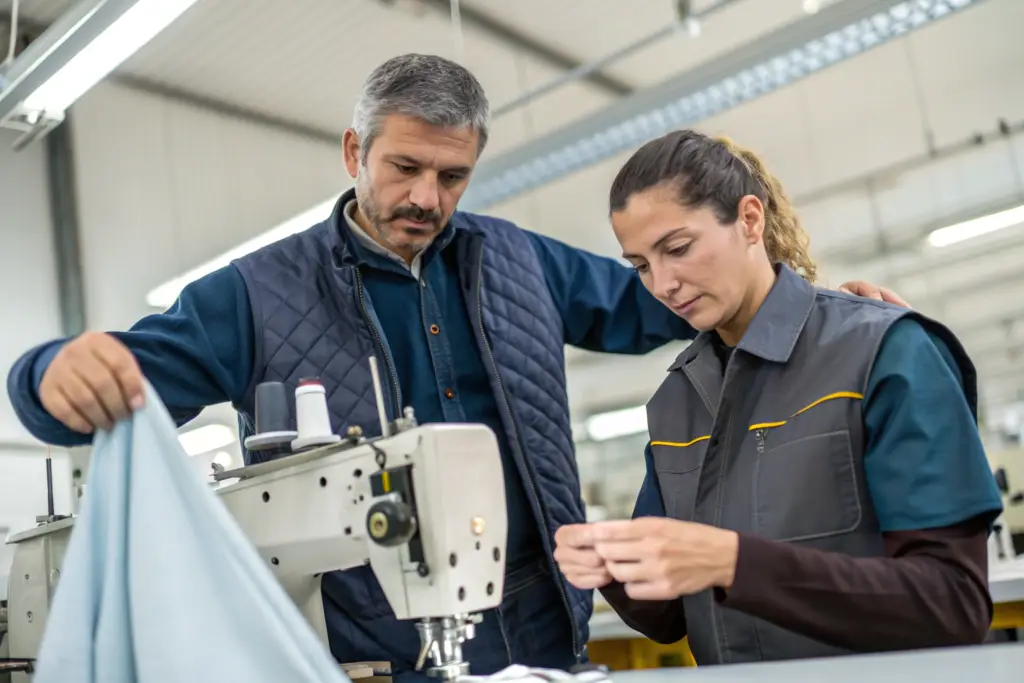
Even with perfect planning, complex styles can throw surprises during production. A batch of fabric might be slightly different. A machine might start acting up. The humidity might change and affect how a fabric feeds through the machine. When these things happen, you need experts on the floor who can make a decision right then, not after a week of emails.
Who makes the decision when something goes wrong mid-production?
In a factory without deep expertise, the decision is made by a manager who might be far away. They might stop the line, causing delays. Or they might ignore the problem, causing defects. In a factory with real in-house expertise, the decision is made by the people who understand the garment. Our line supervisors have 15-20 years of experience. If they see a seam puckering on a complex curve, they can stop the line, adjust the machine tension or the presser foot pressure, and restart within minutes. They don't need to ask permission. This autonomy comes from deep knowledge. Last year, during a production run of a complex draped dress for a Canadian brand, our supervisor noticed the lightweight viscose was slipping during sewing. She immediately changed the feed dogs on the machine to a finer tooth, and the problem was solved instantly. The order was not delayed, and quality was perfect. This real-time problem-solving is what you pay for when you choose a skilled partner.
Can a factory fix a complex design that is failing during production?
Sometimes, a design has a fundamental flaw that only becomes apparent when you make 500 of them instead of 5. The seam is too difficult. The construction takes too long and is inconsistent. An expert factory won't just keep making the flawed design. We will come to you with a solution. We might say, "This seam is failing 10% of the time. If we change the construction slightly to this alternative, we can eliminate the failure rate and the change is invisible to the customer." We did this for a client in Seattle who had a shirt with a very narrow hem that kept flipping out. Our team suggested a different type of hemming foot and a slightly wider fold. It solved the flipping issue, and the final garment looked exactly the same. This kind of proactive, expert troubleshooting is only possible when the factory has deep, in-house knowledge of garment construction. For case studies on manufacturing problem-solving, publications like Just-Style are a good resource.
Conclusion
Complex apparel designs are a test. They test your vision. They test your patience. And most of all, they test your factory. An order-taker will nod and smile, take your money, and deliver a poor imitation of your idea. A true manufacturing partner with deep in-house expertise will challenge you, guide you, and protect your vision. They will use pattern makers who drape, technicians who understand needles, and sewers who can solve problems in real-time. They will turn your impossible design into a best-selling garment.
At Shanghai Fumao, we have built our reputation on this kind of expertise. We don't just have machines; we have masters. We have pattern makers with decades of experience who can look at a sketch and see the finished product. We have mechanics who can tune a machine to handle the most delicate silk. We have supervisors who treat every complex order as a personal challenge. We helped a luxury brand from New York produce a coat with a hand-stitched detail that other factories said was impossible to do at scale. We guided a young designer from London through the sampling of a technically complex jumpsuit, reducing her development time by half.
If you have a design that scares other factories, bring it to us. Let our team's expertise bring it to life, on time and at the highest quality. Please reach out to our Business Director, Elaine, at strong>elaine@fumaoclothing.com. We are ready to solve your toughest design challenges.