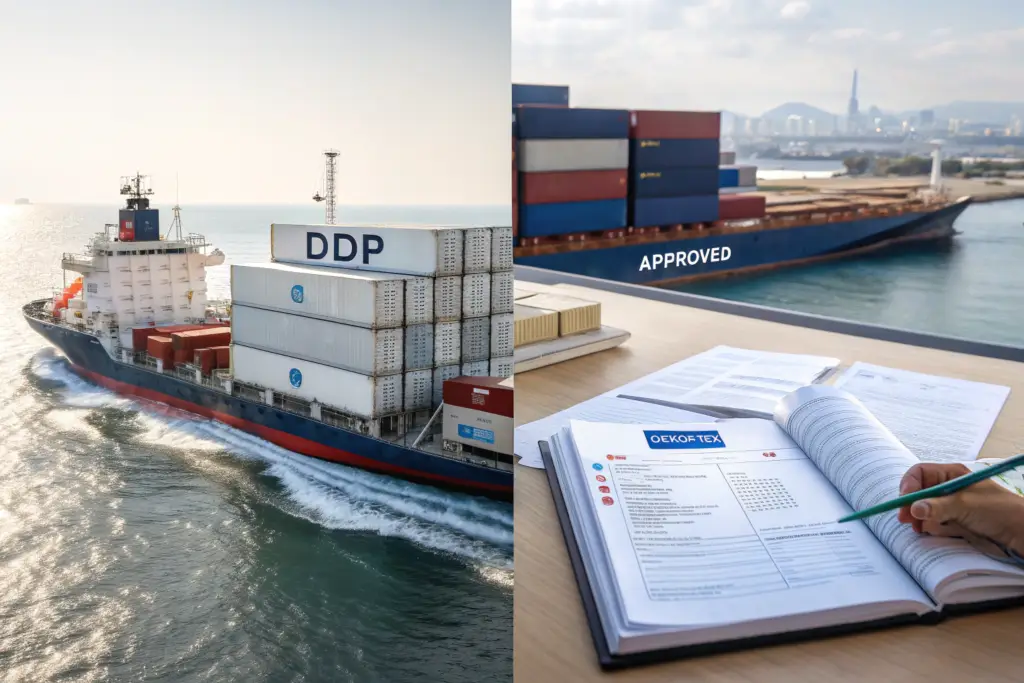
For brands importing apparel to North America, Delivered Duty Paid (DDP) shipping is a game-changer. It simplifies logistics, fixes costs, and transfers risk to the supplier. But this simplicity rests on a critical assumption: that the goods will clear customs smoothly. A single compliance hiccup can unravel the entire DDP advantage, causing delays, unexpected costs, and lost sales. This is where a supplier’s deep, operational OEKO-TEX certification—like the one rigorously implemented at Shanghai Fumao—transitions from a quality feature to a vital logistical and financial safeguard.
Fumao’s OEKO-TEX certification matters profoundly for DDP shipments because it provides the documented, verifiable proof of chemical compliance that U.S. and Canadian customs authorities and retailers increasingly demand. In a DDP arrangement, where the supplier is legally responsible for delivering goods to the final destination, this certification acts as pre-emptive risk mitigation. It significantly reduces the chance of customs holds or rejections related to chemical safety standards, ensuring the predictable, on-time delivery that is the core promise of DDP. It’s not just about selling a safe product; it’s about guaranteeing an unimpeded journey for that product.
Without this embedded certification, the DDP promise is built on shaky ground. The supplier’s control over the supply chain—a necessity for DDP—must extend to chemical and quality management, not just logistics.
How Does OEKO-TEX Prevent Customs Delays In A DDP Model?
Under DDP terms, the supplier (exporter) is the Importer of Record on paper until the goods clear customs at the destination port. This means any delay or penalty at customs becomes the supplier’s direct problem and cost. Customs agencies, particularly the U.S. Customs and Border Protection (CBP), have broad authority to detain shipments for suspected violations of various standards, including those enforced by the Consumer Product Safety Commission (CPSC).
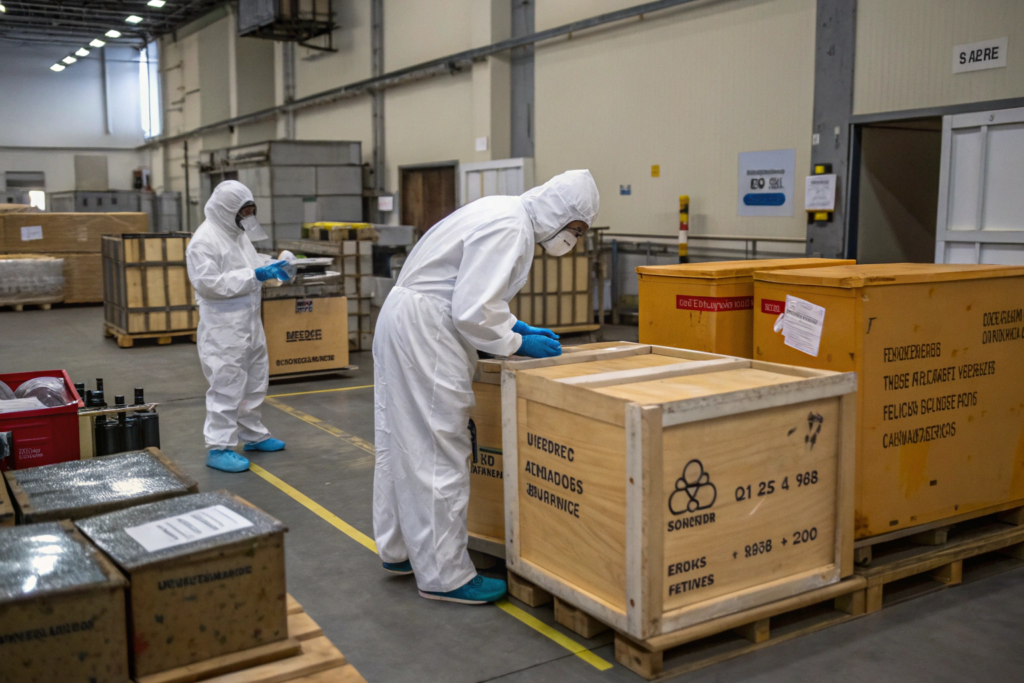
Textile shipments can be flagged for lab testing if they are suspected of containing harmful levels of chemicals like lead, formaldehyde, or certain dyes. A random inspection without ready proof of compliance can lead to a 30-day hold or longer while samples are tested. For a brand, this misses the selling season. For the supplier under DDP, this incurs massive demurrage and storage fees at the port, destroys cost predictability, and breaches the delivery contract.
Fumao’s OEKO-TEX certification provides the pre-screened documentation that can expedite this process. When our documentation package—including the official OEKO-TEX certificate and test reports from accredited labs like Hohenstein—accompanies the shipment, it serves as immediate, credible evidence of compliance. It answers the regulator’s question before it is even asked formally. In our experience, this prepared documentation has helped our clients’ shipments avoid secondary inspections multiple times.
What Is The Financial Risk To The Supplier Under DDP?
In a DDP shipment, the supplier bears all financial risk during transit and until delivery. A customs hold creates direct, unbudgeted costs:
| Cost Item | Impact During a 30-Day Customs Hold |
|---|---|
| Demurrage Fees | Charged by the shipping line for containers stuck at port. Can be hundreds of dollars per day, per container. |
| Storage Fees | Charged by the port terminal. |
| Administrative & Legal Fees | Cost to hire a customs broker or lawyer to resolve the issue. |
| Potential Fines | If non-compliance is confirmed. |
| Contract Penalties | For missing the delivery window stipulated to the brand client. |
For a factory, these costs can erase the profit margin of an entire order. Shanghai Fumao’s investment in systemic OEKO-TEX compliance is, therefore, a form of financial self-protection in the DDP model. It ensures our shipments have the highest probability of seamless clearance, protecting our operational margins and our client’s timeline.
How Does This Align With North American Retailer Requirements?
Beyond customs, North American retailers are the final gatekeepers. Major brands and distributors now require OEKO-TEX or equivalent certifications as part of their vendor compliance manuals. They conduct pre-shipment or post-shipment audits. If a brand is shipping DDP directly to a retailer’s distribution center, the retailer will require proof of certification. Having Fumao’s comprehensive documentation ready allows the brand to fulfill these requirements instantly, preventing chargebacks or rejected shipments at the final destination. This end-to-end coverage is the true value of a certified DDP partner.
How Does Fumao’s “Safety Chain” Integrate With DDP Logistics?
Our “Fumao Safety Chain” for OEKO-TEX is not an isolated quality check; it is integrated into the same controlled workflow that manages our DDP shipments. This integration is key.
- Order Launch: When an OEKO-TEX certified DDP order is launched, the system flags it. Only certified materials from our “Green Zone” warehouse can be allocated.
- Production & Documentation: As the goods are produced, the required certification documents (test reports, certificate copies) are prepared by our QA team in parallel.
- Logistics Packing & Declaration: These documents are digitized and included in the master shipping file. Our logistics team explicitly declares the OEKO-TEX certification on the commercial invoice and other customs documents where applicable, signaling compliance upfront.
- Single-Point Accountability: From the spinning mill in China to the warehouse in Texas, the entire chain—for both safety and logistics—is managed under Fumao’s responsibility in a DDP model. There are no gaps where certification could be invalidated or documents lost.
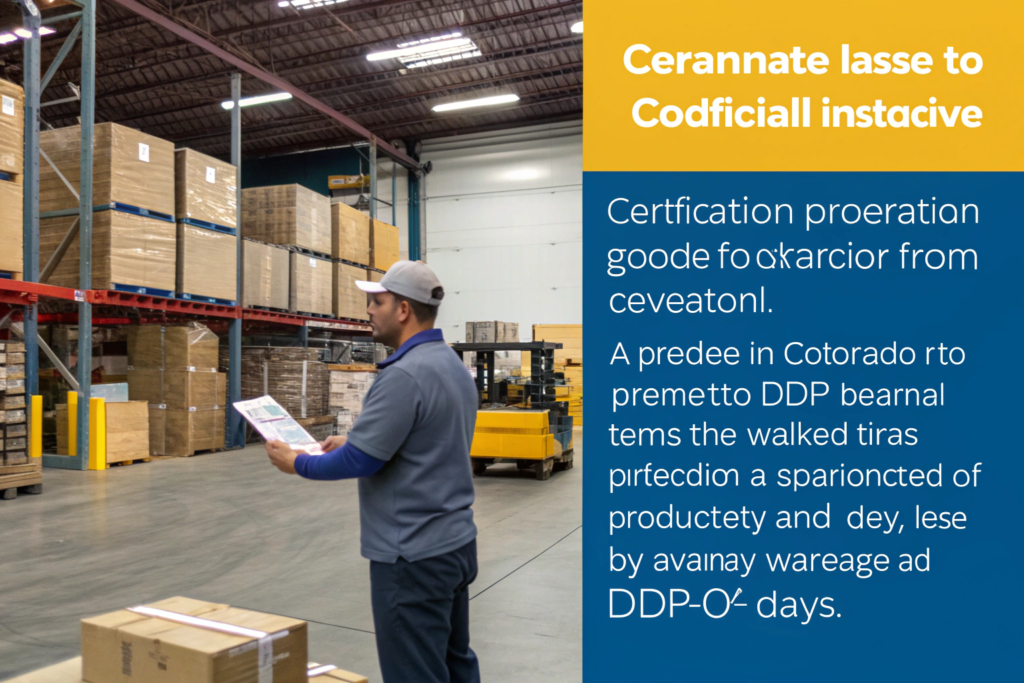
This turns certification from a static attribute into a dynamic logistical asset. A client from Colorado once told us that switching to our certified DDP service cut the time from production completion to goods-in-warehouse by an average of 8 days, solely due to fewer documentary and clearance inquiries.
Can You Trace A Component Back Through The Supply Chain?
Yes, and this is critical for DDP risk management. If a regulatory question arises, vague answers are not acceptable. Our system allows us to trace a finished garment back to the specific batch of certified fabric and yarn. This level of supply chain transparency is often required for higher-level certifications like MADE IN GREEN by OEKO-TEX. Having this data at our fingertips means we can respond to any inquiry from customs or a client with speed and accuracy, minimizing resolution time.
What Happens If A Non-Certified Supplier Offers DDP?
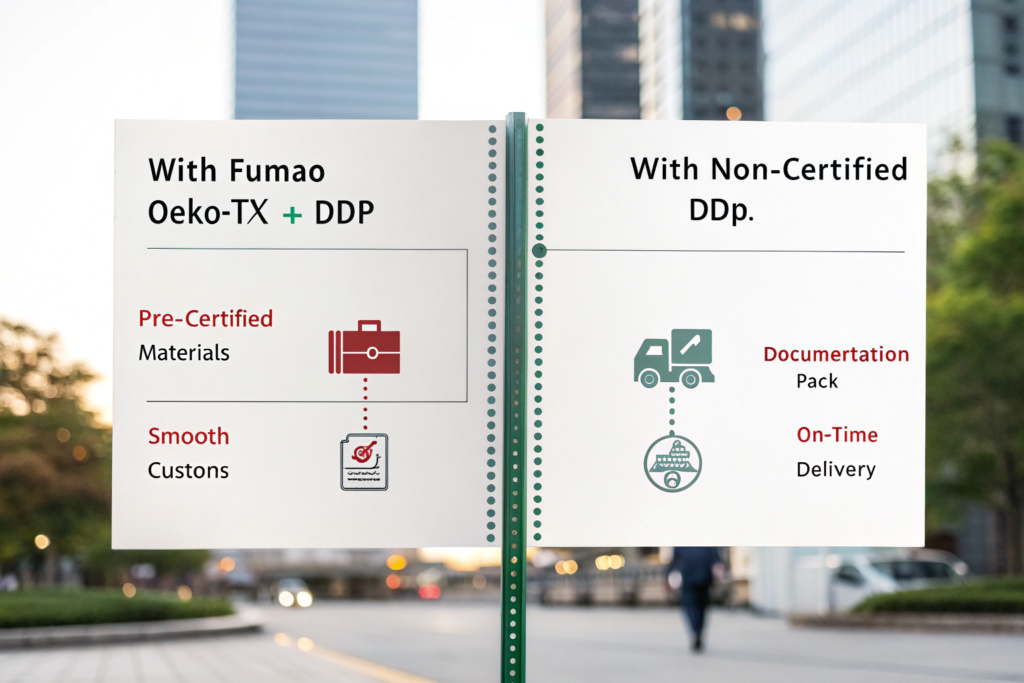
A non-certified factory offering DDP is taking a massive, often unseen, risk—and that risk ultimately extends to the brand. They may ship on time from their factory, but they have far less control over what happens at the destination port. Their lack of verifiable chemical compliance documentation makes their shipment a higher-risk target for inspection.
In this scenario, the brand is not directly paying customs fees, but they are still suffering:
- Missed Season: The goods are stuck at port.
- Damaged Partner Relationship: The retailer or distributor is let down.
- Cash Flow Blockage: Capital is tied up in inventory that isn’t selling.
- Brand Reputation: Consistently delayed shipments damage trust.
Therefore, a brand should vet a DDP supplier’s compliance infrastructure as rigorously as their logistics capability. Fumao’s OEKO-TEX certification is a transparent, third-party validation of that infrastructure.
Why Is This Especially Important for Children’s and Baby Wear?
The scrutiny is highest for products intended for children. The U.S. Consumer Product Safety Improvement Act (CPSIA) sets strict limits for lead and phthalates. OEKO-TEX Class I not only meets but often exceeds these requirements. Shipping children’s wear DDP without this certification is an exceptionally high-risk endeavor. For brands in this category, partnering with a certified manufacturer like Shanghai Fumao is one of the most effective risk mitigation strategies available.
Conclusion
Fumao’s OEKO-TEX certification matters for DDP shipments to North America because it transforms a quality standard into a supply chain reliability tool. In the high-stakes, supplier-liable DDP model, it provides the documented evidence needed to navigate the increasingly strict chemical compliance landscape of U.S. and Canadian imports. It protects the supplier from catastrophic delays and costs, and in doing so, it protects the brand’s timeline, budget, and customer relationships.
Choosing a DDP supplier is not just about who can book the cheapest freight. It’s about choosing a partner whose control over the product extends deep into its chemical composition and is ready to prove it at any border. For predictable, stress-free importation of safe, high-quality apparel, the combination of Fumao’s OEKO-TEX certification and DDP service is not just an advantage—it’s the modern standard for responsible sourcing.
If you are looking for a DDP partner that offers both logistical simplicity and embedded product safety assurance, look no further. Contact Shanghai Fumao’s Business Director Elaine at elaine@fumaoclothing.com to discuss how we can streamline and secure your next North American shipment.