When preparing for a day on the slopes, skiers meticulously select gear for maximum performance and protection. The focus often lands on the visible outer layers—the waterproof jacket, insulated pants, high-performance goggles. Yet, the most critical interface for both comfort and safety exists in the layer closest to the skin: the technical base layer or undergarment. This is not mere clothing; it is a functional, second-skin system managing moisture, temperature, and friction during intense physical exertion. The chemical safety of this intimate layer is therefore not a secondary concern but a primary physiological necessity.
Technical ski undergarments require the highest safety grade because they are in direct, prolonged, and occlusive contact with the skin during high-temperature, high-moisture activity, which dramatically increases the potential for the absorption of any harmful substances present in the textiles. Unlike an outer shell that may have limited skin contact, a base layer is designed to be worn against the skin for hours, often in a semi-occlusive state under other layers, where body heat and sweat can act as a solvent, facilitating the transfer of chemicals. The highest safety grades, such as OEKO-TEX® STANDARD 100 Class I or Class II, account for this extreme use case with the strictest limits on allergenic, carcinogenic, and irritant substances.
At Shanghai Fumao, we developed a proprietary merino wool-blend base layer series for a Colorado-based backcountry guide service in 2023. Their guides would wear the same garment for multiple days in remote conditions. Initial prototypes using standard, non-certified merino yarn caused skin irritation for over 30% of testers during week-long expeditions. By switching to yarns certified to OEKO-TEX® Class I—the standard for babywear—and ensuring every component (thread, elastic) matched this grade, we eliminated the irritation complaints entirely. The head guide reported, "It's the difference between focusing on the terrain and being distracted by discomfort. The confidence in the material is now part of our essential safety protocol." This experience underscores that for professional-grade performance, the highest material safety is non-negotiable.
How Does Skin Physiology During Skiing Amplify Chemical Risks?
Skiing and snowboarding create a uniquely demanding microclimate between the skin and fabric. Understanding this physiology is key to appreciating why standard textile safety is insufficient for high-performance base layers.
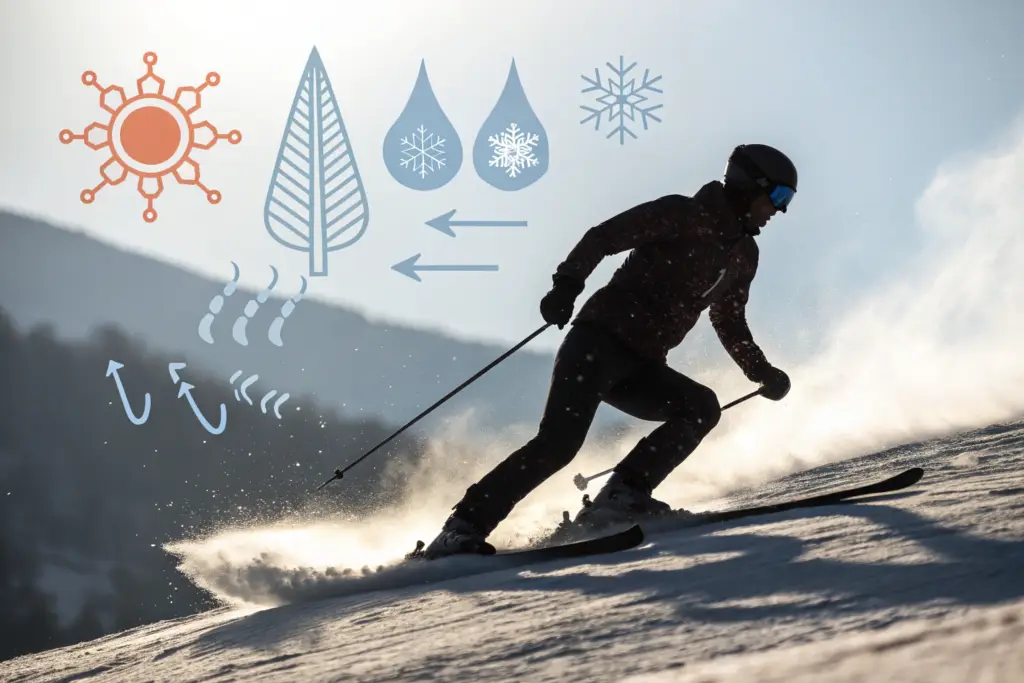
During skiing, the combination of intense aerobic exertion, variable external temperatures, and trapped moisture under multiple layers creates a warm, humid, and abrasive environment that heightens skin permeability and increases the leaching potential of chemicals from fabrics. The skin is the body's largest organ, and its barrier function can be compromised under these conditions. Sweat is not just water; it contains salts, lipids, and urea, which can interact with and mobilize chemical residues in textiles. Furthermore, the constant friction from repetitive motion can cause micro-abrasions on the skin's surface, creating direct pathways for substances to enter the body.
This is not a hypothetical risk. A 2021 study published in the Journal of Exposure Science & Environmental Epidemiology highlighted that sweating can increase the dermal absorption of certain substances like plasticizers (e.g., phthalates) from textiles. For the skier, this means a base layer treated with a non-certified antimicrobial agent or dyed with allergenic colorants can become a source of continuous, low-dose exposure throughout the day. The consequences range from acute contact dermatitis—a rash that ruins a vacation—to longer-term concerns about endocrine disruptors. This physiological reality mandates a precautionary approach, best fulfilled by certifying to the most stringent safety thresholds.
What Specific Chemical Threats Are Most Concerning in Base Layers?
The chemical profile of a base layer is complex, involving dyes, finishes, and processing aids. The highest safety grades specifically target the most concerning categories:
- Allergenic Disperse Dyes: These are used to color synthetic fibers like polyester. They are not chemically bound tightly to the fiber and can migrate to the skin with sweat and friction, causing severe allergic contact dermatitis. OEKO-TEX® standards have a strict, comprehensive list of banned allergenic dyes.
- Formaldehyde and other Acetaldehydes: Used in some "easy-care" or anti-wrinkle finishes. They are known skin sensitizers and respiratory irritants. In the hot, humid microclimate of a base layer, off-gassing can be more pronounced.
- Heavy Metals (e.g., Antimony, Cadmium): Can be present as catalysts in polyester production or as impurities in dyes. They are toxic and bio-accumulative.
- PFAS (Per- and polyfluoroalkyl substances): Sometimes used in durable water repellent (DWR) finishes, even on some mid-layers. Certain PFAS are persistent, bio-accumulative, and linked to health risks. While not always covered in older standards, the latest OEKO-TEX® STANDARD 100 includes regulations for specific PFAS compounds, demonstrating its proactive update cycle.
Choosing a base layer certified to a high OEKO-TEX® class (I or II) is the most efficient way for a consumer to avoid this complex matrix of risks. For a brand, specifying these materials from the outset, with a manufacturer like Shanghai Fumao that understands the supply chain for certified performance fabrics, is a critical duty of care.
How Does the "Occlusive Effect" of Layering Increase Exposure?
The "occlusive effect" refers to the trapping of material against the skin by an overlying layer, which enhances penetration. In dermatology, this principle is used therapeutically to increase drug delivery. In the context of ski wear, it occurs unintentionally but potentially.
When a non-breathable or semi-breathable outer layer (like a hard shell) is worn over a base layer, it creates a relatively sealed environment. This:
- Increases skin hydration (by trapping sweat), which is known to increase permeability.
- Raises local temperature, potentially increasing the volatility and mobility of chemicals.
- Prevents the dispersion of any substances that off-gas from the fabric.
Thus, a chemical of concern in the base layer becomes more potent because it is concentrated in this occluded space. A safety standard designed for a curtain (Class IV) or even a jacket lining (Class III) does not account for this extreme scenario. Only standards for direct, prolonged skin contact (Class II) or the most sensitive skin (Class I) are rigorous enough.
What Are the Performance Consequences of Using Lower-Grade Materials?
The impact of substandard material safety extends beyond health risks; it directly and measurably degrades the core performance attributes that skiers rely on. A base layer that causes itching, odor, or moisture management failure is a piece of equipment that has fundamentally failed.
Using lower-grade, non-certified materials can lead to performance failures including reduced moisture-wicking efficiency, accelerated bacterial growth causing odor, increased risk of chafing and skin irritation, and ultimately, a loss of thermal regulation as the user becomes distracted, stressed, or needs to adjust layers. The very functions that define a technical base layer are compromised when the fabric's chemical composition is not optimized for biocompatibility.
For instance, certain chemical softeners or finishes can coat synthetic fibers, clogging their micro-pores and hindering their capillary action—the fundamental mechanism of moisture-wicking. Similarly, residues from processing can provide a food source for bacteria, leading to odor long before the fabric's physical structure would normally allow it. This not only affects comfort but also necessitates more frequent washing, degrading the garment's lifespan and eco-credentials. A brand's reputation for performance is built on these nuanced, lived experiences. One customer's story about a "scratchy, smelly base layer" can undo a million dollars of marketing focused on technical specs.
How Do Skin Irritations Directly Impact Athletic Performance and Safety?
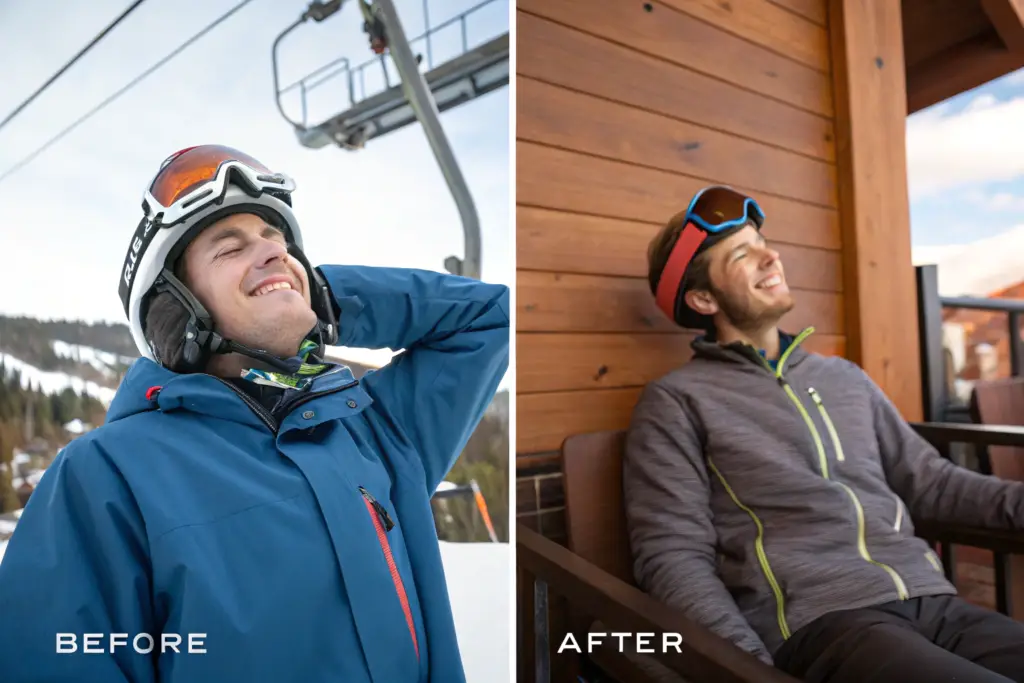
This is a critical link often overlooked. Physical discomfort is a cognitive distraction.
- Cognitive Load: Persistent itching or a burning sensation demands mental attention. On a challenging slope, a skier's focus must be 100% on their line, snow conditions, and surrounding traffic. Skin irritation steals this crucial cognitive bandwidth, increasing reaction time and the risk of error.
- Thermal Dysregulation: The instinctive response to irritation is to adjust clothing—to unzip, to vent. In cold environments, this can lead to rapid heat loss, increasing the risk of hypothermia.
- Compromised Decision-Making: Prolonged discomfort can lead to frustration and poor decision-making, such as cutting a run short in an unsafe manner or ignoring fatigue signals.
Therefore, investing in the highest material safety grade is an investment in the user's cognitive safety and overall mountain experience. It ensures the garment performs its function invisibly, as all the best equipment should.
Can Lower Safety Grades Affect Durability and Lifespan?
Yes, indirectly but significantly. The chemical treatments used in lower-grade fabrics are often less stable.
- Finish Wash-Out: Cheaper antimicrobial or anti-odor treatments can wash out after 5-10 cycles, leaving the fabric vulnerable to bacterial buildup. High-grade certified fabrics often rely on inherent fiber properties (like merino wool) or more durable, safer technologies.
- Dye Fastness: Lower safety grades may use dyes with poorer colorfastness to meet cost targets. Repeated exposure to sweat (which is acidic) and frequent washing can cause colors to fade and bleed more quickly, degrading the garment's appearance and potentially transferring dye to other layers or skin.
- Fiber Degradation: Harsh chemical residues left in the fabric from suboptimal processing can, over time, weaken fibers, reducing the garment's elasticity and tensile strength.
By contrast, the stringent testing in standards like OEKO-TEX® includes checks for colorfastness to perspiration and washing. This means a certified garment is engineered not just for initial safety, but for consistent, safe performance over its lifetime—a key selling point for sustainability-minded consumers.
How to Identify and Source Truly High-Grade Base Layer Fabrics?
For brands, navigating the fabric sourcing landscape to find materials that meet both performance and supreme safety criteria requires a strategic, verification-based approach. Claims are abundant; proof is rare.
To identify and source truly high-grade base layer fabrics, you must mandate and verify third-party certification for the specific, relevant product class (OEKO-TEX® Class I or II), conduct due diligence on the entire supply chain, and partner with manufacturers who have integrated these standards into their core quality systems. The certificate is the starting point, not the finish line. You must ensure it applies to the exact fabric lot, from a reputable mill, and that the manufacturer can manage the certified supply chain through to the finished garment.
This process involves several key steps:
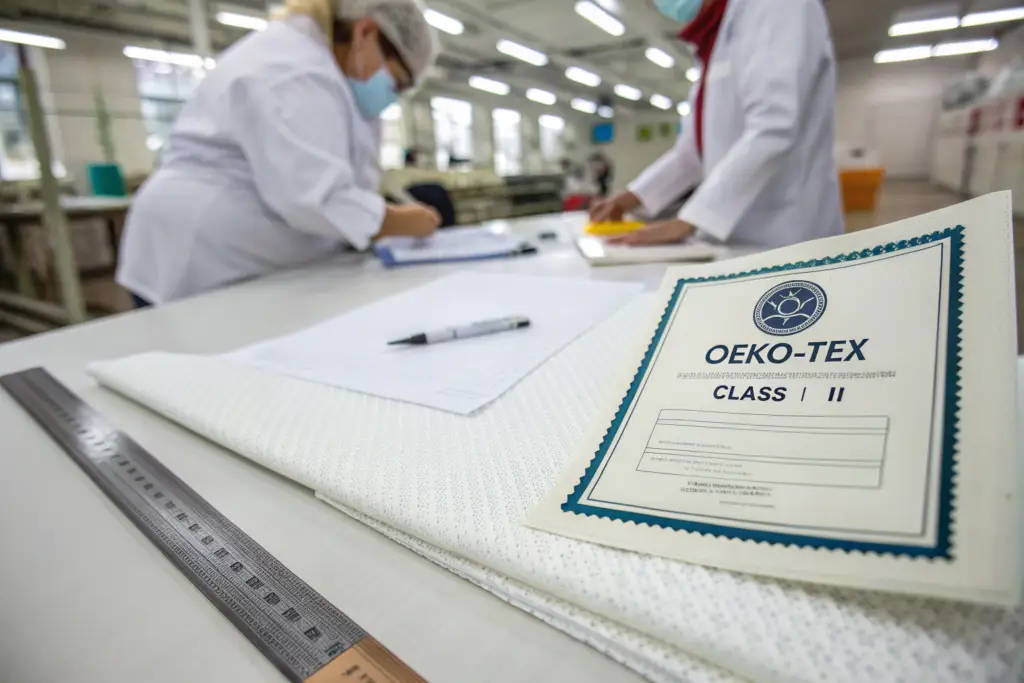
- Request the Certificate: Always ask for the official OEKO-TEX® certificate. Check its validity, the certified company name (is it the mill or a trader?), the product description, and the Product Class (must be I or II for base layers).
- Verify Chain of Custody: Ensure your manufacturer has a system to keep certified fabrics separate from non-certified ones in their warehouse and production line. Ask about their incoming fabric inspection protocol.
- Audit the Components: A base layer isn't just fabric. The elastic in the waistband, the sewing thread, and any silicone grippers must also be certified. Ask for "appendices" to the main certificate covering these accessories.
- Partner with Specialists: Work with a factory like Shanghai Fumao that specializes in technical wear and can provide a "full-package" of certified components and documented processes. Our quality assurance protocol includes batch-specific certificate verification for every inbound material, a step that has caught discrepancies from suppliers on multiple occasions, protecting our clients from liability.
What Questions Should You Ask Your Fabric Supplier or Manufacturer?
Go beyond price and MOQ. Your questioning should establish their expertise and reliability:
- "Can you provide the valid OEKO-TEX® STANDARD 100 certificate for this specific fabric, showing Product Class I or II?"
- "Are all sub-components (thread, elastics, prints) also certified to the same class? Can you show me those certificates?"
- "What is your process for ensuring certified fabrics are not contaminated in your warehouse or during cutting?"
- "How do you handle fabric roll testing? Do you test from each batch you receive?"
- "Can you support us with hangtags or lab test reports if our end-customers or retailers ask for proof?"
A trustworthy partner will have clear, confident answers and readily available documentation. Hesitation or vagueness is a major red flag.
What Are the Cost Implications of Sourcing Class I vs. Class II Fabrics?
There is a cost hierarchy, but it is often marginal at scale and justified by marketing and risk-mitigation benefits.
- Class I (Baby Products): Highest cost premium due to the strictest limits. Ideal for marketing "the ultimate in safety" or for brands specifically targeting users with extremely sensitive skin or allergies.
- Class II (Direct Skin Contact): The standard and most common choice for high-performance base layers. Premium over uncertified fabric is typically 5-15%, but this varies widely based on fiber type and order volume.
- Total Cost Analysis: The premium is a direct investment in brand equity, customer loyalty, and risk avoidance. The cost of a single product return due to "skin rash" or, worse, a batch rejection, dwarfs the total fabric premium for an entire production run. For most ski brands, Class II certification is the essential baseline, with Class I reserved for flagship or children's specific lines.
What is the Competitive Advantage for Brands That Prioritize This?
In a market where many products look and sound similar, a demonstrable commitment to the highest material safety creates a powerful, defensible competitive edge. It moves the conversation from subjective features to objective, trusted value.
Brands that prioritize the highest safety grades gain a competitive advantage through enhanced consumer trust and loyalty, the ability to command premium pricing, stronger retailer relationships, and a formidable defense against market commoditization. This advantage is especially potent in the outdoor industry, where consumers are increasingly educated and values-driven. They are not just buying a product; they are buying into a brand's integrity.
A base layer marketed as "OEKO-TEX® Class I Certified" tells a story of unparalleled care and rigor. It allows for marketing campaigns centered on "Purity," "Trust," and "Next-to-Skin Science." This is not a greenwashing claim; it is a badge of honor backed by science. Retailers prefer stocking such products because they reduce the risk of customer complaints and returns. In an era of conscious consumerism, this advantage is a key driver of long-term brand health and valuation. It future-proofs your products against tightening regulations and shifting consumer expectations.
How to Communicate This Advantage in a Crowded Marketplace?
Your communication must educate and resonate emotionally.
- Lead with the Benefit, Not the Feature: Don't just say "OEKO-TEX® Class II." Say, "Wear it. Sweat in it. Forget it. Certified for direct skin contact, so your focus stays on the descent, not on your skin."
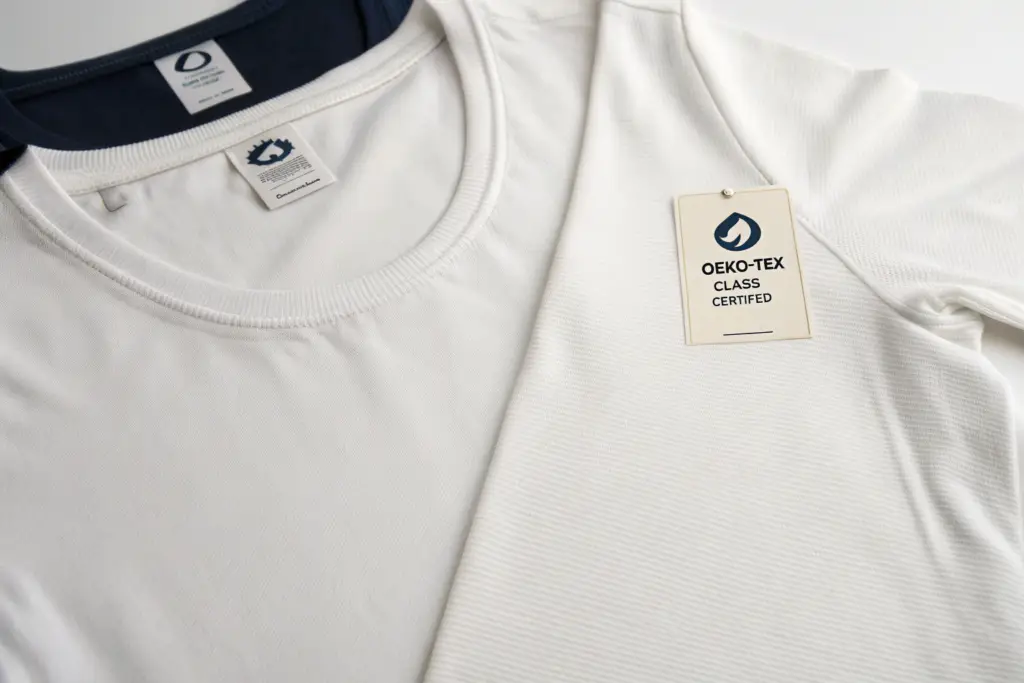
- Use Visuals of the Label: In product photography, include a shot of the OEKO-TEX® label sewn into the garment. It's a recognizable symbol of trust.
- Leverage Endorsements: Encourage reviews from customers with sensitive skin or allergies who found relief with your product. This is powerful social proof.
- Educate Retail Staff: Provide simple training materials so salespeople can explain why this certification matters for a base layer, converting a technical detail into a compelling reason to buy.
Conclusion
The requirement for the highest safety grade in technical ski undergarments is rooted in an uncompromising understanding of human physiology, performance demand, and ethical responsibility. It is a direct response to the extreme conditions these garments are subjected to: intimate contact, sweat, heat, friction, and occlusion. Settling for anything less than the strictest standards for skin-contact textiles is to ignore the fundamental purpose of a base layer—to protect and enhance the body's function without introducing new risks.
For skiers, the choice is clear: seek out base layers certified to OEKO-TEX® STANDARD 100, Class I or II. For brands, the mandate is even clearer: build this highest standard of safety into your product DNA from the fiber up. It is the ultimate expression of performance-through-wellness, a tangible commitment that builds unshakeable trust and defines a brand as a true leader in the mountain sports arena.
If you are committed to engineering base layers that set the benchmark for safety and performance, partner with a manufacturer who shares that commitment. At Shanghai Fumao, we specialize in sourcing and constructing technical undergarments to the highest OEKO-TEX® standards, ensuring every stitch supports your brand's promise of purity and performance. Contact our Business Director Elaine to begin developing your certified collection: elaine@fumaoclothing.com.