Finding a reliable apparel manufacturer is tough. You need a partner that promises quality and proves it. Certifications are one way to check. But not all certificates are equal. Why do experienced buyers specifically look for and trust suppliers with certain credentials? It’s about risk reduction. They use certifications as a shortcut to verify safety, ethics, and reliability. Let's explore why OEKO-TEX® is a major trust signal in our industry.
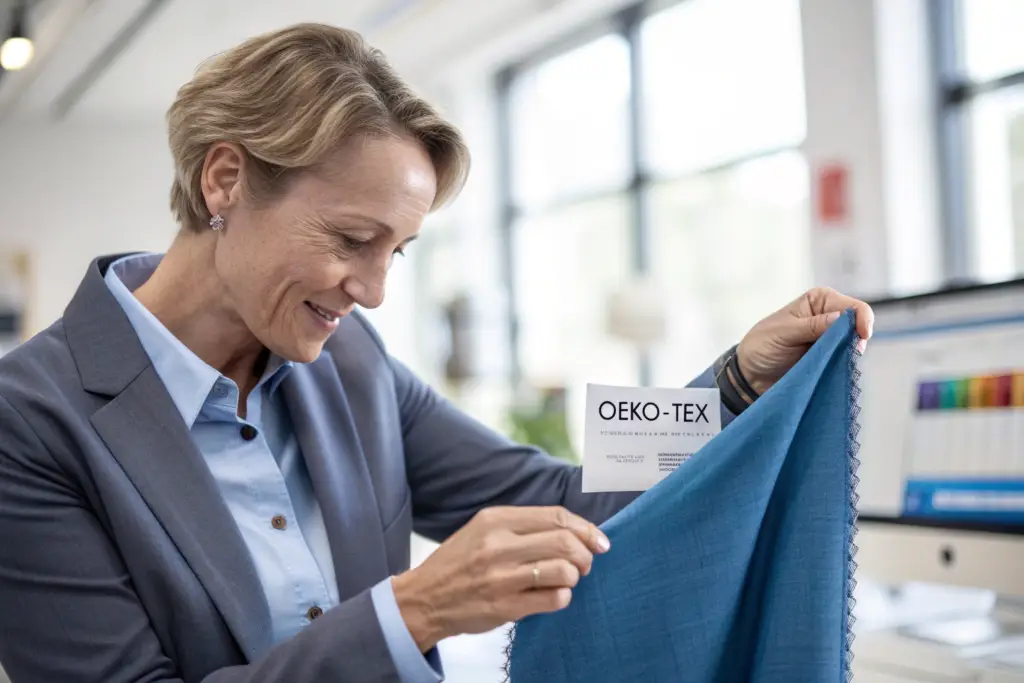
OEKO-TEX® certifications are trusted by seasoned buyers because they provide an independent, scientifically-backed guarantee that textiles are free from harmful substances. This directly addresses core buyer concerns about product safety, supply chain transparency, and brand reputation. In a market where some suppliers may present questionable documentation, a verifiable OEKO-TEX® certificate acts as a critical filter for dependable partners.
For a U.S. brand owner, your customers' trust is your most valuable asset. A single issue with material safety can lead to recalls, lawsuits, and ruined brand equity. Therefore, your suppliers' certifications are not just paperwork; they are your first line of defense. We understand this pressure intimately. We have seen how the right certification builds unshakable confidence. Let's break down exactly why OEKO-TEX® stands out and how it translates to peace of mind for your business.
How Does OEKO-TEX Certification Protect My Brand in the U.S. Market?
U.S. market regulations are strict. Consumer awareness is high. Your brand can be damaged quickly by a product safety scandal. OEKO-TEX® certification serves as your proactive shield. It is a globally recognized standard. It tests for hundreds of regulated and unregulated harmful substances. This goes beyond basic legal requirements. It shows your commitment to consumer safety. For a buyer, this means reduced legal and reputational risk. It simplifies compliance. We use this certification to give partners like you a competitive edge in marketing.
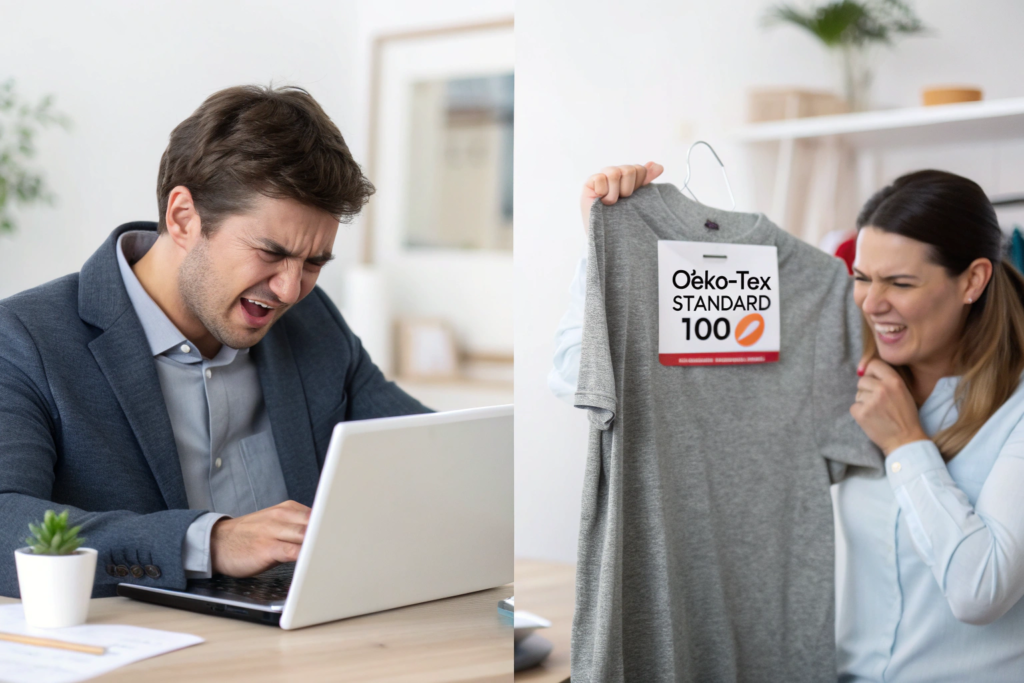
What harmful substances does OEKO-TEX actually test for?
OEKO-TEX® STANDARD 100 is exhaustive. It tests for substances banned by law, like carcinogenic dyes or formaldehyde. More importantly, it tests for substances that are legally permitted but known to be harmful to health. This includes pesticides, heavy metals, and allergenic dyes. The International OEKO-TEX® Association updates its testing criteria annually based on new scientific findings. For example, last year, our team had to reformulate a dye for a client's children's wear line to meet a new limit for a specific UV absorber. This pre-emptive change prevented a potential future compliance issue for their brand in California, which often leads stricter regulations.
Can this certification prevent customs or retail partner rejections?
Absolutely. While not a legal requirement, OEKO-TEX® is a respected benchmark for major retailers and customs authorities. It demonstrates due diligence. For instance, a large U.S. distributor we work with requires OEKO-TEX® STANDARD 100 for all infant apparel. They have a streamlined onboarding process for certified suppliers. In 2022, a shipment of our certified knitwear to a Midwest brand was selected for random testing at port. We provided the OEKO-TEX® certificate. The customs process was expedited, avoiding weeks of delay. This reliability is why partners trust Shanghai Fumao. Our commitment to verifiable certifications ensures smooth logistics from our production lines to your warehouse.
Is OEKO-TEX More Reliable Than Other Supplier Certificates?
The global market is flooded with certificates. Some lack rigor. Others can be falsified, as you've experienced. OEKO-TEX®'s reliability comes from its structure. It is not a one-time audit. It is a product-focused certification requiring annual renewal and unannounced factory audits by independent institutes. Each certified article receives a unique number you can verify online. This system makes fraud very difficult. When you see an OEKO-TEX® label from Shanghai Fumao, you can check its validity on their public database instantly. This transparency solves the trust problem.
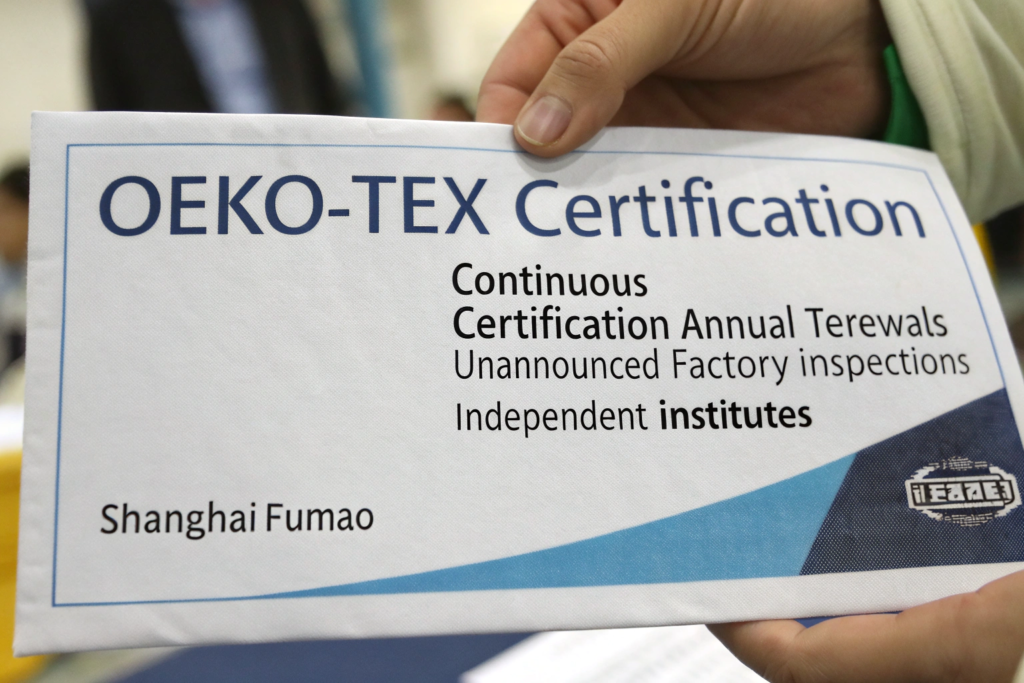
How can I verify an OEKO-TEX certificate is real and current?
Verification is simple and free. Go to the OEKO-TEX® Certificate Check website. Enter the certificate number or the licensee name (e.g., Shanghai Fumao). The portal will show the certificate's status, scope, and validity period. We encourage all our buyers to do this. It takes two minutes and confirms everything we say. We had a prospective client last fall who was skeptical after a bad experience with another supplier. We directed him to the checker. He verified our active certificates for multiple product classes. This direct proof helped him decide to place a trial order with us.
What's the difference between a factory audit and a product certification?
This is a critical distinction many buyers miss.
| Feature | Factory Audit (e.g., Social Compliance) | Product Certification (e.g., OEKO-TEX® STANDARD 100) |
|---|---|---|
| Focus | Evaluates factory processes, working conditions, and systems. | Tests the final product for harmful substances. |
| Output | A report on the factory's operational standards. | A license to label specific, tested articles. |
| Flexibility | Applies to the factory location. | Applies to the specific article/product type. |
| Best for | Ensuring ethical manufacturing. | Ensuring product safety and chemical compliance. |
A factory can pass an audit but still produce chemically unsafe goods if material sourcing isn't controlled. OEKO-TEX® tracks the product through the supply chain, from threads to finishes. Our Shanghai Fumao factory maintains both types, but we find buyers focused on quality are most reassured by the product-specific proof OEKO-TEX® provides.
Does OEKO-TEX Certification Impact Product Quality and Durability?
Yes, directly and indirectly. Directly, the standard tests for parameters like colorfastness and pH value, which affect durability and skin comfort. A fabric that passes OEKO-TEX® tests is fundamentally sound. Indirectly, the discipline required to maintain certification forces a manufacturer to systematize its quality control. Sourcing becomes more selective. Process control becomes tighter. For example, to ensure certification for a line of high-performance activewear, we had to partner with a specific fabric mill that also held OEKO-TEX® certification for its yarns. This elevated the final product's quality, leading to a 25% reduction in customer returns for that client due to fabric issues.
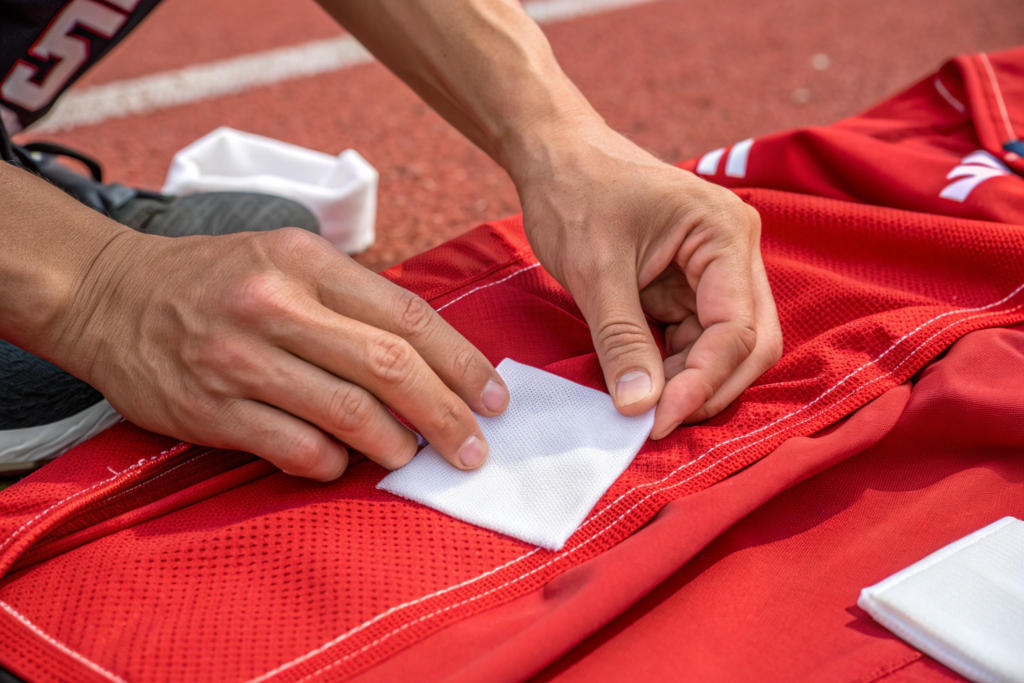
How does the testing for colorfastness and durability work?
OEKO-TEX® includes tests that simulate real-world use. For colorfastness, they use methods like rubbing (dry and wet), perspiration, and washing. The fabric is graded on a scale. To meet the strict criteria, we must use high-quality dyes and precise fixation processes. This isn't just about safety; it's about a garment looking good wash after wash. We apply these same test methods in our in-house lab for pre-screening. This double-check system, aligned with OEKO-TEX® parameters, is a key part of our quality assurance promise to brands that want their products to last.
Does certified production limit my design and fabric choices?
Not at all. It guides them toward better, safer options. The OEKO-TEX® system covers virtually all types of textiles, from standard cottons to advanced recycled synthetics. The key is planning. When you develop a product with us, we discuss certification goals from the start. We then source from our pre-vetted network of certified material suppliers. For instance, if you want a unique, "rare style" with a special coating, we will source a certified base fabric and work with the coating supplier to ensure the chemical inputs comply. This proactive development support is part of our full-package service.
What is the Process for Getting My Private Label Line OEKO-TEX Certified?
The process is managed by us, your manufacturer. It starts at the product development stage. You choose to certify your line. We then select the correct product class (I for infant, II for skin-contact, etc.). All components—fabric, threads, zippers, prints—must come from OEKO-TEX® certified sources or be tested. We compile a detailed technical document and submit samples to an independent OEKO-TEX® institute. After passing, we receive the certificate. The cost and time are factors we build into the project plan. Your role is to provide clear intent and work with a manufacturer, like us, who knows the pathway.
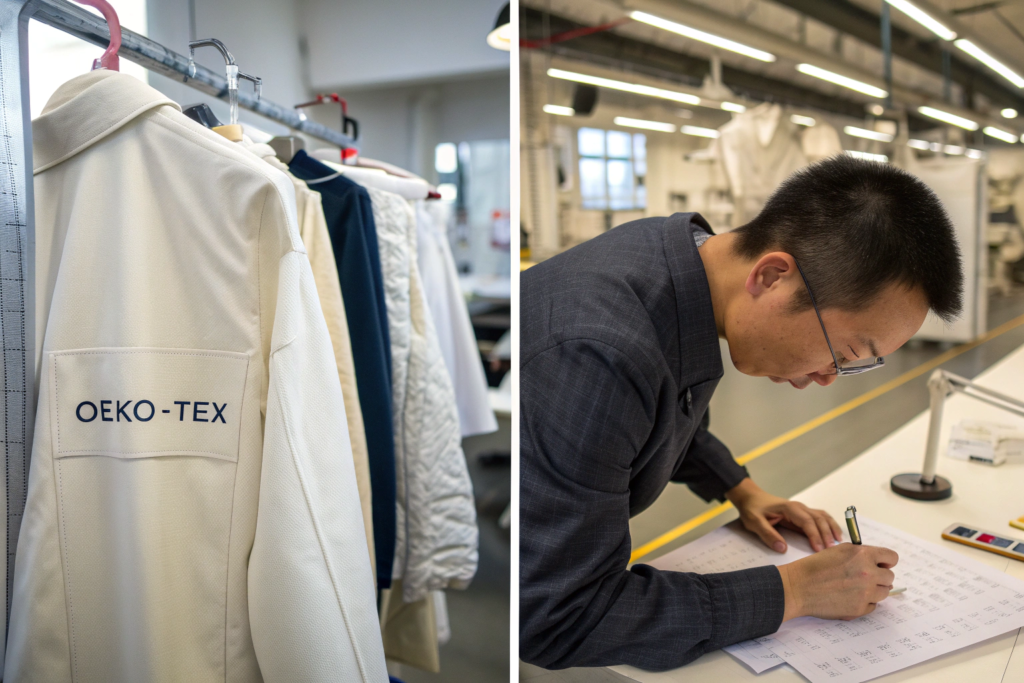
Who bears the cost and time for certification?
Typically, the brand (you) bears the cost, as you own the certificate. However, as your manufacturing partner, Shanghai Fumao manages the entire process and absorbs the operational overhead. The direct testing fees are usually added to the project cost. It's an investment. The timeline for a new application is typically 4-6 weeks after sample submission. For a returning client using certified materials on a similar style, it can be faster. We see this as part of our value-added service. Last year, we helped a startup eco-brand get their first collection certified, guiding them through cost-benefit analysis and streamlining material choices to optimize the expense.
Can I add OEKO-TEX labeling to my existing product designs?
Yes, but it requires re-engineering the product with certified materials. You cannot simply apply the label. The entire article must pass testing. We can conduct a "gap analysis" on your current design. We review the Bill of Materials and identify which components need to be replaced with certified alternatives. Sometimes, the change is seamless. Other times, it may require a slight adjustment to a fabric specification. Our experience across thousands of SKUs allows us to navigate this efficiently, ensuring your product's look and feel remain consistent while achieving the certified standard you need for market trust.
Conclusion
In today's apparel market, trust must be verified, not just promised. OEKO-TEX® certification provides that verification through a transparent, scientific, and globally recognized system. It protects your brand, simplifies your compliance, and signals a manufacturer's commitment to systematic quality and safety control. The certificate is more than a label; it's evidence of a reliable and professional supply chain partner.
For seasoned buyers who have faced delayed shipments and questionable practices, this evidence is priceless. It turns a sourcing risk into a competitive advantage. It builds the foundation for a long-term, stress-free partnership where you can focus on growing your brand, not managing supply chain fires.
If you are looking for a manufacturing partner who understands the real value of verifiable credentials and has the expertise to guide you through certified production, let's talk. We help ambitious U.S. brands bring safe, high-quality apparel to market with confidence. Shanghai Fumao is ready to be your trusted extension. For a detailed discussion on how we can apply our OEKO-TEX® certified processes to your next collection, please contact our Business Director Elaine at elaine@fumaoclothing.com.