You're sourcing for your brand, looking for a reliable partner for specialized apparel. You see big names in the U.S. market producing licensed camouflage patterns. But you notice a trend: a lot of this production isn't happening in China, the world's largest apparel exporter. Instead, it's happening in places like Jordan and Bangladesh. This might make you pause and wonder, "Is China not capable? Am I missing a key piece of the sourcing puzzle?" Let's dig into this together.
Major US brands source licensed camouflage from Jordan and Bangladesh primarily due to trade agreement advantages like duty-free access to the US market under specific rules, and because these countries have developed specialized expertise in heavy-duty fabrics and complex military-grade sewing for defense contracts, which transfers well to commercial licensed patterns. However, this does not mean China lacks capability; it often reflects a strategic choice based on cost structure for specific, quota-sensitive items, not an overall manufacturing superiority.
The choice of sourcing destination is rarely about one single factor. It's a complex calculation involving tariffs, fabric specialization, historical supply chains, and yes, sometimes misconceptions. As someone who has navigated the global apparel manufacturing landscape for years, I want to break down the real reasons behind this phenomenon. More importantly, I'll show you why for the vast majority of your apparel needs—including high-quality, complex items—a strategic partner like us in China can offer a more balanced, reliable, and ultimately more profitable solution. Let's explore the key drivers.
What are the tariff advantages of sourcing from Jordan and Bangladesh?
When a major brand's sourcing team chooses a factory, the first line on their spreadsheet is often total landed cost. This includes the factory price plus a critical add-on: import tariffs. Here is where Jordan and Bangladesh have a significant, agreement-driven edge for shipping to the United States.
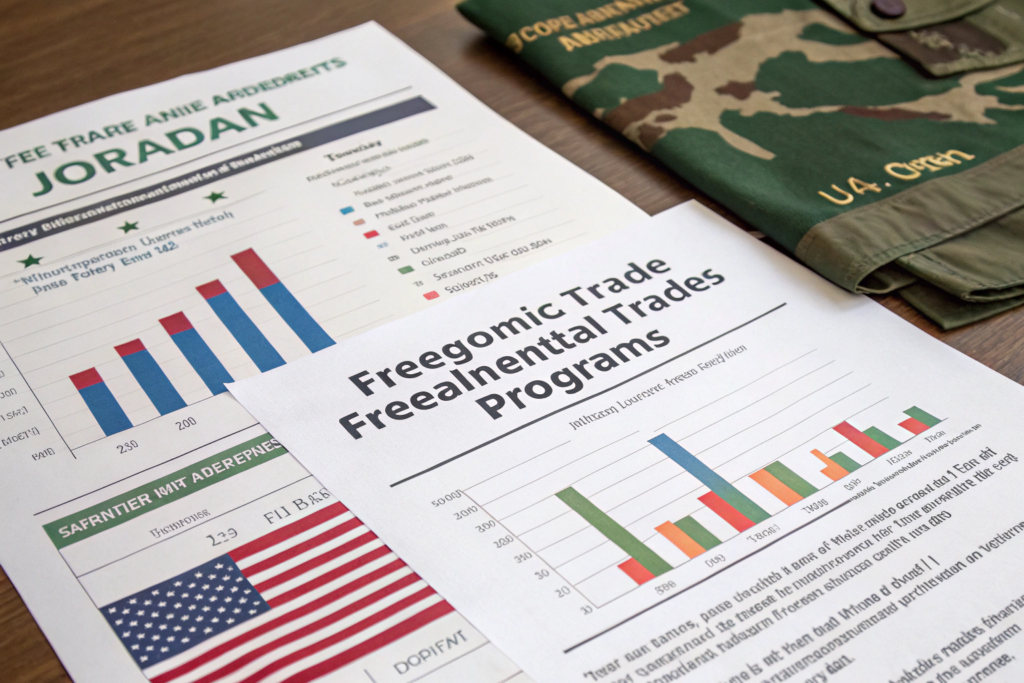
The primary tariff advantage comes from free trade agreements and preferential trade programs. Jordan has a Free Trade Agreement (FTA) with the United States, and Bangladesh benefits from Generalized System of Preferences (GSP) status for certain products. These frameworks can allow qualifying apparel to enter the U.S. duty-free or at a significantly reduced rate, directly improving profit margins. For high-volume orders of standardized items like certain camouflage styles, this cost saving is a powerful motivator, often outweighing other factors.
Let's understand the mechanics. These agreements have specific rules of origin. This means a certain percentage of the garment's value must be created in the exporting country to qualify for the duty benefit.
How do Rules of Origin affect camouflage production?
This is where the plot thickens. For camouflage fabric that is licensed (like proprietary patterns from Huntsman or Crye Precision), the licensing and often the fabric production itself are controlled by U.S. or other non-bilateral entities. To meet rules of origin, the cutting and sewing (the transformation) become the critical value-add. Countries like Jordan have structured their industry to maximize this. We once analyzed a sample order for a client where the duty savings from Jordan were 16.5% of the FOB price. However, the fabric and trim sourcing was limited and more expensive locally, eating into 7% of that saving.
Is the tariff advantage the only cost factor?
Absolutely not. A lower duty rate is just one part of the total cost of procurement. Other factors often neutralize this advantage:
- Fabric & Trim Cost: Sourcing specialized fabrics in smaller countries can be more expensive due to lack of local supply chains. You often import the fabric, losing some duty benefits.
- Production Efficiency: Smaller or less mature industries may have lower labor rates but also lower productivity rates, potentially leading to higher unit labor costs.
- Logistics & Lead Time: Shipping from South Asia or the Middle East to the U.S. can take longer and be less frequent than from major Chinese ports, increasing inventory holding costs.
A simplified comparison for a 10,000-unit camouflage jacket order might look like this:
| Cost Component | Sourcing from Bangladesh/Jordan | Sourcing from China (e.g., Shanghai Fumao) |
|---|---|---|
| FOB Price per Unit | $22.00 | $20.50 |
| U.S. Import Duty | 0% (GSP/FTA) | 16% (~$3.28) |
| Landed Cost (Duty Paid) | $22.00 | $23.78 |
| Additional Factors | Longer lead time (risk), potential higher fabric cost, communication gaps | Shorter lead time, integrated fabric sourcing, direct communication |
Key Insight: The initial landed cost might favor Jordan/Bangladesh, but the total cost of ownership—including risk of delay, quality consistency, and flexibility—can tip the scales. Last year, we helped a brand switch a camouflage trouser line back to us after they faced a 9-week delay in Bangladesh that missed their key retail window. Our integrated full-package service and DDP mode delivery ensured they hit their season.
Do these countries have specialized expertise China lacks?
There's a perception that because Jordan and Bangladesh produce camouflage for certain brands, they possess unique, unmatched skills. This is a classic case of correlation being mistaken for causation. Let's examine what expertise really exists and where.
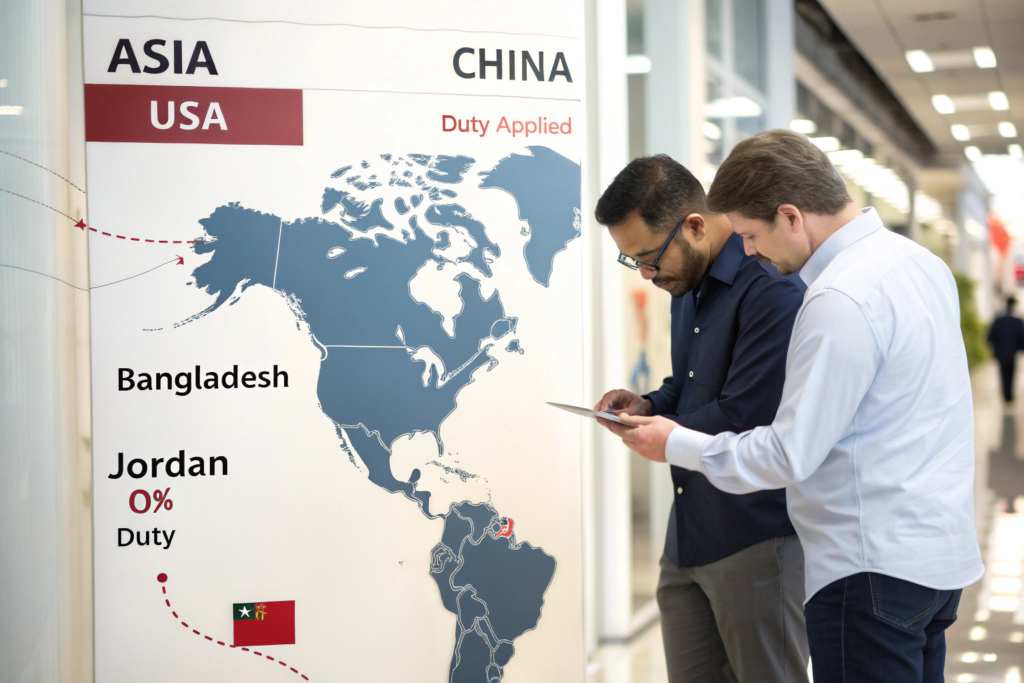
Jordan and Bangladesh have developed niche expertise in heavy-duty technical sewing, largely due to fulfilling government contracts and military tenders that require specific durability standards. This skill set transfers effectively to commercial licensed camouflage gear. However, it is not an expertise that China's vast and technologically advanced manufacturing base lacks. The difference is often one of industry focus and historical accident rather than inherent capability.
China's apparel industry is the most comprehensive in the world. The notion of a "lack of expertise" is inaccurate. The real issue is supply chain specialization.
How did Jordan and Bangladesh build this niche?
Their specialization was often jump-started by large, single orders (like military or UN tenders) that provided the capital and reason to invest in specific machines and worker training for a very particular product type. This created a cluster effect. For example, a factory that wins a contract for military trousers will train hundreds of operators on specific bar-tacking and multi-needle stitching techniques. This knowledge stays in that cluster. However, this is a narrow specialization. Ask that same factory to produce a high-fashion, lightweight camouflage-inspired dress with complex draping, and they may struggle, whereas a Chinese factory like Shanghai Fumao regularly handles such diverse product development.
Can Chinese factories match or exceed this technical quality?
Without a doubt. China's manufacturing ecosystem is built on adaptability and scale. We invest heavily in both technology and skilled labor. For instance, three years ago, a U.S. client approached us with a licensed camouflage pattern for a high-end outdoor line. They were concerned about color matching on a blended fabric and the precision of pocket welding. We not only matched the stringent quality control standards, but our R&D team suggested a more durable fabric treatment that reduced pilling by 30%, which became their unique selling point. Our five production lines are equipped for both high-volume basics and low-volume, high-complexity items, giving brands flexibility that single-niche clusters cannot.
Chasing lower duty costs can be tempting, but smart buyers like you look beyond the headline price. Sourcing from emerging clusters for specialized items like licensed camouflage carries a set of risks that can quietly erode profits and brand reputation.
The hidden risks include inefficient communication leading to costly errors, less reliable logistics increasing the chance of delayed shipments, and a higher potential for ethical compliance issues or certification falsification. These risks are amplified when dealing with complex supply chains for licensed goods, where brand integrity is paramount. A delay can mean missing a selling season entirely, turning a profitable order into a total loss.
From our conversations with many brand owners, the pain points are remarkably consistent. They align perfectly with the risks in these regions.
How can communication gaps lead to quality failure?
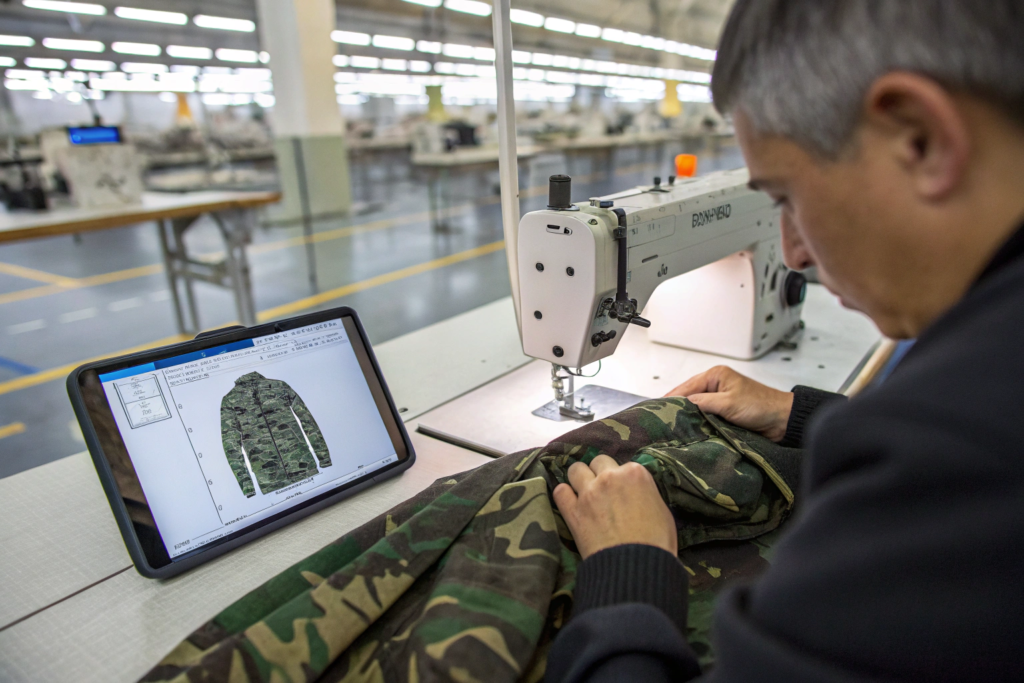
Licensed production requires exact adherence to tech packs and brand standards. A minor misinterpretation of a stitch length or color shade can lead to a whole batch being rejected. In regions where the factory sales rep is not the production manager, and English proficiency is lower, details get lost. We operate differently. At Shanghai Fumao, your point of contact has direct authority on the production floor. Last fall, we averted a crisis for a client when our production manager spotted a pantone color deviation in the dyed fabric before cutting, a detail the mill had missed. We corrected it immediately, avoiding a 4-week delay.
Why are logistics and compliance a bigger concern?
Infrastructure and transparency vary.
- Logistics: Ports in Bangladesh can face congestion. Shipping routes may be less direct. This increases transit time variability. Our export process from Shanghai, one of the world's busiest and most efficient ports, is streamlined for on-time delivery to North America.
- Compliance & Certification: The pressure to win business can lead some suppliers to cut corners. We have heard of cases where certificates for fabric safety or labor practices were not genuine. We view certification as a baseline requirement, not a marketing tool. Our facilities and processes are auditable, and we welcome due diligence.
When does it make sense to source from China instead?
So, when should you, as a brand owner focused on both quality and value, consider China as your primary sourcing base? The answer is: for most scenarios, especially when you view your supplier as a true strategic partner for growth, not just a cost center.
It makes sense to source from China when you need integrated full-package services, value shorter and more reliable lead times, require greater flexibility in product mix and order volume, and seek a partner with strong communication and proactive problem-solving capabilities. China excels at providing end-to-end solutions that reduce your administrative burden and mitigate risk.
Think of your supplier as an extension of your own team. You need them to understand your brand, not just follow instructions.
How does a full-package model in China reduce your workload?
A full-package manufacturing service means we handle everything from sourcing raw materials (like fabrics and trims) to production and export logistics. You provide the design and brand direction; we execute. This is our core model at Shanghai Fumao. For a startup client last year, we managed the entire process for their first 12-SKU collection of men's and women's wear, including fabric testing, labeling, and arranging DDP mode shipping to their warehouse in Texas. They focused on marketing and sales, launching 6 weeks faster than if they had coordinated multiple suppliers themselves.
Why are flexibility and communication China's key strengths?
The scale and maturity of China's industry breed efficiency and responsiveness.
- Flexibility: Need to add a last-minute embroidered logo? Want to test two different fabric blends for a new camouflage style? Our five production lines and local supply network allow for these adjustments without massive delays or cost penalties.
- Communication: We speak your language, both literally and in business terms. We understand the needs of American apparel brands. There is no middleman obscuring information. This direct line ensures that your vision for top quality and rare style is executed precisely, from the first sample to the final shipment.
Conclusion
The decision by major US brands to source licensed camouflage from Jordan and Bangladesh is a specific strategic play, heavily influenced by tariff advantages and historical niche development. It is not a verdict on China's manufacturing capabilities. For brands, this choice often involves a trade-off: potential duty savings against risks in communication, logistical reliability, and supply chain flexibility.
The most successful brands we partner with take a holistic view. They calculate the total cost of ownership, not just the landed cost. They value a supplier who can be a true extension of their team—solving problems proactively, ensuring quality at every step, and adapting to market changes quickly. While niche producers excel at one thing, a partner like a Chinese manufacturer excels at delivering a comprehensive, reliable, and scalable solution across knitwear, woven garments, outerwear, and activewear.
If you are looking for a manufacturing partner that combines competitive pricing with unwavering quality control, transparent communication, and the flexibility to grow with your brand, it's time to look beyond the single-issue sourcing trends. Let's discuss how we can bring your apparel visions to market successfully, on time and to the exacting standards your brand deserves.
We at Shanghai Fumao are dedicated to being that dependable, high-value partner for ambitious U.S. brands. If you're ready to explore a more reliable and comprehensive approach to sourcing your next collection, including specialized items, please reach out to our Business Director, Elaine. She can provide detailed insights tailored to your specific needs. Contact Elaine at: elaine@fumaoclothing.com.